

Bhagavad Gītā · Chapter 8 · Akṣara Brahma Yoga
मामुपेत्य पुनर्जन्म दुःखालयमशाश्वतम्
नाप्नुवन्ति महात्मानः संसिद्धिं परमां गताः
māmupetya punarjanma duḥkhālayamaśāśvatam|
nāpnuvanti mahātmānaḥ saṃsiddhiṃ paramāṃ gatāḥ||
Translation
Great souls, who have attained the highest perfection, having come to Me, are no more subjected to rebirth, which is the abode of sorrow, and transient by nature.
Commentary
The commentators seated around this verse
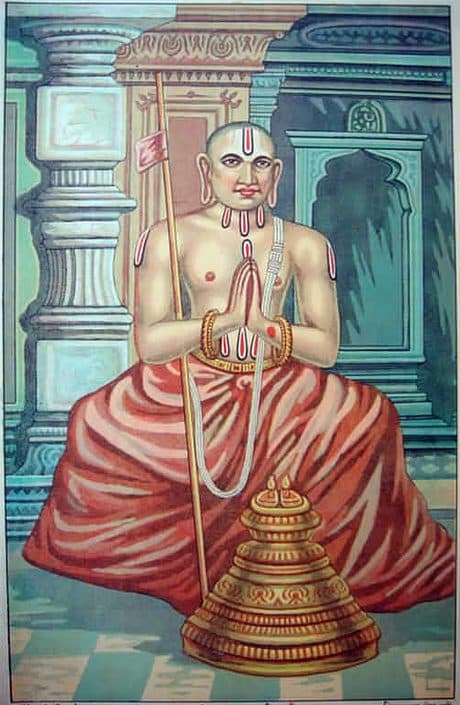
Rāmānuja · Viśiṣṭādvaita
English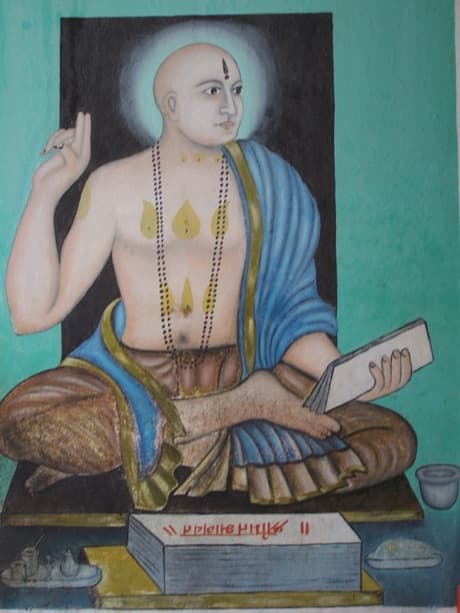
Madhvācārya · Dvaita
Madhva BhāṣyaSanskritEnglishOn verses 8.14–8.16
“नित्ययुक्तस्य नित्योपायवतः । योगिनः परिपूर्णयोगस्य ।” – Equanimous is one who constantly endeavours. The Yogi is completely in equanimity. “तत्प्राप्तिं स्तौति - माम् इति । परमां सिद्धिं गता हि त इति तत्र हेतुः । महामेरुस्थब्रह्मसदनमारभ्य पुनरावृत्तिः । तच्चोक्तं नारायणगोपालकल्पे । आमेरुब्रह्मसदनादानान्न जनिर्भुवि । तथाप्यभावः सर्वत्र प्राप्यैव वसुदेवजम् ॥ इति ।” – Sri Krishna praises attainment of the Supreme State as the singular goal. Starting from Brahma, who dwells on the mountain Meru, there is no return, thus it is said in Narayana Kalpa. “In all the cases concerned with worlds, from the world of (four-faced) Brahma on Maha Meru mountain to the world of human beings, there is no possibility of attaining the Supreme Being”, thus also having been said.
Madhvācārya · Dvaita
Gītā Tātparya NirṇayaSanskritEnglishOn verses 8.14–8.16
“नियमाज्जन्मनोऽभावो मुक्तस्यैव तथाऽपि तु । महर्लोकमतीतानां न जन्मांशलयौ विना । तत्राप्यवश्यं तत् स्थानं तैः क्षिप्रं पुनराप्यते ॥ इति भावे ॥” – Deliverance from samsara and attaining the supreme Lord is possible only through exclusive devotion or Bhakti. Those whose desire is enjoy the heavenly pleasures free from disease, degeneration and old age will soon return to the samsara again without reaching the goal, whereas the devotees of the lord reach the goal.
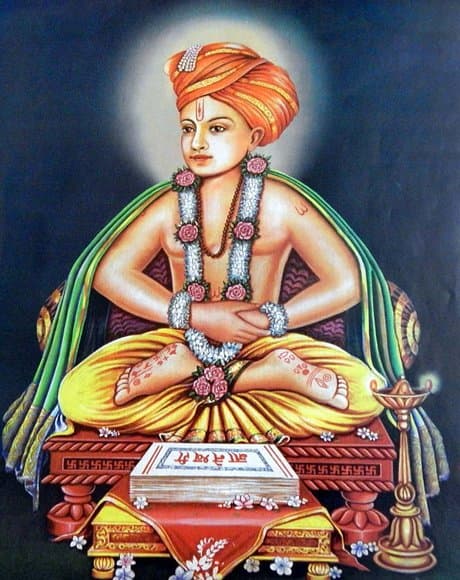
Jñāneśvar · Vārkarī
EnglishOn verses 8.14–8.15
14 'He who, with the mind not straying elsewhere, always and continuously thinks of Me: for such a Yogin, ever diligent in application, I remain, O Son of Pṛthā, easy of attainment. 15 'Having reached Me, (they) do not become liable to re-birth, which is transient and an abode of woe; the high-souled ones who have (already) attained the summum bonum. (124) Such God-Seekers relinquishing all sense pleasures and delights, and fettering all earthly desires, have made Me the cherished treasure of their hearts: thus they enjoy the bliss of My Divine Presence; while enjoying this bliss, no wonder that they forget even hunger and thirst; how could the lure of visible and other objects affect them? Such Souls, as have in this way united themselves to me and been merged in Me and live in Me entirely—would they, at the time of departing this life be required to remember Me for relief? Were it to be, that I should be propitious to such ones only, if and when they remember Me at the time of the fall of their bodies—of what avail then would their entire life of devotion and worship be? Any poor mortal in distress prays piteously, raising the cry of help “Hasten, Oh God, to save me”. Do I not hasten to him to soothe his pain? And if My lifelong devotees be placed in this sad plight, what worth may this strife and strain of a devoted life be? Therefore, I say, let there be no such doubt in your mind even for a moment. I am at their service and ready to relieve their distress, whenever such devotees remember me; for unbearable indeed to Me is the burden of their unswerved devoted life. With such a debt of devotion on My head, I am at all times eager to relieve their suffering, at the time of their end, thus repaying the debt I owe to them. To protect from bodily affliction, the tender and delicate frame of these dear ones, I give them shelter in the Spiritual encasement of Self-knowledge, and then covered with the soothing and cool shade of perpetual presence of My Divine name and fixed in their mind full of Me, they are united to My essence eternal. Therefore, it never happens that My devotees ever suffer any distress at the time of their death.
I bring those, dear to Me, to My own eternal being. I get them to merge into My Divine life by making them cast off their outer bodily covers after brushing aside the dust of their conceit, and keeping untainted the purity of their pure desires. The devotees too have left (in them) no bodily attachment, and therefore, they hardly feel any pangs of separation from their bodies. Also having already become one with Me, even while in (human) body-form, they naturally have no feeling that I should get by their side at death and take them unto Myself. In truth, their very sojourn in this mortal life is only a reflection, as it were, in the waters in the form of their bodies. And just as the reflections of the moon-beams in water, abide in the moon herself with the disappearance of the water, even so with the ebbing of their bodily life, their sojourn in the mortal life abides forever in the Essence of the Eternal Self. Their existence in the world is, in fact, not real but is like reflection while the real form is only the essence of Supreme Brahman. In this way, they having ever become My own Essence, I am always in their life and there is consequently no doubt, that with the fall of their bodies, they abide in Me. And to bodily life they never return—those who have reached the eternal abode in Me. For, verily the body is a soil in which grow trees of misery and a hot-bed of fire breeding three classes of affliction (i) physical, (ii) mental and (iii) Super-natural. It is indeed a victim (बळी) offered to the carrion of Death. It breeds plenty of wretchedness, multiplies, and is the hot-bed of all evil. It is the root of all vice, the ripe fruit of wicked actions and the very image of human folly. It is the home of misery that earthly life is, the garden on which grow all lusts and passions, and the very dish in which food is given to all ills of this life. The body again is a foul morsel of rice dish (खिचडी), that all-destroying time has thrown after chewing. It is the ever-growing strength of the hope never-ending, and the fertile and watery soil for (the breeding of) births and deaths. It is full of delusion and error, is cast on the stuff of fancies and is as it were the very underground (grain) pit of scorpions. It is the den of the tiger, and is strumpet-like in its action on soul, and is the very tool of sense enjoyment on Sensuous pleasures. It is like the affection of a sorceress or like a sip of cool poison, or the showy (false) faith of a thug. It is like embracing a person having white leprosy or the softness of a dark-coloured snake, or the singing of an entrapper (फासेपारधी), or the hospitality by an enemy, or the welcome from a vicious person—nay it is an ocean of evil things. It is like a dream in a dream, or a dense forest grown on (the water of) mirage, or a sky formed by the particles of smoke. To a body of this nature, never return those, who have reached (Me) and become one with the essence of My Being.
Swami Ramsukhdas · Modern
English‘Māmupetya punarjanma duḥkhālayamaśāśvatam nāpnuvanti mahātmānaḥ saṃsiddhiṃ paramāṃ gatāḥ’—If a great soul, has vision of the Lord or knows the reality about Him, or enters into Him, he, is not subject to rebirth. To take birth as a man or an animal or a bird etc., is painful. Therefore, rebirth is said to be an abode of pain.
When a man is reborn, he has to suffer so much of pain, as a man whose skin is stripped off. But, at that time, he is unable to express his pain. He simply cries. When he grows, he feels very sad, as his desires, are not satisfied. When he fails in an examination, he is so much dejected, that he thinks even of committing suicide. In youth, he feels afflicted, on not being married, according to his wish. On being married, he feels sad, not finding the spouse of his choice. When, girls attain puberty, parents suffer from anxiety, for not being able to arrange their marriage. Similarly, one feels much perturbed, during his married life, when he finds himself unable to bring up the members of his family, with limited resources. In old age, besides suffering from disease, he may bear insults. He develops cough and cannot sleep properly. At the time of death also, he has to suffer a lot of pain. Thus, there is no end of pains and sorrow for him.
Just like men, animals and birds etc., have also to suffer, a lot of pain in cold, hot and rainy seasons. The bigger animals kill, the young ones of the smaller animals. Thus, they are very sad. In this way, creatures have to suffer in hell and go through eighty-four lac forms of lives. Therefore, rebirth has been called, the abode of pain.
Rebirth is called transitory, because in the bodies, there is a continuous change. Nobody is permanent, and dies. So, rebirth
is called, a path of the world of death (Gītā 9/3).
Lord Kṛṣṇa, might have only said, 'Having come to Me, the great souls, are no more subject to rebirth.' Why has He used the two adjectives 'Transitory' and 'Abode of pain'? By these adjectives, He says that, as the Lord incarnates for the protection of the virtuous, for the destruction of evil-doers and for the establishment of Dharma (Righteousness), similarly, liberated souls as saints are born on this earth, for the protection of the good, for the service of the evil-doers, and for enabling the people to follow righteousness. When the Lord incarnates, with Him they take birth as His courtiers or companions, (like the Gvālās) on the earth. But, their birth is not transitory and an abode of pain, because their birth is not the fruit of their actions, as is by the sweet will of the Lord.
The Lord, has called strivers as great souls, who possess divine nature (9/13), as men of realization (7/19) and as those who have attained the highest perfection (8/15). It means, that men, are petty souls by having their affinity for the unreal body and the world because, they depend on the body and the world. They are mere souls, when they are established in the self, because in that case there is possibility of their having 'egoism', in its subtle form. But, when they identify themselves with the Lord, by total surrender to Him, without having any independent existence of their own, they are great souls.
Lord Kṛṣṇa, in the Gītā, in the Discipline of Action and Knowledge, has not used the term 'Mahātmā' (great soul). He has used it in the Discipline of Devotion, only. It means that He regards devotion, as supreme.
The great souls, are no more subject to rebirth, because they have reached the highest perfection. As a greedy person desires to get more and more money, a devotee by recognizing the Lord, whose fraction he is, aspires to get more and more love and then he attains fathomless and limitless love, enhancing every moment.
This love, is the perfection of devotion, and there is no perfection beyond it.
An Exceptional Fact
By studying the *Gītā*, it is evident that Lord Kṛṣṇa, has attached the greatest importance to devotion. The Lord has declared, 'He, who devoutly worships Me, is considered by Me to be the best Yogī' (*Gītā* 6/47). 'I am easily attainable, to that Yogī who constantly thinks of Me, with undivided mind, always absorbed in Me' (*Gītā* 8/14). But a striver, by following anyone of the Disciplines of Action, Knowledge or Devotion, attains the same Supreme Goal. But a point needs attention here, that in the philosophy, in which the Lord is not regarded as Supreme, the followers by breaking off their affinity for the world, attain salvation but do not attain the Supreme Love, and thus do not get ever enhancing bliss or love. That ever enhancing bliss, or love has been called, the highest perfection here.
**Appendix**—In the seventh chapter the Lord declared that this world is the manifestation of God—'Vāsudevaḥ sarvam' (7/19) but here He declares that the world is the abode of sorrows—'duḥkhālayam'. It means that the person who derives pleasure from the worldly objects, persons and actions, for him this world is the abode of sorrows; but he who renders service to other persons with his objects and actions, for him the world is the manifestation of God. The expectation, the desire and the enjoyment of pleasures are the roots of severe sufferings. This is the irrefutable rule that he who enjoys pleasures, can't escape pain. Therefore a striver should have a firm determination not to enjoy pleasures. The moment he renounces the desire for pleasure, Supreme Peace (God-realization) immediately follows such renunciation—'tyāgācchāntiranantaram' (*Gītā* 12/12).
A man (the self) is a fragment of that entire God in Whose each pore, there are millions of universes. But he has got entangled
in the body, an insignificant fragment of the lower nature. Because of this entanglement he, instead of attaining only bliss and bliss, is suffering only miseries and sorrows. As in the teats of a cow where there is only milk, there a cattle-louse drinks only blood. Goswāmī Tulasīdāsajī Mahārāja says—
ānāda-sindhu-madhya tava bāsā, bhu jāne kasa marasi piyāsā (Vinayapatrikā 136/2)
(A man's residence is in the ocean of bliss but he is dying of thirst without knowing this fact.)
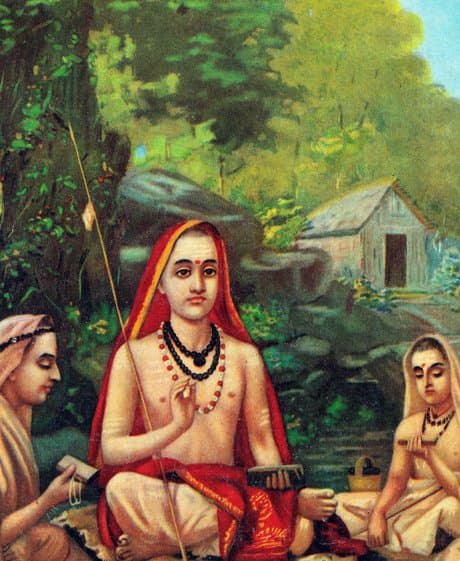
Ādi Śaṅkarācārya · Advaita
Sanskritमां उपेत्य मां ईश्वरं उपेत्य मद्भावमापद्य पुनर्जन्म पुनरुत्पत्तिं नाप्नुवन्ति न प्राप्नुवन्ति । किंविशिष्टं पुनर्जन्म न प्राप्नुवन्ति इति, तद्विशेषणमाह -- दुःखालयं दुःखानां आध्यात्मिकादीनां आलयं आश्रयं आलीयन्ते यस्मिन् दुःखानि इति दुःखालयं जन्म । न केवलं दुःखालयम्, अशाश्वतम् अनवस्थितस्वरूपं च । नाप्नुवन्ति ईदृशं पुनर्जन्म महात्मानः यतयः संसिद्धिं मोक्षाख्यां परमां प्रकृष्टां गताः प्राप्ताः । ये पुनः मां न प्राप्नुवन्ति ते पुनः आवर्तन्ते ॥ किं पुनः त्वत्तः अन्यत् प्राप्ताः पुनरावर्तन्ते इति, उच्यते --
Ādi Śaṅkarācārya · Advaita
Hindiआपके सुलभ हो जानेसे क्या होगा? इसपर कहते हैं कि मेरी सुलभ प्राप्तिसे जो होता है, वह सुन—
मुझे ईश्वरको पाकर अर्थात् मेरे भावको प्राप्त करके फिर (वे महापुरुष) पुनर्जन्मको नहीं पाते।
किस प्रकारके पुनर्जन्मको नहीं पाते, यह स्पष्ट करनेके लिये उसके विशेषण बतलाते हैं—
आध्यात्मिक आदि तीनों प्रकारके दुःखोंका जो स्थान—आधार है अर्थात् समस्त दुःख जिसमें रहते हैं, केवल दुःखोंका स्थान ही नहीं जो अशाश्वत भी है अर्थात् जिसका स्वरूप स्थिर नहीं है, ऐसे पुनर्जन्मको मोक्षरूप परम श्रेष्ठ सिद्धिको प्राप्त हुए महात्मा—संन्यासीगण नहीं पाते। परंतु जो मुझे प्राप्त नहीं होते वे फिर संसारमें आते हैं
Jñāneśvar · Vārkarī
MarathiOn verses 8.14–8.15
जे विषयांसि तीळांजळी देऊनी । प्रवृत्तीवरी निगड वाउनी । मातें हृदयीं सूनी । भोगताती ॥ १२४॥
परि भोगितया आराणुका । भेटणें नाहीं क्षुधादिकां । तेथ चक्षुरादि रंकां । कवण पाडु ॥ १२५॥
ऐसे निरंतर एकवटले । जे अंतःकरणी मजशीं लिगटले । मीचि होऊनि आटले । उपासैती ॥ १२६॥
तयां देहावसान जैं पावे । तैं तिहीं मातें स्मरावें । मग म्यां जरी पावावें । तरि उपास्ति ते कायसी ॥ १२७॥
पैं रंकु एक आडलेपणें । काकुळती अंती धांवा गा धांवा म्हणे । तरि तयाचिये ग्लानी धांवणे । काय न घडे मज ॥ १२८॥
आणि भक्तांही तेचि दशा । तरी भक्तीचा सोसु कायसा । म्हणऊनि हा ध्वनी ऐसा । न वाखाणावा ॥ १२९॥
तिहीं जे वेळीं मी स्मरावा । ते वेळीं स्मरला कीं पावावा । तो आभारूही जीवा । साहवेचि ना ॥ १३०॥
तें ऋणवैपण देखोनि आंगी । मी आपुलियाचि उत्तीर्णत्वालागीं । भक्तांचिया तनुत्यागीं । परिचर्या करीं ॥ १३१॥
देहवैकल्याचा वारा । झणें लागेल या सकुमारां । म्हणोनि आत्मबोधाचे पांजिरां । सूयें तयांतें ॥ १३२॥
वरि आपुलिया स्मरणाची उवाइली । हींवाऐसी करीं साउली । ऐसेनि नित्य बुद्धि संचली । मी आणीं तयांतें ॥ १३३॥
म्हणोनि देहांतींचें सांकडें । माझियां कहींचि न पडे । मी आपुलियांतें आपुलीकडे । सुखेंचि आणीं ॥ १३४॥
वरचील देहाची गंवसणी फेडुनी । आहाच अहंकाराचे रज झाडुनी । शुद्ध वासना निवडुनी । आपणापां मेळवी ॥ १३५॥
आणि भक्तां तरी देहीं । विशेष एकवंकीचा ठाव नाहीं । म्हणऊनि अव्हेरू करितां कांही । वियोग ऐसा न वाटे ॥ १३६॥
ना तरी देहांतींचि मियां यावें । मग आपणपें यांतें न्यावें । हेंही नाहीं जे स्वभावें । ते आधींचि मज मीनले ॥ १३७॥
येरी शरीराचिया सलिलीं । असतेपण हे साउले । वांचूनि चंद्रिका ते ठेली । चंद्रींचि आहे ।। १३८॥
ऐसे जे नित्ययुक्त । तयांसि सुलभ मी सतत । म्हणाऊनि देहांतीं निश्चित । मीचि होती ॥ १३९॥
मग क्लेशतरूची वाडी । जे तापत्रयाग्नीची सगडी । जे मृत्युकाकासि कुरोंडी । सांडिली आहे ॥ १४०॥
जें दैन्याचें दुभतें । जें महाभयातें वाढवितें । जें सकळ दुःखाचें पुरतें । भांडवल ॥ १४१॥
जें दुर्मतीचें मूळ । जें कुमार्गाचें फळ । जें व्यामोहाचें केवळ । स्वरूपचि ॥ १४२॥
जें संसाराचें बैसणें । जें विकाराचें उद्यानें । जें सकळ रोगांचें भाणें । वाढिलें आहे ॥ १४३॥
जें काळाचा खिचउशिटा । जें आशेचा आंगवठा । जन्ममरणाचा वोलिंवटा । स्वभावें जें ॥ १४४॥
जें भुलीचें भरींव । जें विकल्पाचें वोतींव । किंबहुना पेंव । विंचुवांचें ॥ १४५॥
जें व्याघ्राचें क्षेत्र । जें पण्यांगनेचें मैत्र । जें विषयविज्ञानयंत्र । सुपूजित ॥ १४६॥
जें लांवेचा कळवळा । निवालिया विषोदकाचा गळाळा । जें विश्वासु आंगवळा । संवचोराचा ॥ १४७॥
जें कोढियाचें खेंव । जें काळसर्पाचें मार्दव । गोरियाचें स्वभाव । गायन जें ॥ १४८॥
जें वैरियाचा पाहुणेर । जें दुर्जनाचा आदर । हें असो जें सागर । अनर्थाचा ॥ १४९॥
जें स्वप्नीं देखिलें स्वप्न । जें मृगजळें सासिन्नलें वन । जें धूम्ररजांचें गगन । ओतलें आहे ॥ १५०॥
ऐसें जें हें शरीर । तें ते न पवतीचि पुढती नर । जे होऊनि ठेले अपार । स्वरूप माझें ॥ १५१॥
Jñāneśvar · Vārkarī
HindiOn verses 8.14–8.15
(8.124) जो पुरुष विषयों को तिलांजलि दे प्रवृत्ति के पाँवों में बेड़ी ठोक मुझे हृदय में रख भोगते हैं,
(8.125) पर भोग की अतृप्ति के कारण क्षुधा आदि की भी भेंट नहीं लेते तो चक्षु आदि रंकों की क्या कथा;
(8.126) वे जो निरन्तर एकाग्र हो अन्तःकरण में मुझसे युक्त हो मेरे स्वरूप में ही व्याप्त होकर मेरी भक्ति करते हैं,
(8.127) देहावसान के समय यदि वे मेरा स्मरण करें और मैं उन्हें प्राप्त न होऊँ तो वह उपासना ही क्या हुई?
(8.128) कोई दीन मनुष्य संकट में पड़ा अकुला कर "दौड़ो दौड़ो" चिल्लावे तो उसका दुःख दूर करने के लिए क्या मैं नहीं दौड़ जाता?
(8.129) फिर यदि भक्तों की भी वही दशा हो तो कोई भक्ति की उत्कट कामना ही क्यों करें! इसलिए ऐसी बात ही मत कहो।
(8.130) भक्त ज्योंही मेरा स्मरण करते हैं त्योंही, स्मरण करते ही, मैं उनके पास पहुँचता हूँ! परन्तु उसके स्मरण का उपकार भी मेरा जी सह नहीं सकता।
(8.131) अतः मैं निज को इस प्रकार ऋणी देखकर, उनसे उऋण होने के लिए, भक्तों के देहान्त के समय उनकी सेवा करता हूँ। (8.132) उन सुकुमारों को शरीर की विकलतारूप हवा न लग जाय, इसलिए मैं उन्हें आत्मज्ञानरूपी पिंजरे में रखता हूँ
(8.133) और उनपर अपने स्मरण की शान्त और ठण्डी छाया करता हूँ। इस प्रकार मैं उन्हें इस संचित बुद्धि का स्मरण करा देता हूँ कि "मैं नित्य हूँ।"
(8.134) इसलिए मेरे भक्तों को शरीरत्याग के समय संकट कभी नहीं होता। अपने सेवकों को मैं अपनी ओर सुख से ले आता हूँ।
(8.135) उनके बाह्य-शरीर का आच्छादन निकाल कर मिथ्या अहंकार की धूल झाड़ कर शुद्ध वासना के द्वारा मैं उन्हें निज में मिला लेता हूँ।
(8.136) और, भक्तों को भी देह से विशेष तादात्म्य नहीं रहता इसलिए उसे छोड़ते उन्हें कुछ विरह नहीं मालूम पड़ता।
(8.137) अथवा देहान्त के समय वे यह भी नहीं सोचते कि मैं जाऊँ और उन्हें निजस्वरूप को ले आऊँ। क्योंकि वे पहले ही से मुझमें मिले हुए रहते हैं। (8.138) उनका अहंकार शरीररूपी जल में आत्मरूपी चन्द्र का प्रतिबिम्ब दिखाई देता है, परन्तु वास्तव में आत्मारूपी चन्द्रिका का निवास तो चन्द्र में ही रहता है।
(8.139) इस प्रकार जो निरन्तर मुझ से युक्त हैं उन्हें मैं सर्वदा सुलभ हूँ। इसलिए शरीर छोड़ते समय वे निश्चय से मद्रूप हो जाते हैं।
(8.140) और जो क्लेशरूपी वृक्षों का बगीचा है, जो आध्यात्मिक-आधिदैविक और आधिभौतिक तापों की अँगीठी है, जो मृत्युरूपी कौए के लिए मानों बलि डाला गया है,
(8.141) जो दारिद्र्य उत्पन्न करनेवाला और मृत्यु के भय को बढ़ानेवाला है, जो सकल दुःखों की पूर्ण पूँजी है,
(8.142) जो दुर्मति का मूल है, जो कुकर्म का फल है, जो भ्रान्ति की केवल स्वरूप है,
(8.143) जो संसार के बैठने का स्थान है, जो विकारों का बगीचा है, जो सकल रोगों की परोसी हुई थाली है,
(8.144) जो काल की जूँठी खिचड़ी है, जो आशा के शरीर का ढाँचा है, जो स्वभावतः जन्म-मरण के आवागमन का रास्ता है, (8.145) जो भ्रम से भरा हुआ, विकल्प से ढाला हुआ किंबहुना बिच्छुओं की खँव (खती) है,
(8.146) जो व्याघ्र का क्षेत्र है, जो वेश्या का मित्र है, जो विषयों को जानने का उत्तम मन्त्र है,
(8.147) जो डाकिनी के प्रेम का स्थान है, और विषरूपी ठण्डे पानी का घूँट है, जो साहु-चोर का विश्वसनीय सहवासी है,
(8.148) जो कोढ़ी का आलिंगन है, जो महाविषैले सर्प की मृदुता के समान है, जिसका स्वभाव बहेलिये के गायन जैसा है,
(8.149) जो शत्रु की पहुँच है, दुर्जन का आदर है, और क्या कहें, जो अनर्थों का समुद्र है,
(8.150) जो स्वप्न में देखा हुआ स्वप्न अथवा मृगजल का विस्तृत वन अथवा जो धुएँ के रज का ढाला हुआ गगन है,
(8.151) ऐसा जो यह शरीर है उसे मेरे अपार स्वरूप से एक हो जानेवाले पुरुष पुनः नहीं पाते।
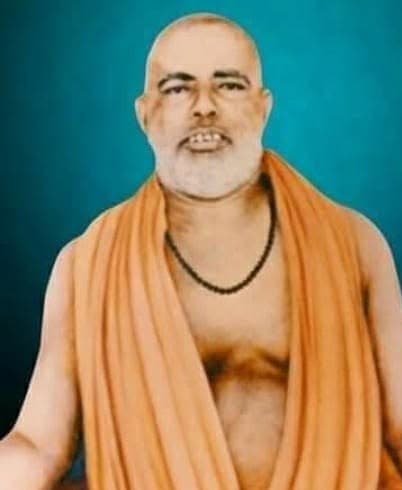
Sri Udiya Baba · Modern
Hindiसंगति— अगले श्लोक में इसकी फल-प्राप्ति बतलाते हैं—
भावार्थ— मुझको प्राप्त होकर वे महात्मा दुःखालय और अनित्य संसार में पुनः जन्म ग्रहण नहीं करते, क्योंकि वे परमा सिद्धि (मोक्ष) को प्राप्त हो जाते हैं।
व्याख्या— जो दैवी सम्पत्ति सम्पन्न होते हैं वे ही महात्मा कहे जाते हैं। दैवी सम्पत्ति के आश्रय से ही वे मुझे प्राप्त करते हैं। ऐसे महापुरुष पुनः जन्म नहीं लेते, क्योंकि वे वासनाशून्य होते हैं। 'महात्मा' शब्द अध्याय ७ श्लोक १९ में, अध्याय ९ श्लोक १३ में और अध्याय ११ श्लोक ३७ में भी आया है। वहाँ इसका प्रयोग विभिन्न अर्थों में हुआ है। जन्म न होना सिद्धि है और मुझे प्राप्त हो जाना परम सिद्धि है। दुःखालय और अशाश्वत शब्दों से व्यक्त होता है कि वे मर्त्यलोक में नहीं आते, तो ऐसी शङ्का हो सकती थी कि यदि इस लोक में नहीं आते तो अन्य लोकों में घूमते रहते होंगे। इसी का निवारण भगवान् अगले श्लोक में करते हैं—
Swami Ramsukhdas · Modern
Hindi‘मामुपेत्य पुनर्जन्म ... संसिद्धिं परमां गताः’—‘मामुपेत्य’ का तात्पर्य है कि भगवान्के दर्शन कर ले, भगवान्को तत्त्वसे जान ले अथवा भगवान्में प्रविष्ट हो जाय तो फिर पुनर्जन्म नहीं होता। पुनर्जन्मका अर्थ है—फिर शरीर धारण करना। वह शरीर चाहे मनुष्यका हो, चाहे पशु-पक्षी आदि किसी प्राणीका हो, पर उसे धारण करनेमें दुःख-ही-दुःख है। इसलिये पुनर्जन्मको दुःखालय अर्थात् दुःखोंका घर कहा गया है।
मरनेके बाद यह प्राणी अपने कर्मोंके अनुसार जिस योनिमें जन्म लेता है, वहाँ जन्म-कालमें जेरसे बाहर आते समय उसको वैसा कष्ट होता है, जैसा कष्ट मनुष्यको शरीरकी चमड़ी उतारते समय होता है। परन्तु उस समय वह अपना कष्ट, दुःख किसीको बता नहीं सकता, क्योंकि वह उस अवस्थामें महान् असमर्थ होता है। जन्मके बाद बालक सर्वथा परतन्त्र होता है। कोई भी कष्ट होनेपर वह रोता रहता है,—पर बता नहीं सकता। थोड़ा बड़ा होनेपर उसको खाने-पीनेकी चीजें, खिलौने आदिकी इच्छा होती है और उनकी पूर्ति न होनेपर बड़ा दुःख होता है। पढ़ाईके समय शासनमें रहना पड़ता है। रातों जागकर अभ्यास करना पड़ता है तो कष्ट होता है। विद्या भूल जाती है तथा पूछनेपर उत्तर नहीं आता तो दुःख होता है। आपसमें ईर्ष्या, द्वेष, डाह, अभिमान आदिके कारण हृदयमें जलन होती है। परीक्षामें फेल हो जाय तो मूर्खताके कारण उसका इतना दुःख होता है कि कई आत्महत्यात्मक कर लेते हैं।
जवान होनेपर अपनी इच्छाके अनुसार विवाह आदि न होनेसे दुःख होता है। विवाह हो जाता है तो पत्नी अथवा पति अनुकूल न मिलनेसे दुःख होता है। बाल-बच्चे हो जाते हैं तो उनका पालन-पोषण करनेमें कष्ट होता है। लड़कियाँ बड़ी हो जाती हैं तो उनका जल्दी विवाह न होनेपर माँ-बापकी नींद उड़ जाती है, खाना-पीना अच्छा नहीं लगता, हरदम बेचैनी रहती है।
वृद्धावस्था आनेपर शरीरमें असमर्थता आ जाती है। अनेक प्रकारके रोगोंका आक्रमण होने लगता है। सुखसे
उठना-बैठना, चलना-फिरना, खाना-पीना आदि भी कठिन हो जाता है। घरवालोंके द्वारा तिरस्कार होने लगता है। उनके अपशब्द सुनने पड़ते हैं। रातमें खाँसी आती है। नींद नहीं आती। मरनेके समय भी बड़े भयंकर कष्ट होते हैं। ऐसे दुःख कहाँतक कहें? उनका कोई अन्त नहीं।
मनुष्य-जैसा ही कष्ट पशु-पक्षी आदिको भी होता है। उनको शीत-घाम, वर्षा-हवा आदिसे कष्ट होता है। बहुत-से जंगली जानवर उनके छोटे बच्चोंको खा जाते हैं तो उनको बड़ा दुःख होता है। इस प्रकार सभी योनियोंमें अनेक तरहके दुःख होते हैं। ऐसे ही नरकोंमें और चौरासी लाख योनियोंमें दुःख भोगने पड़ते हैं। इसलिये पुनर्जन्मको ‘दुःखालय’ कहा गया है।
पुनर्जन्मको ‘अशाश्वत’ कहनेका तात्पर्य है कि कोई भी पुनर्जन्म (शरीर) निरन्तर नहीं रहता। उसमें हरदम परिवर्तन होता रहता है। कहीं किसी भी योनिमें स्थायी रहना नहीं होता। थोड़ा सुख मिल भी जाता है तो वह भी चला जाता है और शरीरका भी अन्त हो जाता है। नवें अध्यायके तीसरे श्लोकमें इसी पुनर्जन्मको मौतका रास्ता कहा है—‘मृत्युसंसारवर्त्मनि।’
यहाँ भगवान्को ‘मेरी प्राप्ति होनेपर पुनर्जन्म नहीं होता’—इतना ही कहना पर्याप्त था, फिर भी पुनर्जन्मके साथ ‘दुःखालय’ और ‘अशाश्वत’—ये दो विशेषण क्यों दिये गये? ये दो विशेषण देनेसे यह एक भाव निकलता है कि जैसे भगवान् भक्तजनोंकी रक्षा, दुष्टोंका विनाश और धर्मकी स्थापना करनेके लिये पृथ्वीपर अवतार लेते हैं, ऐसे ही भगवान्को प्राप्त हुए भक्तलोग भी साधु पुरुषोंकी रक्षा, दुष्टोंकी सेवा और धर्मका अच्छी तरहसे पालन करने तथा करवानेके लिये कारक पुरुषके रूपमें, सन्तके रूपमें इस पृथ्वीपर जन्म ले सकते हैं* अथवा जब भगवान् अवतार लेते हैं, तब उनके साथ पार्षदके रूपमें भी (ग्वालबालोंकी तरह) वे भक्तजन पृथ्वीपर जन्म ले सकते हैं। परन्तु उन भक्तोंका यह जन्म दुःखालय और अशाश्वत नहीं होता; क्योंकि उनका जन्म कर्मजन्य नहीं होता, प्रत्युत
* सन्तोंने कहा है—
परित्राणाय साधूनां सेवां कर्तुं च दुष्कृताम्। धर्मसम्पालनार्थाय सम्भवन्ति कलौ युगे॥
भगवदिच्छासे होता है।
जो आरम्भसे ही भक्तिमार्गपर चलते हैं, उन साधकोंको भी भगवान्ने 'महात्मा' कहा है (नवें अध्यायका तेरहवाँ श्लोक), जो भगवतत्त्वसे अभिन्न हो जाते हैं, उनको भी 'महात्मा' कहा है (सातवें अध्यायका उन्नीसवाँ श्लोक) और जो वास्तविक प्रेमको प्राप्त हो जाते हैं, उनको भी 'महात्मा' कहा है (आठवें अध्यायका पन्द्रहवाँ श्लोक)। तात्पर्य है कि असत् शरीर-संसारके साथ सम्बन्ध होनेसे मनुष्य 'अल्पात्मा' होते हैं; क्योंकि वे शरीर-संसारके आश्रित होते हैं। अपने स्वरूपमें स्थित होनेपर वे 'आत्मा' होते हैं; क्योंकि उनमें अणुरूपसे 'अहम्' की गंध रहनेकी संभावना होती है। भगवान्के साथ अभिन्नता होनेपर वे 'महात्मा' होते हैं; क्योंकि वे भगवन्निष्ठ होते हैं, उनकी अपनी कोई स्वतन्त्र स्थिति नहीं होती।
भगवान्ने गीतामें कर्मयोग, ज्ञानयोग आदि योगोंमें 'महात्मा' शब्दका प्रयोग नहीं किया है। केवल भक्तियोगमें ही भगवान्ने 'महात्मा' शब्दका प्रयोग किया है। इससे सिद्ध होता है कि गीतामें भगवान् भक्तिको ही सर्वोपरि मानते हैं।
महात्माओंका पुनर्जन्मको प्राप्त न होनेका कारण यह है कि वे परम सिद्धिको अर्थात् परम प्रेमको प्राप्त हो गये हैं—**'संसिद्धिं* परमां गताः।'** जैसे लोभी व्यक्तिको जितना धन मिलता है, उतना ही उसको थोड़ा मालूम देता है और उसकी धनकी भूख उत्तरोत्तर बढ़ती रहती है, ऐसे ही अपने अंशी भगवान्को पहचान लेनेपर भक्तमें प्रेमकी
**परिशिष्ट भाव**—गीताके सातवें अध्यायमें तो संसारको परमात्माका स्वरूप कहा गया है—**'वासुदेवः सर्वम्'** (७। १९), पर यहाँ उसको दुःखालय अर्थात् दुःखोंका घर कहा गया है—**'दुःखालयम्'**। इसका तात्पर्य है कि जो मनुष्य सांसारिक वस्तु, व्यक्ति और क्रियासे सुख लेता है, उसके लिये तो संसार भयंकर दुःख देनेवाला है, पर जो वस्तु और क्रियासे व्यक्तियोंकी सेवा करता है, उसके लिये संसार परमात्माका स्वरूप है। सुखकी आशा, कामना और भोग महान् दुःखोंके कारण हैं। सुख भोगनेवाला दुःखसे कभी बच सकता ही नहीं—यह अकाट्य नियम है। इसलिये वस्तु, व्यक्ति और क्रियासे सुख लेना ही नहीं है। जिस क्षण सुखबुद्धिका त्याग है, उसी क्षण परमात्माकी प्राप्ति है—**'त्यागाच्छान्तिरनन्तरम्'** (गीता १२। १२)।
जीव उस समग्र परमात्माका अंश है, जिसके रोम-रोममें करोड़ों ब्रह्माण्ड हैं! पर जीव फँस गया अपरा प्रकृतिके तुच्छ-से-तुच्छ अंश एक शरीरमें! इसलिये जहाँ कोरा आनन्द-ही-आनन्द है, वहाँ जीव कोरा दुःख-ही-दुःख पा रहा है। जैसे—गायके थनोंमें जहाँ केवल दूध-ही-दूध है, वहाँ रहकर चीचड़ केवल खून-ही-खून पीता है। गोस्वामी तुलसीदासजी
* यहाँ 'सिद्धि' शब्दके साथ 'सम्' उपसर्ग और 'परमाम्' विशेषण देनेका तात्पर्य है कि इससे बढ़कर कोई भी सिद्धि नहीं है। कारण कि जीव भगवान्का अंश है और जब वह सर्वथा भगवान्के समर्पित हो जाता है, तब कोई भी सिद्धि बाकी नहीं रहती।
भूख बढ़ती रहती है, उसको प्रतिक्षण वर्धमान, असीम, अगाध, अनन्त प्रेमकी प्राप्ति हो जाती है। यह प्रेम भक्तिकी अन्तिम सिद्धि है। इसके समान दूसरी कोई सिद्धि है ही नहीं।
विशेष बात
गीताका अध्ययन करनेसे ऐसा असर पड़ता है कि भगवान्ने गीतामें अपनी भक्तिकी बहुत विशेषतासे महिमा गायी है। भगवान्ने भक्तको सम्पूर्ण योगियोंमें युक्ततम (सबसे श्रेष्ठ) कहा है (गीता—छठे अध्यायका सैंतालीसवाँ श्लोक) और अपने-आपको भक्तके लिये सुलभ बताया है (आठवें अध्यायका चौदहवाँ श्लोक)। परन्तु अपने आग्रहका त्याग करके कोई भी साधक केवल कर्मयोग, केवल ज्ञानयोग अथवा केवल भक्तियोगका अनुष्ठान करे तो अन्तमें वह एक ही तत्त्वको प्राप्त हो जाता है। इसका कारण यह है कि साधकोंकी दृष्टिमें तो कर्मयोग, ज्ञानयोग और भक्तियोग—ये तीन भेद हैं, पर साध्यतत्त्व एक ही है। साध्यतत्त्वमें भिन्नता नहीं है। परन्तु इसमें एक बात विचार करनेकी है कि जिस दर्शनमें ईश्वर, भगवान्, परमात्मा सर्वोपरि हैं—ऐसी मान्यता नहीं है, उस दर्शनके अनुसार चलनेवाले असत् से सर्वथा सम्बन्ध-विच्छेद करके मुक्त तो हो जाते हैं; पर अपने अंशीकी स्वीकृतिके बिना उनको परम प्रेमकी प्राप्ति नहीं होती और परम प्रेमकी प्राप्तिके बिना उनको प्रतिक्षण वर्धमान आनन्द नहीं मिलता। उस प्रतिक्षण वर्धमान आनन्दको, प्रेमको प्राप्त होना ही यहाँ परमसिद्धिको प्राप्त होना है।
महाराज कहते हैं—
आनंद-सिंधु-मध्य तव बासा।
बिनु जाने कस मरसि पियासा ॥ (विनयपत्रिका १३६।२)
**आब्रह्मभुवनाल्लोकाः पुनरावर्तिनोऽर्जुन।**
Those who attain Lord Krishna do not return to the impermanent material existence and temporary condition of samsāra, the perpetual cycle of birth and death, the abode of misery and suffering.
The devotees of Lord Krishna are mahātmas or great, noble souls who have enlightened themselves as to the real nature of His nama or name, rūpa or form, guṇa or attributes, Dhāma or abode and līlā or divine pastimes.
Such exalted beings feel such fervid love for Him in separation that their very life becomes unsupportable.
Those whose minds are focused on Him and whose heart is only for Him in bhakti or loving devotion, those who incessantly meditate upon Him will attain the highest perfection which is the Supreme Lord Krishna.
Next will be discussed why the arthathi or seeker of wealth return to material existence and the bhaktas or the devotees of Lord Krishna are liberated from material existence.