

Bhagavad Gītā · Chapter 8 · Akṣara Brahma Yoga
अधिभूतं क्षरो भावः पुरुषश्चाधिदैवतम्
अधियज्ञोऽहमेवात्र देहे देहभृतां वर
adhibhūtaṃ kṣaro bhāvaḥ puruṣaścādhidaivatam|
adhiyajño'hamevātra dehe dehabhṛtāṃ vara||
Translation
All perishable objects are Adhibhuta; the shining Purusa (Brahma) is Adhidaiva; and in this body I Myself, dwelling as the inner witness, am Adhiyajña, O Arjuna!
Commentary
The commentators seated around this verse
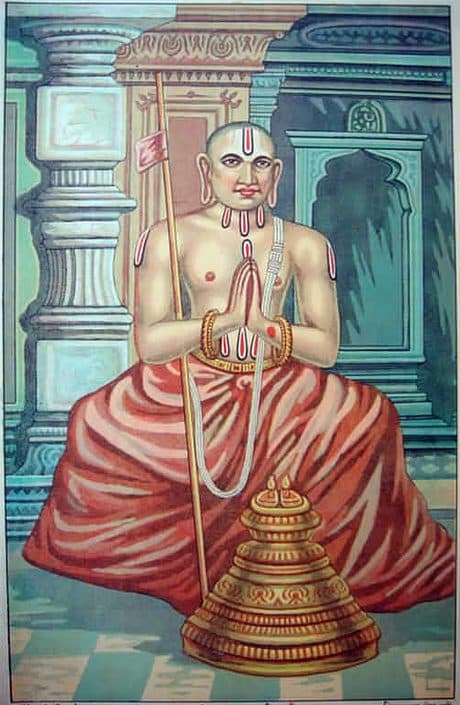
Rāmānuja · Viśiṣṭādvaita
English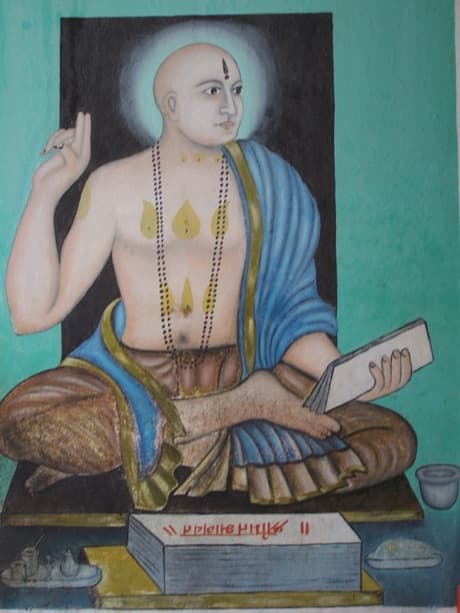
Madhvācārya · Dvaita
Madhva BhāṣyaSanskritEnglish“भूतानि सशरीरान् जीवान् अधिकृत्य यत्, तद् अधिभूतम् । क्षरो भावः विनाशिकार्यपदार्थः । अव्यक्तान्तर्भावे तस्याप्यन्यथाभावाख्यो विनाशोऽस्त्वेव ।” - That nature which elevates or is useful to the creatures, the Jivas along with their bodies, is अधिभूत. The mutable nature is of gross objects, subject to dissolution. It is well known that the nature of dissolution is included in the nature of the unmanifest. “तच्चोक्तम् - अव्यक्तं परमे व्योमन् निष्क्रये सम्प्रलीयते । इति । तस्मादव्यक्तमुत्पन्नं त्रिगुणं द्विजसत्तमः ॥ इति च । विकारोऽव्यक्तजन्म हि । इति च स्कान्दे । पुरि शयनात् पुरुषो जीवः । स च सङ्कर्षणो ब्रह्मा वा । स सर्वदेवानाधिकृत्य पतिः इति अधिदेवतम् । देवाधिकारस्थ इति वा ॥” - The Supreme Unmanifest merges in Space at the end of the creation. From Lord were born the three-fold attributes, O Best of the wise in Wisdom, thus in Mahabharata and Brahma Purana. The modification (of the three-fold attributes), verily, is the cause of creation, thus in Skanda Puraana. Since he dwells in gross forms he is known as person, पुरुषः, verily as Sankarshana or Brahma. Sheltering all divine forces as the lord, he is अधिदेवतम् or since he has supervisory control over other divine forces.
“सर्वयज्ञभोक्तृत्वादेः अधियज्ञः । अन्यो अधियज्ञोऽन्यादिः प्रसिद्धः इति । देह इति विशेषणम् । भोक्तारं यज्ञतपसाम्, त्रैविद्या माम्, येष्वन्यदेवताभक्ताः, एतस्य वा अक्षरस्य प्रशासने गार्गि, ददतो मनुष्याः प्रशंसन्ति यजमानं देवाः - इत्यादेः । कुतो ह्यस्य ध्रुवं स्वर्गः कुतो नैश्श्रायसं परम्? - इत्यादिपरिहाराच्च मोक्षधर्मे । भगवांश्चेत् तदभोक्तृत्वादेरधियज्ञत्वं सिद्धमिति कथं? इत्यस्य परिहारः पृथङ्नोक्तः । सर्वप्राणिदेहस्थरूपेण अधियज्ञः । अत्र इति स्वदेहनिवृत्त्यर्थम् । न हि तत्रेश्वरस्य नियन्तृत्वं पृथगस्ति । नात्रोक्तं ब्रह्म भगवतोऽन्यत् - ते ब्रह्म इत्युक्त्वा साधिभूतादिदेवं मां साधियज्ञं च ये विदुः | इति परामर्शात् | तस्यैव च प्रश्नात् | साधियज्ञम् इति भेदप्रतीतेस्तन्निवृत्त्यर्थं अधियज्ञोऽहम् इत्युक्तम् | माम् इत्यभेदसिद्धेः अक्षरम् इत्येवोक्तम् ||” - Being the enjoyer of all the sacrifices - He is the अधियज्ञः, the supreme sacrifice itself. There are others who are also known as अधियज्ञः like Agni. Therefore in this context the adjective देहे, in the body is used. “I am the enjoyer of the sacrifices and the austerities...”, “The knowers of the three (vedas) know Me...”, “Even the worshippers of other gods...”, “These of the Immutable One is praised, O Gargi”, “The human being praises the one who gives, the presiding host or the gods etc”, “For whom is the permanent heaven? For whom is the meritorious status?”. To clarify such queries, the righteousness of deliverance is spoken in Moksha Dharma. Even when it was established that the Resplendent Lord Himself is the enjoyer of the supreme sacrifice, (Arjuna’s) query regarding who, was replied but not the query how. In the form of the indweller of all the creatures, He becomes the अधियज्ञः. The word अत्र is used as adjective to exclude His body as the one that is being referred to. There (in the body of the Lord) there is nothing separate that could be said to control, because nothing else exists there other than Brahman, the Resplendent Lord. ‘Know That Brahman’ saying thus or having concluded that “I am the one who is the अधियज्ञः (the Supreme Sacrifice) along with the supreme beings and deities” He alone is the one inquired into, (and not the Vedas). To eliminate the doubt regarding His identification, along with sacrifice, he clarifies Himself as “I am the Supreme Sacrifice itself” and maam - Myself also says immutable.
“देहस्थविष्णुरूपाणि अधियज्ञ इतीरितः | कर्मेश्वरस्य मुष्टाख्यं तच्चापीच्छाद्यमुच्यते | अधिभूतं जडं प्रोक्तमध्यात्मं जीव उच्यते | हिरण्यगर्भोऽधिदेवं देवः सङ्कार्यणोऽपि वा | ब्रह्म नारायणो देवः सर्वदेवेश्वरः || इति | आह च कल्पे || यथाप्रतीतं वा सर्वमत्र वै न विरुद्ध्यते | इति च |” - “Sri Vishnu dwelling in the body is known as अधियज्ञ. Creation is the object of the Lord of Action. It is the product of His definite Will. अधिभूतं is the Gross form of the Nature and Jiva is known अध्यात्मं. Hiranygarbha is the अधिदेवं or even four-faced Brahma and Sankarshana (Shesha). Sriman Narayana is the Lord of all the gods”, thus in Gita kalpa. Similar interpretations are here accepted which are not contrary to Pramaana.
“आत्माभिमानाधिकारस्थितमध्यात्ममुच्यते | देहाद् बाह्यं विनाऽतीव बाह्यत्वादधिदेवतम् | देहादिकारगं सर्वं महाभूताधिकारगम् | तत्कारणं तथा कार्यमधिभूतम् तदन्तिकात् || इति स्कान्दे | अध्यात्मं देहपार्यन्तं केवलात्मोपकारकम् | सदेहजीवभूतानि यत् तेषामुपकारकश्रतऽ | अधिभूतं तु मायान्तं देवानामधिदेवतम् || इति महाकीमें च ||” - That which is dwelling (within) exercising authority over the Self is called - अध्यात्मं. That which is external to the body being alien to the body is called - अधिदेवं. All else which are different are the cause of the world creatures. Therefore, that activity is known as अधिभूतं, thus in Skanda Purana. अध्यात्मं is that which, being helpful to the pure Self, reaches till the bodily limit. That which becomes useful to the Jiva along with the body and also other gross elements is the अधिभूत. Beyond the pale of illusion that which becomes helpful to the gods is अधिदेवं” thus in Maha Kurma Puraana.
Madhvācārya · Dvaita
Gītā Tātparya NirṇayaSanskritEnglish“अधियज्ञोऽहमेव इति साधियज्ञम् इत्युक्त्या प्राप्तभेदनिवृत्यर्थम् । तस्यैव सर्वं प्राणिदेहस्थितरूपान्तरापेक्षया सहितत्वं युज्यते ।” — Further when the words accompanied with sacrifice along with the elements which are useful to the creatures - अधिभूतादि, are used for attaining the wisdom of Sri Vishnu alone, why should there be any doubt about others being Brahman? When it is established that the Supreme Immutable is primarily Sri Vishnu alone, the doubt is dispelled. Since both ‘I am the’ अधियज्ञ and ‘saadhiyajnya’ (along with adhiyajnya) have been mentioned, there is a possible doubt of separation of the Lord and the Supreme Sacrifice. For removal of such doubt it is mentioned that He is the indweller of all the creatures, whereby He also becomes the material cause of the Supreme Sacrifice also.
“प्राणिनां देहगो विष्णुराधियज्ञ इतीरतः । स एव व्याप्तरूपेण ब्रह्मेति परिकीर्त्यते ॥ तैस्तैरधिकयाज्यत्वाद् वृहतित्वाच्च हेतुतः । अध्यात्मं तत्स्वभावो यदधिकः परमात्मगः ॥ पुंसां सजडभावानां सर्गः कर्म हरेः स्मृतम् । भूतादिकत्वतो जीवा अधिभूतमितीरिताः ॥ अधिको देवतं विष्णुरेव यस्यातु सा रमा । पुरुषाणाऽधिदैवाख्या त्विति ज्ञेयमिदं नरैः ॥ इति तत्त्वविवेके ॥” — “As the indweller in the bodies of creatures, Sri Vishnu is known as adhiyajnya; He alone in his all-pervading nature is celebrated as Brahman, by His additional nature of sacrifice, of effervescence, in principle the Supreme Lord is known as Supreme Self. The creation of the Gross elements and the Jiva is said to the act of the Sri Hari. Since Jivas are superior among the all, the creatures, they are also known as adhibhoota. The superior divinity is Sri Vishnu, hence Sri Rama establishing herself in His heart, is known as adhidaivata by the human beings” thus in Tattva Viveka text.
“कथरूपोऽधियज्ञः? इति प्रश्नस्तु अहमेव इत्युक्त्यात् तल्लक्षणोक्त्येव परिहृतः ॥” — For the query — “What is the form of adhiyajnya ? I, verily, am the One having shown the marks in this manner, all doubts are removed.”
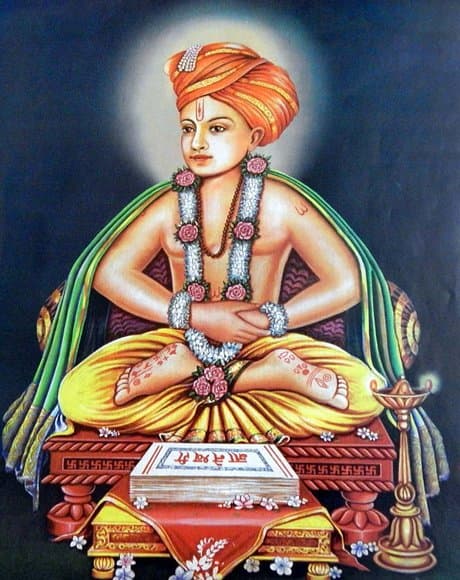
Jñāneśvar · Vārkarī
English4 “The inner essence of Elemental beings is the Mutable Existence, and the inner essence of Divine beings is the Puruṣa (Person). The inner entity of the Sacrifice is no other than Myself residing, here within the body. O best of embodied beings. (30)
I (now) tell you in brief about what is called Adhibhūta (inner essence of created beings). It is like the clouds that become visible and then disappear. It is that whose real being is hollow, the truth of which is that it never comes into being, which has a visible form given by the five gross elements, which only takes the created things as its substratum and appears through their coming together and disappears as soon as this union is dissolved—all this variety experienced as name and form is called Adhibhūta. Adhidaivata (inner luminous soul) is the Purusha, who experiences whatever is created by Prakriti-Māyā (delusion). This Purusha is the very eye of the sentience. He is the chief presiding agent in the sphere of the sense-awareness as also the tree on which, at the time of the setting of bodily life, the birds in the form of unconscious desire, take shelter. He is in fact the Supreme Spirit itself, but he has become somewhat distinct, getting drowsy through the slumber of ego-sense and experiencing, as he does, the joy and grief in the doings of the Māyā, which is only another sleep-condition. What is ordinarily called the life (जीव) is the Adhidaivata in the body formed of the five gross elements. Now, O Son of Pandu, the Supreme Being who longs to rid the distress of bodily existence, know ye, is My own self (known as) the Adhiyajna, the inner entity of the Sacrifice. Both Adhidaivata and Adhibhūta are also myself; yet, does not pure gold form part of the alloy (also) when mixed with such alloy? Pure gold (as such) never gets dim nor becomes part of the alloy: as long as it exists as alloy, it must be called alloy. In that way these Adhibhūta and others, as long as their true being is hidden by the fabric of the Prakriti-Māyā, are to be held as separate from the Pure Sacred Brahman. With the removal of the covering of ignorance (delusion), and the snapping of the hunting knot of distinction, the Adhibhūta and others get melted together, and become one with the Supreme Brahman. And really when were these separate from the Supreme and how? Could they be separate? A crystal slab placed on (a cluster of) hair-combings, looks cracked to the eye, but with the removal of the hair-combings, (there appear no cracks) no one knows where the cracks have gone! No: it (slab) was originally one whole (uncracked), but appeared cracked with the association of hair-combings, but as soon as the latter were removed, the former (slab) became uncracked as before. In the same way with the destruction of the illusory ego-sense on the part of the Adhibhūta and others, they abide as one with the Supreme as they eternally are, the true being unto whom they are united is Myself the Adhiyajna. This is the meaning of the truth. I told you already that all sacrifices arise out of Karman. I have thus revealed to you today, O Son of Pandu, the eternal Home (of Rest) of Souls, the Supreme bliss that crowns the path of attachment-free action. At first, should be obtained in abundance, fuel in the form of asceticism and with that should be kindled the fire of all sense-organs, and there—into should be released the oblations in the form of sense-objects. Then clearing the ground in the form of the posture named Vajrāsana should be constructed on it the basin (कुंडवेदिका) in the form of Mūlabandha (posture in which the upper half of the body remains balanced on the 'Ādhāra- chakra'—the region of pelvis—between the penis and the anus) with the canopy of the body roofing over it. Getting ready in this way, there should be offered in abundance, in the fire basin in the form of restraint of the senses, the balls of oblations in the form of sense objects, accompanied by the recital of Mantras in the form of 'Yoga' —discipline. Then should be propitiated, the smokeless fire in the form of knowledge, through the sacrificial material in the form of the control of mind. When all is sacrificed in the fire of knowledge, that knowledge becomes one with the Supreme—the object of know- ledge (the Brahman), and then only, this Supreme objective existence abides in its own whole of pure essence. And that object of know- ledge is called Adhiyajna (अधियज्ञ).” No sooner Lord Krishna said all this, than did Arjuna, of thoughtful mind, grasp it immediately. At this Lord Krishna said “Well done, Pārtha! You grasp it all quickly.” Arjuna was satisfied in his heart. It is only the mother, who can realise the joy (felt by a mother), at seeing the babe fully fed; or it is only the good preceptor, who realises the pleasure (felt by a preceptor), of seeing the disciple getting fully initiated. There- fore, a wave of pure and pious feelings swept over Lord Krishna, even before Arjuna (had felt so), with such exuberance that he could hardly check it, and then Lord Krishna, with great difficulty, steadied himself anyhow; and picking up the thread of reasoning spoke again soft and plain words which were like the flow of cool nectar or like a fully ripened fragrance. He said, “Oh, hear, ye Dhananjaya—the Prince of hearers: once the delusion thus begins to get burnt, along with it the burning knowledge itself too burns in the fire.
Swami Ramsukhdas · Modern
English'Adhibhūtaṃ kṣaro bhāvaḥ'—The kaleidoscopic and perishable universe, consisting of the five subtle elements—earth, water, fire, air and ether, is called 'Adhibhūta'.
'Puruṣaścādhidaivatam'—The term 'Adhidaiva', has been used for Brahmā. At the beginning of the creation by God's pursuit of mind, there is revelation of Brahmā, the creator of the world, and then he creates the universe.
'Adhiyajñō'hamevātra dehe dehabhṛtāṃ vara'—O best of the embodied, Arjuna! In this body I am Adhiyajña, i.e., I dwell as the inner witness, in this body.† Lord Kṛṣṇa, has declared the
* 'cāturvarṇyam mayā sṛṣṭam' (Gītā 4/13); 'kalpādau viṣṛjāmyaham' (9/7); 'viṣṛjāmi punaḥ punaḥ' (9/8); 'aham bijapradaḥ pitā' (14/4)
† He dwells in the body. It means that the human body has discrimination and is capable of realizing God while other beings' discrimination is not aroused
same again, 'I am specially seated, in the hearts of all' (13/17), 'I am installed, in the hearts of all' (15/15), 'The Lord dwells, in the hearts of all beings' (18/61).
'Ahameva atra* dehe' means, that in other bodies, beings reap the fruit of their previous actions and are not free to perform new actions; while in a human body new actions are performed, due to Lord's inspiration.† The actions which are performed by the Lord's inspiration, being free from attachment and aversion, are pure and they do not lead a man to bondage, while actions performed with attachment and aversion, lead to bondage, because these are not performed due to Lord's inspiration. The reason is, that attachment and aversion, are verily man's enemies (Gītā 3/34). It means, that forbidden actions can never be performed, with God's inspiration. The scriptures and jurisprudence, contain the inspiration (Command) of the Lord. Forbidden actions, are performed under the sway of desire (Gītā 3/37). If a man is not a victim of desire, he will perform actions, which are sanctioned by scriptures and which, have been called, actions ordained by one's own nature or innate actions, in the eighteenth chapter.
By using 'Dehabhṛtām vara', for Arjuna, Lord Kṛṣṇa, wants to convey that the man who knows that the Lord is installed in the body, is the best. Even if he does not know, he should assume that in each atom of physical, subtle and causal bodies, the Lord pervades and the aim of human life is, to realize Him.
and they can't attain God-realization, though the Lord also dwells in their bodies. So a human being by utilizing this life should realize God in this very birth.
* In the second verse the term 'Atra' (Here) has been used for the context and the term 'Asmin' (This) for the body but here the term 'Atra' has been used for the body, because while putting the question, Arjuna has given a hint of the context, therefore there is no need for using the term 'Atra' in the answer.
† The Lord gives inspiration to human beings according to their nature. A man is free to be or not to be under the sway of attachment and aversion. He by depending on the scriptures, saints and the Lord can change his nature.
To attain that aim, he should carry out the command of the Lord, by performing action.
The terms 'Brahma', 'Adhyātma', 'Karma', 'Adhibhūta', 'Adhidaiva' and 'Adhiyajña', can be explained, by giving an illustration of water. When the sky is clear, we feel that there is nothing between us and the sun, yet there are atoms (molecules) of water. Water is transformed into clouds, by evaporation. Clouds turn to drops of rain. Those drops, at a low temperature, are frozen into snow. Similarly, the attributeless and formless Brahma (the Absolute), is like molecules of water, Adhiyajña (All-pervading Lord Viṣṇu) is water, as vapour, Adhidaiva (Brahmā) is, water as cloud, Adhyātma (Infinite embodied soul), is water as drops of rain, Karma (creation of the universe), is the activity of rain and Adhibhūta (perishable world), is water as snow.
It means, that as water takes different forms, the Lord also transforms Himself, into different forms. This knowledge about Him is complete (7/1) and so a man of aspiration realizes that, all this is God (7/19).
Though in essence, there is nothing besides the Lord, yet by discrimination, we see its two separate parts, a body and the soul. A devotee, perceives the Lord, (the Adored), the devotee (soul), and matter (the world). These three parts have been divided into six.
The Lord—Brahma (attributeless), and Adhiyajña (endowed with attributes).
The soul of two kinds—adhyātma (embodied soul which is bound) and Adhidaiva (Kāraka Puruṣa, a liberated soul).
The world has two separate forms—actions (heaps of change) and Adhibhūta (matter).
| 1. Brahma | → | ← | 6. Adhiyajña | | --- | --- | --- | --- | | 2. Adhyātma | → | ← | 5. Adhidaiva | | 3. Karma (Action) | → | ← | 4. Adhibhūta |
An Important Fact
(1) In the Gītā, Lord Kṛṣṇa has declared His existence in different ways, 'All this is permeated by Me' (9/4); 'By whom all this is pervaded' (18/46); 'There is nothing else, besides Me' (7/7); 'All this is God' (7/19); 'I am the enjoyer and the Lord of all sacrifices' (9/24); 'I am the enjoyer of sacrifices and austerities, the Supreme Lord of all the worlds' (5/29). Now let us think how to bring these into harmony.
All the strivers* in the world, want to attain God, by being free from the bondage of the world, because they want to attain a state of eternal peace and bliss. The worldly people, having affinity for the world, always suffer from disquietude and sorrow. The Lord, is the abode of infinite bliss, this is mentioned in scriptures and discourses of the saints who have also realized it.
Now, a question arises, that the world is clearly visible, while a striver has to assume the existence of God. Who is invisible. The striver starts adoration, by believing in the scriptures and the saints, as they declare, 'The Lord pervades the entire universe.' So long as, he attaches primary importance to the world, the Lord gets, a secondary place. But, by and by, when by constant devotion, his belief gets a firm footing, about the existence of God, a striver visualizes, that the world is perishing continuously. Finally, he perceives, that the world merely seems to appear, but has ever been non-existent, and the Lord existed in the past, exists now, and will exist in future, because He is eternal and in the world there is nothing besides Him. When a striver realizes 'All is God', he becomes a 'Siddha' (perfect soul).
* Strivers are those who want to attain the state of perfect peace and infinite bliss, totally free from turmoil and sorrows. But the worldly people are those who hanker after worldly prosperity and pleasures and thus follow the cycle of birth and death.
(2) The Lord, is being and non-being, both (9/19); He is said to be, neither being nor non-being (13/12); He is being and the non-being, and also beyond the two (11/37). How to harmonize the different statements?
In fact, the Lord is very uncommon and unique. He cannot be perceived by senses, mind and intellect, which can merge into Him. The striver himself, can also merge into Him and attain Him, but cannot control Him.
There are two kinds of strivers—those having predominance of discrimination (mind), and those having predominance of faith, (devotion) (heart). But, it does not mean, that the former has no faith at all, and the latter, no discrimination at all. In the former, there is predominance of discrimination, while faith is secondary. In the latter, there is predominance of faith, while discrimination is secondary. In other words, it can be said, that the former first knows and then assumes, while the latter, first assumes and then knows.
A striver, whether he follows the path of discrimination or that of faith, can attain his aim quickly if he has taste for faith on (belief) and capability of his discipline. Because of interest, the mind is naturally motivated; because of faith (belief), intellect is naturally motivated, and because of capability, truth is understood. Strivers having predominance of discrimination, adore the Lord, Who is attributeless and formless, while the latter ones, adore the Lord, endowed with attributes and form. The former, says that He is neither being nor non-being, while the latter believes that He is the being, the non-being and also, beyond the two.
Thus we conclude that the Lord (Pure-consciousness) always remains the same, while the perishable world, changes continuously. When a man attaches importance to the perishable world, by having affinity for it, he has to follow, the cycle of birth and death. But, when he breaks up his affinity for the world, he realizes God. A striver having predominance of
discrimination, breaks off affinity for the world (matter), by applying his discrimination and then Pure-Consciousness remains, while a devotee having faith in Him, by having disinclination for the world, attains Him through devotion. The former, by being established in the Absolute, Who is All-Truth, All-Consciousness and All-Bliss, attains indestructible and infinite bliss, while the latter by becoming one with Him, attains infinite and ever-enhancing bliss of love.
Thus, both the strivers by renouncing their affinity for the world, attain pure-consciousness, and realize that the Lord, is being and non-being both.
**Appendix**—All actions and objects which are kaleidoscopic and perishable are—‘kṣara bhāva’ which is the Lord’s aparā prakṛti.
In knowledge there is union of the self with Brahma and in love there is intimate union (abhinnatā) of a devotee with the indwelling Lord. The Lord has declared here ‘the indwelling’ (adhiyajña) as His own Self. Therefore ‘Brahma’ is adjective and ‘antaryāmi’ (indwelling) is the noun qualified—‘brahmaṇo hi pratiṣṭhāham’ (Gītā 14/27). It means that the creator and controller of all beings Who has been mentioned as ‘Samagra’ (entire) in the Gītā, is the indwelling Lord Himself. The same ‘indwelling’ has been mentioned by the term ‘aham’ in the third and fourth verses of the fourteenth chapter in the expression—‘mama yonirmahadbrahma tasmingarbham dadhāmyaham’ and ‘aham bijapradaḥ pitā’. In the Gītā it is mentioned for Brahma ‘na Sattannāsaducyate’ (13/12) and for entire God it is mentioned—‘sadasaccāham’ (9/19), ‘sadasattatparam yat’ (11/37).
*Link:—In the second verse, Arjuna’s seventh question was, “How is one to realize You at the time of death?” Lord Kṛṣṇa, answers this question, in the next verse.*
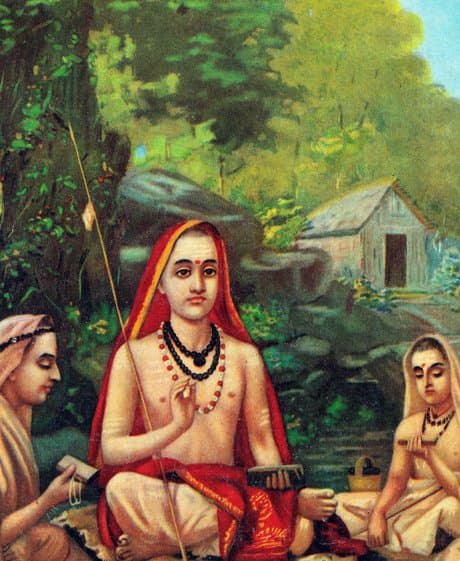
Ādi Śaṅkarācārya · Advaita
Sanskritअधिभूतं प्राणिजातं अधिकृत्य भवतीति । कोऽसौ ? क्षरः क्षरतीति क्षरः विनाशी, भावः यत्किञ्चित् जनिमत् वस्तु इत्यर्थः । पुरुषः पूर्णम् अनेन सर्वमिति, पुरि शयनात् वा, पुरुषः आदित्यान्तर्गतो हिरण्यगर्भः, सर्वप्राणिकरणानां अनुग्राहकः, सः अधिदैवतम् । अधियज्ञः सर्वयज्ञाभिमानिनी विष्ण्वाख्या देवता, ''यज्ञो वै विष्णुः'' (तै. सं. १-७-४) इति श्रुतेः । स हि विष्णुः अहमेव ; अत्र अस्मिन् देहे यो यज्ञः तस्य अहं अधियज्ञः ; यज्ञो हि देहनिर्वर्त्यत्वेन देहसमवायी इति देहाधिकरणो भवति, देहभृतां वर ॥
Ādi Śaṅkarācārya · Advaita
Hindiजो प्राणिमात्रको आश्रित किये होता है उसका नाम अधिभूत है। वह कौन है? क्षर—जो कि क्षय होता है ऐसा विनाशी भाव यानी जो कुछ भी उत्पत्तिशील पदार्थ हैं वे सब-के-सब अधिभूत हैं।
पुरुष अर्थात् जिससे यह सब जगत् परिपूर्ण है अथवा जो शरीररूप पुरमें रहनेवाला होनेसे पुरुष कहलाता है, वह सब प्राणियोंके इन्द्रियादि करणोंका अनुग्राहक सूर्यलोकमें रहनेवाला हिरण्यगर्भ अधिदैवत है।
'यज्ञ ही विष्णु है' इस श्रुतिके अनुसार सब यज्ञोंका अधिष्ठाता जो विष्णुनामक देवता है वह अधियज्ञ है। हे देहधारियोंमें श्रेष्ठ अर्जुन! इस देहमें जो यज्ञ है उसका अधिष्ठाता वह विष्णुरूप 'अधियज्ञ' में ही हूँ। यज्ञ शरीरसे ही सिद्ध होता है, अतः यज्ञका शरीरसे नित्य सम्बन्ध है, इसलिये वह शरीरमें रहनेवाला माना जाता है
Jñāneśvar · Vārkarī
Marathiआतां अधिभूत जें म्हणिपे । तेंहि सांगों संक्षेपें । तरी होय आणि हारपे । अभ्र जैसें ॥ ३०॥
तैसें असतेपण आहाच । नाहीं होइजे हें साच । जयांतें रूपा आणिती पांचपांच । मिळोनियां ॥ ३१ ॥
भूतांतें अधिकरूनि असे । आणि भूतसंयोगें तरि दिसे । जे वियोगवेळे भ्रंशे । नामरूपादिक ॥ ३२ ॥
तयातें अधिभूत म्हणिजे । मग अधिदैवत पुरूष जाणिजे । जेणें प्रकृतीचें भोगीजे । उपार्जिलें ॥ ३३ ॥
जो चेतनेचा चक्षु । जो इंद्रियदेशीचा अध्यक्षु । जो देहास्तमनीं वृक्षु । संकल्पविहंगमाचा ॥ ३४ ॥
जो परमात्माचि परि दुसरा । जो अहंकारनिद्रा निदसुरा । म्हणोनि स्वप्नींचिया बोरबारा । संतोषें शिणे ॥ ३५॥
जीव येणें नांवें । जयातें आळविजे स्वभावे । तें अधिदैवत जाणावें । पंचायतनींचें ॥ ३६॥
आतां इयेचि शरीरग्रामीं । जो शरीरभावातें उपशमी । तो अधियज्ञु एथ गा मी । पांडुकुमरा ॥ ३७॥
येर अधिदैवाधिभूत । तेहि मीचि कीर समस्त । परि पंधरें किडाळा मिळत । तें काय सांके नोहे ॥ ३८॥
तरि ते पंधरेपण न मैळे । आणि किडाळाचियाही अंशा न मिळे । परि जंव असे तयाचेनि मेळें । तव सांकेंचि म्हणिजे ॥ ३९॥
तैसें अधिभूतादि आघवे । हें अविद्येचेनि पालवें । झांकलें तंव मानावें । वेगळें ऐसें ॥ ४०॥
तेचि अविद्येची जवनिका फिटे । आणि भेदभावाची अवघि तुटे । मग म्हणों एक होऊनि जरी आटे । तरी काय दोनी होती ॥ ४१॥
पैं केशांचा गुंडाळा । वरि ठेविली स्फटिकशिळा । ते वरि पाहिजे डोळां । तवं भेदिली गमती ॥ ४२॥
पाठीं केश परौते नेले । आणि भेदलेपण काय नेणों जाहालें । तरि डांक देऊनि सांदिले । शिळेतें काई ॥ ४३॥
ना ते अखंडचि आयती । परि संगें भिन्न गमली होती । ते सारिलिया मागौती । जैसी कां तैसी ।। ४४॥
तेवींचि अहंभावो जाये । तरी ऐक्य तें आधींचि आहे । हेंचि साचें जेथ होये । तो अधियज्ञु मी ॥ ४५॥
पैं गा आम्हीं तुज । सकळ यज्ञ कर्मज । सांगीतलें कां जें काज । मनी धरूनि ॥ ४६॥
तो हा सकळ जीवांचा विसांवा । नैष्कर्म्यसुखाचा ठेवा । परि उघड करूनि पांडव । दाविजत असे ॥ ४७॥
पहिलें वैराग्याइंधनपरिपूर्ती । इंद्रियानळी प्रदीप्तीं । विषयद्रव्याचिया आहुती । देऊनिया ॥ ४८॥
मग वज्रासन तेचि उर्वी । शोधूनि आधारमुद्रा बरवी । वेदिका रचे मांडवी । शरीराच्या ॥ ४९॥
तेथ संयमाग्नीचीं कुंडे । इंद्रियद्रव्याचेनि पवाडें । यजिजती उदंडे । युक्तिघोषे ॥ ५० ॥
मग मनप्राण आणि संयमु । हाचि हवनसंपदेचा संभ्रमु । येणें संतोषविजे निर्धूमु । ज्ञानानळु ॥ ५१॥
ऐसेनि हें सकळ ज्ञानी समर्पे । मग ज्ञान तें ज्ञेयीं हारपे । पाठीं ज्ञेयचि स्वरूपें । निखिल उरे ॥ ५२ ॥
तया नांव गा अधियज्ञु । ऐसें बोलिला जंव सर्वज्ञु । तंव अर्जुन अतिप्राज्ञु । तया पातलें तें ॥ ५३॥
हें जाणोनि म्हणितलें देवें । पार्था परिसतु आहासि बरवें । याकृष्णाचिया बोलासवें । येरू सुखाचा जाहला ॥ ५४॥
देखा बालकाचिया धणी धाइजे । कां शिष्याचेनि जाहलेपणें होइजे । हें सद्गुरूचि एकलेनि जाणिजे । कां प्रसवतिया ॥ ५५॥
म्हणोनि सात्विकां भावांची मांदी । कृष्णाआंगीं अर्जुनाआधीं । न समातसे परी बुद्धी । सांवरूनि देवें ॥ ५६॥
मग पिकलिया सुखाचा परिमळु । कीं निवालिया अमृताचा कल्लोळु । तैसा कोंवळा आणि रसाळु । बोलु बोलिला ॥ ५७॥
म्हणे परिसणेयांच्या राया । आइके बापा धनंजया । ऐसी जळों सरलिया माया । तेथ जाळितें तेंही जळे ॥ ५८॥
Jñāneśvar · Vārkarī
Hindi(8.30) अब जो अधिभूत कहलाता है वह भी संक्षेप से समझाते हैं। अब जैसे उत्पन्न होता और विलीन हो जाता है, (8.31) वैसे ही जिसका अस्तित्व मिथ्या और न होता सत्य है; पंचमहाभूत आपस में मिलकर जिसका रूप बनाते हैं,
(8.32) जो भूतमात्र का आश्रय बन रहता है और भूतों के संयोग से जो दिखाई देता है, परन्तु उनके वियोग के समय जिसके नाम-रूप इत्यादि का नाश हो जाता है,
(8.33) उसे अधिभूत कहते हैं। अब अधिदैवत अर्थात् पुरुष उसे जानो जो प्रकृति की सम्पादित सम्पत्ति का भोग लेता है,
(8.34) जो बुद्धि का द्रष्टा है, जो इन्द्रियरूपी देश का राजा है, जो देह के अस्तमान के समय संकल्परूपी पक्षियों का वृक्ष है,
(8.35) जो परमात्मा ही है परन्तु भिन्न दिखाई देता है, क्योंकि वह अहंकाररूपी निद्रा में सोया हुआ है और स्वप्न की चेष्टा से सन्तोषी वा दुःखी होता है।
(8.36) जिसे स्वभावतः जीव नाम से पुकारते हैं उसे इस पंचायतन का अधिदैवत जानो।
(8.37) हे पाण्डुकुँवर! अब इस शरीररूपी नगर में जो शरीरभाव का लय करता है वह अधियज्ञ मैं हूँ। (8.38) अन्य जो अधिभूत और अधिदेव हैं वे भी सब निश्चय से मैं ही हूँ, परन्तु अच्छा सुवर्ण यदि हीन सुवर्ण से मिलाया जाय तो क्या हलके मोल का नहीं हो जाता?
(8.39) वास्तव में उस सुवर्ण की उत्तमता मलीन नहीं होती और वह हीन सुवर्ण के अंश में ही नहीं मिल जाता, तथापि जब तक उसके सम्बन्ध से रहता है तब तक उसे हलके ही मोल का कहना चाहिए;
(8.40) वैसे ही ये सम्पूर्ण अधिभूत इत्यादि जब तक अविद्या के अंचल से ढँके हुए हैं तब तक इन्हें भिन्न समझना चाहिए।
(8.41) वही जो अविद्या की परदा हट जाय और भेदभाव की सीमा मिट जाय और फिर यदि कहो कि वे एक में मिल गये तो क्या वे यथार्थ में अलग थे?
(8.42) बालों की गुंडेली पर स्फटिक का टुकड़ा रख दो तो बाह्यतः देखने से दरका हुआ काँच दिखाई देता है,
(8.42) परन्तु बाल हटा लिये जायँ तो दरार न मालूम कहाँ चली जाती है। तब क्या दरके हुए दिखाई देनेवाले स्फटिक को कोई रॉज कर जोड़ देता है? (8.44) नहीं, वह तो वैसा ही अखण्ड बना हुआ है, परन्तु केवल संग के कारण भिन्न दिखाई देता था। वही संग हटा लेने से फिर वह ज्यों का त्यों हो जाता है।
(8.45) वैसे ही अहंभाव निकल जाय तो ऐक्य तो पहले से ही बना है। यही ऐक्य जहाँ यथार्थतः होता है वही अधियज्ञ मैं हूँ।
(8.46) अजी, हमने जो कहा था कि सब कर्म से उत्पन्न होते हैं वह जिस लक्ष्य को ध्यान में रखकर कहा था,
(8.47) वही इन सम्पूर्ण जीवों का विश्रामस्थान नैष्कर्म्य-सुख का निधान है। हे पार्थ! वही हम स्पष्ट बताते हैं।
(8.48) पहले वैराग्यरूपी ईंधन डालकर, प्रदीप्त किये हुए इन्द्रियरूपी अग्नि में विषयरूप द्रव्यों की आहुति दे, तब
(8.49) वज्रासनरूपी पृथ्वी का शोधन करके शरीररूपी मण्डप में मूलबन्धमुद्रारूपी उत्तम वेदी बनाई जाती है।
(8.50) उस पर इन्द्रियनिग्रहरूपी अग्नि के कुण्ड में इन्द्रियद्रव्यों के और बड़े-बड़े योगमन्त्रों के द्वारा यजन किया जाता है।
(8.51) फिर मन और प्राण का निग्रह ही जो हवनश्री का समारम्भ है उससे धूम्ररहित ज्ञानाग्नि सन्तुष्ट की जाती है। (8.52) इस प्रकार यह सब सामग्री ज्ञान में अर्पण की जाती है और ज्ञान ज्ञेय में विलीन हो जाता है। पश्चात् जो ज्ञेय ही पूर्ण निजस्वरूप से बच रहता है।
(8.53) उसका नाम अधियज्ञ है। इस प्रकार जब सर्वज्ञ श्रीकृष्ण ने निरूपण किया तब अर्जुन तो महाबुद्धिमान् था, वह बात उसके बुद्धिगत हो गई।
(8.54) यह जानकर देव ने कहा — हे पार्थ! भले सुन रहे हो! कृष्ण के इन वचनों से अर्जुन को बहुत आनन्द हुआ।
(8.55) देखो, बालक की तृप्ति से तृप्त होना अथवा शिष्य की कृतार्थता से कृतार्थ होना एक माता अथवा सद्गुरु ही जानते हैं।
(8.56) अतएव अर्जुन के पहले श्रीकृष्ण के ही हृदय में सात्विक भावों की इतनी भीड़ बच गई थी कि वह उसमें समा न सकी। परन्तु देव ने जानबूझ कर उसका निग्रह किया।
(8.57) और फिर ऐसे कोमल और सरस वचन कहे कि मानों परिपक्व सुख की सुगन्ध हो, अथवा शान्त अमृत की तरंगें हो।
(8.58) उन्होंने कहा — हे श्रोताओं के राजा, हे तात धनंजय! सुनो, इस प्रकार जब माया जल कर रह जाती है तब उसे जलानेवाला ज्ञान भी जल जाता है।
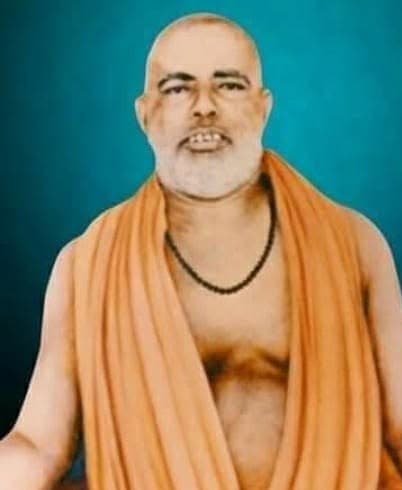
Sri Udiya Baba · Modern
Hindiभावार्थ— हे देहधारियों में श्रेष्ठ अर्जुन! शरीरादि नाशवान् पदार्थ ही अधिभूत हैं, पुरुष ही अधिदैव है और इस देह में 'मैं' ही अधियज्ञ हूँ।
व्याख्या— यहाँ जीव को ही पुरुष कहा है और वही अधिदैव (बड़ा देवता) है। सबका अन्तर्यामी जो मैं हूँ वही अधियज्ञ है। अर्थात् स्थूल शरीर और विराट् तो अधिभूत है, सूक्ष्म शरीर और हिरण्यगर्भ अधिदैव है तथा कारण शरीर और अन्तर्यामी ईश्वर (अव्याकृत) ही अधियज्ञ है। इनसे पृथक् तुरीय (चौथा) शुद्ध ब्रह्म है; जो इन सबका अधिष्ठान है। अर्जुन को देहधारियों में श्रेष्ठ इसलिये कहा, क्योंकि उसने बहुत बड़ा प्रश्न किया है।
प्रश्न— यहाँ तक छः प्रश्नों के उत्तर हो गये अब अगले श्लोक में सातवें प्रश्न का उत्तर देते हैं—
Swami Ramsukhdas · Modern
Hindi'अधिभूतं क्षरो भावः'— पृथ्वी, जल, तेज, वायु और आकाश—इन पंचमहाभूतोंसे बनी प्रतिक्षण परिवर्तनशील और नाशवान् सृष्टिको अधिभूत कहते हैं। 'पुरुषश्चाधिदैवतम्'—यहाँ 'अधिदैवत' (अधिदैव)
१-जैसे कर्म करते-करते थकावट होती है तो कर्तृत्वाभिमान, कर्मफलासक्ति और संचित कर्मोंके ज्यों-के-त्यों रहते हुए ही प्राणियोंको नींद आ जाती है। नींदमें विश्राम पानेसे थकावट दूर होती है और कर्म करनेके लिये शरीर-इन्द्रियाँ-मन-बुद्धिमें ताजगी आती है, सामर्थ्य आती है। इसी रीतिसे प्राणी कर्तृत्वाभिमान, कर्मफलासक्ति और संचित कर्मोंके सहित प्रलयमें सूक्ष्म प्रकृतिमें और महाप्रलयमें कारण प्रकृतिमें लीन हो जाते हैं। उन लीन हुए प्राणियोंके संचित कर्म विश्राम पाकर—परिपक्व होकर अर्थात् प्रारब्धरूप होकर फल देनेके लिये उन्मुख हो जाते हैं। तब भगवान्का संकल्प होता है और उस संकल्पसे प्राणियोंका जन्मारम्भक कर्मोंके साथ विशेषतासे सम्बन्ध जुड़ जानेका नाम ही 'कर्म' है।
२-'चातुर्वर्ण्यं मया सृष्टम्' (गीता ४।१३), 'कल्पादौ विसृजाम्यहम्' (१।७), 'विसृजामि पुनः पुनः' (१।८), 'अहं बीजप्रदः पिता' (१४।४)।
‘अधियज्ञोऽहमेवात्र देहे देहभूतां वर’—हे देहधारियोंमें श्रेष्ठ अर्जुन! इस देहमें अधियज्ञ मैं ही हूँ अर्थात् इस मनुष्यशरीरमें अन्तर्यामीरूपसे मैं ही हूँ। भगवान्ने गीतामें ‘हृदि सर्वस्य विच्छितम्’ (१३।१७), ‘सर्वस्य चाहं हृदि सन्निविष्टः’ (१५।१५), ‘ईश्वरः सर्वभूतानां हृद्देशेऽर्जुन तिष्ठति’ (१८।६१) आदिमें अपनेको अन्तर्यामीरूपसे सबके हृदयमें विराजमान बताया है।
‘अहमेव अत्र देहे’ कहनेका तात्पर्य है कि दूसरी योनियोंमें तो पूर्वकृत कर्मोंका भोग होता है, नये कर्म नहीं बनते, पर इस मनुष्यशरीरमें नये कर्म भी बनते हैं। उन कर्मोंके प्रेरक अन्तर्यामी भगवान् होते हैं। जहाँ मनुष्य राग-द्वेष नहीं करता उसके सब कर्म भगवान्की प्रेरणाके अनुसार शुद्ध होते हैं अर्थात् बन्धनकारक नहीं होते और जहाँ वह राग-द्वेषके कारण भगवान्की प्रेरणाके अनुसार कर्म नहीं करता, उसके कर्म बन्धनकारक होते हैं। कारण कि राग और द्वेष मनुष्यके महान् शत्रु हैं (गीता—तीसरे अध्यायका चौंतीसवाँ श्लोक)। तात्पर्य यह हुआ कि भगवान्की प्रेरणासे कभी निषिद्ध-कर्म होते ही नहीं। श्रुति और स्मृति भगवान्की आज्ञा है—‘श्रुतिस्मृती ममैवाज्ञे’। अतः भगवान् श्रुति और स्मृतिके विरुद्ध प्रेरणा कैसे कर सकते हैं? नहीं कर सकते। निषिद्ध-कर्म तो मनुष्य कामनाके वशीभूत होकर ही करता है (गीता—तीसरे अध्यायका सैंतीसवाँ श्लोक)। अगर मनुष्य कामनाके वशीभूत न हो, तो उसके द्वारा स्वाभाविक ही विहित कर्म होंगे, जिनको अठारहवें अध्यायमें सहज, स्वभावनियत कर्म नामसे कहा गया है।
यहाँ अर्जुनके लिये ‘देहभूतां वर’ कहनेका तात्पर्य है कि देहधारियोंमें वही मनुष्य श्रेष्ठ है, जो ‘इस देहमें परमात्मा हैं’—ऐसा जान लेता है। ऐसा जान न हो, तो भी ऐसा मान ले कि स्थूल, सूक्ष्म और कारण-शरीरके कण-कणमें परमात्मा हैं और उनका अनुभव करना ही मनुष्य-
जन्मका खास ध्येय है। इस ध्येयकी सिद्धिके लिये परमात्माकी आज्ञाके अनुसार ही काम करना है।
तीसरे और चौथे श्लोकमें जो ब्रह्म, अध्यात्म, कर्म, अधिभूत, अधिदैव और अधियज्ञका वर्णन हुआ है, उसे समझनेमात्रके लिये जलका एक दृष्टान्त दिया जाता है। जैसे, जब आकाश स्वच्छ होता है, तब हमारे और सूर्यके मध्यमें कोई पदार्थ न दीखनेपर भी वास्तवमें वहाँ परमाणुरूपसे जल-तत्त्व रहता है। वही जल-तत्त्व भाप बनता है और भापके घनीभूत होनेपर बादल बनता है। बादलमें जो जलकण रहते हैं, उनके मिलनेसे बूँदें बन जाती हैं। उन बूँदोंमें जब ठण्डकके संयोगसे घनता आ जाती है, तब वे ही बूँदें ओले (बर्फ) बन जाती हैं—यह जल-तत्त्वका बहुत स्थूल रूप हुआ। ऐसे ही निर्गुण-निराकार ‘ब्रह्म’ परमाणुरूपसे जल-तत्त्व है, ‘अधियज्ञ’ (व्यापक विष्णु) भापरूपसे जल है; ‘अधिदैव’ (हिरण्यगर्भ ब्रह्म) बादलरूपसे जल है, ‘अध्यात्म’ (अनन्त जीव) बूँदें-रूपसे जल है, ‘कर्म’ (सृष्टि-रचनारूप कर्म) वर्षाकी क्रिया है और ‘अधिभूत’ (भौतिक सृष्टिमात्र) बर्फरूपसे जल है।
इस वर्णनका तात्पर्य यह हुआ कि जैसे एक ही जल परमाणु, भाप, बादल, वर्षाकी क्रिया, बूँदें और ओले-(बर्फ-) के रूपसे भिन्न-भिन्न दीखता है, पर वास्तवमें है एक ही। इसी प्रकार एक ही परमात्मतत्त्व ब्रह्म, अध्यात्म, कर्म, अधिभूत, अधिदैव और अधियज्ञके रूपसे भिन्न-भिन्न प्रतीत होते हुए भी तत्त्वतः एक ही है। इसीको सातवें अध्यायमें ‘समग्रम्’ (७।१) और ‘वासुदेवः सर्वम्’ (७।१९) कहा गया है।
तात्त्विक दृष्टिसे तो सब कुछ वासुदेव ही है (सातवें अध्यायका उन्नीसवाँ श्लोक)। इसमें भी जब विवेक-दृष्टिसे देखते हैं, तब शरीर-शरीरी, प्रकृति-पुरुष—ऐसे दो भेद हो जाते हैं। उपासनाकी दृष्टिसे देखते हैं तो उपास्य (परमात्मा), उपासक (जीव) और त्याज्य
१-यहाँ इस मनुष्य-शरीरमें कहनेका तात्पर्य है कि इसमें भगवान्की प्रेरणाको समझनेकी, स्वीकार करनेकी और उसके अनुसार आचरण करके तत्त्वको प्राप्त करनेकी सामर्थ्य है। अन्य शरीरोंमें अन्तर्यामीरूपसे परमात्माके रहते हुए भी उन प्राणियोंमें उस तत्त्वकी तरफ दृष्टि डालनेकी सामर्थ्य नहीं है और मनुष्यशरीरमें जो विवेक प्राप्त है, वह विवेक उन शरीरोंमें जाग्रत नहीं है। अतः मनुष्यको चाहिये कि वह इस शरीरके रहते-रहते उस तत्त्वको प्राप्त कर ले। इस दुर्लभ अवसरको व्यर्थ न जाने दे।
२-दूसरे श्लोकमें तो ‘अत्र’ पद प्रकरणके लिये आया है, तथा ‘अस्मिन्’ पद देहके लिये आया है, पर यहाँ ‘अत्र’ पद देहके लिये ही आया है। कारण कि अर्जुनने प्रश्नमें ‘अत्र’ पद देकर प्रकरणका संकेत कर दिया है, इसलिये अब उसका उत्तर देते हुए प्रकरणके लिये ‘अत्र’ पद देनेकी जरूरत नहीं है।
३-कर्मोंकी प्रेरणा भगवान् मनुष्यके स्वभावके अनुसार करते हैं। यदि स्वभावमें राग-द्वेष है तो उस राग-द्वेषके वशीभूत होना अथवा न होना मनुष्यके हाथमें है। वह शास्त्र, सन्त तथा भगवान्का आश्रय लेकर अपने स्वभावको बदल सकता है।
(प्रकृतिका कार्य—संसार)—ये तीन भेद हो जाते हैं। इन तीनोंको समझनेके लिये यहाँ इनके छः भेद किये गये हैं—परमात्माके दो भेद—ब्रह्म (निर्गुण) और अधियज्ञ (सगुण)।
जीवके दो भेद—अध्यात्म (सामान्य जीव, जो कि बद्ध हैं) और अधिदैव (कारक पुरुष, जो कि मुक्त हैं)। संसारके दो भेद—कर्म (जो कि परिवर्तनका पुंज है) और अधिभूत (जो कि पदार्थ हैं)।
विशेष बात
(१)
सब संसारमें परमात्मा व्याप्त हैं—‘मया ततमिदं सर्वम्’ (१।४), ‘येन सर्वमिदं ततम्’ (१।८।४६); सब संसार परमात्मामें हैं—‘मयि सर्वमिदं प्रोतम्’ (७।७); सब कुछ परमात्मा ही हैं—‘वासुदेवः सर्वम्’ (७।१९); सब संसार परमात्माका है—‘अहं हि सर्वयज्ञानां भोक्ता च प्रभुरेव च’ (१।२४), ‘भोक्तारं यज्ञतपसां सर्वलोकमहेश्वरम्’ (५।२९)—इस प्रकार गीतामें भगवान्के तरह-तरहके वचन आते हैं। इन सबका सामंजस्य कैसे हो? सबकी संगति कैसे बैठे? इसपर विचार किया जाता है।
संसारमें परमात्माप्राप्तिके लिये, अपने कल्याणके लिये साधना करनेवाले जितने भी साधक* हैं, वे सभी संसारसे छूटना चाहते हैं और परमात्माको प्राप्त करना चाहते हैं। कारण कि संसारके साथ सम्बन्ध रखनेसे सदा रहनेवाली शान्ति और सुख नहीं मिल सकता, प्रत्युत सदा अशान्ति और दुःख ही मिलता रहता है—ऐसा मनुष्योंका प्रत्यक्ष अनुभव है। परमात्मा अनन्त आनन्दके स्वरूप हैं, वहाँ दुःखका लेश भी नहीं है—ऐसा शास्त्रोंका कथन है और सन्तोंका अनुभव है।
अब विचार यह करना है कि साधकको संसार तो
प्रत्यक्षरूपसे दीखता है और परमात्माको वह केवल मानता है; क्योंकि परमात्मा प्रत्यक्ष दीखते नहीं। शास्त्र और सन्त कहते हैं कि ‘संसारमें परमात्मा हैं और परमात्मामें संसार हैं’ इसको मानकर साधक साधन करता है। उस साधनामें जबतक संसारकी मुख्यता रहती है, तबतक परमात्माकी मान्यता गौण रहती है। साधन करते-करते ज्यों-ज्यों परमात्माकी धारणा (मान्यता) मुख्य होती चली जाती है, त्यों-ही-त्यों संसारकी मान्यता गौण होती चली जाती है। परमात्माकी धारणा सर्वथा मुख्य होनेपर साधकको यह स्पष्ट दीखने लग जाता है कि संसार पहले नहीं था और फिर बादमें नहीं रहेगा तथा वर्तमानमें जो ‘है’ रूपसे दीखता है, वह भी प्रतिक्षण अभावमें जा रहा है। जब संसार नहीं था, तब भी परमात्मा थे; जब संसार नहीं रहेगा, तब भी परमात्मा रहेंगे और वर्तमानमें संसारके प्रतिक्षण अभावमें जाते हुए भी परमात्मा ज्यों-के-त्यों विद्यमान हैं। तात्पर्य है कि संसारका सदा अभाव है और परमात्माका सदा भाव है। इस तरह जब संसारकी स्वतन्त्र सत्ताका सर्वथा अभाव हो जाता है, तब सत्यस्वरूपसे ‘सब कुछ परमात्मा ही हैं’—ऐसा वास्तविक अनुभव हो जाता है, जिसके होनेसे साधक ‘सिद्ध’ कहा जाता है। कारण कि ‘संसारमें परमात्मा हैं और परमात्मामें संसार हैं’—ऐसी मान्यता संसारकी सत्ता
* सदा रहनेवाली शान्ति और अनन्त सुख मिले, जिसमें अशान्ति और दुःखका लेश भी न हो—ऐसा विचार करनेवाले ‘साधक’ होते हैं। परन्तु जो संसारमें ही रहना चाहते हैं, संसारसे ही सुख लेना चाहते हैं, सांसारिक संग्रह और भोगोंमें ही लगे रहना चाहते हैं और संसारके सुख-दुःखको भोगते रहते हैं, वे साधक नहीं होते, प्रत्युत ‘संसारी’ होते हैं। वे जन्म-मरणके चक्करमें पड़े रहते हैं।
माननेसे ही होती थी और संसारकी सत्ता साधकके रागके कारण ही दीखती थी। तत्त्वतः सब कुछ परमात्मा ही हैं।
(२)
सत् और असत् सब परमात्मा ही हैं—‘सदसच्चाहम्’ (९। १९), परमात्मा न सत् कहे जा सकते हैं और न असत् कहे जा सकते हैं—‘न सत्त्वासदुच्यते’ (१३। १२); परमात्मा सत् भी हैं; असत् भी हैं और सत्-असत् दोनोंसे परे भी हैं—‘सदसत्तत्परं यत्’ (११। ३७)। इस प्रकार गीतामें भिन्न-भिन्न वचन आते हैं। अब उनकी संगतिके विषयमें विचार किया जाता है।
परमात्मतत्त्व अत्यन्त अलौकिक और विलक्षण है। उस तत्त्वका वर्णन कोई भी नहीं कर सकता। उस तत्त्वको इन्द्रियाँ, मन और बुद्धि नहीं पकड़ सकते अर्थात् वह तत्त्व इन्द्रियाँ, मन और बुद्धिकी परिधिमें नहीं आता। हाँ, इन्द्रियाँ, मन और बुद्धि उसमें विलीन हो सकते हैं। साधक उस तत्त्वमें स्वयं लीन हो सकता है, उसको प्राप्त कर सकता है, पर उस तत्त्वको अपने कब्जेमें, अपने अधिकारमें, अपनी सीमामें नहीं ले सकता।
परमात्मतत्त्वकी प्राप्ति चाहनेवाले साधक दो तरहके होते हैं—एक विवेकप्रधान और एक श्रद्धाप्रधान अर्थात् एक मस्तिष्कप्रधान होता है और एक हृदयप्रधान होता है। विवेकप्रधान साधकके भीतर विवेककी अर्थात् जाननेकी मुख्यता रहती है और श्रद्धाप्रधान साधकके भीतर माननेकी मुख्यता रहती है। इसका तात्पर्य यह नहीं है कि विवेकप्रधान साधकमें श्रद्धा नहीं रहती और श्रद्धाप्रधान साधकमें विवेक नहीं रहता, प्रत्युत यह तात्पर्य है कि विवेकप्रधान साधकमें विवेककी मुख्यता और साथमें श्रद्धा रहती है, तथा श्रद्धाप्रधान साधकमें श्रद्धाकी मुख्यता और साथमें विवेक रहता है। दूसरे शब्दोंमें, जाननेवालोंमें मानना भी रहता है और माननेवालोंमें जानना भी रहता है। जाननेवाले जानकर मान लेते हैं और माननेवाले मानकर जान लेते हैं। अतः किसी भी तरहके साधकमें किंचिन्मात्र भी कमी नहीं रहती।
साधक चाहे विवेकप्रधान हो, चाहे श्रद्धाप्रधान हो, पर साधनमें उसकी अपनी रुचि, श्रद्धा, विश्वास और योग्यताकी प्रधानता रहती है। रुचि, श्रद्धा, विश्वास और योग्यता एक साधनमें होनेसे साधक उस तत्त्वको जल्दी
समझता है। परन्तु रुचि और श्रद्धा-विश्वास होनेपर भी वैसी योग्यता न हो अथवा योग्यता होनेपर भी वैसी रुचि और श्रद्धा-विश्वास न हो, तो साधकको उस साधनमें कठिनता पड़ती है। रुचि होनेसे मन स्वाभाविक लग जाता है, श्रद्धा-विश्वास होनेसे बुद्धि स्वाभाविक लग जाती है और योग्यता होनेसे बात ठीक समझमें आ जाती है।
विवेकप्रधान साधक निर्गुण-निराकारको पसंद करता है अर्थात् उसकी रुचि निर्गुण-निराकारमें होती है। श्रद्धाप्रधान साधक सगुण-साकारको पसंद करता है अर्थात् उसकी रुचि सगुण-साकारमें होती है। जो निर्गुण-निराकारको पसंद करता है, वह यह कहता है कि परमात्मतत्त्व न सत् कहा जा सकता है और न असत् कहा जा सकता है। जो सगुण-साकारको पसंद करता है वह कहता है कि परमात्मा सत् भी हैं, असत् भी हैं और सत्-असत् से परे भी हैं।
तात्पर्य यह हुआ कि चिन्मय-तत्त्व तो हरदम ज्यों-का-त्यों ही रहता है और जड़, असत् कहलानेवाला संसार निरन्तर बदलता रहता है। जब यह चेतन जीव बदलते हुए संसारको महत्त्व देता है, उसके साथ सम्बन्ध जोड़ लेता है, तब यह जन्म-मरणके चक्करमें घूमता रहता है। परन्तु जब यह जड़तासे सर्वथा सम्बन्ध-विच्छेद कर लेता है, तब इसको स्वतःसिद्ध चिन्मय-तत्त्वका अनुभव हो जाता है। विवेकप्रधान साधक विवेक-विचारके द्वारा जड़ताका त्याग करता है। जड़ताका त्याग होनेपर चिन्मय-तत्त्व अवशेष रहता है अर्थात् नित्यप्राप्त तत्त्वका अनुभव हो जाता है। श्रद्धाप्रधान साधक केवल भगवान्के ही सम्मुख हो जाता है, जिससे वह जड़तासे विमुख होकर भगवान्को प्रेमपूर्वक प्राप्त कर लेता है। विवेकप्रधान साधक तो सम, शान्त, सत्-घन, चित्-घन, आनन्द-घन तत्त्वमें अटल स्थित होकर अखण्ड आनन्दको प्राप्त होता है; पर श्रद्धाप्रधान साधक भगवान्के साथ अभिन्न होकर प्रेमके अनन्त, प्रतिक्षण वर्धमान आनन्दको प्राप्त कर लेता है।
इस प्रकार दोनों ही साधकोंको जड़तासे सर्वथा सम्बन्ध-विच्छेदपूर्वक चिन्मय-तत्त्वकी प्राप्ति हो जाती है और ‘सत्-असत् अर्थात् सब कुछ परमात्मा ही हैं’—ऐसा अनुभव हो जाता है।
**परिशिष्ट भाव**—परिवर्तनशील एवं नाशवान् क्रिया और पदार्थमात्र ‘क्षरभाव’ हैं, जो भगवान्की अपरा प्रकृति है। ज्ञानमें ब्रह्मके साथ एकता होती है और प्रेममें अन्तर्यामी भगवान्के साथ अभिन्नता होती है। भगवान्ने यहाँ अन्तर्यामी-(अधियज्ञ-) को अपना स्वरूप बताया है। अतः ब्रह्म तो विशेषण है और अन्तर्यामी विशेष्य है—‘ब्रह्मणो
हि प्रतिष्ठाहम्' (गीता १४। २७)। तात्पर्य है कि जिसको गीताने 'समग्र' कहा है, वह सबका रचयिता और नियन्ता अन्तर्यामी में ही हूँ। इसी अन्तर्यामीको चौदहवें अध्यायके तीसरे-चौथे श्लोकोंमें 'मम योनिर्महद्ब्रह्म तस्मिन्नाभं दधाम्यहम्' और 'अहं बीजप्रदः पिता' पदोंमें 'अहम्' शब्दसे कहा गया है। गीतामें ब्रह्मके लिये कहा है—'न सत्तन्नासदुच्यते' (१३। १२) और समग्र भगवान्के लिये कहा है—'सदसच्चाहम्' (९। १९), 'सदसत्तत्परं यत्' (११। ३७)।
सम्बन्ध—दूसरे श्लोकमें अर्जुनका सातवाँ प्रश्न था कि अन्तकालमें आप कैसे जाननेमें आते हैं? इसका उत्तर भगवान् आगेके श्लोकमें देते हैं।
By the word Adhibhūta or those things pertaining to physical objects sought after by aiśvaryarthis or fortune seekers are those things of a perishable nature
including the supra subtle principles of sound, sight, smell etc. which are latent in their elements of ether, fire, earth etc. and develop therefrom into their support system being the senses.
All these things must certainly be comprehended and contemplated by them.
The word Adhidaivata refers to the puruṣa or the ultimate, original supreme being whose status is superior and elevated above the 330 million demigods and all other celestials and lesser divinities and gods as well.
This is the Supreme Lord Krishna who is the possessor and enjoyer of all the supra-mundane enjoyments of rare and equisite delights of His transcendental senses of sound and sight etc. as the ultimate recipient of all yajña or worship and propitiation, even more then that experienced in the heavenly planets by Indra and Brahma.
The aiśvaryarthis or fortune seekers must meditate on the puruṣa as the Supreme Being and ultimate enjoyer of all the subtle transcendental delights and this is what is called knowing the Adhidaivata.
The Adhiyajña denotes the Supreme Lord Krishna, Himself.
It is He as the indwelling monitor in all the demigods and other gods and all sentient beings and whose total aggregate of ātmas or eternal souls constitute His transcendental, spiritual body and as such He receives first worship and propitiation from all yajñas.
Thus as the Adhiyajña he is the indwelling monitor established in the heart of all beings and He is the one whom the three classes of devotees have to realise and meditate upon as a mahā yajña or great offering in all their nitya and naimittika or eternal and occasional acts of worship.