

Bhagavad Gītā · Chapter 7 · Jñāna Vijñāna Yoga
रसोऽहमप्सु कौन्तेय प्रभास्मि शशिसूर्ययोः
प्रणवः सर्ववेदेषु शब्दः खे पौरुषं नृषु
raso'hamapsu kaunteya prabhāsmi śaśisūryayoḥ|
praṇavaḥ sarvavedeṣu śabdaḥ khe pauruṣaṃ nṛṣu||
Word meanings
कौन्तेय = O son of Kuntī
अप्सु = in the waters
रसः = the taste
अहम् = I am
शशिसूर्ययोः = in the moon and sun
प्रभा = the radiance
अस्मि = I am
सर्ववेदेषु = in all the Vedas
प्रणवः = the syllable Om
खे = in ether
शब्दः = the sound
नृषु = in men
पौरुषम् = manliness
Translation
Arjuna, I am the sapidity in water and the light of the moon and the sun; I am the sacred syllable OM in all the Vedas, the sound in ether; and the manlinss in men.
Commentary
The commentators seated around this verse

Rāmānuja · Viśiṣṭādvaita
EnglishOn verses 7.8–12
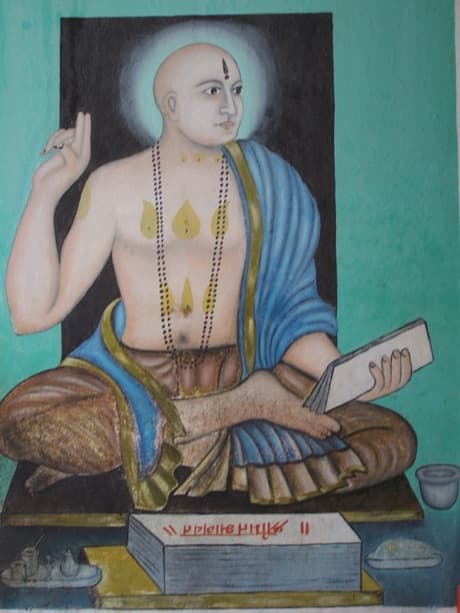
Madhvācārya · Dvaita
Madhva BhāṣyaSanskritEnglishOn verses 7.8–7.11
“रसोऽहं इत्यादि विज्ञानम् | अवादयोऽपि तत एव | तथाऽपि रसादिस्वभावानां रसाणां च स्वभावत्वे रसत्वे न विशेषतोऽपि स एव नियामकः | नत्ववादिनियमानुवद्धो रसादिस्तत्पारत्वादिश्च इति दर्शयति अप्सु रस इत्यादि शब्दैः | भोगश्च विशेषतो रसादेः इति च | उपासनार्थं च |” - I am the Essence, thus the supra-sensory Wisdom (विज्ञान). What is narrated later is the greatness of the Lord. Even then, the inherent nature like essence and also the substance being natural attributes or substance is mentioned as special supervision of the Lord. The fact that attributes like substance do not come on their own in the water therefore, substance is shown by using special words like essence in the water. More than the water it is the essence in the water that is represented by the Lord. The same is the case of उपासना, spiritual practice.
“रसादिनां रसादि त्वे स्वभावत्वे तथैव च | सारत्वे सर्वधर्मेषु विशेषणापि कारणम् | सारभोक्ता च सर्वत्र यतोऽतो जगदीश्वरः | रसादिमानिनां देहे स सर्वत्र व्यवस्थितः | अवादयः पार्पदा एव ध्येयः स ज्ञानिना हरिः | रसादिसम्पत्त्याऽन्येषां वासुदेवो जगत्पतिः || इति |” - The essence in flavours and their inherent attribute are due to special reason of its Dharma. The enjoyer of the essence is always the Lord of the Universe, dwelling in all bodies as essence. The presiding deities sheltered in water etc. are but the reflection of the Lord. Sri Vasudeva who is Lord of the worlds, therefore, should be sought by those who seek the essence of the things. Inherent nature, the Jiva are an in this manner (due to the grace of the Lord), thus in Gita-Kalpa.
“स्वभावो जीव एव च | सर्वस्वभावो नियतस्तेनैव किमतः परम् | न तदस्ति विना यत् स्यान्मया भूतं चराचरम् | इति च | धर्माविरुद्धः कामरागविवर्जितम् इत्याद्युपासनार्थम् ||” - All inherent natural tendencies are as ordained by the Lord. There is nothing whatsoever without My essence in animate or the inanimate creatures. Also thus has been spoken. For the sake of spiritual practice desires which are not contrary to Dharma, renunciation of desires and attachments have been recommended.
“धर्माविरुद्धाकामेऽसावुपास्यः काममिच्छता | विहीने कामरागादेर्वले च बलमिच्छताम् | ध्यातस्तत्र त्वनिच्छदिभजानमेव ददाति सः || उक्तं च गीताकल्पे ||” - The desires, not contrary to Dharma, should be sought by the aspirant Strength, without the powerful influence of desires and without attachment, should be sought Then by His Win alone the awareness win be attained, thus in Gita-Kalpa.
“पुण्योगन्धः इति भोगापेक्षया च | तथापि श्रुतिः - पुण्यमेवामुं गच्छति, ऋतं पिवन्तो मुकुतस्य लोके इत्यादिका | ऋतं च पुण्यं - ऋतं सत्यं तथा धर्मः मुकुतं चाभिधीयते इत्यभिधानात् | ऋतं तु मानसो धनः सत्यं स्यात् सम्प्रयोगगः || इति च | न च अनन्त्यो अभिचाकशीति, अन्यो निरन्तोऽपि वलेन भूयान् | इत्यादि विरोध स्थूलाननोक्ते ||” - The pure fragrance, thus to show expectation of enjoyment. Thus in scriptures, the merits alone reach Him. In the World of meritorious, ऋत (cosmic law) alone is enjoyed. ऋत is that which is meritorious. ऋत, सत्य and धर्म are the auspicious actions that are followed due to such statements. ऋत is attribute of the Mind; सत्य Truth is what one puts in practice.
“अह च सूक्ष्माशनं - प्रविविक्ताहारतर इवैष भवत्यस्मच्छारीरादात्मनः | इति | न चात्र जीव उच्यते | शारीरात्मनः | इति भेदाभिनानात् | स्वप्नदिश्च शरीर एव | शारीरस्तु त्रिधा भिन्नो जाग्रदादिष्ववस्थिते इति वचनाद् गारुडे ||” - Even though not enjoying, He still illuminates and the other one even though devoid of food, is still powerful, in such statements there is no contradiction. In this verse the jiva is not mentioned because of reference earlier to the आत्मा being endowed with a body as in a dream state. In this verse the jiva is not mentioned because of reference earlier to the आत्मा being endowed with a body as in a dream state, thus in Garuda Purana.
“अस्मात् - अस्मात् इतिश्वरनिवृत्त्यर्थः | शारीरी तावुभौ ज्ञेयौ जीवेश्चेश्वरसंज्ञितः | अनादि वन्धनस्त्वेको नित्यमुक्तस्तथाऽपरः | इति वचनाद्वैये ||” - By the word अस्मात् - the Lord alone is referred. The body is assumed both for the Jiva as well as for the Lord. One is with the eternal bondage; while the Supreme one is ever liberated, thus in Narada Puraana.
“भेदाश्रुतेच्छ | सति गतन्तरे पुरुषभेदं एव कल्प्यो नत्ववस्थाभेदः | आह च - प्रविविक्तभृग् यतो ह्यस्माच्छारीरात् पुरुषोत्तमः | अतोऽभोक्ता च भोक्ता चस्थूलाभोगत् स एव तु || इति गीताकल्पे ||” - The distinction is clarified in the Scriptures. The distinction in persons also should be imagined and not from their forms. The enjoyment by Purushottama is distinctive than that of the Jiva. He is the enjoyer as well as the non-enjoyer. But He is not the enjoyer of the gross forms”, thus in Gita-Kalpa.
Madhvācārya · Dvaita
Gītā Tātparya NirṇayaSanskritEnglishOn verses 7.8–7.11
“सोप्यु स्थित्वा रमयति रसनामा ततः स्मृतः | सूर्यचन्द्रादिदिषु स्थित्वा प्रभानामा प्रभासनात् || वेदस्थः प्रणवाख्योऽसावात्मान यत् प्रणोत्यतः | स्वे स्थितः शब्दनामाऽसौ सच्छब्दयति केशवः ||” - Dwelling in water as the essence, he (the Lord) is known as the essence thereof. Dwelling in Sun and Moon as light, He is known as the Illumination. Dwelling in Vedas as the very Self, He is praised as pranava. Dwelling in Space as the sound, Keshava is known as the Word.
“पुण्यापुण्यं गन्धयति स्वयं पुण्यो धरास्थितः | तेजयत्यग्निसंस्थं सन्मृतस्थो जीवनप्रदः | तपस्विस्थस्तपयति व्यञ्जनाद् बीजसञ्जितः | बोधनाद् बुद्धिनामाऽसौ बुद्धिमस्तु व्यवथितः ||” - Abiding in the earth, only as meritorious, He causes both the merits as well as the demerits. Abiding in fire, He is known as Energy. Abiding in the human beings, He is known as giver of life. Abiding in austerity, He is known as intense dedication. By manifesting, He is the Seed. Abiding in wise men, He is Wisdom.
“नित्यपूर्णवलत्वात्तु वलं कामविवर्जितम् | अगगजवलश्चैव स्थानेभ्योऽन्येष्वायोजनात् || एतादृशवलात्माऽसौ बलिनां वलदः स्वयम् | वेति पूर्णत्ववाची स्यात् तद्वतेवलमुच्यते || प्रायो हि कामिता अर्थो धर्मं हन्युर्हरिः पुनः | न धर्महानिकृत् किन्तु कामितो धर्मवृद्धिकृत् || धर्मविरुद्धकामोऽतो विष्णुभूतेषु संस्थितः | एवं स सर्वतश्चान्यः स्वतंत्रश्चैव सर्वगः || व्यवस्थैव सर्वेषां सर्वदा सर्वदः प्रभुः ||” - Being devoid of desire and attachments He is eternally endowed with strength. Since He does not use it in wrong places, His strength is non-passionate. Since He grants strength similar to His, He is strength of the powerful ones. Since व symbolizes strength and ल bliss, He is वल, strength itself. Primarily, sensual desires cause decrease in righteousness but do not cause any harm if attuned to Dharma. Sri Vishnu abides in all desires which are not contrary to Dharma. Therefore, Sri Vishnu even when abiding in everything, yet remains distinct from them all and as the Lord of all of them.

Jñāneśvar · Vārkarī
EnglishOn verses 7.8–7.9
8 "I am the sapidity in the Waters, O Son of Kunti; I am the lustre in the Moon and the Sun; amongst all the Vedas (I am) the (syllable) 'Om'; (I am) the sound in Ether and the manhood amongst men. 9 "Pure smell in the Earth as well as brilliance in Fire I am; life in all beings and asceticism amongst the ascetics I am. (33)
And therefore take it, that I am the very essence of sapidity in Water, and of the touch-sense of the Wind, as also the lustre in the Sun and the Moon; I am similarly the pure Smell in the Earth, the Sound in the Ether; I am also the Pranava (the monsyllable 'Om') amongst the Vedas; I am the very essence of manhood in men, and I tell you the truth that I am that very strength, which being the core of individual sense is called *Pourusha* (manhood) (पौरुष). I am that brilliance—that pure form, that is left over, after removing its outer cover called Fire. In this universe, diverse (living) beings come into being in diverse orders, and live their life in their respective, particular ways; some live on wind, some on hay, some live on food, while several others are sustained on water. In this way, the different means of living of all beings appear as being natural and in all these living creatures I dwell as the abiding Self identical in unity of being.
Swami Ramsukhdas · Modern
English[Generally people attach a lot of importance to money. So, greedy people have a natural inclination to earn money and accumulate it. Similarly, by accepting the fact that the Lord is the source of the entire creation (7/6), there is no existence of the creation besides the Lord. By accepting this fact, a striver has his natural inclination, towards Him without making any effort. The same fact, has been pointed out by the Lord, in the eighth verse of the tenth chapter, when He declares, "I am the source of the creation, all things evolve from Me. Knowing this, the wise adore Me, with all their heart." In the forty-sixth verse of the eighteenth chapter, He declares, "He from whom the evolution of all beings is, by whom all this is pervaded, worshipping Him through the performance of his own duty, man attains perfection." Here the same principle is explained further.]
'Raso'hamapsu kaunteya'—'O son of Kuntī! I am sapidity in water'. Water emanates, from a subtle form of sapidity, (rasa tanmātrā)* it remains in it and it merges in it. If the taste is removed from water, water cannot remain water.
'Prabhāṣmi śāśisūryayoḥ'—"I am radiance† (light), in the
*The causes of the five gross elements—earth, water, fire, air and ether are respectively smell, taste, form, touch and sound which are called five Tanmātrā (seeds). These five seeds can't be known by senses and mind but they are only assumed by hearing the scriptures. The evolutes of these five seeds are also smell, taste, form, touch and sound which can be known by senses and mind.
†In subtle element fire there are two powers—radiance (brilliance) and combustion (burning). Radiance is called 'Prabhā' and combustion is known as 'Teja'. The power of radiance can function without the power of combustion as in gems and the moon, but the power of combustion can't function without radiance. Here in this verse there is predominance of radiance while in the ninth verse of
moon and the sun.' Without radiance the moon and the sun, will lose their essence.
'Praṇavaḥ sarvavedeṣu'—'I am the syllable Om, in all the Vedas.' First of all, there was revelation of the syllable Om. It was from this sacred syllable Om, that Gāyatrī was revealed and it was from Gāyatrī, that the Vedas were revealed. Therefore, the gist of the Vedas, is the sacred syllable Om.
'Śabdaḥ khe'—Ether, emanates from the subtle element, sound, it remains in it and merges in it. Therefore, sound manifests itself as ether. Without sound, ether is meaningless.
'Pauruṣaṃ nṛṣu'—'I am manliness in men.' It is not enough for a man to possess the human body, in order to gain worldly riches, knowledge, name and fame etc., but all these are perishable. The real man, is he who has attained God-realization, the ultimate aim of human life. God existed in the past, exists now and will also exist, in future, because He is eternal. Therefore, a man's 'Puruṣārtha' exertion consists in making efforts with promptness and zeal, to realize God. Without attaining Him, human life is, in vain.
Appendix—In the sixth and seventh verses the Lord has mentioned that He is the cause of the entire creation. Therefore now the Lord describes His divine glories in the form of 'cause' from the eighth verse to the twelfth verse. Though the effect has special characteristic which is not found in the cause, yet the cause has its independent existence viz., without cause the effect has no independent existence. As earth (clay) is the cause and jar is its effect. Water can be filled in a jar but this characteristic is not found in the earth. But without earth (clay) a jar has no independent existence. It means that the cause is changed
this chapter there is predominance of the power of combustion. So there the term 'Teja' has been used.
The sun and fire possess both of these powers while in the moon there is only radiance, and instead of combustion there is mildness.
into effect. In making a jar, the doer, the material (cause) and the effect—the three are not one viz., the cause (clay) and the effect (jar) are of one class but the doer (potter) has his different (independent) existence. But in creating the universe the doer, the material and the effect—these three are only God. Therefore sapidity is also God and water is also God. Radiance is also God and the moon and the sun are also God. 'Om' is also God and the Veda is also God. Sound is also God and ether is also God. Manliness is also God and man is also God.
[The earth is changed into the form of a jar but God does not change into the form of the world. The reason is that the thing which is changed is mutable while God is immutable. As in the dark a string (rope) appears in the form of a snake or the snake appears in the form of a coil, similarly God appears in the form of the world. It means that in God there is no distinction of effect and cause because there is nothing besides Him. There is a distinction between the cause and the effect from the man's point of view. Therefore in order to explain it to men, by assuming the existence of some other thing or the other, God is described, discussed, considered and reflected upon and there are questions and answers etc., on Him—'nodyam vā parihāro vā kriyatām dvaitabhāṣyā.]
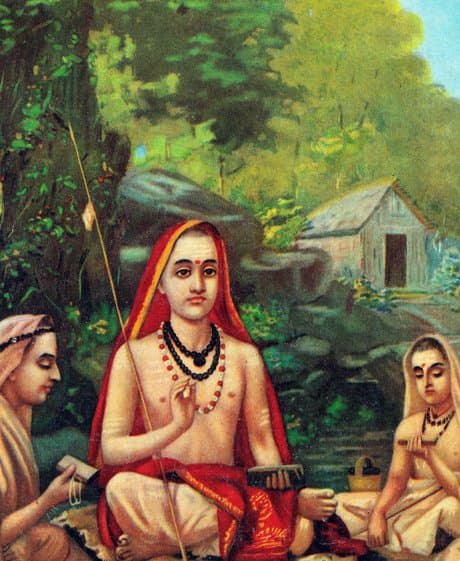
Ādi Śaṅkarācārya · Advaita
Sanskritरसः अहम्, अपां यः सारः स रसः, तस्मिन् रसभूते मयि आपः प्रोता इत्यर्थः । एवं सर्वत्र । यथा अहं अप्सु रसः, एवं प्रभा अस्मि शशिसूर्ययोः । प्रणवः ओङ्कारः सर्ववेदेषु, तस्मिन् प्रणवभूते मयि सर्वे वेदाः प्रोताः । तथा खे आकाशे शब्दः सारभूतः, तस्मिन् मयि खं प्रोतम् । तथा पौरुषं पुरुषस्य भावः पौरुषं यतः पुम्बुद्धिः नृषु, तस्मिन् मयि पुरुषाः प्रोताः ॥
Ādi Śaṅkarācārya · Advaita
Hindiयह समस्त जगत् किस-किस धर्मसे युक्त आपमें पिरोया हुआ है ? इसपर कहते हैं—
जलमें मैं रस हूँ अर्थात् जलका जो सार है उसका नाम रस है उस रसरूप मुझ परमात्मामें समस्त जल पिरोया हुआ है। ऐसे ही और सबमें भी समझना चाहिये।
जैसे जलमें मैं रस हूँ, वैसे ही चन्द्रमा और सूर्यमें मैं प्रकाश हूँ। समस्त वेदोंमें मैं ओंकार हूँ अर्थात् उस ओंकाररूप मुझ परमात्मामें सब वेद पिरोये हुए हैं।
आकाशमें उसका सारभूत शब्द हूँ, अर्थात् उस शब्दरूप मुझ ईश्वरमें आकाश पिरोया हुआ है।
तथा पुरुषोंमें मैं पौरुष हूँ अर्थात् पुरुषोंमें जो पुरुषत्व है, जिससे उनको पुरुष समझा जाता है वह मैं हूँ, उस पौरुषरूप मुझ ईश्वरमें पुरुष पिरोये हुए हैं
Jñāneśvar · Vārkarī
HindiOn verses 7.8–7.9
(7.33) अतएव जल में जो रस है, अथवा पवन में जो स्पर्श है, चन्द्र और सूर्य में जो प्रकाश है, वह मैं ही हूँ।
(7.34) वैसे ही मैं पृथ्वी में स्वभावतः शुद्ध सुगंध हूँ, गगन में शब्द हूँ और वेदों में ओंकार हूँ।
(7.35) नर में जो नरत्व है, अहंकारियों में जो बल है वह पराक्रम मैं हूँ। यह मैं अपना सत्य स्वरूप बताता हूँ।
(7.36) तेज का अग्नि नामक जो ऊपरी आवरण है उसे अलग करते ही जो निजस्वरूप रह जाता है वह मैं हूँ।
(7.37) नानाविधि योनियों में जन्म लेकर प्राणी जो त्रिभुवन में अपनी अपनी उपजीविका के लिए व्यापार करते हैं, (7.38) कोई पवन ही पीते हैं, कोई तृण खाकर जीते हैं, कोई अन्न के आधार पर रहते हैं; कोई जल के आश्रय से रहते हैं,
(7.39) ऐसे प्रत्येक प्राणी का प्रकृति के वश से, जो अलग-अलग जीवन दिखाई देता है, वह सर्वत्र अभिन्नतः एक में ही हूँ।

Sri Udiya Baba · Modern
Hindiसंगति— यहाँ से बारहवें श्लोक तक विराट् का वर्णन है। अगले श्लोक में विभूति रूप से अपनी उपासना बतलाते हैं और यह प्रतिपादन करते हैं कि सब कुछ मैं ही हूँ।
भावार्थ— हे कुन्तिनन्दन! जल में मैं रस हूँ, चन्द्रमा और सूर्य में प्रकाश हूँ, सब वेदों में प्रणव हूँ और पुरुषों में पुरुषार्थ हूँ।
व्याख्या— रस से जल ओत-प्रोत है, अतः वह रस से भिन्न नहीं। प्रकाश से सूर्य और चन्द्रमा ओत-प्रोत हैं, अतः वे प्रकाश से भिन्न नहीं हैं। इसी प्रकार प्रणव से वेद, शब्द से आकाश और पौरुष से पुरुष भिन्न नहीं हैं। जैसे कि मिट्टी से घट और दाहिका शक्ति से अग्नि भिन्न नहीं हैं उसी प्रकार मुझसे चराचर जगत् भिन्न नहीं है। अर्थात् इन सबका निमित्त और उपादान कारण मैं ही हूँ।
Swami Ramsukhdas · Modern
Hindi[जैसे साधारण दृष्टिसे लोगोंने रुपयोंको ही सर्वश्रेष्ठ मान रखा है तो रुपये पैदा करने और उनका संग्रह करनेमें लोभी आदमीकी स्वाभाविक रुचि हो जाती है। ऐसे ही देखने, सुनने, मानने और समझनेमें जो कुछ जगत् आता है, उसका कारण भगवान् हैं (सातवें अध्यायका छठा श्लोक); भगवान्के सिवाय उसकी स्वतन्त्र सत्ता है ही नहीं—ऐसा माननेसे भगवान्में स्वाभाविक रुचि हो जाती है। फिर स्वाभाविक ही उनका भजन होता है। यही बात
दसवें अध्यायके आठवें श्लोकमें कही है कि 'मैं सम्पूर्ण संसारका कारण हूँ, मेरेसे ही संसारकी उत्पत्ति होती है'—ऐसा समझकर बुद्धिमान् मनुष्य मेरा भजन करते हैं। ऐसे ही अठारहवें अध्यायके छियालीसवें श्लोकमें कहा है कि 'जिस परमात्मासे सम्पूर्ण जगत्की प्रवृत्ति होती है और जिससे सारा संसार व्याप्त है, उस परमात्माका अपने कर्मोंके द्वारा पूजन करके मनुष्य सिद्धिको प्राप्त कर लेता है।' इसी सिद्धान्तको बतानेके लिये यह प्रकरण आया है।]
‘रसोऽहमप्सु कौन्तेय’—हे कुन्तीनन्दन! जलोंमें मैं ‘रस’ हूँ। जल रस-तन्मात्रासे पैदा होता है; रस-तन्मात्रामें रहता है और रस-तन्मात्रामें ही लीन होता है। जलमेंसे अगर ‘रस’ निकाल दिया जाय तो जलतत्त्व कुछ नहीं रहेगा। अतः रस ही जलरूपसे है। वह रस में हूँ।
‘प्रभास्मि शशिसूर्ययोः’—चन्द्रमा और सूर्यमें प्रकाश करनेकी जो एक विलक्षण शक्ति ‘प्रभा’ है, वह मेरा स्वरूप है। प्रभा रूप-तन्मात्रासे उत्पन्न होती है, रूप-तन्मात्रामें रहती है और अन्तमें रूप-तन्मात्रामें ही लीन हो जाती है। अगर चन्द्रमा और सूर्यमेंसे प्रभा निकाल दी जाय तो चन्द्रमा और सूर्य निस्तत्त्व हो जायेंगे। तात्पर्य है कि केवल प्रभा ही चन्द्र और सूर्यरूपसे प्रकट हो रही है। भगवान् कहते हैं कि वह प्रभा भी मैं ही हूँ।
‘प्रणवः सर्ववेदेषु’—सम्पूर्ण वेदोंमें प्रणव (ओंकार) मेरा स्वरूप है। कारण कि सबसे पहले प्रणव प्रकट हुआ। प्रणवसे त्रिपदा गायत्री और त्रिपदा गायत्रीसे वेदत्रयी प्रकट हुई है। इसलिये वेदोंमें सार ‘प्रणव’ ही रहा। अगर वेदोंमेंसे प्रणव निकाल दिया जाय तो वेद वेदरूपसे नहीं रहेंगे। प्रणव ही वेद और गायत्रीरूपसे प्रकट हो रहा है। वह प्रणव मैं ही हूँ।
‘शब्दः खे’—सब जगह यह जो पोलाहट दीखती है, यह आकाश है। आकाश शब्द-तन्मात्रासे पैदा होता है,
परिशिष्ट भाव—छठे-सातवें श्लोकोंमें भगवान्ने अपनेको सम्पूर्ण जगत्का कारण बताया है। इसलिये अब भगवान् आठवें श्लोकसे बारहवें श्लोकतक ‘कारण’-रूपसे अपनी विभूतियोंका वर्णन करते हैं। यद्यपि कारणकी अपेक्षा कार्यमें विशेष गुण होता है, पर स्वतन्त्र सत्ता कारणकी ही होती है अर्थात् कारणके बिना कार्यकी स्वतन्त्र सत्ता नहीं होती। जैसे, मिट्टी कारण है और घड़ा कार्य है। घड़ेमें जल भरा जा सकता है, पर यह विशेषता मिट्टीमें नहीं है। परन्तु मिट्टीके बिना घड़की स्वतन्त्र सत्ता नहीं है। तात्पर्य है कि कारण ही कार्यरूपमें परिणत होता है। घड़की रचनामें कर्ता, कारण और कार्य—तीनों एक नहीं होते अर्थात् कारण (मिट्टी) और कार्य-(घड़ा-) की तो एक सत्ता होती है, पर
१-पृथ्वी, जल, तेज, वायु और आकाश—इन स्थूल पंचमहाभूतोंके कारणोंका नाम भी क्रमशः गन्ध, रस, रूप, स्पर्श और शब्द है, जो ‘पंचतन्मात्राएँ’ कहलाती हैं। पंचतन्मात्राएँ इन्द्रियों और अन्तःकरणकी विषय नहीं हैं तथा केवल शास्त्रोंसे सुनकर मानी जाती हैं। पंचमहाभूतोंके कार्योंका नाम भी गन्ध, रस, रूप, स्पर्श और शब्द है, जो इन्द्रियों और अन्तःकरणके विषय हैं।
२-रूप-तन्मात्रामें दो शक्तियाँ होती हैं—एक ‘प्रकाशिका’ अर्थात् प्रकाश करनेवाली और एक ‘दाहिका’ अर्थात् जलानेवाली। प्रकाशिका शक्तिको ‘प्रभा’ कहते हैं और दाहिका शक्तिको ‘तेज’ कहते हैं। ‘प्रकाशिका शक्ति’ दाहिका शक्तिके बिना भी रह सकती है (जैसे—मणि, चन्द्र आदिमें), पर ‘दाहिका शक्ति’ प्रकाशिका शक्तिके बिना नहीं रह सकती। यहाँ ‘प्रभास्मि शशिसूर्ययोः’ पदोंमें चन्द्रमा और सूर्यकी ‘प्रकाशिका शक्ति’ की प्रधानताको लेकर ‘प्रभा’ शब्दका प्रयोग हुआ है और आगे इसी अध्यायके नवें श्लोकमें ‘तेजश्चास्मि विभावसी’ पदोंमें अग्निकी ‘दाहिका शक्ति’ की प्रधानताको लेकर ‘तेज’ शब्दका प्रयोग हुआ है।
सूर्य और अग्निमें प्रकाशिका और दाहिका—दोनों शक्तियाँ हैं। चन्द्रमामें प्रकाशिका शक्ति तो है, पर उसमें दाहिका शक्ति तिरस्कृत होकर ‘सौम्य शक्ति’ प्रकट हो गयी है, जो कि शीतलता देनेवाली है।
शब्द-तन्मात्रामें ही रहता है और अन्तमें शब्द-तन्मात्रामें ही लीन हो जाता है। अतः शब्द-तन्मात्रा ही आकाश-रूपसे प्रकट हो रही है। शब्द-तन्मात्राके बिना आकाश कुछ नहीं है। वह शब्द मैं ही हूँ।
‘पौरुषं नृषु’—मनुष्योंमें सार चीज जो पुरुषार्थ है, वह मेरा स्वरूप है। वास्तवमें नित्यप्राप्त परमात्मतत्त्वका अनुभव करना ही मनुष्योंमें असली पुरुषार्थ है। परन्तु मनुष्योंने अप्राप्तको प्राप्त करनेमें ही अपना पुरुषार्थ मान रखा है; जैसे—निर्धन आदमी धनकी प्राप्तिमें पुरुषार्थ मानता है, अपह आदमी पढ़ लेनेमें पुरुषार्थ मानता है, अप्रसिद्ध आदमी अपना नाम विख्यात कर लेनेमें अपना पुरुषार्थ मानता है, इत्यादि। निष्कर्ष यह निकला कि जो अभी नहीं है, उसकी प्राप्तिमें ही मनुष्य अपना पुरुषार्थ मानता है। पर यह पुरुषार्थ वास्तवमें पुरुषार्थ नहीं है। कारण कि जो पहले नहीं थे, प्राप्तिके समय भी जिनका निरन्तर सम्बन्ध-विच्छेद हो रहा है और अन्तमें जो ‘नहीं’ में भरती हो जायेंगे, ऐसे पदार्थोंको प्राप्त करना पुरुषार्थ नहीं है। परमात्मा पहले भी मौजूद थे, अब भी मौजूद हैं और आगे भी सदा मौजूद रहेंगे; क्योंकि उनका कभी अभाव नहीं होता। इसलिये परमात्माको उत्साहपूर्वक प्राप्त करनेका जो प्रयत्न है, वही वास्तवमें पुरुषार्थ है। उसकी प्राप्ति करनेमें ही मनुष्योंकी मनुष्यता है। उसके बिना मनुष्य कुछ नहीं है अर्थात् निरर्थक है।
कर्ता-(कुम्हार-) की अलग (स्वतन्त्र) सत्ता होती है। परन्तु सृष्टिकी रचनामें कर्ता, कारण और कार्य-तीनों एक भगवान् ही होते हैं। अतः रस भी भगवान् हैं और जल भी भगवान् हैं। प्रभा भी भगवान् हैं और चन्द्र-सूर्य भी भगवान् हैं। ओंकार भी भगवान् हैं और वेद भी भगवान् हैं। शब्द भी भगवान् हैं और आकाश भी भगवान् हैं। पुरुषार्थ भी भगवान् हैं और मनुष्य भी भगवान् हैं।
[मिट्टी तो घड़ेके रूपमें परिणत होती है, पर परमात्मा संसारके रूपमें परिणत नहीं होते। कारण कि परिणत होनेवाली वस्तु विकारी होती है, जबकि परमात्मा निर्विकार हैं। अतः जैसे अँधेरमें रस्सी ही साँपके रूपमें दीखती है अथवा साँप ही कुण्डलीरूपमें दीखता है, ऐसे ही परमात्मा संसाररूपमें दीखते हैं। तात्पर्य है कि परमात्मामें कार्य-कारणका भेद नहीं है; क्योंकि उनके सिवाय अन्य कोई वस्तु है ही नहीं। कार्य-कारणका भेद मनुष्योंकी दृष्टिमें ही है। इसलिये मनुष्योंको समझानेके लिये अन्य वस्तुकी कुछ-न-कुछ सत्ता मानकर ही परमात्माका वर्णन, विवेचन, विचार, चिन्तन, प्रश्नोत्तर आदि किया जाता है-'नोद्यं वा परिहारो वा क्रियतां द्वैतभाषया।']
Why indeed this should be declared with particular illustrations! The reason is as follows:
—“All existing entities in the universe possesses the properties of Sattva (harmony), Rajas (activity) and Tamas (inertia) in the forms of their bodies, senses, objects of enjoyment and their causes —
know them all to have originated from Me alone, and they abide in Me alone, as they constitute My ‘corporeality’.
I am not in them in so far as I do not depend on them for My existence at any time.
In the case of sentient beings, though, the physical body depends for its existence on the Self. The Self in turn depends on the physical body for its embodiment.
In My case, however, there is no need for any assistance in my “embodiment.” They [all entities] merely serve the purpose of My Līlā” [cosmic recreation] —this is the meaning.