

Bhagavad Gītā · Chapter 7 · Jñāna Vijñāna Yoga
जरामरणमोक्षाय मामाश्रित्य यतन्ति ये
ते ब्रह्म तद्विदुः कृत्स्नमध्यात्मं कर्म चाखिलम्
jarāmaraṇamokṣāya māmāśritya yatanti ye|
te brahma tadviduḥ kṛtsnamadhyātmaṃ karma cākhilam||
Word meanings
जरामरणमोक्षाय = for release from old age and death
ये = those who
माम् = Me
आश्रित्य = taking refuge
यतन्ति = strive
ते = they
तत् = that
ब्रह्म = Brahman
कृत्स्नम् = entire
अध्यात्मम् = adhyātma
च = and
अखिलम् = entire
कर्म = karma
विदुः = know
Translation
They who, having taken refuge in Me, strive for deliverance from old age and death know Brahma (the Absolute), the whole Adhyatma (the totality of Jivas or embodies souls), and the entire field of Karma (action) as well as My integral being, comprising Adhibhuta (the field of matter), Adhidaiva (Brahma) and Adhiyajñ (the unmanifest Divinity dwelling in the heart of all beings as their witness). And they who, possessed of a steadfast mind, know thus even at the hour of death, they too know Me alone.
verses 29–30
Commentary
The commentators seated around this verse
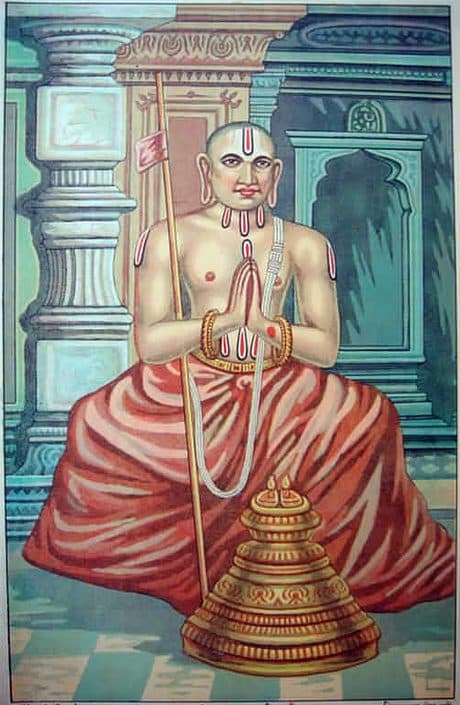
Rāmānuja · Viśiṣṭādvaita
English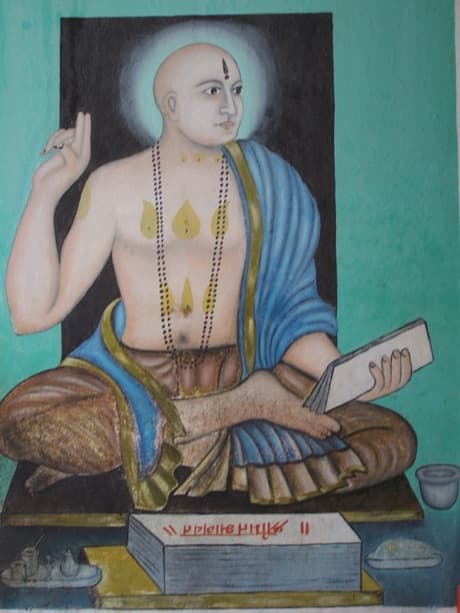
Madhvācārya · Dvaita
Madhva BhāṣyaSanskritEnglishOn verses 7.29–7.30
“जरामरणमोक्षाय इत्यन्यकामनिवृत्त्यर्थम् | मोक्षे सक्तिस्तुर्थं वा | न विधिः | मुमुक्षोरमुमुक्षास्तु वरो धेकान्तभक्तिभाक् इतीतरस्तुतेनारदीये || नात्मनिकम् || इति च |” - For deliverance from old age, death and for clarification of such other desires, clarification for deliverance is praiseworthy but not by way of prescription. Better than the aspirant (for deliverance) is the aspirant for the singular communion, thus, in Narada Puraana. Not merely for those who desire deliverance alone. “देवानां गुणलिङ्गानामानुश्राविककर्मणाम् | सत्व एवैकमनसो वृत्तिः स्वाभाविकी तु या | अनिमित्ता भगवति भक्तिः सिद्धेर्गीयसि | जरयत्याशु या कोशं निगीर्णनमलो यथा || इति भागवते लक्षणाच्च ||” - Devotion towards gods with neither distraction nor expectation of fruits in return but with concentrated mind, an attitude and with inherent nature and undistracted devotion to the Lord is established, which is superior, like the food in the stomach which is digested, thus pointing out the distinctive marks of भक्ति – communion in Bhagavat Puraana.
“आह च - सर्वे वेदास्तु देवार्था देवा नारायणार्थकाः | नारायणास्तु मोक्षार्थे मोक्षो नान्यार्थ ईष्यते | एवं मध्यमभक्तानामेकान्तानां न कस्यचित् | अर्थे नारायणो देवः सर्वमन्यत्तदर्थकम् || इति गीता कल्पे ||” - The knowledge of all the Vedas for the sake of the gods, the knowledge of all the (presiding) gods for the sake of Sriman Narayana, the knowledge of Sriman Narayana for the sake of deliverance, and deliverance for no other purpose at all, this for the intermediate devotees. But for the singularly committed ones, there exists nothing else but the Lord Narayana Himself, thus in Gita - Kalpa.
“ता एव च विदुः | यमवैष वृणुदे इति श्रुतेः || - they, the एकान्तिन, the singularly committed ones are aware. Only to such one (and according to his capacity and gradation) does He reveal His true form, thus in Katha Upanishad.
Madhvācārya · Dvaita
Gītā Tātparya NirṇayaSanskritEnglishOn verses 7.29–7.30
“तद् ब्रह्म इत्युक्तेऽन्यत्वशङ्कां निवारयति - साधिभूताधिदैवम् इति ||” - Brahman is to be consciously aware of, declaring thus he terminates all doubts about the supreme Lord of all creation.

Jñāneśvar · Vārkarī
English29 "To gain release from old-age and death, those that betake themselves unto Me and make the effort; they know the Brahman, and the entire process-of-subjectivation, and the whole (creative—) movement. (175)
What else indeed, O Arjuna, would be the natural end to the story of births and deaths? Persons whose yearning after escape leads them to the pathway of liberation have at last their efforts crowned with success some time, and then the ripe and complete fruit in the form of the Supreme Brahman, dripping wet with the juice of perfection, drops into their hands. In that great movement the universe is filled with the joy of realization, the vision of the Self reaches its wondrous perfection, and the urge of action loses its point and the mind becomes perfectly tranquil and happy. Oh Dhananjaya, those that have made Me the sole capital of that business, secure in this way the interest on that capital of realization of the Self. Along with the spread of evenness in their temper, also widens the field of their Divine farm-produce, in the form of union with the Supreme Brahman, and there no longer exists anywhere that beggarly state of distinction.
Swami Ramsukhdas · Modern
English'Jarāmarāṇamokṣāya māmaśritya yatanti ye'—Here, deliverance from old age and death, does not mean that after knowing Brahma, the individual self and entire field of action, man will not suffer from old age and will not die. But it means, that old age and death will not be able to make him, sad. As in the thirty-fourth
*In the twenty-ninth and thirtieth verses in the phrase 'Māmaśritya' (having taken refuge in), 'Madāśrayaḥ'; in the term 'Yatanti' (strive), 'Yogaṃ yuñjan' (practising Yoga); and in 'Yuktacetasaḥ' (steadfast in mind), 'Mayyāsaktamanaḥ' (with mind clinging) have been concluded. Similarly the term 'Samagram' has been used for Brahma, Adhyātma, Karma, Adhibhūta, Adhidaiva and Adhiyajña.
verse of the thirteenth chapter, in 'Bhūta prakṛti mokṣam' the Lord says, that a striver realizes, that he is different from nature and its evolutes while here He means that a striver realizes, that he is different from the body and thus old age and death, have no effect on him.
A young man, is free from old age and death, only at present, but it does not mean that he has deliverance from these forever, while liberated souls are always free from these, because they have separated themselves from their bodies, which suffer from old age and death. When a man identifies himself with the body, he accepts the body's, old age and death, as his own. This is so, because he has assumed 'I am the body and the body is mine.' So in the eighth verse of the thirteenth chapter, Lord Kṛṣṇa exhorts Arjuna to perceive, pain and evil in birth, death, old age and disease. It means, that a striver should not accept his affinity of 'Tness and 'mineness', with this body. When the affinity is renounced, he is delivered from old age and death, because his attachment for the body, is the cause of his birth, in good and evil bodies (Gītā 13/21). In fact, he is separate from the body, because the body decays and dies, while he lives ever.
In the phrase 'Māmāśritya yatanti ye', there are two aspects—to take refuge in Him, and to strive. If a man strives, he may feel proud of his achievement, as a result of striving. But, if he takes refuge in Him, he may become idle and lazy, and be engaged, in prosperity and pleasure. Therefore, a striver, should strive promptly, according to the ordinance of scriptures and give credit, for success to God.
So long as, a man attaches importance to the body, and the world, regarding these as permanent, he, in spite of striving, does not, realize God. Therefore, he should not attach importance to them. He should strive to remove, these two stumbling blocks
(i.e.,) attaching importance to the body and the world, and accepting their independent existence. But, those who taking refuge in God, strive, are superior, because they feel that they are engaged in spiritual discipline, only by God's grace. Thus, by taking refuge in Him and having no pride, they realize the full form, of the Lord.
Those who strive, without taking refuge in Him for salvation, also know Him but they do not know, His entire form. As a man practises 'Prāṇāyāma' (the process of restraining breath), he achieves accomplishments (Siddhi), and if he rises above these, he knows formless God or gets established in his own self. Similarly, the Bauddhas and Jains, who do not believe in God, by following spiritual discipline according to their religion and by renouncing their affinity for the world, attain salvation. But, those who, having disinclination for the world, taking refuge in God, strive by knowing the Lord, in His entire form, receive divine love. To express this singularity, Lord Kṛṣṇa has used the expression 'Māmāśritya yatanti ye'.
'Te brahma tat (viduḥ)'—Thus by striving, they attain Brahma (the Infinite) who is formless, without attributes and who cannot be perceived, by mind, intellect and senses.
God exists, in all beings, because He pervades everywhere, every time, in all the things and men. But, He is not perceived, because we have attached importance to the transitory and kaleidoscopic body, and world, and have accepted their independent existence. So ever-attained God, seems to be unattained.
'Kṛṣṇamadhyātmaṇ (viduḥ)'—The strivers know the entire individual self. In the tenth verse of the fifteenth chapter, Lord Kṛṣṇa says, 'The ignorant do not perceive the soul, departing from one body and dwelling in the other, but those who possess eyes of wisdom, perceive.' This perception, does not include
knowledge of the number of beings, their activities and their fate. But, they do know that the self, (soul) is different from the body. Those who take refuge in Him, realize this reality.
By taking refuge in God, when a striver breaks up his affinity for actions and things, he realizes, that his self, as well as, the self of all the beings, is pure and detached from *prakṛti*. He comes to know, that he can never be identified, with actions and bodies, and he can never be separated, from his self. This knowledge constitutes the fullest spiritual essence of the self.
‘*Karma cākhilam viduḥ*’—The strivers know the entire field of action i.e., why and how, the universe is created. God has created, the bodies of the people according to a class (caste) they belong to. But because of detachment, the Lord remains a non-doer and has no craving, for the fruit of action (*Gītā* 4/13-14). Similarly, if a man performs his duty and actions, without feelings of doership, and without desire for the fruit of actions, he is not bound, by actions. Thus knowledge about the entire field of action, is that a man has no affinity for action, he is completely detached, from these.
The striver, who takes refuge in Him, with exclusive devotion, does not depend on things and actions. He, very well realizes that all things and actions, are kaleidoscopic and perishable. No action or thing, even in *Brahmaloka* (the abode of *Brahmā*), is eternal, these are subject to, appearance and disappearance. So he has, not the least affinity for actions. This is knowledge, about the entire field of action.
It means, that a striver by taking refuge in God knows *Brahma* (the Infinite), the individual self and the entire field of action i.e., he realizes, “In the world there is nothing else, besides God” (7/7) and “All this is God” (7/19). Thus, he comes to know that *Brahma*, the individual self, and entire field of
action, are nothing else, besides God.
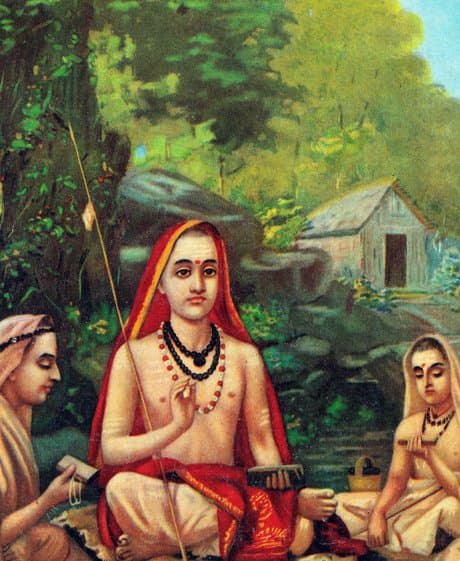
Ādi Śaṅkarācārya · Advaita
Sanskritजरामरणमोक्षाय जरामरणयोः मोक्षार्थं मां परमेश्वरं आश्रित्य मत्समाहितचित्ताः सन्तः यतन्ति प्रयतन्ते ये, ते यत् ब्रह्म परं तत् विदुः कृत्स्नं समस्तं अध्यात्मं प्रत्यगात्मविषयं वस्तु तत् विदुः, कर्म च अखिलं समस्तं विदुः ॥
Ādi Śaṅkarācārya · Advaita
Hindiवे किसलिये भजते हैं! सो कहते हैं—
जो पुरुष जरा और मृत्युसे छूटनेके लिये मुझ परमेश्वरका आश्रय लेकर अर्थात् मुझमें चित्तको समाहित करके प्रयत्न करते हैं, वे जो परब्रह्म है उसको जानते हैं एवं समस्त अध्यात्म अर्थात् अन्तरात्मविषयक वस्तुको और अखिल समस्त कर्मको भी जानते हैं
Jñāneśvar · Vārkarī
Hindi(7.175) और भी, हे पार्थ! जो आस्थापूर्वक ऐसी चेष्टा करते हैं कि जन्ममरण की कहानी ही बन्द हो जाय, (7.176) उनके एक बार प्रयत्न करते ही सम्पूर्ण परब्रह्मरूपी फल हाथ लगता है; वह ऐसा पका हुआ होता है कि उसमें से पूर्णतारूपी रस टपकता रहता है।
(7.177) तब फिर सब जगत् में कृतार्थता भरी दिखाई देती है, आत्मज्ञान का कौतुक पूर्ण हो जाता है।
(7.178) हे धनंजय! जिसके व्यापार की पूँजी मैं ही हूँ उसे इस प्रकार अध्यात्म का लाभ होता है।
(7.179) उसे साम्यरूपी व्याज मिलता है, उसका ऐक्यरूपी असामी-समूह बढ़ता है तथा भेदरूपी दीनता से कभी उसकी भेंट नहीं होती।
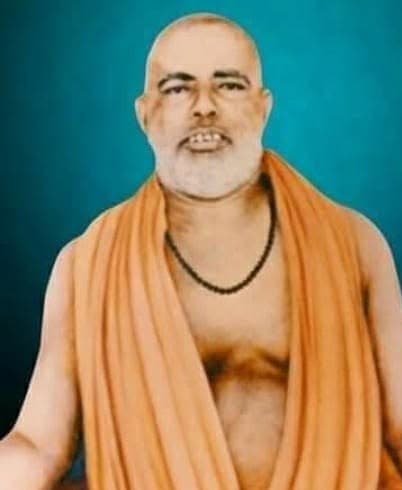
Sri Udiya Baba · Modern
Hindiसंगति— अब अगले श्लोक में यह बतलाते हैं कि वे किस लिए भजन करते हैं—
भावार्थ— जो लोग जरा-मरणादि दुःखों से छूटने के लिये मेरा आश्रय लेकर प्रयत्न करते हैं वे उस ब्रह्म, सम्पूर्ण अध्यात्म तथा सम्पूर्ण कर्म को जान लेते हैं।
व्याख्या— जरा-मरण से जन्म, बाल्य, युवा, जरा और मरण—ये पाँचों अवस्थाएँ समझनी चाहिए। इस श्लोक में 'माम्' शब्द सगुण-साकार स्वरूप का ही परामर्श करता है, क्योंकि आगे 'ब्रह्म' शब्द का प्रयोग हुआ है। यदि निर्गुणपरक होता तो 'माम्' शब्द से ही काम चल जाता। यहाँ भगवान् ने केवल भजन से ही ब्रह्म, अध्यात्म और कर्म की प्राप्ति दिखायी है। इससे जान पड़ता है कि भगवान् के भजन और आश्रय से सभी कुछ मिल जाता है।
Swami Ramsukhdas · Modern
Hindi[इन उन्तीसवें-तीसवें श्लोकोंमें आये 'मामाश्रित्य' पदमें 'मदाश्रयः' का, 'यतन्ति' पदमें 'योगं युज्जन्' का और 'युक्तचेतसः' पदमें 'मय्यासक्तमनाः' का उपसंहार किया गया है। इसी अध्यायके आरम्भमें जो 'समग्रम्' पद आया था, उसको यहाँ ब्रह्म, अध्यात्म, कर्म, अधिभूत, अधिदैव और अधियज्ञ कहा गया है।]
* सममुख होइ जीव मोहि जबहीं। जन्म कोटि अघ नासहि तबहीं ॥ (मानस, सुन्दर ४४। १)
‘जरामरणमोक्षाय मामाश्रित्य यतन्ति ये’—यहाँ जरा (वृद्धावस्था) और मरणसे मुक्ति पानेका तात्पर्य यह नहीं है कि ब्रह्म, अध्यात्म और कर्मका ज्ञान होनेपर वृद्धावस्था नहीं होगी, शरीरकी मृत्यु नहीं होगी। इसका तात्पर्य यह है कि बोध होनेके बाद शरीरमें आनेवाली वृद्धावस्था और मृत्यु तो आयेगी ही, पर ये दोनों अवस्थाएँ उसको दुःखी नहीं कर सकेंगी। जैसे तेरहवें अध्यायके चौतीसवें श्लोकमें ‘भूतप्रकृतिमोक्षम्’ कहनेका तात्पर्य भूत और प्रकृति अर्थात् कार्य और कारणसे सम्बन्ध-विच्छेद होनेमें है, ऐसे ही यहाँ ‘जरामरणमोक्षाय’ कहनेका तात्पर्य जरा, मृत्यु आदि शरीरके विकारोंसे सम्बन्ध-विच्छेद होनेमें है।
जैसे कोई युवा पुरुष है, तो उसकी अभी न वृद्धावस्था है और न मृत्यु है; अतः वह जरा-मरणसे अभी मुक्त है। परन्तु वास्तवमें वह जरा-मरणसे मुक्त नहीं है; क्योंकि जरा-मरणके कारण शरीरके साथ जबतक सम्बन्ध है, तबतक जरा-मरणसे रहित होते हुए भी वह इनसे मुक्त नहीं है। परन्तु जो जीवन्मुक्त महापुरुष हैं, उनके शरीरमें जरा और मरण होनेपर भी वे इनसे मुक्त हैं। अतः जरा-मरणसे मुक्त होनेका तात्पर्य है—जिसमें जरा और मरण होते हैं, ऐसे प्रकृतिके कार्य शरीरके साथ सर्वथा सम्बन्ध-विच्छेद होना। जब मनुष्य शरीरके साथ तादात्म्य (‘मैं यही हूँ’) मान लेता है, तब शरीरके वृद्ध होनेपर ‘मैं वृद्ध हो गया’ और शरीरके मरनेको लेकर ‘मैं मर जाऊँगा’—ऐसा मानता है। यह मान्यता ‘शरीर मैं हूँ और शरीर मेरा है’ इसीपर टिकी हुई है। इसलिये तेरहवें अध्यायके आठवें श्लोकमें आया है—‘जन्ममृत्युजराव्याधिदुःखदोषानुदर्शनम्’ अर्थात् जन्म, मृत्यु, जरा और व्याधिमें दुःख-रूप दोषोंको देखना—इसका तात्पर्य है कि शरीरके साथ ‘मैं’ और ‘मेरा-पन’ का सम्बन्ध न रहे। जब मनुष्य ‘मैं’ और ‘मेरा-पन’ से मुक्त हो जायगा, तब वह जरा, मरण आदिसे भी मुक्त हो जायगा; क्योंकि शरीरके साथ माना हुआ सम्बन्ध ही वास्तवमें जन्मका कारण है—‘कारणं गुणसंगोऽस्य सदसद्योनिजन्मसु’ (गीता १३। २१)। वास्तवमें इसका शरीरके साथ सम्बन्ध नहीं है, तभी सम्बन्ध मिटता है। मिटता वही है, जो वास्तवमें नहीं होता।
यहाँ ‘मामाश्रित्य यतन्ति ये’ पदोंमें आश्रय लेना और
यत्न करना—इन दो बातोंको कहनेका तात्पर्य है कि मनुष्य अगर स्वयं यत्न करता है, तो अभिमान आता है कि ‘मैंने ऐसा कर लिया, जिससे ऐसा हो गया’ और अगर स्वयं यत्न न करके ‘भगवान्के आश्रयसे सब कुछ हो जायगा’ ऐसा मानता है, तो वह आलस्य और प्रमादमें तथा संग्रह और भोगमें लग जाता है। इसलिये यहाँ दो बातें बतायीं कि शास्त्रकी आज्ञाके अनुसार स्वयं तत्परतासे उद्योग करे और उस उद्योगके होनेमें तथा उद्योगकी सफलतामें कारण भगवान्को माने।
जो नित्य-निरन्तर विमुक्त हो रहा है, ऐसे शरीर-संसारको मनुष्य प्राप्त और स्थायी मान लेता है। जबतक वह शरीर और संसारको स्थायी मानकर उसे महत्ता देता रहता है, तबतक साधन करनेपर भी उसको भगवत्प्राप्ति नहीं होती। अगर वह शरीर-संसारको स्थायी न माने और उसको महत्त्व न दे, तो भगवत्प्राप्तिमें देरी नहीं लगेगी। अतः इन दोनों बाधाओंको अर्थात् शरीर-संसारकी स्वतन्त्र सत्ताको और महत्ताको विचारपूर्वक हटाना ही यत्न करना है। परन्तु जो भगवान्का आश्रय लेकर यत्न करते हैं, वे श्रेष्ठ हैं। उनका तो यही भाव रहता है कि उस प्रभुकी कृपासे ही साधन-भजन हो रहा है। भगवान्की कृपाका आश्रय लेनेसे और अपने बलका अभिमान न करनेसे वे भगवान्के समग्ररूपको जान लेते हैं।
जो भगवान्का आश्रय न लेकर अपना कल्याण चाहते हुए उद्योग करते हैं, उनको अपने-अपने साधनके अनुसार भगवत्स्वरूपका बोध तो हो जाता है, पर भगवान्के समग्ररूपका बोध उनको नहीं होता। जैसे, कोई प्राणायाम आदिके द्वारा योगका अभ्यास करता है, तो उसको अणिमा, महिमा आदि सिद्धियाँ मिलती हैं और उनसे ऊँचा उठनेपर परमात्माके निराकार-स्वरूपका बोध होता है अथवा अपने स्वरूपमें स्थिति होती है। ऐसे ही बौद्ध, जैन आदि सम्प्रदायोंमें चलनेवाले जितने मनुष्य हैं, जो कि ईश्वरको नहीं मानते, वे भी अपने-अपने सम्प्रदायके सिद्धान्तोंके अनुसार साधन करके असत्-जडरूप संसारसे सम्बन्ध-विच्छेद करके मुक्त हो जाते हैं। परन्तु जो संसारसे विमुख होकर भगवान्का आश्रय लेकर यत्न करते हैं, उनको भगवान्के समग्ररूपका बोध होकर भगवत्प्रेमकी प्राप्ति हो जाती है—यह विलक्षणता बतानेके लिये ही भगवान्ने यहाँ
‘मामाश्रित्य यतन्ति ये’ कहा है।
‘ते ब्रह्म तत् (विदुः)’—इस तरहसे यत्न (साधन) करनेपर वे मेरे स्वरूपको* अर्थात् जो निर्गुण-निराकार है, जो मन-बुद्धि-इन्द्रियों आदि का विषय नहीं है, जो सामने नहीं है, शास्त्र जिसका परोक्षरूपसे वर्णन करते हैं, उस सच्चिदानन्दन ब्रह्मको जान जाते हैं।
‘ब्रह्म’ के साथ ‘तत्’ शब्द देनेका तात्पर्य यह है कि प्रायः सभी ‘तत्’ शब्दसे कहे जानेवाले जिस परमात्माको परोक्षरूपसे ही देखते हैं, ऐसे परमात्माका भी वे साक्षात् अपरोक्षरूपसे अनुभव कर लेते हैं।
उस परमात्माकी सत्ता प्राणिमात्रमें स्वतःसिद्ध है। कारण कि वह परमात्मा किसी देशमें न हो, किसी समयमें न हो, किसी वस्तुमें न हो और किसी व्यक्तिमें न हो—ऐसा नहीं है, प्रत्युत वह सब देशमें है, सब समयमें है, सब वस्तुओंमें है और सब व्यक्तियोंमें है। ऐसा होनेपर भी वह अप्राप्त क्यों दीखता है? जो पहले नहीं था, बादमें नहीं रहेगा, अभी मौजूद रहते हुए भी प्रतिक्षण वियुक्त हो रहा है, अभावमें जा रहा है—ऐसे शरीर-संसारकी सत्ता और महत्ता स्वीकार कर ली, इसीसे नित्यप्राप्त परमात्मतत्त्व अप्राप्त दीख रहा है।
‘कृत्स्नमध्यात्मम् (विदुः)’—वे सम्पूर्ण अध्यात्मको जान जाते हैं अर्थात् सम्पूर्ण जीव तत्त्वसे क्या हैं, इस बातको वे जान जाते हैं। पंद्रहवें अध्यायके दसवें श्लोकमें कहा है कि ‘जीवके द्वारा एक शरीरको छोड़कर दूसरे शरीरको प्राप्त करनेको विमूढ़ पुरुष नहीं जानते और ज्ञानचक्षुवाले जानते हैं।’ इसको जाननेका तात्पर्य यह नहीं है कि ‘जीव कितने हैं, वे क्या-क्या करते हैं और उनकी क्या-क्या गति हो रही है’—इसको जान जाते हैं, प्रत्युत आत्मा शरीरसे अलग है—इसको तत्त्वसे जान जाते हैं अर्थात् अनुभव कर लेते हैं।
भगवान्के आश्रयसे साधकका जब क्रियाओं और पदार्थोंसे सम्बन्ध-विच्छेद हो जाता है, तब वह अध्यात्म-तत्त्वको—अपने स्वरूपको जान जाता है। केवल अपने स्वरूपको ही नहीं, प्रत्युत तीनों लोकों और चौदह भुवनोंमें जितने भी स्थावर-जंगम प्राणी हैं, उन सबके स्वरूपको भी जान जाता है कि सबका स्वरूप शुद्ध है, निर्मल है, प्रकृतिसे असम्बद्ध है। अनन्त जन्मोंतक अनन्त क्रियाओं
और शरीरोंके साथ एकता करनेपर भी उनकी कभी एकता हो ही नहीं सकती और अनन्त जन्मोंतक अपने स्वरूपका बोध न होनेपर भी वे अपने स्वरूपसे कभी अलग हो ही नहीं सकते—ऐसा जानना सम्पूर्ण अध्यात्म-तत्त्वको जानना है।
‘कर्म चाखिलं विदुः’—वे सम्पूर्ण कर्मोंके वास्तविक तत्त्वको जान जाते हैं अर्थात् सृष्टिकी रचना क्यों होती है, कैसे होती है और भगवान् कैसे करते हैं—इसको भी वे जान जाते हैं।
जैसे भगवान्ने चारों वर्णोंकी रचना की। उस रचनामें जीवोंके जो गुण और कर्म हैं अर्थात् उनके जैसे भाव हैं और उन्होंने जैसे कर्म किये हैं, उनके अनुसार ही शरीरोंकी रचना की गयी है। उन वर्णोंमें जन्म होनेमें स्वयं भगवान्की तरफसे कोई सम्बन्ध नहीं है, इसलिये भगवान्में कर्तृत्व नहीं है और फलेच्छा भी नहीं है (गीता—चौथे अध्यायका तेरहवाँ-चौदहवाँ श्लोक)। तात्पर्य यह हुआ कि सृष्टिकी रचना करते हुए भी भगवान् कर्तृत्व और फलासक्तिसे सर्वथा निलिप्त रहते हैं। ऐसे ही मनुष्यमात्रको देश, काल, परिस्थितिके अनुरूप जो भी कर्तव्य-कर्म प्राप्त हो जाय, उसे कर्तृत्व और फलासक्तिसे रहित होकर करनेसे वह कर्म मनुष्यको बौधनेवाला नहीं होता अर्थात् वह कर्म फलजनक नहीं बनता। तात्पर्य है कि कर्मोंके साथ अपना कोई सम्बन्ध नहीं है, इस तरह उनके साथ निलिप्तताका अनुभव करना ही अखिल कर्मको जानना है।
जो अनन्यभावसे केवल भगवान्का आश्रय लेता है, उसका प्राकृत क्रियाओं और पदार्थोंका आश्रय छूट जाता है। इससे उसको यह बात ठीक तरहसे समझमें आ जाती है कि ये सब क्रियाएँ और पदार्थ परिवर्तनशील और नाशवान् हैं अर्थात् क्रियाओंका भी आरम्भ और अन्त होता है तथा पदार्थोंकी भी उत्पत्ति और विनाश, संयोग और वियोग होता है। ब्रह्मलोकतककी कोई भी क्रिया और पदार्थ नित्य रहनेवाला नहीं है। अतः कर्मोंके साथ मेरा किंचिन्मात्र भी सम्बन्ध नहीं है—यह भी अखिल कर्मको जानना है।
तात्पर्य यह हुआ कि भगवान्का आश्रय लेकर चलने-वाले ब्रह्म, अध्यात्म और कर्मके वास्तविक तत्त्वको जान जाते हैं अर्थात् भगवान्ने जैसे कहा है कि ‘यह सम्पूर्ण
* यहाँ अट्ठाईसवें, उन्तीसवें और तीसवें श्लोकमें भगवान्ने अस्मत् शब्द ‘माम्’ का प्रयोग किया है, इसलिये यहाँ व्याख्यामें ‘मेरा स्वरूप’ ऐसा अर्थ लिया है।
संसार मेरेमें ही ओतप्रोत है' (सातवें अध्यायका सातवाँ श्लोक) और 'सब कुछ वासुदेव ही है' (सातवें अध्यायका उन्नीसवाँ श्लोक), ऐसे ही वे भगवान्के
समग्ररूपको जान जाते हैं कि ब्रह्म, अध्यात्म और कर्म—ये सभी भगवत्स्वरूप ही हैं, भगवान्के सिवाय इनमें दूसरी कोई सत्ता नहीं है।
Brahman is the Self in its immaculate and essential state.
Self-realisation is freedom from the identification with Material Nature —Prakṛti.
Karma are those activities leading to rebirth.