

Bhagavad Gītā · Chapter 7 · Jñāna Vijñāna Yoga
ये चैव सात्त्विका भावा राजसास्तामसाश्च ये
मत्त एवेति तान्विद्धि नत्वहं तेषु ते मयि
ye caiva sāttvikā bhāvā rājasāstāmasāśca ye|
matta eveti tānviddhi natvahaṃ teṣu te mayi||
Word meanings
ये = whichever
एव = indeed
सात्त्विकाः = of sattva, the pure
भावाः = states, natures
ये = whichever
च = even
राजसाः = of rajas, the passionate
च = and
तामसाः = of tamas, the dull
मत्तः = from Me
एव = alone, indeed
इति = thus (saying)
तान् = them
विद्धि = know
तु = but
अहम् = I
तेषु = in them
ते = they
मयि = in Me
न = not
Translation
Whaterever other entities there are, born of Sattva (the quality of goodness), and those that are born of Rajas (the principal of activity) and Tamas (the principal of intertia), know them all as evolved from Me alone. In reality, however, neither do I exist in them, nor they in Me.
Commentary
The commentators seated around this verse
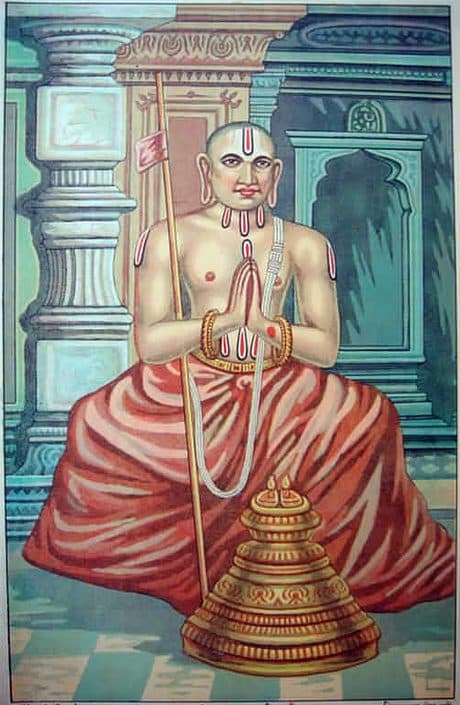
Rāmānuja · Viśiṣṭādvaita
EnglishOn verses 7.8–12
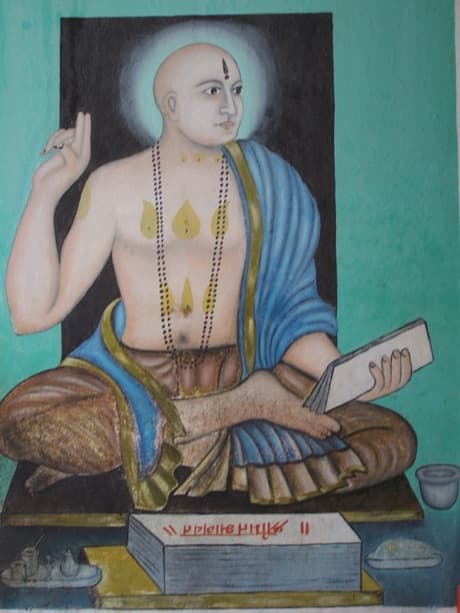
Madhvācārya · Dvaita
Madhva BhāṣyaSanskritEnglish“नत्वहं तेषु इति तदनाधारत्वमुच्यते | उक्तं च – तदाश्रितं जगत् सर्वे नासौ कुत्रचिदाश्रितः | इति गीताकल्पे ||” - I am not in them thus Sri Krishna says, being not dependent on them. All the world is dependent on Him; He is not dependent on anyone else, thus Gita-Kalpa.
Madhvācārya · Dvaita
Gītā Tātparya NirṇayaSanskritEnglish“ये चैव सात्विका भावा राजसास्तामसाक्ष ये | तत् एव नचान्यस्मात् तदायर्तमिदं न सः ||” - All these attributes -satva, raja, tama - are all born from Him alone; but not He from them. He is not dependent on anyone else.
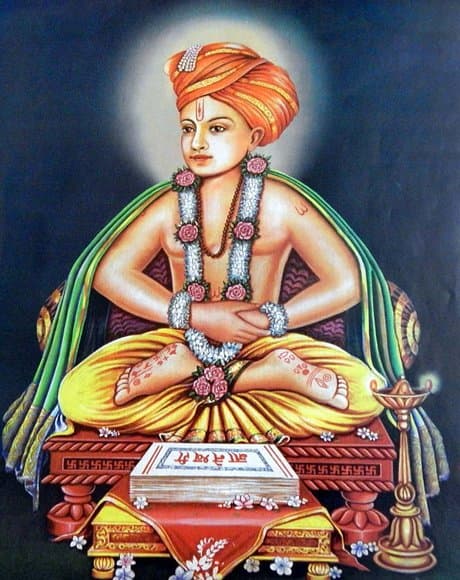
Jñāneśvar · Vārkarī
English12 "And those forms of existence that there are, consisting of the Sattva, Rajas, and Tamas constituents: know that it is from Me alone that they have their source: I am not (contained) in them: but it is they that are (contained) in Me. (53)
Also bear well in mind, that the three states of the mind—Sattva, Rajas and Tamas, come into being from My form. These are created out of My being, and yet I am not wholly in them, just as awareness cannot be flooded in the deep waters of dreams. The solid compact mass of seed is formed out of soft juicy substance and from this seed in its turn comes the hard wood of stem, shoots, and branches; yet these cannot show any trace of the quality of the seed. In that way, all change comes out of My being, and yet My being is not subject to changes. The clouds appear as changing in the sky, but pure sky is not in them; and water comes from the clouds and yet clouds are not in the water. Lightning is produced by the friction of the water in the clouds and flashes out brilliance; but is there the least (drop of) water in the flash of the lightning? Smoke rises from fire; but can fire be found in smoke itself? In the same way although all changing states of the world appear to come from My being still I am beyond these shadowy changes.
Swami Ramsukhdas · Modern
English'Ye caiva sāttvikā bhāvā rājasāstāmasāśca ye'—It means, that in the entire universe, all the Guṇas (attributes of things and actions) evolve from God. He is the root, support, base and illuminator of all of these. Whatever, singularity is seen in the entire universe, that is the Lord's. So, a man should have inclination towards Him, rather than, towards the mode of goodness etc. This inclination towards God, will lead him to emancipation, while inclination towards the mode of goodness etc., will lead him to bondage.
Actually all the objects, attributes (modes) and actions, are
* 'yacchreyaḥ syānniścitam brūhi tanme' (Gītā 2/7) 'tadekaṁ vada niścitya yena śreyo'hamāpnuymam' (Gītā 3/2) 'yacchreya etayorekam tanme brūhi suniścitam' (Gītā 5/1)
nothing else, besides the manifestation of the Lord. Now a question arises, when every action is a manifestation of the Lord, why is there, sanction or prohibition for these? The answer is, that actions which are sanctioned by scriptures, result in favourable and happy circumstances, while actions which are prohibited (forbidden), result in unfavourable and sad circumstances. So, if a person performs forbidden actions, regarding these as manifestation of the Lord, the Lord as a result of those actions will manifest Himself, in the form of punishment and hell.
As far as actions are concerned, a striver should perform only those actions, which are sanctioned by the scriptures. As far as, acceptance (assumption) and knowledge, are concerned, one should accept that God exists and he should know the self or the world. By assuming the existence of God, he should develop a keen desire to attain Him. He should try to please Him, by obeying Him and by following His principles. He should also know that bodies and the universe, are kaleidoscopic and perishable, and these are neither his nor meant for him. By knowing this fact, he should cease attachment for them. By doing so, he will realize the reality. But, even after knowing the fact that they are perishable, if a striver, attaches importance to them, he will not be able to attain emancipation.
'Matta eveti tānvidhi'—All are evolved from the Lord viz., He is all in all; the cause and the effect, which seems distinct. But, the effect has no separate and independent existence, from the cause. Therefore, the effect is a manifestation of the cause, only. As in ornaments made of gold, there is nothing else, besides gold, similarly the universe evolved from God is nothing else, besides God.
By using the phrase 'Matta eva' Lord Kṛṣṇa, means that His lower nature and higher nature, are not different from Him. As an appendix to the seventh chapter in the ninth chapter, Lord Kṛṣṇa declares, 'Through My nature, I bring forth again
and again, all this multitude of beings' (9/8) and further, He declares, 'With Me as the supervisor, nature brings forth, the whole creation' (9/10). Actually, both of the declarations, are one and the same. In both the cases, there is predominance of God. The same fact, has been pointed out here in 7/6. 'I am the source and the end of the entire universe.' While concluding it, He declares, 'Whatever entities there are born of sattva, rajas and tamas, know them all, as evolved from Me.'
The Lord, having promised to discuss knowledge and realization, started the topic by mentioning that among thousands, one scarcely knows Him, in truth. Then having explained His higher and lower natures, He mentioned these as the source of all beings. Then, He explained that He, is the source of the universe (7/7). The same fact, has been pointed out here, while concluding the topic of His divine glories, when He declares 'Know that the sattva (mode of goodness), the rajas (mode of passion) and the tamas (mode of ignorance), are evolved from Me.'
'Na tvaham teşu te mayi'—'I am not in them, and they are not in Me.' It means, that those attributes have no independent existence of their own, besides the Lord. All actions, objects, are born and then they decay. If the Lord, had been in them, with their decay He would have also decayed. But, He never decays. It means, that He is not in them. If they had been in Him, they should have also been imperishable, like Him. But it is not so, they perish, while He is eternal. It means, that they are not in Him. As a seed, takes the shape of a tree with its branches, leaves, flowers etc., but these cannot be perceived in it, similarly, nature, constituted of the three categories (modes)—sattva, rajas and tamas has origin in Him, but He is not perceived, in them. Actually, there is nothing else, besides Him.
As clouds evolve from ether, reside in ether and dissolve in ether, yet ether, remains the same, without any modification. All the divine glories, described from the eighth verse upto this
verse, evolve from the Lord, reside in Him and dissolve in Him. But He is not in them and they are not in Him i.e., they are nothing else, besides Him. The Lord by pointing out this fact, wants to warn people, that they should not be entangled in worldly pleasures and prosperity, because there is nothing else, besides Him. So they should attach importance, only to Him.
An Important Fact
All the entities born of sattva, rajas and tamas, are born of God's nature and as God and His Nature, are one and the same. It means, that they are born of God and they dissolve in Him. But, the higher nature (embodied soul), has accepted its affinity with Nature (Matter). It has accepted it as its own, and for its own—this is sustaining the world by an embodied soul and so it is born and it decays. In order to, free man from this bondage of birth and death, Lord Kṛṣṇa declares, that all entities born of sattva, rajas and tamas are born of Him. Similarly, He declares, in the tenth chapter, 'These diverse feelings of creatures, emanate from Me alone' (10/5) and 'I am the source of all creation and everything in the world, moves because of Me' (10/8). In the fifteenth chapter also He declares: 'Memory, wisdom and ratiocinative faculty emanate from Me' (15/15). When everything emanates from God, it means that man actually has no affinity for the attributes (modes). Therefore, if one does not accept his affinity for them, they cannot lead him to bondage i.e., to the cycle of birth and death.
In the *Gītā*, in the context of devotion also, Lord Kṛṣṇa declares, that He is all—'I am being and non-being both' (9/19) and Arjuna also says, to Lord Kṛṣṇa, 'You are being (existent) and non-being (non-existent) both, and also beyond, both of them' (11/37). Lord Kṛṣṇa also, declares about a devotee having exclusive devotion 'Such a devotee realizes, that all this is God' (7/19). A devotee having exclusive devotion, like a chaste wife
who perceives only her husband, and thinks of no other man even in dream, beholds nothing else besides, God.
In the Discipline of Knowledge, the Lord declares, the real and unreal, as separate entities. 'The unreal has no existence, and the real never ceases to be' (2/16). Similarly, matter (nature) spirit, and Kṣetra (field)—Kṣetrajñā (knower of the field) are described in the *Gītā*, time and again, as 'Know matter and spirit to be both, without beginning' (13/19); 'The knowledge of Kṣetra (field or matter) and kṣetrajñā (spirit), is true knowledge' (13/2); 'Whatever being, is born, the unmoving or the moving know it, as emanated from the union of Kṣetra (Matter) and Kṣetrajñā (spirit) (13/26); Kṣetrajñā (the Lord of the Kṣetra viz., spirit), illumines the whole Kṣetra (field or matter) (13/33); 'Those who perceive with an eye of wisdom, this distinction between the Kṣetra and Kṣetrajñā, reach the Supreme' (13/34). Thus, by distinguishing the two, a striver realizes, that self is unconnected with Matter, and is totally untainted.
A striver, should possess both devotion and knowledge. In, the Discipline of Devotion, there is predominance of devotion, while knowledge is secondary. In the Discipline of Knowledge, there is predominance of knowledge while devotion occupies a secondary place. In, the Discipline of Devotion, it is believed that all the entities (beings) born of sattva, rajas and tamas, evolve from Him (7/12) while, in the Discipline of Knowledge, it is thought, that qualities (modes) of sattva (goodness), rajas (passion) and tamas (ignorance), are born of prakṛti (nature) (14/5). Both types of strivers, accept that they are free from those qualities (modes), and both of them realize, the same reality which cannot be called, either dual or non-dual, neither, real nor unreal.
The strivers, following the Discipline of Devotion, having exclusive devotion identify themselves with God and thus become free from Matter, while devotees following the Discipline of Knowledge, by discriminating between matter and the spirit,
realize the self, and thus become free from matter.
**Appendix**—While explaining in details the notion of the expression 'mattah parataram nānyat kiñcidasti' (there is nothing else besides Me) (7/7), whatever the Lord told in the preceding four verses and whatever He has not told—all that has been concluded in this verse. The Lord declares, 'All the Sāttvika, Rājasa and Tāmasa modes evolve from Me and I provide them existence and agility; yet neither I am in them nor are they in Me viz., only I am all. Therefore the striver who wants to attain Me, instead of getting entangled in these modes, should be inclined to Me. If he gets entangled in these modes, he can never attain salvation or devotion.'
The modes that are seen, heard and understood and that are not seen, heard and understood—all of them should be included within the term 'ye' (whatever).
The Sāttvika, Rājasa and Tāmasa modes have been called 'bhāva' because they evolve from God. It means that God is in the form of 'bhāva' (ever-existent)\*, therefore only the existent 'bhāva' will evolve from Him, how will 'abhāva' (Non-existent) evolve? As all these 'bhāvas' (modes) evolve from Him, so all of them are the manifestations of God—'bhavanti bhāvā bhūtānām matta eva pṛthagvidhāḥ' (Gītā 10/5). It means that with the body-senses-mind-intellect whatever Sāttvika, Rājasa and Tāmasa feelings, actions, objects etc., are perceived, they are all only God†. Even the 'sphuraṇā' (mere fleeting thought) that comes to the mind whether good or bad, is only God. In the world whatever good or bad, pure or impure, friend or enemy,
\*nāsato vidyate bhavo nābhāvo vidyate sataḥ (Gītā 2/16);
'madbhāvaṁ so'dhigacchati' (Gītā 14/19)', 'sarvabhūteṣu yenaikam bhāvamavyayamīkṣate' (Gītā 18/20).
†manasā vacasā dṛṣṭyā gṛhyate'nyairapindriyaiḥ
(Śrīmadbhā. 11/13/24)
wicked or noble, virtuous or sinful etc., is seen, heard, thought of and understood etc.,—all is only God. Besides God there is nothing else anywhere.
If there is any selfish motive and we have a desire to take anything from others, then Sāttvika, Rājasa and Tāmasa—these three different kinds appear. But if there is no selfish motive and we have an eye on the welfare of others, then these are nothing but the manifestation of God. If we regard them for us and derive pleasure from them, they pave the way to ruin (Gītā 3/37).
‘The three modes are evolved from Me’—by saying this the Lord means that a striver instead of having an eye on these modes, should have his eye on Him Who transcends these modes viz., he having assumed the existence and greatness of the Lord, should establish relation with Him so that he may attain Him, and being free from the sufferings forever, may attain the Supreme bliss. ‘I am not in them and they are not in Me’—by saying this, the Lord means, “If anyone instead of attaching importance to Me as reality and my greatness, attaches importance and value to Sāttvika, Rājasa and Tāmasa modes, objects and actions and is attached to them, he instead of attaining Me, will follow the cycle of birth and death—‘kāraṇaṃ guṇasaṅgo’sya sadasadyonijanmasu’ (Gītā 13/21).
The Lord uses the expression ‘matta eva’ as if He wants to say, “The three modes are evolved from Me, then instead of having an inclination to Me, why do you get entangled in the modes? Those who get entangled in these modes, can’t worship Me (Gītā 7/13). But those devotees, who don’t get entangled in these modes, worship Me (Gītā 7/16, 10/8). These modes are not lasting because the cause stays, the effect does not stay. As gold stays, ornaments don’t stay; earth stays (persists), the jar does not remain; God remains, modes don’t stay (remain). The modes are kaleidoscopic and perishable but God ever remains the same, He is neither kaleidoscopic nor perishable. Therefore
God is not attained by modes, but He is attained by renouncing attachment to the modes. Therefore by overpowering Tamogunā by Rajogunā and Rajogunā by Sattvagunā, the striver has to transcend all the three guṇas (modes).
Here a point needs special attention that God endowed with attributes and form is in fact only attributeless because He is free from the modes of Sattva, Raja and Tama but He possesses virtues such as glory, sweetness, beauty and generosity etc. Therefore the devotion to God Who is endowed with attributes and form, is also called 'Nirguṇa' (free from the modes of goodness etc.,) as 'manniṣṭham nirguṇam smṛtam', 'manniketaṁ tu nirguṇam', 'nirguṇo madapāśrayaḥ', 'matsevāyāṁ tu nirguṇā' (Śrīmadbhā. 11/25/24—27).
**Question**—When all is God, why are Sāttvika-Rājasa-Tāmasa 'bhāvas' (modes) to be renounced?
**Answer**—As in the earth there is water everywhere but that is available in the well, similarly God exists everywhere but the place where He attained is 'Yajñā' (performance of duty selflessly)—'tasmātsarvagataṁ brahma nityaṁ yajñē pratiṣṭhitam' (Gītā 3/15). But Sāttvika-Rājasa-Tāmasa bhāvas (entities) are not places where God is available viz., by them God is not attained (Gītā 7/13). Therefore they are not useful for a striver. So the Lord has declared—'Neither I am in those modes nor are they in Me.'
As in the field of millet, only millet is substantial, stalks and leaves are not substantial. The aim of the farmer is only to get millet. In order to get millet, he waters the field and manures it for nourishing the soil (field) so that he may get the millet of a good quality. Similarly a striver should aim at attaining God, not the world. In order to attain God, a striver should serve the world without any selfish motive. There is value of millet rather than of stalks and leaves, because at the beginning there is millet and in the end also millet remains. After taking out
millet whatever stalks and leaves are left, they are not useful for men, but they are feeds for animals. Similarly Sāttvika, Rājasa and Tāmasa modes are for the deluded (unwise). These three modes bind a man (Gītā 14/5). Therefore these modes in spite of being the manifestations of God are not for the self but their use with discrimination is for worldly dealings. As poison is also the manifestation of God but that is not to be taken.
As leaves and stalks also emanate from the seed of millet but there is no millet in them and in the millet there are no stalks and leaves, similarly though the Sāttvika-Rājasa-Tāmasa modes evolve from God, yet God is not in them and they are not in God.
*Link:—Lord Kṛṣṇa, in the twelfth verse, said that entities born of Sattva, Rajas and Tamas, are born of Him, still neither He is in them, nor are they in Him. It means, that God is free from Matter (Nature), and its evolutes. Similarly, soul being an eternal portion of God, is also free. But how is it bound? The answer follows:—*
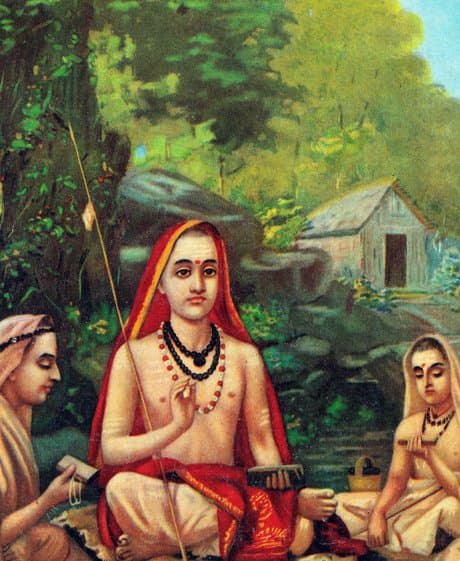
Ādi Śaṅkarācārya · Advaita
Sanskritये चैव सात्त्विकाः सत्त्वनिर्वृत्ताः भावाः पदार्थाः, राजसाः रजोनिर्वृत्ताः, तामसाः तमोनिर्वृत्ताश्च, ये केचित् प्राणिनां स्वकर्मवशात् जायन्ते भावाः, तान् मत्त एव जायमानान् इति एवं विद्धि सर्वान् समस्तानेव । यद्यपि ते मत्तः जायन्ते, तथापि न तु अहं तेषु तदधीनः तद्वशः, यथा संसारिणः । ते पुनः मयि मद्वशाः मदधीनाः ॥ एवम्भूतमपि परमेश्वरं नित्यशुद्धबुद्धमुक्तस्वभावं सर्वभूतात्मानं निर्गुणं संसारदोषबीजप्रदाहकारणं मां नाभिजानाति जगत् इति अनुक्रोशं दर्शयति भगवान् । तच्च किन्निमित्तं जगतः अज्ञानमित्युच्यते --
Ādi Śaṅkarācārya · Advaita
Hindiजो सात्त्विक—सत्त्वगुणसे उत्पन्न हुए भाव—पदार्थ हैं और जो राजस—रजोगुणसे उत्पन्न हुए एवं तामस—तमोगुणसे उत्पन्न हुए भाव—पदार्थ हैं, उन सबको अर्थात् प्राणियोंके अपने कर्मानुसार ये जो कुछ भी भाव उत्पन्न होते हैं उन सबको तू मुझसे ही उत्पन्न हुए जान ।
यद्यपि वे मुझसे उत्पन्न होते हैं तथापि मैं उनमें नहीं हूँ अर्थात् संसारी मनुष्योंकी भाँति मैं उनके वशमें नहीं हूँ, परंतु वे मुझमें हैं यानी मेरे वशमें हैं—मेरे अधीन हैं
Jñāneśvar · Vārkarī
Hindi(7.53) यह जान लो कि जो सात्त्विक भाव है अथवा रज-तमादि गुण हैं, वे सब मेरे ही रूप से उत्पन्न हुए हैं।
(7.54) परन्तु यद्यपि वे मुझसे उत्पन्न हुए हैं, तथापि मैं उनमें नहीं हूँ, जैसे स्वप्नरूपी देह में जागृति नहीं डूबती।
(7.55) जैसे बीजकणिका दृढ़ और घने रस की ही बनी रहती है परन्तु उससे अंकुर के द्वारा काष्ठ उत्पन्न होता है,
(7.56) इसलिए क्या काष्ठ में बीजत्व नहीं है? वैसे ही यद्यपि मैं विकृत दिखाई देता हूँ तथापि मैं विकृत नहीं होता।
(7.57) गगन में मेघ उत्पन्न होते हैं परन्तु उनमें गगन सर्वथा नहीं रहता, अथवा मेघ से जो जल उत्पन्न होता है उसमें मेघ नहीं रहते, (7.58) या उदक के घर्षण से प्रकट हो जो प्रकाश चमकता हुआ दिखाई देता है, उस विद्युत में क्या जल रहता है?
(7.59) कहो अग्नि से जो धुआँ उत्पन्न होता है उस धुएँ में क्या अग्नि रहती है? वैसे ही यद्यपि में विकृत दिखाई देता हूँ तथापि विकाररूप नहीं हूँ।
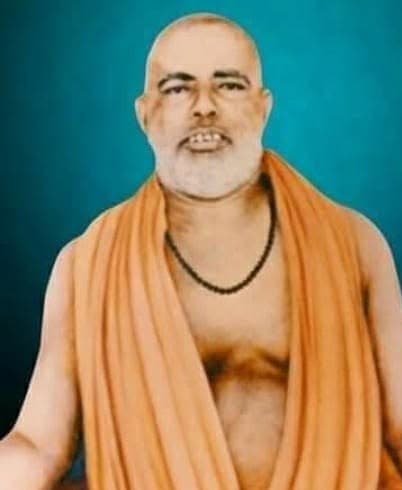
Sri Udiya Baba · Modern
Hindiसंगति— श्लोक ७ से ११ तक कार्य सहित अपनी विभूतियों का वर्णन किया। अब १२वें श्लोक से अपना समग्र रूप बताना आरम्भ करते हैं।
भावार्थ— जो भी सात्त्विक, राजस और तामस पदार्थ हैं उन्हें मुझ से ही उत्पन्न हुए जानो। मैं उनमें नहीं हूँ वे ही मुझ में हैं।
व्याख्या— जैसे सारे लोक-लोकान्तर आकाश में हैं किन्तु आकाश उनसे भिन्न है, जिस प्रकार अपनी कोई सत्ता न होने के कारण स्वप्न स्वप्नदृष्टा में ही है, किन्तु स्वप्न-दृष्टा स्वप्न में नहीं तथा जैसे बादल आकाश में होते हैं आकाश बादलों में नहीं वैसे ही ब्रह्माणादि सत्त्वगुणी, खटाई-मिर्च आदि रजोगुणी तथा लहसुन-प्याज आदि तमोगुणी पदार्थ सब मुझ से ही उत्पन्न होते हैं, क्योंकि मुझ
से भिन्न उनकी सत्ता नहीं है। इस प्रकार भगवान् अपने सविशेष स्वरूप का प्रतिपादन कर रहे हैं कि तीनों गुण मुझ में हैं मैं उनमें नहीं हूँ क्योंकि वे सत्ता शून्य हैं। जिस प्रकार रज्जु से सर्प का कोई सम्बन्ध नहीं उसी प्रकार चराचर दृश्य का मुझ से कोई सम्बन्ध नहीं है, क्योंकि मैं सब का अधिष्ठान हूँ।
‘मैं उनमें नहीं, वे मेरे में हैं’ यह अनुभव बार-बार निषेधाकार वृत्ति का अभ्यास करने से होता है। निषेध करने में आर्य समाजियों की हम से भिन्नता है। वे सबका निषेध करके उनकी अलग सत्ता स्वीकार करते हैं और हम निषेध करके केवल अधिष्ठान की ही सत्ता से उनकी सत्ता मानते हैं। वास्तव में देखा जाय तो आर्यसमाजियों का ईश्वर एक पुरुष विशेष ही है, क्योंकि उन्हें योग दर्शन का सिद्धान्त ही मान्य है और उसका लक्ष्य ईश्वर नहीं, समाधि है। किन्तु दृष्टा की स्वरूप में स्थिति तो ईश्वर-प्राप्ति नहीं, समाधि ही है। यह भगवदानन्द नहीं योगानन्द है। यह चित्त की ही एक स्थिति है। इसे तत्पद का शोधन या पञ्चकोश के साक्षी में स्थिति कह सकते हैं। इससे साक्षी की ही सिद्धि होती है, ईश्वर की नहीं। जैसे राज्य के बिना राजा नहीं होता वैसे ही ऐश्वर्य के बिना ईश्वर नहीं होता। ईश्वर से ऐश्वर्य या प्रकृति को अलग कर दें तो शुद्ध चेतन ही रह जाता।
आर्यसमाजी ईश्वर को व्यापक और प्रकृति को भिन्न सत्ता मानते हैं। किन्तु सत्य दो नहीं हो सकते, क्योंकि दो सत्यों का विभाजक रेखा कोई नहीं मिलती और न दो सत्यों का एक आधार ही मिलता है।
प्रश्न— आपके सिद्धान्तानुसार तो उत्पत्ति है ही नहीं, फिर सबको उत्पन्न कैसे मानते हैं?
उत्तर— सबकी उत्पत्ति माया के द्वारा सविशेष ब्रह्म से होती है। जहाँ भी उत्पत्ति का प्रसङ्ग हो वहाँ माया के सहित सविशेष ब्रह्म ही समझना चाहिये।
प्रश्न— ‘रसोऽहमप्सु कौन्तेय’ से लेकर ‘बलं बलवतां चाहम्’ तक इन श्लोकों धर्माविरुद्ध कामादि को भी भगवान् ने अपना रूप
कहा है। और भगवान् के रूपों की उपासना करने का विधान है। तो क्या जिनमें ये गुण हों उनकी उपासना की जाय?
उत्तर— नहीं, जिनमें ये गुण हैं वे स्वयं ही भगवान के उपासक हैं। अर्थात् इन गुणों को धारण करना भी भगवान की ही उपासना है। श्रुतियाँ तो जातवाद और अजातवाद दोनों का ही प्रतिपादन करती हैं। किन्तु जहाँ जातवाद या उत्पत्ति का वर्णन हो वहाँ उपासना समझनी चाहिये और जहाँ अजातवाद हो वहाँ ज्ञान का प्रकरण जानना चाहिये। इसी की पुष्टि अगले श्लोक में करते हैं —
Swami Ramsukhdas · Modern
Hindi'ये चैव सात्त्विका भावा राजसास्तामसाश्च ये'—ये जो सात्त्विक, राजस और तामस भाव (गुण, पदार्थ और क्रिया) हैं, वे भी मेरेसे ही उत्पन्न होते हैं। इसका तात्पर्य यह हुआ कि सृष्टिमात्रमें जो कुछ हो रहा है, मूलमें सबका आश्रय, आधार और प्रकाशक भगवान्
ही हैं अर्थात् सब भगवान्से ही सत्ता-स्फूर्ति पाते हैं। सात्त्विक, राजस और तामस भाव भगवान्से ही होते हैं, इसलिये इनमें जो कुछ विलक्षणता दीखती है, वह सब भगवान्की ही है; अतः मनुष्यकी दृष्टि भगवान्की तरफ ही जानी चाहिये, सात्त्विक आदि भावोंकी तरफ नहीं। यदि
१-'स्थै शब्दसंघातयोः।' स्यायतः—संगते भवतः अस्यां शुकशोणिते इति स्त्री। (सिद्धान्तकौमुदी, बालमनोरमा)।
२-अंगहीनाश्रोत्रियषण्डशुद्रवर्जम्। (कात्यायनश्रोतसूत्र १।१।५)
३-'यच्छ्रेयः स्यान्निश्चितं ब्रूहि तन्मे' (गीता २।७)
तदेकं वद निश्चित्य येन श्रेयोऽहमाप्नुयाम् ॥ (गीता ३।२)
यच्छ्रेय एतयोरैकं तन्मे ब्रूहि सुनिश्चितम् ॥ (गीता ५।१)
उसकी दृष्टि भगवान्की तरफ जायगी तो वह मुक्त हो जायगा और यदि उसकी दृष्टि सात्त्विक आदि भावोंकी तरफ जायगी तो वह बँध जायगा।
सात्त्विक, राजस और तामस—इन भावोंके (गुण, पदार्थ और क्रियामात्रके) अतिरिक्त कोई भाव है ही नहीं। ये सभी भगवत्स्वरूप ही हैं। यहाँ शंका होती है कि अगर ये सभी भगवत्स्वरूप ही हैं तो हमलोग जो कुछ करें, वह सब भगवत्स्वरूप ही होगा, फिर ऐसा करना चाहिये और ऐसा नहीं करना चाहिये—यह विधि-निषेध कहाँ रहा? इसका समाधान यह है कि मनुष्यमात्र सुख चाहता है, दुःख नहीं चाहता। अनुकूल परिस्थिति विहित-कर्मोंका फल है और प्रतिकूल परिस्थिति निषिद्ध-कर्मोंका फल है। इसलिये कहा जाता है कि विहितकर्म करो और निषिद्धकर्म मत करो। अगर निषिद्धको भगवत्स्वरूप मानकर करोगे तो भगवान् दुःखों और नरकोंके रूपमें प्रकट होंगे। जो अशुभ कर्मोंकी उपासना करता है, उसके सामने भगवान् अशुभरूपसे ही प्रकट होते हैं; क्योंकि दुःख और नरक भी तो भगवान्के ही स्वरूप हैं।
जहाँ करने और न करनेकी बात होती है, वहाँ विधि और निषेध लागू होता है। अतः वहाँ विहित ही करना चाहिये, निषिद्ध नहीं करना चाहिये। परंतु जहाँ मानने और जाननेकी बात होती है, वहाँ परमात्माको ही 'मानना' चाहिये और अपनेको अथवा संसारको 'जानना' चाहिये।
जहाँ माननेकी बात है, वहाँ परमात्माको ही मानकर उनके मिलनेकी उत्कण्ठा बढ़ानी चाहिये। उनको प्राप्त और प्रसन्न करनेके लिये उनकी आज्ञाका पालन करना चाहिये तथा उनकी आज्ञा और सिद्धान्तोंके विरुद्ध कार्य नहीं करना चाहिये। भगवान्की आज्ञाके विरुद्ध कार्य करेंगे तो उनको प्रसन्नता कैसे होगी? और विरुद्ध कार्य करनेवालेको उनकी प्राप्ति कैसे होगी? जैसे, किसी मनुष्यके मनके विरुद्ध काम करनेसे वह राजी कैसे होगा और प्रेमसे कैसे मिलेगा?
जहाँ जाननेकी बात है, वहाँ संसारको जानना चाहिये। जो उत्पत्ति-विनाशशील है, सदा साथ रहनेवाला नहीं है, वह अपना नहीं है और अपने लिये भी नहीं है—ऐसा जानकर उससे सम्बन्ध-विच्छेद करना चाहिये। उसमें कामना, ममता, आसक्ति नहीं करनी चाहिये। उसका महत्त्व हृदयसे उठा देना चाहिये। इससे सत्-तत्त्व प्रत्यक्ष हो जायगा और जानना पूर्ण हो जायगा। असत् (नाशवान्) वस्तु हमारे साथ रहनेवाली नहीं है—ऐसा समझनेपर भी
अगर समय-समयपर उसको महत्त्व देते रहेंगे तो वास्तविकता (सत्-वस्तु)-की प्राप्ति नहीं होगी।
'मत्त एवेति तान्विद्धि'—उन सबको तू मेरेसे ही उत्पन्न होनेवाला समझ अर्थात् सब कुछ मैं ही हूँ। कार्य और कारण—ये दोनों भिन्न दीखते हुए भी कार्य कारणसे अपनी भिन्न एवं स्वतन्त्र सत्ता नहीं रखता। अतः कार्य कारणरूप ही होता है। जैसे, सोनेसे गहने पैदा होते हैं तो वे सोनेसे अलग नहीं होते अर्थात् सोना ही होते हैं। ऐसे ही परमात्मासे पैदा होनेवाली अनन्त सृष्टि परमात्मासे भिन्न स्वतन्त्र सत्ता नहीं रख सकती।
'मत्त एव' कहनेका तात्पर्य है कि अपरा और परा प्रकृति मेरा स्वभाव है; अतः कोई उनको मेरेसे भिन्न सिद्ध नहीं कर सकता। सातवें अध्यायके परिशिष्टरूप नवें अध्यायमें भगवान्ने कहा है कि 'कल्पके आदिमें प्रकृतिको वशमें करके मैं बार-बार सृष्टिकी रचना करता हूँ' (नवें अध्यायका आठवाँ श्लोक) और आगे कहते हैं कि मेरी अध्यक्षतामें प्रकृति चराचर संसारको रचती है' (नवें अध्यायका दसवाँ श्लोक)—ये दोनों बातें एक ही हुईं। चाहे प्रकृतिको लेकर भगवान् रचना करें, चाहे भगवान्की अध्यक्षतामें प्रकृति रचना करें—इन दोनोंका तात्पर्य एक ही है। भगवान् रचना करते हैं तो प्रकृतिको लेकर ही करते हैं, तो मुख्यता भगवान्की ही हुई और प्रकृति भगवान्की अध्यक्षतामें रचना करती है, तो भी मुख्यता भगवान्की ही हुई। इसी बातको यहाँ कहा है कि 'मैं सम्पूर्ण जगत्का प्रभव और प्रलय हूँ' (सातवें अध्यायका छठा श्लोक), और इसका उपसंहार करते हुए कहते हैं कि 'सात्त्विक, राजस और तामस—ये भाव मेरेसे ही होते हैं।'
भगवान्ने विज्ञानसहित ज्ञान कहनेकी प्रतिज्ञा करके जाननेवालेकी दुर्लभता बताते हुए जो प्रकरण आरम्भ किया, उसमें अपरा और परा प्रकृतिका कथन किया। अपरा और परा प्रकृतियोंको सम्पूर्ण प्राणियोंका कारण बताया; क्योंकि इनके संयोगसे ही सम्पूर्ण प्राणी पैदा होते हैं। फिर अपनेको इन अपरा और पराका कारण बताया—'मत्तः परतरं नान्यत्' (७।७)। यही बात विभूतियोंके वर्णनका उपसंहार करते हुए यहाँ कही है कि सात्त्विक, राजस और तामस भावोंको मेरेसे ही होनेवाला जान।
'न त्वहं तेषु ते मयि'—मैं उनमें नहीं हूँ और वे मेरेमें नहीं हैं। तात्पर्य है कि उन गुणोंकी मेरे सिवाय कोई स्वतन्त्र सत्ता नहीं है अर्थात् मैं-ही-मैं हूँ; मेरे सिवाय और कुछ है
ही नहीं। वे सात्त्विक, राजस और तामस जितने भी प्राकृत पदार्थ और क्रियाएँ हैं, वे सब-के-सब उत्पन्न और नष्ट होते हैं। परन्तु मैं उत्पन्न भी नहीं होता और नष्ट भी नहीं होता। अगर मैं उनमें होता तो उनका नाश होनेपर मेरा भी नाश हो जाता; परन्तु मेरा कभी नाश नहीं होता, इसलिये मैं उनमें नहीं हूँ। अगर वे मेरेमें होते तो मैं जैसा अविनाशी हूँ, वैसे वे भी अविनाशी होते; परन्तु वे तो नष्ट होते हैं और मैं रहता हूँ, इसलिये वे मेरेमें नहीं हैं।
जैसे बीज ही वृक्ष, शाखाएँ, पत्ते, फूल आदिके रूपमें होता है; परन्तु वृक्ष, शाखाएँ, पत्ते आदिमें बीजको खोजेंगे तो उनमें बीज नहीं मिलेगा। कारण कि बीज उनमें तत्त्व-रूपसे विद्यमान रहता है। ऐसे ही सात्त्विक, राजस और तामस भाव मेरेसे ही होते हैं; परन्तु उन भावोंमें मेरेको खोजोगे तो उनमें मैं नहीं मिलूँगा (गीता—सातवें अध्यायका तेरहवाँ श्लोक)। कारण कि मैं उनमें मूलरूपसे और तत्त्वरूपसे विद्यमान हूँ। अतः मैं उनमें और वे मेरेमें नहीं हैं अर्थात् सब कुछ मैं-ही-मैं हूँ।
जैसे, बादल आकाशसे ही उत्पन्न होते हैं, आकाशमें ही रहते हैं और आकाशमें ही लीन होते हैं; परन्तु आकाश ज्यों-का-त्यों निर्विकार रहता है। न आकाशमें बादल रहते हैं और न बादलोंमें आकाश रहता है। ऐसे ही आठवें श्लोकसे लेकर यहाँतक जितनी (सत्रह) विभूतियाँ बतायी गयी हैं, वे सब मेरेसे ही उत्पन्न होती हैं, मेरेमें ही रहती हैं और मेरेमें ही लीन हो जाती हैं। परन्तु वे मेरेमें नहीं हैं और मैं उनमें नहीं हूँ। मेरे सिवाय उनकी स्वतन्त्र सत्ता नहीं है। इस दृष्टिसे सब कुछ मैं ही हूँ। तात्पर्य यह हुआ कि भगवान्के सिवाय जितने सात्त्विक, राजस और तामस भाव अर्थात् प्राकृत पदार्थ और क्रियाएँ दिखायी देती हैं, उनकी सत्ता मानकर और उनको महत्ता देकर ये मनुष्य उनमें फँस रहे हैं। अतः भगवान् उन मनुष्योंका लक्ष्य इधर कराते हैं कि इन सब पदार्थों और क्रियाओंमें सत्ता और महत्ता मेरी ही है।
विशेष बात
सत्त्वगुण, रजोगुण और तमोगुणसे उत्पन्न होनेवाले तरह-तरहके जितने भाव (प्राकृत पदार्थ और क्रियाएँ) हैं, वे सब-के-सब भगवान्की शक्ति प्रकृतिसे ही उत्पन्न होते हैं। परन्तु प्रकृति भगवान्से अभिन्न होनेके कारण इन गुणोंको भगवान्ने 'मत्त एव' 'मेरेसे ही होते हैं'—ऐसा
कहा है। तात्पर्य यह कि प्रकृति भगवान्से अभिन्न होनेसे ये सभी भाव भगवान्से उत्पन्न होते हैं और भगवान्में ही लीन हो जाते हैं, पर परा प्रकृति (जीवात्मा-) ने इनके साथ सम्बन्ध जोड़ लिया अर्थात् इनको अपना और अपने लिये मान लिया—यही परा प्रकृतिद्वारा जगत्को धारण करना है। इसीसे वह जन्मता-मरता रहता है। अब उस बन्धनका निवारण करनेके लिये यहाँ कहते हैं कि सात्त्विक, राजस और तामस—ये सब भाव मेरेसे ही होते हैं। इसी रीतिसे दसवें अध्यायमें कहा है—'भवन्ति भावा भूतानां मत्त एव पृथग्विधाः' (१०।५) अर्थात् प्राणियोंके ये अलग-अलग प्रकारवाले (बीस) भाव मेरेसे ही उत्पन्न होते हैं; और 'अहं सर्वस्य प्रभवो मत्तः सर्वं प्रवर्तते' (१०।८) अर्थात् सबका प्रभव मैं हूँ और सब मेरेसे प्रवृत्त होते हैं। पंद्रहवें अध्यायमें भी कहा है कि स्मृति, ज्ञान आदि सब मेरेसे ही उत्पन्न होते हैं—'मत्तः स्मृतिर्ज्ञानमपोहनं च' (१५।१५)। जब सब कुछ परमात्मासे ही उत्पन्न होता है, तब मनुष्यके साथ उन गुणोंका कोई सम्बन्ध नहीं है। अपने साथ गुणोंका सम्बन्ध न माननेसे यह मनुष्य बँधता नहीं अर्थात् वे गुण उसके लिये जन्म-मरणके कारण नहीं बनते।
गीतामें जहाँ भक्तिका वर्णन है, वहाँ भगवान् कहते हैं कि सब कुछ मैं ही हूँ—'सदसच्चाहमर्जुन' (९।१९) और अर्जुन भी भगवान्के लिये कहते हैं कि आप सत् और असत् भी हैं तथा उनसे पर भी हैं—'सदसत्तत्परं यत्' (११।३७)। ज्ञानी (प्रेमी) भक्तके लिये भी भगवान् कहते हैं कि उसकी दृष्टिमें सब कुछ वासुदेव ही है—'वासुदेवः सर्वम्' (७।१९)। कारण यह है कि भक्तिमें श्रद्धा और मान्यताकी मुख्यता होती है तथा भगवान्में दृढ़ अनन्यता होती है। भक्तिमें अन्यका अभाव होता है। जैसे उत्तम पतिव्रताको एक पतिके सिवाय संसारमें दूसरा कोई पुरुष दीखता ही नहीं, ऐसे ही भक्तको एक भगवान्के सिवाय और कोई दीखता ही नहीं, केवल भगवान् ही दीखते हैं।
गीतामें जहाँ ज्ञानका वर्णन है, वहाँ भगवान् बताते हैं कि सत् और असत्—दोनों अलग-अलग हैं—'नासतो विद्यते भावो नाभावो विद्यते सतः' (२।१६)। ऐसे ही ज्ञानमार्गमें शरीर-शरीरी, देह-देही, क्षेत्र-क्षेत्रज्ञ, प्रकृति-पुरुष—दोनोंको अलग-अलग जाननेकी बात बहुत बार आयी है; जैसे—'प्रकृतिं पुरुषं चैव विद्वज्जनादी
‘उभावपि’ (१३।१९); ‘क्षेत्रक्षेत्रज्ञयोर्ज्ञानम्’ (१३।२); ‘क्षेत्रक्षेत्रज्ञसंयोगात्’ (१३।२६); ‘क्षेत्रं क्षेत्री तथा कृत्स्नम्’ (१३।३३); ‘क्षेत्रक्षेत्रज्ञयोरेवमन्तरं ज्ञानचक्षुषा’ (१३।३४)। कारण यह है कि ज्ञानमार्गमें विवेककी प्रधानता होती है। अतः वहाँ नित्य-अनित्य, अविनाशी-विनाशी आदिका विचार होता है और फिर अपना स्वरूप बिलकुल निलिप्त है—ऐसा बोध होता है।
साधकमें श्रद्धा और विवेक—दोनों ही रहने चाहिये। भक्तिमार्गमें श्रद्धाकी मुख्यता होती है और ज्ञानमार्गमें विवेककी मुख्यता होती है। ऐसा होनेपर भी भक्तिमार्गमें विवेकका और ज्ञानमार्गमें श्रद्धाका अभाव नहीं है। भक्ति-मार्गमें मानते हैं कि सात्त्विक, राजस और तामस भाव
**परिशिष्ट भाव—‘मत्तः परतरं नान्यत्किंचिदस्ति’** (७।७) का विस्तार करते हुए भगवान्ने पिछले चार श्लोकोंमें जो बात कही है और जो बात नहीं कही है, वह सब-की-सब बात उपसंहाररूपसे भगवान्ने इस श्लोकमें कह दी है। भगवान् कहते हैं कि सम्पूर्ण सात्त्विक, राजस और तामस भाव मेरेसे ही उत्पन्न होते हैं, मेरेसे ही सत्ता-स्फूर्ति पाते हैं, तथापि मैं इनमें नहीं हूँ और ये मेरेमें नहीं हैं अर्थात् सब कुछ मैं-ही-मैं हूँ। अतः मेरी प्राप्ति चाहनेवाले साधककी दृष्टि इन भावोंकी तरफ न जाकर मेरी तरफ ही जानी चाहिये। अगर वह उन भावोंमें ही उलझ जायगा तो कभी मुक्त अथवा भक्त नहीं हो सकेगा।
देखने, सुनने, समझने आदिमें जो भी भाव आते हैं और जो नहीं आते, वे सब-के-सब ‘ये’ पदके अन्तर्गत समझने चाहिये।
भगवान्से उत्पन्न होनेके कारण यहाँ सात्त्विक, राजस और तामस गुणोंको ‘भाव’ नामसे कहा गया है। तात्पर्य है कि भगवान् भाव (सत्ता)-रूप हैं; अतः उनसे भाव ही उत्पन्न होगा, अभाव कैसे उत्पन्न होगा? भगवान्से उत्पन्न होनेके कारण सब भाव भगवान्के ही स्वरूप हैं—‘भवन्ति भावा भूतानां मत्त एव पृथग्विधाः’ (गीता १०।५)। तात्पर्य है कि शरीर-इन्द्रियाँ-मन-बुद्धिसे जो भी सात्त्विक, राजस और तामस भाव, क्रिया, पदार्थ आदि ग्रहण किये जाते हैं, वे सब भगवान् ही हैं। मनकी स्फुरणामात्र चाहे अच्छी हो या बुरी, भगवान् ही हैं। संसारमें अच्छा-बुरा, शुद्ध-अशुद्ध, शत्रु-मित्र, दुष्ट-सज्जन, पापात्मा-पुण्यात्मा आदि जो कुछ भी देखने, सुनने, कहने, सोचने, समझने आदिमें आता है, वह सब केवल भगवान् ही हैं। भगवान्के सिवाय कहीं कुछ भी नहीं है।
अपना कुछ स्वार्थ रखें, लेनेकी इच्छा रखें, तभी सात्त्विक, राजस और तामस—ये तीन भेद होते हैं। यदि अपना कुछ स्वार्थ न रखें और दूसरेके हितकी दृष्टि रखें तो ये भगवान्के ही स्वरूप हैं। इनको अपने लिये मानना, इनसे सुख लेना ही पतनका कारण है (गीता—तीसरे अध्यायका सैंतीसवाँ श्लोक)।
‘तीनों गुण मेरेसे ही प्रकट होते हैं’—ऐसा कहकर भगवान्ने यह भाव प्रकट किया है कि साधककी दृष्टि इन गुणोंकी तरफ न जाकर मुझ गुणातीतकी तरफ ही जानी चाहिये, अर्थात् मेरी सत्ता और महत्ता मानकर मेरे ही साथ सम्बन्ध जोड़ना चाहिये, जिससे मेरी प्राप्ति हो जाय और सदाके लिये दुःख मिटकर महान् आनन्दका अनुभव हो जाय। ‘मैं उनमें नहीं
१-‘नासतो विद्यते भावो नाभावो विद्यते सतः।’ (गीता २।१६); ‘मद्भावं सोऽधिगच्छति’ (गीता १४।१९); ‘सर्वभूतेषु येनैकं भावमव्ययमीक्षते।’ (गीता १८।२०)
२-मनसा वचसा दृष्ट्या गृह्यतेऽन्यैरपीन्द्रियैः। अहमेव न मत्तोऽन्यदिति बुध्यध्वमंजसा॥
(श्रीमद्भा० ११।१३।२४)
‘मनसे, वाणीसे, दृष्टिसे तथा अन्य इन्द्रियोंसे जो कुछ (शब्दादि विषय) ग्रहण किया जाता है, वह सब मैं ही हूँ। अतः मेरे सिवाय और कुछ भी नहीं है—यह सिद्धान्त आप विचारपूर्वक शीघ्र समझ लें अर्थात् स्वीकार करके अनुभव कर लें।’
हूँ और वे मेरेमें नहीं हैं'—ऐसा कहकर भगवान्ने यह भाव प्रकट किया है कि अगर कोई मनुष्य मेरेको सत्ता और महत्ता न देकर सात्त्विक, राजस और तामस गुण, पदार्थ तथा क्रियाको सत्ता और महत्ता देकर उनके साथ सम्बन्ध जोड़ेगा तो वह मेरेको प्राप्त न होकर जन्म-मरणमें चला जायगा—**'कारणं गुणसंगोऽस्य सदसद्योनिजन्मम्'** (गीता १३। २१)।
**'मत्त एव'** पदोंका प्रयोग करके भगवान् मानो यह कहते हैं कि तीनों गुण मेरेसे ही होते हैं, फिर तुम मेरी तरफ न आकर गुणोंमें क्यों फँसते हो? जो गुणोंमें फँस जाते हैं, वे मेरा भजन नहीं कर सकते (गीता—इसी अध्यायका तेरहवाँ श्लोक)। परन्तु जो गुणोंमें नहीं फँसते, वे भक्त मेरा भजन करते हैं (गीता—सातवें अध्यायका सोलहवाँ और दसवें अध्यायका आठवाँ श्लोक)। ये गुण टिकनेवाले नहीं हैं; क्योंकि कारण टिकता है, कार्य नहीं टिकता। जैसे सोना टिकता है, गहने नहीं टिकते; मिट्टी टिकती है, घड़ा नहीं टिकता, ऐसे ही भगवान् टिकते हैं, गुण नहीं टिकते। गुण तो परिवर्तनशील और मिटनेवाले हैं, पर भगवान् नित्य-निरन्तर ज्यों-के-त्यों रहनेवाले हैं। उनका न परिवर्तन होता है, न नाश। इसलिये भगवान्की प्राप्ति गुणोंसे नहीं होती, प्रत्युत गुणोंके सम्बन्ध-विच्छेदसे होती है। अतः तमोगुणको रजोगुणसे और रजोगुणको सत्त्वगुणसे जीतकर गुणोंसे अतीत होना है।
यहाँ एक विशेष बात समझनेयोग्य है कि सगुण-साकार भगवान् भी वास्तवमें निर्गुण ही हैं; क्योंकि वे सत्त्व, रज और तमोगुणसे युक्त नहीं हैं, प्रत्युत ऐश्वर्य, माधुर्य, सौन्दर्य, औदार्य आदि गुणोंसे युक्त हैं। इसलिये सगुण-साकार भगवान्की भक्तिको भी निर्गुण (सत्त्वादि गुणोंसे रहित) बताया गया है; जैसे—**'मन्निष्ठं निर्गुणं स्मृतम्'**, **'मन्निकेतं तु निर्गुणम्'**, **'निर्गुणो मदपाश्रयः'**, **'मत्सेवायां तु निर्गुणम्'** (श्रीमद्भगवद्गीता ११। २५। २४—२७)।
**प्रश्न**—जब सब कुछ भगवान् ही हैं, तो फिर सात्त्विक-राजस-तामस भाव त्याज्य क्यों हैं?
**उत्तर**—जैसे जमीनमें जल सब जगह रहता है, पर उसका प्राप्ति-स्थान कुआँ है, ऐसे ही भगवान् सब जगह हैं, पर उनका प्राप्ति-स्थान यज्ञ (कर्तव्य-कर्म) है—**'तस्मात्सर्वगतं ब्रह्म नित्यं यज्ञे प्रतिष्ठितम्'** (गीता ३। १५)। परन्तु सात्त्विक-राजस-तामस भाव भगवान्के प्राप्ति-स्थान नहीं हैं अर्थात् इनके द्वारा भगवान्की प्राप्ति नहीं होती (गीता—इसी अध्यायका तेरहवाँ श्लोक)। अतः ये साधकके लिये कामके नहीं हैं। इसलिये भगवान्ने कहा है कि ये भाव मेरेसे होनेपर भी मैं इनमें और ये मेरेमें नहीं हैं।
जैसे, बाजरीकी खेतीमें बाजरी ही मुख्य होती है, पत्ती-डंठल नहीं। किसानका लक्ष्य केवल बाजरीको प्राप्त करनेका ही होता है। बाजरीको प्राप्त करनेके लिये वह खेतीको जल, खाद आदिसे पुष्ट करता है, जिससे बढ़िया बाजरी प्राप्त हो सके। ऐसे ही साधकका लक्ष्य भी केवल भगवान्का होना चाहिये, संसारका नहीं। भगवान्को प्राप्त करनेके लिये साधकको संसारकी सेवा करनी चाहिये। सेवाके सिवाय संसारसे अपना कोई मतलब नहीं रखना चाहिये। महत्त्व बाजरी (दाने-) का है, पत्ती-डंठलका नहीं; क्योंकि आरम्भमें भी बाजरी रहती है और अन्तमें भी बाजरी ही रहती है। बाजरी प्राप्त करनेके बाद जो शेष बचता है, वह (पत्ती-डंठल) बाजरीसे अलग न होनेपर भी अपने लिये किसी कामकी चीज नहीं है, प्रत्युत पशुओंके खानेकी चीज है। ऐसे ही सात्त्विक-राजस-तामस भाव मूढ़ (अविवेकी) मनुष्योंके लिये हैं। ये तीनों ही भाव मनुष्यको बाँधनेवाले हैं (गीता—चौदहवें अध्यायका पाँचवाँ श्लोक)। इसलिये ये भाव भगवान्के रूप होते हुए भी स्वयंके लिये नहीं हैं, प्रत्युत विवेकपूर्वक सांसारिक व्यवहारके लिये हैं। जैसे, जहर भी भगवान्का रूप है, पर वह खानेके लिये नहीं है!
जैसे बाजरी (बीज)-से पत्ती-डंठल पैदा होनेपर भी पत्ती-डंठलमें बाजरी नहीं है और बाजरीमें पत्ती-डंठल नहीं है, ऐसे ही भगवान्से पैदा होनेपर भी सात्त्विक-राजस-तामस भावोंमें भगवान् नहीं हैं और भगवान्में सात्त्विक-राजस-तामस भाव नहीं हैं।
**सम्बन्ध**—भगवान्ने पहले बारहवें श्लोकमें कहा कि ये सात्त्विक, राजस और तामस भाव मेरेसे ही होते हैं, पर मैं उनमें और वे मेरेमें नहीं हैं। इस विवेचनसे यह सिद्ध हुआ कि भगवान् प्रकृति और प्रकृतिके कार्यसे सर्वथा निलिप्त हैं। ऐसे ही भगवान्का शुद्ध अंश यह जीव भी निलिप्त है। इसपर यह प्रश्न होता है कि यह जीव निलिप्त होता हुआ भी बँधता कैसे है? इसका विवेचन आगेके श्लोकमें करते हैं।
Why indeed this should be declared with particular illustrations! The reason is as follows:
—“All existing entities in the universe possesses the properties of Sattva (harmony), Rajas (activity) and Tamas (inertia) in the forms of their bodies, senses, objects of enjoyment and their causes —
know them all to have originated from Me alone, and they abide in Me alone, as they constitute My ‘corporeality’.
I am not in them in so far as I do not depend on them for My existence at any time.
In the case of sentient beings, though, the physical body depends for its existence on the Self. The Self in turn depends on the physical body for its embodiment.
In My case, however, there is no need for any assistance in my “embodiment.” They [all entities] merely serve the purpose of My Līlā” [cosmic recreation] —this is the meaning.