

Bhagavad Gītā · Chapter 7 · Jñāna Vijñāna Yoga
स तया श्रद्धया युक्तस्तस्याराधनमीहते
लभते च ततः कामान्मयैव विहितान् हि तान्
sa tayā śraddhayā yuktastasyārādhanamīhate|
labhate ca tataḥ kāmānmayaiva vihitān hi tān||
Word meanings
तया = with that
श्रद्धया = with faith
युक्तः = endowed with, united
सः = he
तस्य = of that deity
आराधनम् = worship
उपासना = worship, devotion
इहते = seeks, desires
च = and
ततः = from that
कामान् = desired objects
लभते = obtains
Translation
Endowed with such faith he worship that particular deity and obtains through him without doubt his desired enjoyments as ordained by Myself.
Commentary
The commentators seated around this verse

Rāmānuja · Viśiṣṭādvaita
EnglishOn verses 7.22–23
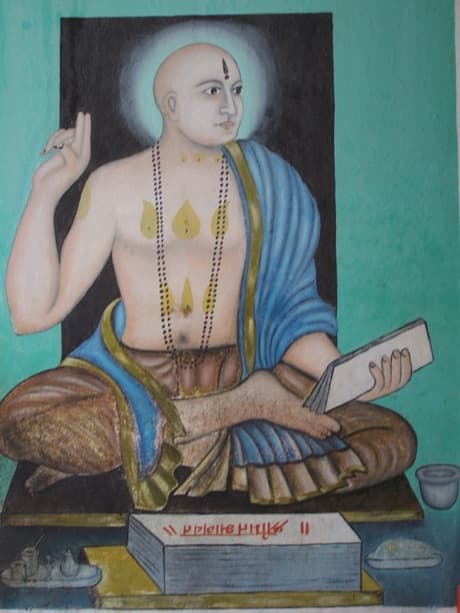
Madhvācārya · Dvaita
Madhva BhāṣyaSanskritEnglishOn verses 7.20–7.23
“प्रकृत्या स्वभावेन | स्वभावः प्रकृतिश्चैव संस्कारो वासनेति च | इत्यभिधानात् ||” - By nature means by their innate inclination and conventional impressions. By innate attributes, by nature, by tradition and by attraction of senses, thus having been spoken.
“यां याम् ब्रह्मदिरूपां तनूम् | उक्तं च नारदीये - अन्तो ब्रह्मदिभक्तानां मद्भक्तानां अन्तारा || इति | मुक्तच्छ कं गतिं गच्छेन्मोक्षश्चैव किमात्मकः? इत्यादेः | परिहारसम्बन्धो मोक्षधर्मेषु | अवतारे महाविष्णोर्भक्तः कुत्र च मुच्यते? इत्यादेः च ब्रह्मवैवर्ते ||” - Here यां याम् तनूम् means in whatever other forms, like those of Brahma and others. There is conclusion to the devotees of Brahma and others but to my devotees there is no such conclusion, thus in Narada Puraana. What is the goal of deliverance? Where does the self go after deliverance? All the matters dealing with deliverance have been explained here. Even though manifestations of the Lord are many, deliverance is singularly assured to the devotee of the Lord, thus in Brahma Vaivartaka Puraana.
Madhvācārya · Dvaita
Gītā Tātparya NirṇayaSanskritEnglishOn verses 7.20–7.23
“विष्णुं तत्परं ज्ञात्वा रमाव्रह्महरादिकान् | यजन्नापि तमोघोरं नित्यदुःखं प्रयाति हि || अज्ञानां तु कुले जातो यावद् विष्णुः समर्चयन् | विष्णुतत्त्वं च जानीयत् तावत् | सेव पृथक् कृता || विद्यादैहिकभोगय यदि बुद्ध्वा पुनर्नतु | परिवर्तामृते कुर्यादन्यदेवार्चनं क्वचित् || अजानता कृतं त्वक्तं न दोषाय भविष्यति | जन्मादिप्रदमेव स्यादत्यागे पुनरेव तु || क्षिप्रं च ज्ञापयत्येव भगवान् स्वायमेव तु | यदि जन्मान्तरे स्वीयो निनित्तीकृत्य कश्चन || इत्यादि च ||” - Even after knowing Sri Vishnu as the Supreme One, those who propitiate Ramaa, Brahma, Hara and others as the superior ones, though such worship, they enter the dark world of tamas (obscurity), offering the eternal misery, to those born in the family of those who have no awareness. Whereas Sri Vishnu alone is fully to be propitiated because without knowing this principles of propitiating Sri Vishnu other propitiation becomes disparate. Knowledge comes to be used only for the satisfaction of the body. If by discrimination one becomes aware of the truth, then other gods should be worshipped knowing them to be the members of His family.
The worship done unknowingly and later given up, does not bring any demerits. Only it causes re-births. In the subsequent life the Lord Himself grants quick recollection making some one the instrument of the proper mode of worship.
“मत्त एवेति तान् विद्धि इत्युपसंहाराच्च तत्कारणत्वात् तत्तनामेत्यवसीयते | मयि सर्वमिदं प्रोतम् | इति भेदेनैवोपक्रमाच्च | आप्नोति विष्णुमित्येवाऽस्मशब्दो ज्ञानिनि | आप्नोति यदादत्ते इत्यादेः | आस्थितः स हि, मां प्रपद्यते इत्यादिवाक्यशेषाच्च | बहूनां जन्मनान्ते ज्ञानवान् भवति | ततो मां प्रपद्यते | वासुदेवः सर्वमिति पूर्णमिति जानन् | प्रपद्यन्तेऽन्यदेवताः इतिवाक्यशेषे भेददर्शनाच्च | देवान् देवयज्ञो यान्ति मद्भक्ता यान्ति मामपि | इति च ||” - Knowing Me in this manner... - with these words of conclusion, He clarifies that He alone exists in everything. मयि सर्वमिदं प्रोतम् - speaks only of the difference. Thus he clarifies that for the one who is knowledgeable, Sri Vishnu alone is the Self within. “That which is attained; that which gives” with such statements, आस्थितः स हि, मां प्रपद्यते - one who is devoted to Me attains Me, particularly with such sentences, then He attains Me, “At the end of many lives one attains knowledge” knowing that Vasudeva is all this. Knowing Vasudeva as all this and also as the Complete one. “Those who worship other gods” such sentences show the difference. Those who are devoted to gods attain only the gods; while those who worship Me attain Me alone.
“ज्ञात्वा परत्वं विष्णोस्तु पृथग् देवान् यजन्तः | याति देवास्तदज्ञात्वा तम एव प्रपद्यते | तथापि यावदन्यैस्तु साम्यं हीनत्वमेकताम् | नकिञ्चिन्वन्ति जायन्ते संसारे ते पुनः पुनश्च || इति च ||” - Knowing the supremacy of Sri Vishnu, those human beings who worship others gods as the separate ones, go to the worlds of tamas (obscurity). Even then whoever considers the other gods as similar to, or superior than, or capable of being united with Sri Vishnu would certainly attain the world of tamas (obscurity).

Jñāneśvar · Vārkarī
English22 “(And) the man, joined to that (same) faith, longs for the adoration of that Divinity; and he does obtain therefrom (fulfilment of) those desires, seeing that they are (actually) granted by none but myself. (145)
With such erring faith in his mind, he worships that particular deity in the prescribed form, and persists in such worship until he obtains the fulfilment of his desires. Such a devotee succeeds in securing whatever fruit he desires, but even this fruit is My gift.
Swami Ramsukhdas · Modern
English'Sa tayā śraddhayā yuktaḥ'—A devotee, whose faith has been made firm by Me, worships the god and obtains his desired enjoyment. Actually, his desire is satisfied by Me, but he feels that his desire has been satisfied, by the gods. The fact is, that the gods' power is nothing, besides My power, and they satisfy desires, as ordained by Me.
The gods, are just like government officers, in different departments. So, their power is limited. The gods at the most, can carry their devotees, to their worlds. But, after reaping the fruit of their virtuous deeds, they have to come back to this world (Gītā 8/16).
By using the phrase 'Mayaiva', Lord Kṛṣṇa means that the whole universe is managed by Him, and so whatever one obtains, is ordained only by Him. If a man, understands this mystery, he cannot help being attracted, towards Him.
Appendix—God has provided all the deities with different and limited rights. But God has limitless rights. This is the special feature of God that He does not rule over anyone, does not make anyone His slave, does not make anyone His disciple, but makes
everyone His friend and He elevates him equal to Himself. As Niṣādarāja was a devotee who had attained perfection, Vibhīṣaṇa was a striver and Sugrīva was passionate, but Lord Rāma accepted all the three as His friends. The deities etc., don't possess this special virtue of making a devotee their friend. Therefore in the Vedas the soul has been declared as the friend of God—
**dvā suparnā sayujā sakhāyā samānam vṛkṣaṁ pariṣasvajāte**
(Muṇḍaka 3/1/1, Śvetā. 4/6)
In the Gītā Lord Kṛṣṇa has said to Arjuna—'bhakto'si me sakhā ceti' (4/3)—'thou art My devotee and My friend'. Here the Lord has called Arjuna a 'devotee' from Arjuna's point of view,* but from His point of view, He has called him 'friend'. 'Mamaivāṁso jīvaloke' (15/7)—in this expression also the Lord by the term 'eva' has mentioned that the soul is His manifestation. 'The soul is My fragment only'—this expression means that in the soul there is no fragment of Prakṛti at all.
*Link:—Now Lord Kṛṣṇa, describes the fruit according to worship.*
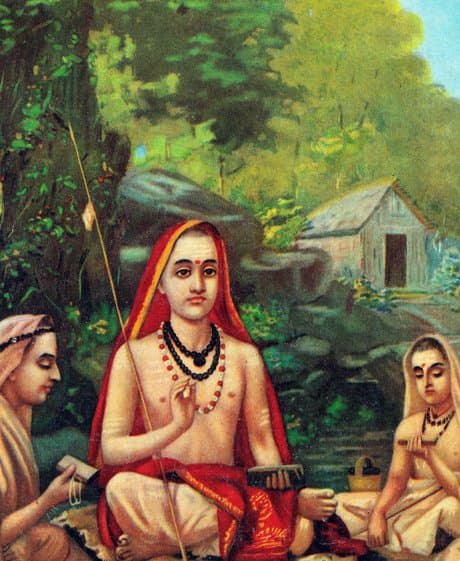
Ādi Śaṅkarācārya · Advaita
Sanskritस तया मद्विहितया श्रद्धया युक्तः सन् तस्याः देवतातन्वाः राधनम् आराधनं ईहते चेष्टते । लभते च ततः तस्याः आराधितायाः देवतातन्वाः कामान् ईप्सितान् मयैव परमेश्वरेण सर्वज्ञेन कर्मफलविभागज्ञतया विहितान् निर्मितान् तान्, हि यस्मात् ते भगवता विहिताः कामाः तस्मात् तान् अवश्यं लभते इत्यर्थः । ``हितान्'' इति पदच्छेदे हितत्वं कामानामुपचरितं कल्प्यम् ; न हि कामा हिताः कस्यचित् ॥ यस्मात् अन्तवत्साधनव्यापारा अविवेकिनः कामिनश्च ते, अतः --
Ādi Śaṅkarācārya · Advaita
Hindiमेरे द्वारा स्थिर की हुई उस श्रद्धासे युक्त हुआ वह उसी देवताके स्वरूपकी सेवा—पूजा करनेमें तत्पर होता है।
और उस आराधित देवविग्रहसे कर्म-फल-विभागके जाननेवाले मुझ सर्वज्ञ ईश्वरद्वारा निश्चित किये हुए इष्ट भोगोंको प्राप्त करता है। वे भोग परमेश्वरद्वारा निश्चित किये होते हैं इसलिये वह उन्हें अवश्य पाता है, यह अभिप्राय है।
यहाँपर यदि 'हितान्' ऐसा पदच्छेद करें तो भोगोंमें जो 'हितत्व' है उसको औपचारिक समझना चाहिये, क्योंकि वास्तवमें भोग किसीके लिये भी हितकर नहीं हो सकते
Jñāneśvar · Vārkarī
Hindi(7.145) तथा वह उस श्रद्धा से युक्त हो कार्यसिद्धि होने तक उन देवताओं का उचित रीति से आराधन करने में प्रवृत्त होता है
(7.146) जो जैसी भावना करता है उसे वैसा ही फल मिलता है, परन्तु ये सब बातें मेरे ही कारण होती हैं।

Sri Udiya Baba · Modern
Hindiभावार्थ— उस श्रद्धा से युक्त होकर वह उस देवता की उपासना करता है और मेरे द्वारा ही दिये हुए उन भोगों को वह उस देवता से प्राप्त करता है।
व्याख्या— तात्पर्य यह कि मैं ही उस देवता में उसका प्रेम कराता हूँ और मैं उसे उसके अभीष्ट फल देता हूँ। किन्तु वे फल नाशवान् ही होते हैं—यही बात भगवान् आगे कहते हैं।
Swami Ramsukhdas · Modern
Hindi‘स तया श्रद्धया युक्तः ... मयैव विहितान्हि तान्’—मेरे द्वारा दृढ़ की हुई श्रद्धासे सम्पन्न हुआ वह मनुष्य उस देवताकी आराधनाकी चेष्टा करता है और उस देवतासे जिस कामनापूर्तिकी आशा रखता है, उस कामनाकी पूर्ति होती है। यद्यपि वास्तवमें उस कामनाकी
पूर्ति मेरे द्वारा ही की हुई होती है; परन्तु वह उसको देवतासे ही पूरी की हुई मानता है। वास्तवमें देवताओंमें मेरी ही शक्ति है और मेरे ही विधानसे वे उनकी कामनापूर्ति करते हैं। जैसे सरकारी अफसरोंको एक सीमित अधिकार दिया जाता है कि तुमलोग अमुक विभागमें अमुक अवसरपर
इतना खर्च कर सकते हो, इतना इनाम दे सकते हो। ऐसे ही देवताओंमें एक सीमातक ही देनेकी शक्ति होती है; अतः वे उतना ही दे सकते हैं, अधिक नहीं। देवताओंमें अधिक-से-अधिक इतनी शक्ति होती है कि वे अपने-अपने उपासकोंको अपने-अपने लोकोंमें ले जा सकते हैं। परन्तु अपनी उपासनाका फल भोगनेपर उनको वहाँसे लौटकर पुनः संसारमें आना पड़ता है (गीता—आठवें
**परिशिष्ट भाव**—भगवानने सब देवताओंको अलग-अलग और सीमित अधिकार दिये हुए हैं। परन्तु भगवानका अधिकार असीम है। भगवानमें यह विशेषता है कि वे किसीपर शासन नहीं करते, किसीको अपना गुलाम नहीं बनाते, किसीको अपना चेला नहीं बनाते, प्रत्युत हर एकको अपना मित्र बनाते हैं, अपने समान बनाते हैं। जैसे, निषादराज सिद्ध भक्त था, विभीषण साधक था और सुग्रीव विषयी था, पर भगवान श्रीरामने तीनोंको ही अपना सखा बनाया। यह विशेषता देवताओं आदि किसीमें भी नहीं है। इसलिये वेदोंमें भी भगवानको जीवका सखा बताया गया है—
**द्वा सुपर्णा सयुजा सखाया समानं वृक्षं परिषस्वजाते।**
(मुण्डक० ३। १। १, श्वेता० ४। ६)
गीतामें भी भगवानने अर्जुनको कहा है—‘भक्तोऽसि मे सखा चेति’ (४। ३)। यहाँ भगवानने ‘भक्त’ तो अर्जुनकी दृष्टिसे कहा है*, पर अपनी दृष्टिसे ‘सखा’ कहा है। ‘ममैवांशो जीवलोके’ (१५। ७)—इन पदोंमें भी भगवानने ‘एव’ पदसे जीवको साक्षात् अपना स्वरूप बताया है। यह मेरा ही अंश है—ऐसा कहनेका तात्पर्य है कि इसमें प्रकृतिका अंश बिलकुल नहीं है।
सम्बन्ध—अब भगवान उपासनाके अनुसार फलका वर्णन करते हैं।
“The results obtained by their worship are trivial and limited. Why?
The devotees of devas like Indra go to them; and Indra and other devas possess limited joy and are conditioned by time and space. So if they attain equality of enjoyment with them, they also fall down along with them in due course.
But My devotees, fully mindful of the fact that all their acts are being done as worship of Me, renouncing attachment for finite rewards, and acting in order to please Me alone, reach Me. That is, they never again return to the cycle of transmigration [Samsāra].