

Bhagavad Gītā · Chapter 7 · Jñāna Vijñāna Yoga
उदाराः सर्व एवैते ज्ञानी त्वात्मैव मे मतम्
आस्थितः स हि युक्तात्मा मामेवानुत्तमां गतिम्
udārāḥ sarva evaite jñānī tvātmaiva me matam|
āsthitaḥ sa hi yuktātmā māmevānuttamāṃ gatim||
Word meanings
एते = these
सर्वे, एव = all indeed
उदाराः = noble
तु = but
ज्ञानी = the man of knowledge
मे = my, of Me
हि = for
सः = that
युक्तात्मा = with mind united, steadfast
गतिम् = the goal
माम् = in Me
एव = indeed
आस्थितः = is established, fixed
Translation
Indeed all these are noble, but the man of wisdom is My very self: such is My view. For such a devotee, who has his mind and intellect merged in Me, is firmly established in Me alone, the highest goal.
Commentary
The commentators seated around this verse
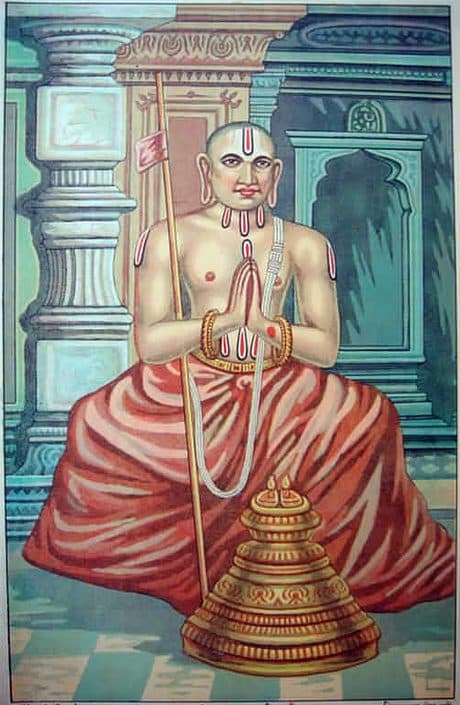
Rāmānuja · Viśiṣṭādvaita
English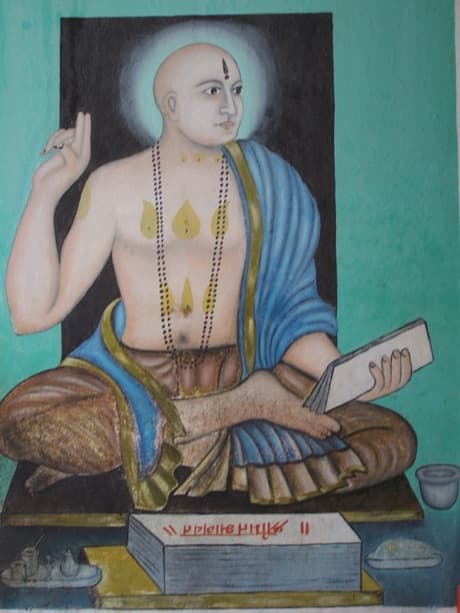
Madhvācārya · Dvaita
Madhva BhāṣyaSanskritEnglishOn verses 7.13–7.19
“तर्हि कथमेव न ज्ञायस ? इत्यत आह - त्रिभिः इति | तादात्म्यार्थं मयद् | तच्चोक्तम् - तादात्म्यार्थं विकारार्थं प्राचुर्यार्थं मयद् त्रिधा इति | नहि गुणकार्यभूता माया | गुणमयि इति च वक्ष्यति | सिद्धं च कार्यस्यापि तादात्म्यम् - तादात्म्यं कार्यधर्मादिः सम्योगो भिन्नवस्तुनोः इत्यादि व्यासयोगे ||” - Why does he (Arjuna) not know? This is explained in three ways. To show his attachment (to the attributes), the word माया is used. माया is used in three ways as Self, as modification and as effulgence. Not as Sri Durgadevi's actions, thus Gita-Kalpa. He speaks of गुणमयी as his attributes. His actions also subscribe to his Nature. One's inclination is compatible with one's nature, association is with two distinct objects, thus in Vyasa Yoga.
“भावैः पदार्थैः | सर्वे भावा दृश्यमाना गुणमया एत | इति दर्शयति - एभिः इति | ज्ञानिव्यावृत्त्यर्थम् - इदम् इति | गुणमयदेहादिकं दृष्टवेश्वरदेहोऽपि तादृश इति मायामोहित इत्यर्थः | जगाद् च व्यासयोगे - गौणान् ब्रह्मादिदेहादीन् दृष्ट्वा विष्णोरपीतृशः | देहादिरिति मन्वानो मोहितोऽज्ञो जनो भूशम् || इति | एभ्यः गुणमयेभ्यः | गुणेभ्यः परम् इति वक्ष्यमाणत्वात् | केवलो निर्गुणश्च | इत्यादि श्रुतिभ्यश्च | त्रैगुण्यवर्जितम् इति चोक्तम् ||” - One's inclination is compatible with one's nature, association is with two distinct objects. भावैः means by inclination. All objects become perceivable by us because of their attributes and inclinations. By these, they are seen; इदम् is used to show that they are not deluded. Seeing our own body consisting of threefold attributes, those who think that Lord's body is also similarly formed, are deluded people. Seeing the bodies of Brahma and others with attributes, those who consider that Sri Vishnu also is similarly formed of body, being deluded men are under bondage, thus in Vyas Yoga. एभ्यः means by things having attributes. Sri Vishnu having been spoken as beyond the (threefold) attributes, entirely formless, devoid of three-fold attributes.
“कथमनादिकाले मोहनत्ययो बहूनाम् ? इत्यत आह - देवी इति | अयमाशयः - माया होषा मोहिका | सा च मुष्ट्यादिकिडादिमद् देवसन्मन्वित्वादतिशक्तैः दुरत्यया | तथाहि देव शब्दार्थः पठन्ति - दिवु किडाविजिगिपाव्यवहारद्युतिमोदमद्वप्नकान्तिस्तुतिगतिषु इति | कथं देवी? मदीयत्वात् | अहं हि देव इति |” - The reasons why has this delusion not been surmounted ? This is explained here, saying divine is this illusion which deludes people by her great power. Therefore, luminous, sport or play, desire to conquer, splendour, adoration, pleasure, imagination, brilliance and movement are the attributes. Why is it Divine ? Because of its being under the control of the supreme Lord, who alone is the Lord.
“श्रीभूदुर्गति या भिन्ना महामाया तु वैष्णवी | तच्छक्त्यनन्तांशहीनाऽथापि तस्याऽश्रयात् प्रभोः | अनन्तब्रह्मगुद्रादेनस्याः शक्तिः कलाऽपि हि | तेषां दुरत्ययाऽप्येषा विना विष्णुप्रसादतः || इति व्यासयोगे | तर्हि न कथञ्चिदत्येतुं शक्यत इत्यत आह - मामेव इति | अन्यत् सर्वे परित्यज्य मामेव ये प्रपद्यन्ते | गुर्वादिवन्दनं च मय्येव समर्पयन्ति | स एव च तत्र स्थित्वा गुर्वादिर्भवतीत्यादि पश्यन्ति आह च नारदीये ||” - Shri, Bhu and Durga are the distinct three forms of the Great Illusion, of Sri Lakshmi. She does not partake the endless energies of the Lord, since she has taken refuge in Him. Because of such protection, Rudra, Brahma and other Gods do not possess even a small part of her manifestation. Without the grace of Sri Vishnu even they cannot overcome her power, thus in Vyasa Yoga.
“तर्हि न कथश्चिदत्येतुं शक्यत इत्यत आह - मामेव इति | अन्यत् सर्वे परित्यज्य मामेव ये प्रपद्यन्ते | गुर्वा दिवन्दनं च मय्येव समर्पयन्ति | आह च नारदीये - मत्सम्पत्या तु गुर्वादीन् भजन्ते मध्यमा नराः | मदुपाधितया तांश्च सर्वभूतानि चोत्तमाः | इति | आचार्यचैत्यवपुत्रा स्वगतिं व्याडिक्ष इति च |” - To the question how can माया be surmounted, Sri Krishna replies saying taking refuge in Me. The one who renounces all else, taking refuge in supreme Lord alone, his adoration to the Teacher etc. reaches him alone or he perceives that (the Teacher) has become great because supreme Lord is abiding in him. The intermediate human beings because of My being near him, propitiate the Teacher. The superior ones propitiate all the creatures, they being manifested in Me, thus in Narada Purana. Through your form of consciousness, which is in Mind of the Teacher, You yourself teach the wisdom about Yourself.
“तर्हि किमिति सर्वे नत्यायन् ? इत्यत आह - न माम् इति | दुष्कृतित्वान् मूढाः | अत एव नराधमाः | अपहतज्ञानवाच्च मूढाः | अत एव असुर भावमाश्रिताः | स च वक्ष्यते - प्रवृत्ते च निवृत्तिं इत्यादिना | अपहारोऽभिभवः | उक्तम् चैतद् व्यासयोगे - ज्ञानं स्वभावो जीवानां मायया चाभिभूयते || इति | असुरुतः असुराः | तच्चोक्तं नारदीये - ज्ञानप्रधाना देवास्तु असुराश्रतु रता असौ || इति |” - Why do all people not surrender to Him. This is explained in this verse. The are deprived of intelligence, because of their evil deeds. Same is the case with the mean ones among men, robbed of their Wisdom, they become bewildered in their intelligence. Therefore, they take shelter in demonic inclination. Here the word माययाऽपहता means robbed or concealed, stolen by the illusory energy. Awareness (ज्ञान) is the natural tendency of the one born; by illusion it becomes concealed. The one who is intent in satisfying the senses is असुर (unenlightened), thus in Vyasa Yoga. Among the Gods there is predominance of ज्ञान; among असुर enjoyment of senses is predominant, thus in Naarada Puraana.
“एकस्मिन्नेव भक्तिः इति एकभक्तिः | तच्चोक्तं गारुडे - मय्येव भक्तिर्नान्यत्र एकभक्तिः स उच्यते || इति ||” - Devotion in Me alone, singular devotion. Therefore it is said in Garuda Purana: “The devotion to Me alone and to no one else is said to be Singular Devotion”.
“बहूनां जन्मनामन्ते ज्ञानवान् भवति | तच्चोक्तं बाह्ये - जन्माभिर्बहुभिर्ज्ञात्वा ततो मां प्रतिपद्यते || इति |” - At the end of many lives he becomes aware, therefore, it is said in Brahma Puraana: “Being aware after taking many births, he attains to Me”.
Madhvācārya · Dvaita
Gītā Tātparya NirṇayaSanskritEnglishOn verses 7.13–7.19
“अन्यायतो अचेतनया तन्मेयत्वात्तु मायया | लक्ष्म्या वशगया लोको विष्णुनैव विमोहितः || ये तु विष्णुं प्रपद्यन्ते ते मायां तां तरन्ति हि | लक्ष्मीः सा जडमायाया देवता ते उभे अपि || विष्णोर्वशे ततोऽनन्यभक्त्या तं शरणं व्रजेत् | यादृशी तत्र भक्तिः स्यात् तादृश्यन्यत्र नैव चेत् || अनन्यभक्तिः सा ज्ञेया विष्णुवेव तु सा भवेत् | अन्येषु वैष्णवत्वेन लक्ष्मीब्रह्महरादिषु | कुर्याद् भक्तिं नान्यथा तु तदृशा एव ते यतः | एवं जानस्तमाप्नोति नान्यथा तु कथञ्चन || पूर्णं वस्तु यतो ह्येको वसुदेवो नचापरः | एवंविहुलभो लोके यत् सर्वे मिश्रयुजनः ||” - The unmanifest (Sri Lakshmi), verily, is what causes Illusion. People who are under the influence of Sri Lakshmi are essentially deluded by Sri Vishnu Himself. Those who propitiate Sri Vishnu, only they will surely cross over the Illusion. Gross Illusion and its presiding deity Sri Lakshmi both are subservient to Sri Vishnu. Therefore, everyone should surrender to Sri Vishnu with uncompromising devotion. The form of fullness of devotion is not possible to arise anywhere else. अनन्यभक्ति - uncompromising devotion should be known as that in which one is attuned to Sri Vishnu in all entirety. The devotion to Sri Lakshmi, Brahma, Rudra and others should be considered as devotion to Sri Vishnu, because they are all subservient to Him. Knowing thus, one reaches Him but not through any other means. The Complete One is Vasudeva alone, no one else. The ones who knows thus are very rare in the world, while all are, verily, the mixed aspirants.
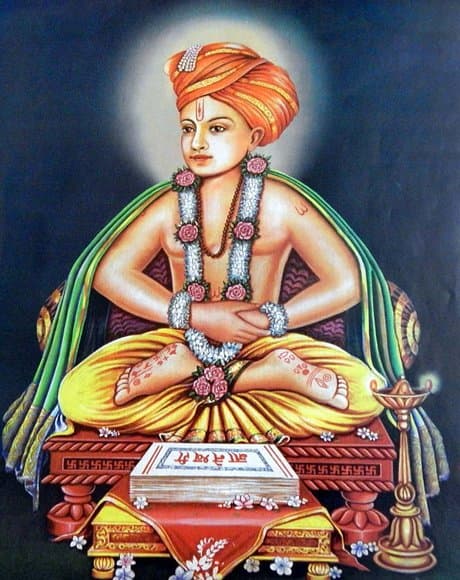
Jñāneśvar · Vārkarī
English18 *“All these in sooth are men of lofty souls, but the man of knowledge is—such is my opinion—my very self; for he, with devoted self, has set Me alone as his Supreme Goal.”* (119)
Anyone then may indeed try to cling fast to Me as my devotee with the object of securing his own end. But the man of knowledge alone, whose devotion claims Me entire, is the devotee I hold dear. Just see. Men tie the hind-legs of the cow, in order to secure her milk; but how is it that the young calf gets its share of the milk without such a rope? The truth is that the calf knows nothing except its mother, but feels “This is my mother” from the bottom of its heart as soon as it sees her. The cow likewise sees that the young one is helpless and supportless without herself, and loves it with all her soul, and thus the saying of the Lord of Lakshmi is all true. Let that pass. The Lord then went on “The other devotees that I mentioned are good in their own way and they are dear to Me. But those that lose everything including their (past) self after knowing Me, like a river ending with its approach to the sea—those whose entire love is as it were the Ganges moving into the ocean of realization of the Absolute Divine Self,—such devotees are none other but Myself. Why waste more words? Really speaking, whosoever attains knowledge, is My very sentience-My very soul. This in fact is not a matter of words, but I have uttered a truth this is unutterable.
Swami Ramsukhdas · Modern
English'Udārāḥ sarva evaite'—All these are noble. The term 'Udārāḥ' (noble), has several interpretations—
(1) In the eleventh verse of the fourth chapter Lord Kṛṣṇa declares, 'Howsoever men approach Me, even so do I seek them.' A devotee, likes God and so does God like a devotee. But, a devotee is noble, because he accepts his affinity and surrenders himself first to God. He does not bother, whether God calls him His own or not.
(2) Devotees of the gods (deva) perform oblation, charity, penance etc., following the rules for fruits. The gods, grant them boons, as desired by devotees, without thinking of the welfare of devotees. But, God grants only boons, which are for their welfare and which enhance their devotion. He does not grant boons, by which their devotion is not enhanced and they may be entangled in the world, because He is the supreme father and the greatest well-wisher. So, the devotees of God, worship Him, not caring whether their desires are satisfied, or not. Thus, they are noble.
(3) Worldly pleasure and prosperity, obviously seem pleasant, while adoration does not seem to bear immediate
fruit, yet devotees adore the Lord without caring for pleasure and prosperity. So they are noble.
(4) One, who wants anything from God is called noble. It is so, because God Himself is very much noble and He regards one who wants anything from Him, as noble.
(5) Devotees with an exclusive devotion, want their mundane as well as spiritual desires, to be satisfied only by God. Because, of their exclusive devotion, they are noble.
**'Jñāni tvātmaiva me matam'**—The other three devotees, are noble, but a man of wisdom, is the Lord's own manifestation, and so is naturally, loving to Him. The self, is naturally loving to everyone. It knows no motive or cause. So, the term 'Tu' (but), denotes singularity, of the man of wisdom.
In divine love, the lover surrenders himself to his Beloved and identifies himself with Him. Similarly, the Beloved also surrenders Himself to His lover. So they identify themselves, with each other. This union in the Discipline of Knowledge, remains calm and constant. But, in the Discipline of Devotion (love), it increases every moment, and in it the lover and the Beloved even having separate entities, are one and in spite of, being identified with each other, are two. This love cannot be expressed, in words. In this divine love affair, even in seeming separation, there is constant union, while in natural union there is also union.
When a river flows into the sea, both of them, become one. But, sometimes a river flows towards the sea and sometimes the sea flows, towards the river. Similar is the case in divine love, of the lover and Beloved. This drama of divine love, between a lover and the Beloved, continues for infinite years, in infinite forms. There develops such an intense love, between the two, that it becomes difficult to know, who is the lover and who the Beloved. Both of them
are Beloved, and both of them are lovers.
'Āsthitaḥ sa hi yuktātmā māmevānuttamām gatim'—A man of wisdom by being steadfast in mind, remains established in God, who is supreme and above whom, there is none. Such a devotee remaining unaffected by favourable or unfavourable circumstances, is always absorbed in Him. He has a firm belief, that only God is his, and that affinity is enhanced in both desirable and undesirable circumstances. Thus, he remains firmly established in Him.
**Appendix**—The worldly seeker of wealth instead of yearning for God, wants only wealth, therefore he is a devotee of falsehood, fraud and dishonesty etc. From his heart he attaches much importance to wealth, therefore he is not generous (noble) but he is very miserly. Therefore the term 'generous' is not applicable to him. But the seeker of wealth, who is a devotee of God, from his heart does not attach importance to wealth but attaches importance to God. So he is not miserly but he is generous (noble). Therefore the Lord has called him noble. Here generous (noble) means renunciation. The seeker of wealth, the sufferer and the seeker of knowledge—all these devotees having renounced the world (pleasure and prosperity) have started worshipping God—this is their renunciation. Therefore all of them are noble—'udārāḥ sarve evaite'. Because of the predominance of their relationship with only God, the seeker of wealth, the sufferer and the seeker of knowledge also afterwards naturally become 'Jñānī' (devotees).
There is a vital point that atheism is more defective than a desire. Those who, instead of worshipping God, worship other deities, if they are desire-ridden, they follow the cycle of birth and death—'gatāgatam kāma kāmā labhante' (Gītā 9/21). But those who worship only God, if any desire remains in them, then by God's grace and by the influence of their worship, they attain God. The reason is that if a man is connected with
God in anyway, he attains only God* because basically he is a fragment of God.
The seeker of wealth, the sufferer and the seeker of knowledge—all the three have been called 'noble' by God. But those who don't worship God but worship other deities, the Lord instead of calling them noble, have called them men of meagre intellect (Gītā 7/23) and their worship has been called as the worship in a mistaken manner (Gītā 9/23). Their worship is in a mistaken manner because they regard gods as different from God viz., they don't regard gods as the manifestation of God and moreover they are desire-ridden. It means that 'not to behold God in all' is more harmful than 'to work with an interested motive' because in the former there is no relation with the sentient (divinity) (God).
An enlightened (self-realized) soul has his 'tāttvika ektā' (unity in essence) viz., 'Sadharmatā' (merger into God's Being) with the Supreme but a devotee has his 'ātmīya ektā' viz., he becomes the Lord's own self—'Jñānī tvātmaiva me matam'. In 'tāttvika unity' (Sadharmatā), there is 'abheda' between the self and Brahma viz., as Brahma is truth, consciousness and bliss solidified, similarly he also becomes truth, consciousness and bliss solidified and nothing else remains besides the Supreme Reality. But in a devotee's 'ātmīya' unity the self and God become 'abhinna' (inseparable). In this 'abhinnatā' the devotee and the Lord in spite of being one, become two in order to exchange love with each other. In this state both are lovers and both are beloved (Sometimes God is the lover and the devotee is the beloved and vice versa). Therefore in spite of
*kāmād dveṣād bhayāt snehād yathā bhaktyeśvare manaḥ āveṣya tadaghaṃ hitvā bahavastadgatim gatāḥ
(Śrīmadbhā. 7/1/29)
"Not one, many men out of desire, malice, fear and love by concentrating (focussing) their mind on God and washing away all their sins, have attained God in the same way as a devotee attains Him by devotion."
being two, they remain only one.
A man (the self) is a fragment of God. The more disinclination he has for God, the more his ego is inflated; and the more inclination he has to God, the more his ego is wiped out. Even after being established in the self, he can have an iota (trace) of subtle ego. But in devotion living in developed oneness with God through devotion, a devotee’s attachment to the lower nature (aparā prakṛti) is totally renounced and his ego is totally wiped out because ego is the evolute of aparā prakṛti. Therefore the Lord declares—‘jñānī tvātmaiva me matam’ (a Jñānī viz., devout devotee is verily My own self).
A seeker of wealth, a sufferer and a seeker of knowledge, gradually lose their independent entity (ego), while a Jñānī (devotee) has no independent entity. Therefore the expression ‘tvātmaiva’ means that a lover (devotee with exclusive devotion) has no independent entity besides God and only God remains viz., the lover becomes the manifestation of God—tasminstajjane bhedābhāvāt (Nārada. 41). This ‘ātmīyatā’ (intimacy) with God is dualism for devotion which a devotee accepts himself in order to enhance devotion and it is far superior to the non-dualism of Jñānayoga—‘bhaktyartham kalpitam (svikṛtam) dvaitamadvaitādapi sundaram’* (Bodhasāra, Bhakti. 42).
‘Māmevānuttamām gatim’—There is no other Supreme goal besides God. The term ‘gati’ has three meanings—knowledge, speed (act of going) and attainment. Here the term ‘gati’ has been used for attainment. Being the final attainable Reality, God is the Supreme goal to be attained.
‘Aṣṭhitaḥ’—One steadiness is gained by practice and the other steadiness is natural. As every being feels ‘I am’—this is natural steadiness in one’s own self, similarly a wise devotee
* The non-dualism of devotion is not an imagination but it is an acceptance. The imaginative non-dualism is untrue and it is devoid of love.
(who has exclusive devotion) naturally remains established steadily in God.
*Link:— In the next verse, Lord Kṛṣṇa describes, the man of wisdom, as mentioned in the previous verse, and indicates the kind of devotion he has.*
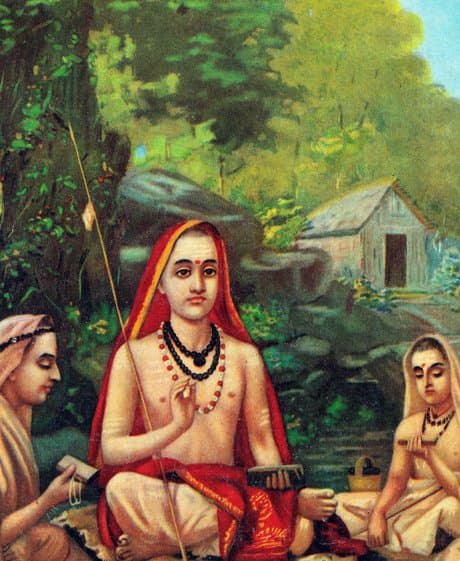
Ādi Śaṅkarācārya · Advaita
Sanskritउदाराः उत्कृष्टाः सर्व एव एते, त्रयोऽपि मम प्रिया एवेत्यर्थः । न हि कश्चित् मद्भक्तः मम वासुदेवस्य अप्रियः भवति । ज्ञानी तु अत्यर्थं प्रियो भवतीति विशेषः । तत् कस्मात् इत्यत आह -- ज्ञानी तु आत्मैव न अन्यो मत्तः इति मे मम मतं निश्चयः । आस्थितः आरोढुं प्रवृत्तः सः ज्ञानी हि यस्मात् ``अहमेव भगवान् वासुदेवः न अन्योऽस्मि'' इत्येवं युक्तात्मा समाहितचित्तः सन् मामेव परं ब्रह्म गन्तव्यं अनुत्तमां गन्तुं प्रवृत्त इत्यर्थः ॥ ज्ञानी पुनरपि स्तूयते --
Ādi Śaṅkarācārya · Advaita
Hindiतो फिर क्या आर्त आदि तीन प्रकारके भक्त आप वासुदेवके प्रिय नहीं हैं ? यह बात नहीं, तो क्या बात है ?
ये सभी भक्त उदार हैं, श्रेष्ठ हैं । अर्थात् वे तीनों भी मेरे प्रिय ही हैं । क्योंकि मुझ वासुदेवको अपना कोई भी भक्त अप्रिय नहीं होता, परंतु ज्ञानी मुझे अत्यन्त प्रिय होता है इतनी विशेषता है ।
ऐसा क्यों है सो कहते हैं—
ज्ञानी तो मेरा स्वरूप ही है, वह मुझसे अन्य नहीं है, यह मेरा निश्चय है, क्योंकि वह योगारूढ़ होनेके लिये प्रवृत्त हुआ ज्ञानी 'स्वयं मैं ही भगवान् वासुदेव हूँ, दूसरा नहीं' ऐसा युक्तात्मा—समाहितचित्त होकर मुझ परम प्राप्त्य गतिस्वरूप परब्रह्ममें ही आनेके लिये प्रवृत्त है
Jñāneśvar · Vārkarī
Hindi(7.119) अतएव अपने-अपने कल्याण के लोभ से हर एक भक्त मुझे भजता है, परन्तु मैं जिस पर प्रेम करता हूँ वह एक ज्ञानी ही है।
(7.120) देखो, दूध की आशा से जगत् गाय को डोरी से फाँसता है पर बछड़े का फन्दा डोरी के बिना ही कैसा बलवान् होता है!
(7.121) क्योंकि वह तन, मन, प्राण से उस गाय के अतिरिक्त और कुछ नहीं जानता। उसे देखते ही वह कहता है कि यह मेरी माता है।
(7.122) इस प्रकार वह अन्याधाररहित है इसलिए गाय को भी उससे वैसी ही प्रीति होती है। अतएव श्रीकृष्ण ने सत्य कहा।
(7.123) अस्तु, फिर श्रीकृष्ण ने कहा कि और जिन भक्तों का हमने वर्णन किया वे सब हमें प्रिय हैं।
(7.124) परन्तु मुझे जानकर जो संसार में लौटना भूल जाते हैं, जैसे समुद्र को पहुँच कर नदी का लौटना बन्द हो जाता है
(7.125) वैसे ही अन्तःकरणरूपी गुहा में जन्म लेकर जिनकी अनुभवरूपी गंगा मुझमें आ मिलती है, वे मद्रूप हैं। इस बात का शब्दों से कहाँ तक विस्तार करूँ। (7.126) वैसे भी जो ज्ञानी कहता है वह केवल मेरा जीवन है। यह बात कहनी नहीं चाहिए, पर क्या किया जाय, पर न कहने की
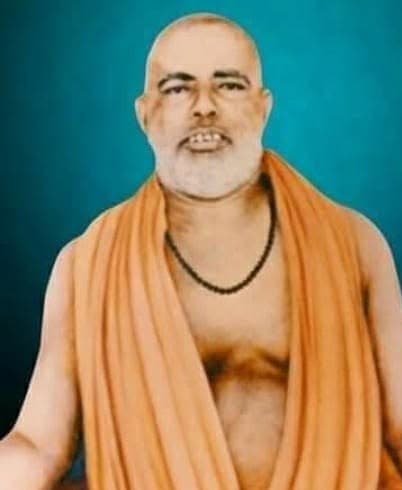
Sri Udiya Baba · Modern
Hindiसंगति— यदि नित्ययुक्त होने के कारण ज्ञानी ही श्रेष्ठ है तो क्या अन्य तीन प्रकार के भक्त श्रेष्ठ नहीं हैं? ऐसा प्रश्न होने पर कहते हैं—
भावार्थ— ये सभी उदार हैं, किन्तु ज्ञानी को तो मैं आत्मा मानता हूँ क्योंकि उस युक्तचित्त ज्ञानी की मुझ अनुत्तम (सर्वश्रेष्ठ) गति परमात्मा में ही आस्था है।
व्याख्या— प्रश्न—अनुत्तम गति क्या है?
उत्तर— मेरा सगुण स्वरूप भी उत्तम है, परन्तु वह अवाधित नहीं है। मेरा शुद्ध स्वरूप अवाधित है, अतः वही अनुत्तम है उससे श्रेष्ठ और कोई नहीं है, इसी से उसे अनुत्तम कहा है। वही ज्ञानियों की गति है, इसलिये ज्ञानी को अनुत्तमगति कहा है। ज्ञानी को आत्मा इसलिये कहा है क्योंकि उसमें और मुझमें कोई भेद नहीं है। जल और तरङ्ग के समान तत्त्वतः हम अभिन्न ही हैं। इसके सिवाय आत्मानन्द में दुःख का भी सर्वथा अभाव है, क्योंकि इसमें दीनता नहीं रहती। ज्ञानी का अपने इष्ट से नित्य संयोग है— दोनों एक ही हैं, अतः ज्ञानी को कभी वियोग का दुःख नहीं होता। उपासना में तो संयोग-वियोग दोनों ही होते हैं, इसलिये दुःख है। आत्मा को लाना नहीं पड़ता, भक्त तो भगवान् को लाता है और वे फिर चले भी जाते हैं। इसलिए अन्य भक्तों की अपेक्षा ज्ञानी श्रेष्ठ है। भगवान् ने यहाँ भक्त तो तीन ही माने हैं, क्योंकि ज्ञानी को तो वे अपना आत्मा कहते हैं—
Swami Ramsukhdas · Modern
Hindi‘उदाराः सर्व एवैते’—ये सब-के-सब भक्त उदार हैं, श्रेष्ठ भाववाले हैं। भगवान्ने यहाँ जो ‘उदाराः’ शब्दका प्रयोग किया है, उसमें कई विचित्र भाव हैं; जैसे—
(१) चौथे अध्यायके ग्यारहवें श्लोकमें भगवान्ने कहा है कि ‘भक्त जिस प्रकार मेरे शरण होते हैं, उसी प्रकार मैं उनका भजन करता हूँ।’ भक्त भगवान्को चाहते हैं और भगवान् भक्तको चाहते हैं। परन्तु इन दोनोंमें पहले भक्तने ही सम्बन्ध जोड़ा है और जो पहले सम्बन्ध जोड़ता है, वह उदार होता है। तात्पर्य यह है कि भगवान् सम्बन्ध जोड़ें या न जोड़ें, इसकी भक्त परवाह नहीं करता। वह तो अपनी तरफसे पहले सम्बन्ध जोड़ता है और अपनेको समर्पित करता है। इसलिये वह उदार है।
(२) देवताओंके भक्त सकामभावसे विधिपूर्वक यज्ञ, दान, तप आदि कर्म करते हैं तो देवताओंको उनकी कामनाके अनुसार वह चीज देनी ही पड़ती है; क्योंकि देवतालोग उनका हित-अहित नहीं देखते। परन्तु भगवान्का भक्त अगर भगवान्से कोई चीज माँगता है तो भगवान् अगर उचित समझें तो वह चीज दे देते हैं अर्थात् देनेसे उसकी भक्ति बढ़ती हो तो दे देते हैं और भक्ति न बढ़ती हो, संसारमें फँसावट होती हो तो नहीं देते। कारण कि भगवान् परम पिता हैं और परम हितैषी हैं। तात्पर्य यह हुआ कि अपनी कामनाकी पूर्ति हो अथवा न हो, तो भी वे भगवान्का ही भजन करते हैं, भगवान्के भजनको नहीं छोड़ते—यह उनकी उदारता ही है।
(३) संसारके भोग और रुपये-पैसे प्रत्यक्ष सुखदायी दीखते हैं और भगवान्के भजनमें प्रत्यक्ष जल्दी सुख नहीं दीखता, फिर भी संसारके प्रत्यक्ष सुखको छोड़कर अर्थात् भोग भोगने और संग्रह करनेकी लालसाको छोड़कर भगवान्का भजन करते हैं, यह उनकी उदारता ही है।
(४) भगवान्के दरबारमें माँगनेवालोंको भी उदार कहा जाता है—‘यहि दरबार दीनको आदर रीति सदा चलि आई।’ (विनयपत्रिका १६५।५) अर्थात् कोई कुछ माँगता है, कोई धन चाहता है, कोई दुःख दूर करना चाहता है—ऐसे माँगनेवाले भक्तोंको भी भगवान् उदार कहते हैं,
यह भगवान्की विशेष उदारता ही है।
(५) भक्तोंका लौकिक-पारलौकिक कामनापूर्तिके लिये अन्यकी तरफ किंचिन्मात्र भी भाव नहीं जाता। वे केवल भगवान्से ही कामनापूर्ति चाहते हैं। भक्तोंका यह अनन्यभाव ही उनकी उदारता है।
‘ज्ञानी त्वात्मैव मे मतम्’—यहाँ ‘तु’ पदसे ज्ञानी अर्थात् प्रेमी भक्तकी विलक्षणता बतायी है कि दूसरे भक्त तो उदार हैं ही, पर ज्ञानीको उदार क्या कहें, वह तो मेरा स्वरूप ही है। स्वरूपमें किसी निमित्तसे, किसी कारण-विशेषसे प्रियता नहीं होती, प्रत्युत अपना स्वरूप होनेसे स्वतःस्वाभाविक प्रियता होती है।
प्रेममें प्रेमी अपने-आपको प्रेमास्पदपर न्योछावर कर देता है अर्थात् प्रेमी अपनी सत्ता अलग नहीं मानता। ऐसे ही प्रेमास्पद भी स्वयं प्रेमीपर न्योछावर हो जाते हैं। उनको इस प्रेमाद्वैतकी विलक्षण अनुभूति होती है। ज्ञानमार्गका जो अद्वैतभाव है, वह नित्य-निरन्तर अखण्डरूपसे शान्त, सम रहता है। परन्तु प्रेमका जो अद्वैतभाव है, वह एक-दूसरेकी अभिन्नताका अनुभव कराता हुआ प्रतिक्षण वर्धमान रहता है। प्रेमका अद्वैतभाव एक होते हुए भी दो हैं और दो होते हुए भी एक है। इसलिये प्रेम-तत्त्व अनिर्वचनीय है। शरीरके साथ सर्वथा अभिन्नता (एकता) मानते हुए भी निरन्तर भिन्नता बनी रहती है और भिन्नताका अनुभव होनेपर भी भिन्नता बनी रहती है। इसी तरह प्रेमतत्त्वमें भिन्नता रहते हुए भी अभिन्नता बनी रहती है और अभिन्नताका अनुभव होनेपर भी अभिन्नता बनी रहती है।
जैसे, नदी समुद्रमें प्रविष्ट होती है तो प्रविष्ट होते ही नदी और समुद्रके जलकी एकता हो जाती है। एकता होनेपर भी दोनों तरफसे जलका एक प्रवाह चलता रहता है अर्थात् कभी नदीका समुद्रकी तरफ और कभी समुद्रका नदीकी तरफ एक विलक्षण प्रवाह चलता रहता है। ऐसे ही प्रेमीका प्रेमास्पदकी तरफ और प्रेमास्पदका प्रेमीकी तरफ प्रेमका एक विलक्षण प्रवाह चलता रहता है। उनका नित्ययोगमें वियोग और वियोगमें नित्ययोग—इस प्रकार प्रेमकी एक विलक्षण लीला अनन्तरूपसे अनन्तकालतक चलती रहती है। उसमें कौन प्रेमास्पद है और कौन प्रेमी
है—इसका खयाल नहीं रहता। वहाँ दोनों ही प्रेमास्पद हैं और दोनों ही प्रेमी हैं। यही 'ज्ञानी त्वात्मैव मे मतम्' पदोंका तात्पर्य है।
'आस्थितः स हि युक्तात्मा मामेवानुत्तमां गतिम्'—क्योंकि जिससे उत्तम गति कोई हो ही नहीं सकती, ऐसे सर्वोपरि मेरेमें ही उसकी दृढ़ स्थिति है।
**परिशिष्ट भाव**—सांसारिक अर्थार्थी भगवान्को छोड़कर केवल अर्थको ही चाहता है; अतः वह झूठ, कपट, बेईमानी आदिका भक्त होता है। उसके भीतर धनका महत्त्व ज्यादा होनेसे वह उदार नहीं होता, प्रत्युत महान् कृपण होता है। अतः उसके लिये 'उदार' शब्द लागू ही नहीं होता। परन्तु जो अर्थार्थी भगवान्का भक्त होता है, उसके भीतर अर्थका महत्त्व न होकर भगवान्का महत्त्व होता है। इसलिये उसमें कृपणता नहीं होती, प्रत्युत उदारता होती है। अतः उसको भगवान्ने यहाँ उदार कहा है। यहाँ उदारभावका अर्थ है—त्याग। अर्थार्थी, आर्त और जिज्ञासु भक्त संसार-(भोग और संग्रह-) को छोड़कर भगवान्में लग गये—यह उनका त्याग है। इसलिये वे सभी उदार हैं—'उदाराः सर्व एवैते।' एकमात्र भगवान्का सम्बन्ध मुख्य होनेसे अर्थार्थी, आर्त और जिज्ञासु भी आगे चलकर स्वतः 'ज्ञानी' हो जाते हैं।
एक मार्मिक बात है कि भगवान्को न मानना कामनासे भी अधिक दोषी है। जो भगवान्को छोड़कर अन्य देवताओंकी उपासना करते हैं, उनमें यदि कामना रह जाय तो वे जन्म-मरणको प्राप्त होते हैं—'गतागतं कामकामा लभन्ते' (गीता ९। २१)। परन्तु जो केवल भगवान्का ही भजन करते हैं, उनमें यदि कामना रह भी जाय तो भगवान्की कृपा और भजनके प्रभावसे वे भगवान्को ही प्राप्त होते हैं। कारण कि मनुष्यका किसी भी तरहसे भगवान्के साथ सम्बन्ध जुड़ जाय तो वह भगवान्को ही प्राप्त होता है*; क्योंकि वह मूलमें भगवान्का ही अंश है।
अर्थार्थी, आर्त और जिज्ञासु—इन तीनोंको ही भगवान्ने यहाँ 'उदार' कहा है। परन्तु जो भगवान्के सिवाय अन्यका भजन करनेवाले हैं, उनको भगवान्ने उदार न कहकर 'अल्पमेधा' कहा है (गीता—इसी अध्यायका तेईसर्वाँ श्लोक) और उनके भजनको अविधिपूर्वक किया गया बताया है (गीता—नवें अध्यायका तेईसर्वाँ श्लोक)। देवताओंको भगवान्से अलग समझनेके कारण अर्थात् देवताओंमें भगवद्बुद्धि न होनेके कारण तथा कामना भी होनेके कारण उनकी उपासना अविधिपूर्वक है। तात्पर्य है कि सबमें भगवद्बुद्धि न होना सकामभावसे भी अधिक घातक है; क्योंकि चेतनके साथ सम्बन्ध नहीं हुआ!
तत्त्वज्ञानीकी ब्रह्मसे 'तात्त्विक एकता' अर्थात् सधर्मता होती है; परन्तु भक्तकी भगवान्के साथ 'आत्मीय एकता' होती है—'ज्ञानी त्वात्मैव मे मतम्'। तत्त्वज्ञानीकी तात्त्विक एकता-(सधर्मता-) में जीव और ब्रह्ममें अभेद हो जाता है अर्थात् जैसे ब्रह्म सत्-चित्-आनन्दस्वरूप है, ऐसे वह भी सत्-चित्-आनन्दस्वरूप हो जाता है और एक तत्त्वके सिवाय कुछ नहीं रहता। परन्तु भक्तकी आत्मीय एकतामें जीव और भगवान्में अभिन्नता हो जाती है। अभिन्नतामें भक्त और भगवान् एक होते हुए भी प्रेमके लिये दो हो जाते हैं। उनमें दोनों ही प्रेमी और दोनों ही प्रेमास्पद होते हैं। इसलिये वे दो होते हुए भी एक ही रहते हैं।
जीव परमात्माका अंश है। अतः वह परमात्मासे जितना-जितना दूर जाता है, उतना-उतना अहंकार दृढ़ होता जाता है और वह ज्यों-ज्यों परमात्माकी तरफ आता है, त्यों-त्यों अहंकार मिटता जाता है। स्वरूपमें स्थित होनेपर भी सूक्ष्म अहमकी गन्ध रह सकती है। परन्तु प्रेममें परमात्माके साथ अभिन्नता (आत्मीयता) होनेपर जीवका अपरा प्रकृतिसे सर्वथा सम्बन्ध-विच्छेद हो जाता है और अहंकार सर्वथा मिट जाता है, क्योंकि अहंकार अपरा प्रकृतिका ही कार्य है। इसलिये भगवान्ने कहा है—'ज्ञानी त्वात्मैव मे मतम्'।
* कामाद् द्वेषाद् भयात् स्नेहाद् यथा भक्त्येश्वरे मनः। आवेश्य तदर्थं हित्वा बहवस्तद्गतिं गताः ॥
(श्रीमद्भा० ७। १। २९)
'एक नहीं, अनेक मनुष्य कामसे, द्वेषसे, भयसे और स्नेहसे अपने मनको भगवान्में लगाकर तथा अपने सारे पाप धोकर वैसे ही भगवान्को प्राप्त हुए हैं, जैसे भक्त भक्तिसे।'
अर्थार्थी, आर्त और जिज्ञासुर्में क्रमशः अपनी स्वतन्त्र सत्ता (अहंता) कम होती जाती है और ज्ञानीमें अपनी स्वतन्त्र सत्ता बिलकुल नहीं रहती। इसलिये 'त्वात्सेव' पदका तात्पर्य है कि प्रेमी भक्तकी स्वतन्त्र सत्ता नहीं रही, प्रत्युत केवल भगवान् ही रहे अर्थात् प्रेमीके रूपमें साक्षात् भगवान् ही हैं—'तस्मिंस्तज्जने भेदाभावात्' (नारद० ४१)। यह आत्मीयता भक्तिके लिये स्वीकृत द्वैत है, जो ज्ञानयोगके अद्वैतसे भी सुन्दर है—'भक्त्यर्थं कल्पितं (स्वीकृतं) द्वैतमद्वैतादपि सुन्दरम्' (बोधसार, भक्ति० ४२)।
'मामेवानुत्तमां गतिम्'—भगवान्से बढ़कर उत्तम गति और कोई नहीं है। 'गति' शब्दके तीन अर्थ होते हैं—ज्ञान, गमन और प्राप्ति। यहाँ 'गति' शब्द प्राप्तिके अर्थमें आया है। अन्तिम प्रापणीय तत्त्व होनेसे भगवान् सर्वोत्तम गति हैं।
'आस्थितः'—एक दृढ़ता अभ्याससे होती है और एक दृढ़ता स्वतः होती है। जैसे मात्र प्राणियोंकी 'मैं हूँ'—इस प्रकार अपने-आपमें स्वतः दृढ़ स्थिति होती है, ऐसे ही ज्ञानी भक्तकी भगवान्में स्वतः दृढ़ स्थिति होती है।
सम्बन्ध—पूर्वश्लोकमें कहे हुए ज्ञानी अर्थात् प्रेमी भक्तकी वास्तविकता और उसके भजनका प्रकार आगेके श्लोकमें बताते हैं।
“Because they worship Me alone, all these are noble i.e., magnanimous. For, those who accept anything from Me, however small, I consider them as contributing everything to Me [and thus as My benefactors].
But I consider the wise to be My very Self —I consider Myself to be dependent on the wise for My support.
How come?
Because the wise consider Me to be the highest and find it impossible to support themselves without Me; I also find it impossible to be without them.”