

Bhagavad Gītā · Chapter 17 · Śraddhātraya Vibhāga Yoga
अशास्त्रविहितं घोरं तप्यन्ते ये तपो जनाः
दम्भाहङ्कारसंयुक्ताः कामरागबलान्विताः
aśāstravihitaṃ ghoraṃ tapyante ye tapo janāḥ|dambhāhaṅkārasaṃyuktāḥ kāmarāgabalānvitāḥ||
Word meanings
for verses 17.5–17.6
ये = who
जनाः = people
विहितम् = not enjoined by scripture
घोरम् = severe
तपः = austerity
तप्यन्ते = practice
संयुक्ताः = joined with
बलान्विताः = possessed of force
शरीरस्थम् = dwelling in the body
भूतग्रामम् = the aggregate of elements
च = and
शरीरस्थम् = dwelling within
माम् = Me
एव = indeed
कर्षयन्तः = tormenting
तान् = those
अचेतसः = the senseless
निश्चयान् = of demoniac resolve
विद्धि = know
Translation
Men who practise dire penance of an arbitrary type not sanctioned by the scriptures, and who are full of hypocrisy and egotism and are obsessed with desire, attachment and pride of power;
Commentary
The commentators seated around this verse
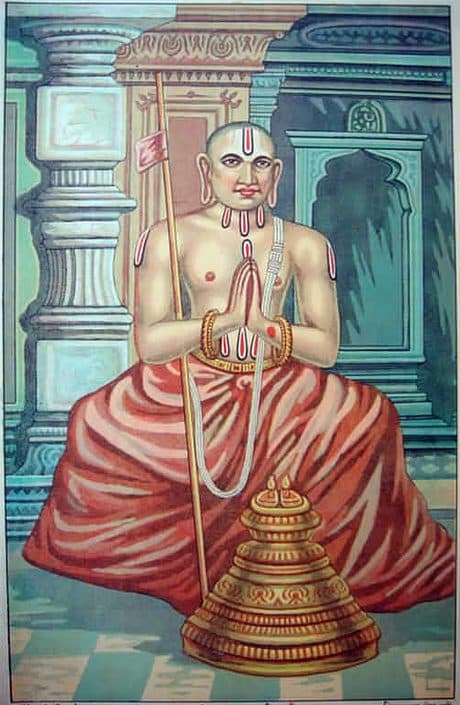
Rāmānuja · Viśiṣṭādvaita
EnglishOn verses 17.5–6
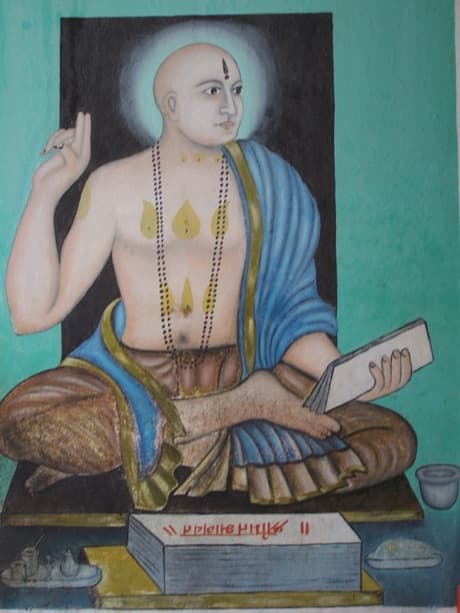
Madhvācārya · Dvaita
Madhva BhāṣyaSanskritEnglishOn verses 17.5–17.6
“भगवत्कर्पनं नामाल्पत्वदृष्टिरेव | यो वै महान्तं परमं पुमांसं नैव दृष्टा कर्कशकः सोऽतिपापि इति ह्यनभिस्नातश्रुतिः | आसुरो निश्चयो येषां, त असुरनिश्चयाः | देवास्तु सात्विकाः प्रोक्ताः दैत्या राजसतामसाः | इति ह्यनिवेशश्रुतिः ||” - Those who oppress the Resplendent Lord within are of little perceptivity. Thus in Anabhimaan scripture “Those who are not receptive to the Great Self, the Supreme Person, oppress Him”. Those who are a-sura un-enlightened (of scriptures) are of non-luminous, obscure, of taamasic receptivity. “The Divine ones are said to be saatvic (luminous) and the demons are combination of raajas (enterprising) energy and obscurity, taamasic (obscure) energy” thus in Agniveshya scripture.
Madhvācārya · Dvaita
Gītā Tātparya NirṇayaSanskritEnglishOn verses 17.5–17.6
“अशास्त्रविहितं घोरं तप्यन्ते ये तपो जनाः | इमाहङ्कारसंयुक्ताः कामरागवलान्विताः | अकृशानपि लक्ष्म्यादीन् देवान् विष्णुपरायणान् | विष्णुं च सर्वदेहस्थं कृशत्वेन विजानते | तेपामल्पगुणत्वेन कल्पनात्ते तमो ध्रुवम् | यान्ति ज्ञेयाश्च ते दैत्याः पिशाचा वाऽथ राक्षसाः ||” - Those who perform terrible austerities even according to scriptures, they being arrogant and full of pride and strengthened by the desire for fruits and attachment propitiating gods in the lower order like Lakshmi are also devoted to Sri Vishnu. But those who consider Him, who pervades, the whole body as having lesser gunas will go to obscure worlds. Such people having obscure receptivity are divided in categories like Daityas, Pishachas and Rakshasas.

Jñāneśvar · Vārkarī
English5 'Those persons who practise dreadful austerity, not in accordance with the Shāstra's prescriptions, being dominated by hypocrisy and egotism and impelled by the force of their desires and passions: (93)
(Now as regards) those that do not even know how to clear their throat (tune their vocal chords) in order to utter distinctly even the word 'Shāstras' (Scriptures) and who are not prepared to permit the Shāstra-knowing persons even to approach (touch) their periphery (i.e. who keep them at a safe distance); or those that grin and mouth (नाती वाकुलिया) in mockery of their elders (seeing their acts), and scoff at the learned by indulging in snapping of their thumbs and fingers (डाकुलियांवाजवितो); those that follow religious austerities practised by the atheists in the conceit of their greatness and in the arrogance consequent on their possession of great riches; those that use the woodbill (कोयता) and take out flesh and blood from their own bodies and from those of others, and with these fill up to the brim the sacrificial pot, and pour it into the burning (sacrificial) receptacles or into the mouth of the Spirit of a deceased Brahmin (समंध): those that dedicate child-victims in fulfilment of the vows taken by them; those that perversely remain without food and observe complete fast for seven days at a time for securing a boon from some petty deities—such (men) sow the seed of torment to themselves and also to others in the Tamas field, and then the seed germinates and gives yield of the same sort. Then such ones get reduced to the state of one, who finds himself in the sea, and yet has neither the strength of arms to swim across, nor does he take to the use of a boat; or of a sick person, who is cross with the doctor and kicks out the medicine (offered), and then suffers the pangs due to the pain (of the disease); or of one who (being unable to take revenge) retaliates spitefully by removing his own eyes and getting thus blind, is compelled to embrace the rigorous vow (of confinement) in his own house; to such a state are reduced those demons that discard with scorn the Scriptures, and getting infatuated, wander about aimlessly through out-of-the-way tracts. They act as the desires for sense-objects dictate to them, and belabour others as directed by their wrath to be belaboured: not only that, but they bury me (who lives as the soul in the body-form) too deep under the boulder-heap in the form of miseries.
Swami Ramsukhdas · Modern
EnglishOn verses 17.5–17.6
'Aśāstravihitaṁ ghoraṁ tapyante ye tapo janāḥ'—Those men perform dire austerities which are not sanctioned by the scriptures rather forbidden. It is because of their tāmasika intellect (intellect enveloped in darkness) (Gītā 18/32) that they themselves do not know the ordinance of scriptures. Moreover, they are not prepared to accept those ordinances, and act upon these, even if, those ordinances, are explained to them by some person.
'Dambhāhaṅkārasaṃyuktāḥ'—They, are full of hypocrisy and egoism. They believe, that people who are engaged in adoration, meditation and study of scriptures, are hypocrites. So they also pretend to be, what they are not, and are puffed up with pride, because of their false intelligence, wisdom and knowledge etc. They think that they can bring other people round, to their viewpoint; and they need not listen to the scriptures, because they possess, enough knowledge.
'Kāmarāgabalānvitāḥ'—The term 'Kāma', stands for lust, for worldly pleasure. They remain engrossed in those pleasures i.e., they remain attached to them. Impelled by the force of desire, they have a thirst for these and so they want to secure and maintain them. Thus, they hanker after worldly pleasure and
prosperity and remain engrossed in them, by regarding these, as the only goal of human life. They have the feelings, that if having obtained this human life, they have not enjoyed worldly pleasure, they are just like beasts. If they have not acquired those materials, for enjoyment, what have they gained? Without those enjoyments, their life has gone in vain. They are always given, to sense-enjoyments. They perform austerities, obstinately with a view to acquire material for worldly enjoyment.
'Karśayantaḥ śarīrastham bhūtagrāmam'—They believe, that austerities consist in tormenting the group of five elements (earth, water, fire, air and ether), in their bodies. According to them, austerity means bodily torture.
In the fourteenth, fifteenth and sixteenth verses of this chapter, there is a description of the austerities of the body, speech and mind. There is no mention of physical torture. Austerity is performed very calmly, without tormenting the body. But the austerities, referred to in this verse, are performed by tormenting the body, against the ordinances of scriptures. So these are called violent austerities.
'Mām caivāntaḥśarīrastham'—They, also torment the Lord, Who is lodged in their hearts. As God is seated in their hearts as their very self, so when they torment the self, they torment God. Moreover, they torment Him, by disobeying His teachings.
'Tānviddhyāsuraniścayān'—The Lord, declares that such people should be known to be of demoniacal resolves. Here, the expression 'Āsuraniścayān', does not denote people of ordinary demoniac nature; but those who are extremely demoniac, mean and atheistic.
An Important Fact
In the fourth verse, the term 'Yajante' (worship), has been used, for those people who neglecting the ordinances of scriptures due to their ignorance perform worship, with faith. But here
the term, 'tapyante' (practise), has been used for people, who intentionally neglect the ordinances of scriptures and are also lacking in faith. The reason is, that people of demoniac resolve, attach great importance to violent austerities, according to their own fancy and whims. The mark, of their austerity is tormentation of body. They instead of believing in God, and the scriptures, believe in austerities. They perform, violent austerities against ordinances of the scriptures. They remain hungry, for a long time, lie on thorns or nails bare bodied, stand on one leg only, sit facing fire and perform other violent austerities, of such type, to torment their bodies.
In the twenty-third verse of the sixteenth chapter, it is mentioned that those, who having cast aside, ordinances of scriptures, act under the impulse of desire, attain neither perfection, nor happiness nor achieve the Supreme Goal. It means, that they do not secure the full fruit of their actions, because they attach importance to external activities, instead of internal feelings. But, here people of demoniac resolves, go to the lower wombs and hell, because they are given to hypocrisy and egoism, etc. Moreover, they neither have faith, nor want to listen to ordinances of the scriptures and not act upon these.
In the twenty-third verse of the sixteenth chapter, there is reference to disobedience of the ordinance of scriptures through indifference, in the first verse of this chapter, there is disobedience, through lack of knowledge while, here it is, intentional and wilful disobedience. Here the performance of austerities is made having opposition to faith, the ordinances of scriptures and God, and welfare of the people. Such opposition, is not found among the people of the rājasa and tāmasa dispositions, described at places.
*Link:—How to know the faith of a man, who does not offer, any sort of worship! The Lord, explains that it can be judged by the food, which is dear to him.*

Ādi Śaṅkarācārya · Advaita
Sanskritअशास्त्र-विहितं न शास्त्र-विहितं अशास्त्र-विहितं घोरं पीडाकरं प्राणिनां आत्मनः च तपः तप्यन्ते निर्वर्तयन्ति ये जनाः ते च दम्भ-अहङ्कार-संयुक्ताः, दम्भः च अहङ्कारः च दम्भ-अहङ्कारौ, ताभ्यां संयुक्ताः दम्भ-अहङ्कार-संयुक्ताः, काम-राग-बल-अन्विताः कामः च रागः च काम-रागौ तत्-कृतं बलं काम-राग-बलं तेन अन्विताः काम-राग-बल-अन्विताः ॥
Ādi Śaṅkarācārya · Advaita
Hindiइस प्रकार कार्यसे जिनकी सात्त्विकादि निष्ठाओंका निर्णय किया गया है, उन (स्वाभाविक श्रद्धावाले) हजारों मनुष्योंमें कोई एक ही शास्त्रविधिका त्याग होनेपर देवपूजादिके परायण, सात्त्विक निष्ठायुक्त होता है। अधिकांश मनुष्य तो राजसी और तामसी निष्ठावाले ही होते हैं। कैसे? (सो कहा जाता है—)
जो मनुष्य, शास्त्रमें जिसका विधान नहीं है ऐसा, अशास्त्रविहित और घोर अर्थात् अन्य प्राणियोंको और अपने शरीरको भी पीड़ा पहुँचानेवाला, तप, दम्भ और अहंकार—इन दोनोंसे युक्त होकर तथा कामना और आसक्तिजनित बलसे युक्त होकर, अथवा कामना, आसक्ति और बलसे युक्त होकर तपते हैं
Jñāneśvar · Vārkarī
Marathiना शास्त्राचेनि कीर नांवें । खाकरोंही नेणती जीवें । परी शास्त्रज्ञांही शिवें । टेंकों नेदिती ॥ ९३ ॥ वडिलांचिया क्रिया । देखोनि वाती वांकुलिया । पंडितां डाकुलिया । वाजविती ॥ ९४ ॥ आपलेनीचि आटोपें । धनित्वाचेनि दर्पें । साचचि पाखंडाचीं तपें । आदरिती ॥ ९५ ॥ आपुलिया पुढिलांचिया । आंगीं घालूनि कातिया । रक्तमांसा प्रणीतया । भर भरु ॥ ९६ ॥ रिचविती जळतकुंडीं । लाविती चेड्याच्या तोंडीं । नवसियां देती उंडी । बाळकांची ॥ ९७ ॥ आग्रहाचिया उजरिया । क्षुद्र देवतां वरीया । अन्नत्यागें सातरीया । ठाकती एक ॥ ९८ ॥ अगा आत्मपरपीडा । बीज तमक्षेत्रीं सुहाडा । पेरिती मग पुढां । तेंचि पिके ॥ ९९ ॥ बाहु नाहीं आपुलिया । आणि नावेतेंही धनंजया । न धरी होय तया । समुद्रीं जैसें ॥ १०० ॥ कां वैद्यातें करी सळा । रसु सांडी पाय खोळां । तो रोगिया जेवीं जिव्हाळा । सवता होय ॥ १०१ ॥ नाना पडिकराचेनि सळें । काढी आपुलेचि डोळे । तें वानवसां आंधळें । जैसें ठाके ॥ १०२ ॥ तैसें तयां आसुरां होये । निंदूनि शास्त्रांची सोये । सैंघ धांवताती मोहें । आडवीं जे कां ॥ १०३ ॥ कामु करवी तें करिती । क्रोधु मारवी ते मारिती । किंबहुना मातें पुरिती । दुःखाचा गुंडां ॥ १०४ ॥
Jñāneśvar · Vārkarī
Hindi(17.93) अन्यथा जो जन्म भर शास्त्र के नाम खखारना भी नहीं जानते वरन् जो शास्त्रों का अपनी हद नहीं छूने देते,
(17.94) अपने पूर्वजों की क्रियाएँ देख कर जो उन्हें चिढ़ाते हैं, पण्डितों का चुटकियों पर उड़ाते हैं,
(17.95) जो अपनी ही शेखी और धनिकता के घमण्ड के वश है। सचमुच पाखण्डरूपी तप का आदर करते हैं,
(17.96) अपने और दूसरों में अंग में याज्ञिकों के वस्त्र पहना कर यज्ञपात्र को रक्त और मांस से भर-भर कर (17.97) जलते हुए कुण्डों में खाली करते और जादू के देवता के मुँह से लगाते हैं, तथा मानता किये हुए बालकों की बलि देते हैं
(17.98) जो हठ की बड़ाई मारते हुए क्षुद्र देवताओं से वर-प्राप्ति के लिए सात-सात दिन तक अन्न त्याग करते हैं,
(17.99) इस प्रकार हे सुहृद! जो तमरूपी क्षेत्र में अपने और दूसरों के लिए पीड़ारूपी बीज बोते हैं जिससे कि फिर वैसा ही फल होता है,
(17.100) हे धनंजय! जिसके निज के बाहु नहीं हैं और जो नाव का भी आश्रय नहीं करता उस मनुष्य का समुद्र में जो हाल होता है,
(17.101) अथवा जो वैद्य से द्वेष करता है और औषधि को लात से उड़ेल देता है वह रोगी जैसे स्वयं व्याकुल ही रहता है,
(17.102) अथवा उपाय न करके कोई अपनी आँखें ही निकाल ले तो वह जैसे आप ही अपनी इच्छा से अन्धा बन जाता है,
(17.103) वही हाल उन असुरों का होता है जो शास्त्र के प्रबन्ध की निन्दा कर मोह से इधर-उधर जंगल में भटकते हैं।
(17.104) काम जो करावे सो वे करते हैं, क्रोध जिसे मारने के लिए प्रवृत्त करे उसे मारते हैं, बहुत क्या कहूँ वे मुझे दुःख-रूपी पत्थरों से पूर देते हैं।
Sri Udiya Baba · Modern
HindiOn verses 17.5–17.6
भावार्थ— जो मूर्ख लोग दम्भ और अहंकार से युक्त हो तथा काम और राग के वशीभूत हो अपने शरीर में स्थित भूतसमुदाय और अन्तःकरण में स्थित मुझे पीड़ित करते हुए अशास्त्रविहित घोर तप करते हैं, उन्हें तुम आसुरी निश्चय वाले जानो।
Swami Ramsukhdas · Modern
HindiOn verses 17.5–17.6
‘अशास्त्रविहितं घोरं तप्यन्ते ये तपो जनाः’—शास्त्रमें जिसका विधान नहीं है, प्रत्युत निषेध है, ऐसे घोर तपको करनेमें उनकी रुचि होती है अर्थात् उनकी रुचि सदा शास्त्रसे विपरीत ही होती है। कारण कि तामसी बुद्धि (गीता—अठारहवें अध्यायका बत्तीसवाँ श्लोक) होनेसे वे स्वयं तो शास्त्रोंको जानते नहीं और दूसरा कोई बता भी दे तो वे न उसको मानना चाहते हैं तथा न वैसा करना ही चाहते हैं।
‘दम्भाहंकारसंयुक्ताः’—उनके भीतर यह बात गहरी बैठी हुई रहती है कि आज संसारमें जितने भजन, ध्यान, स्वाध्याय आदि करते हैं, वे सब दम्भ करते हैं, दम्भके बिना दूसरा कुछ है ही नहीं। अतः वे खुद भी दम्भ करते हैं। उनके भीतर अपनी बुद्धिमानीका, चतुराईका, जानकारीका अभिमान रहता है कि हम बड़े जानकार आदमी हैं; हमलोगोंको समझा सकते हैं, उनको रास्तेपर ला सकते हैं; हम शास्त्रोंकी बातें क्यों सुनें? हम कोई कम जानते हैं क्या? हमारी बातें सुनो तो तुम्हारेको पता चले; आदि-आदि।
‘कामरागबलान्विताः’—‘काम’ शब्द भोग-पदार्थोंका वाचक है। उन पदार्थोंमें रंग जाना, तल्लीन हो जाना, एकरस हो जाना ‘राग’ है और उनको प्राप्त करनेका अथवा उनको बनाये रखनेका जो हठ, दुराग्रह है, वह ‘बल’ है। इनसे वे सदा युक्त रहते हैं। उन आसुर स्वभाववाले लोगोंमें यह भाव रहता है कि मनुष्य-शरीर पाकर इन भोगोंको नहीं भोगा तो मनुष्य-शरीर पशुकी तरह ही है। सांसारिक भोग-सामग्रीको मनुष्यने प्राप्त नहीं किया, तो फिर उसने क्या किया? मनुष्य-शरीर पाकर मनचाही भोग-सामग्री नहीं मिली, तो फिर उसका जीवन ही व्यर्थ है, आदि-आदि। इस प्रकार वे प्राप्त सामग्रीको भोगनेमें सदा तल्लीन रहते हैं और धन-सम्पत्ति आदि भोग-सामग्रीको प्राप्त करनेके लिये हठपूर्वक, जिदसे तप किया करते हैं।
‘कर्षयन्तः शरीरस्थं भूतग्रामम्’—वे शरीरमें स्थित पाँच भूतों-(पृथ्वी, जल, तेज, वायु और आकाश-) को कृश करते हैं, शरीरको सुखाते हैं और इसीको तप समझते हैं। शरीरको कष्ट दिये बिना तप नहीं होता—ऐसी उनकी स्वाभाविक धारणा रहती है।
आगे चौदहवें, पन्द्रहवें और सोलहवें श्लोकमें जहाँ शरीर, वाणी और मनके तपका वर्णन हुआ है, वहाँ शरीरको कष्ट देनेकी बात नहीं है। वह तप बड़ी शान्तिसे होता है। परन्तु यहाँ जिस तपकी बात है, वह शास्त्रविरुद्ध घोर तप है और अविधिपूर्वक शरीरको कष्ट देकर किया जाता है।
‘मां चैवानःशरीरस्थम्’—भगवान् कहते हैं कि ऐसे लोग अन्तःकरणमें स्थित मुझ परमात्माको भी कृश करते हैं, दुःख देते हैं। कैसे? वे मेरी आज्ञा, मेरे मतके अनुसार नहीं चलते, प्रत्युत उसके विपरीत चलते हैं।
अर्जुनने पूछा था कि वे कौन-सी निष्ठावाले हैं—सात्त्विक हैं कि राजस-तामस? दैवी-सम्पत्तिवाले हैं कि आसुरी-सम्पत्तिवाले? तो भगवान् कहते हैं कि उनको आसुर निश्चयवाले समझो—‘तान्विद्धि आसुरनिश्चयान्।’ यहाँ ‘आसुरनिश्चयान्’ पद सामान्य आसुरी-सम्पत्तिवालोंका वाचक नहीं है, प्रत्युत उनमें भी जो अत्यन्त नीच—विशेष नास्तिक हैं, उनका वाचक है।
विशेष बात
चौथे श्लोकमें शास्त्रविधिको न जाननेवाले श्रद्धायुक्त मनुष्योंके द्वारा किये जानेवाले पूजनके लिये ‘यजन्ते’ पद आया है; परन्तु यहाँ शास्त्रविधिका त्याग करनेवाले श्रद्धाहित मनुष्योंके द्वारा किये जानेवाले पूजनके लिये ‘तप्यन्ते’ पद आया है। इसका कारण यह है कि आसुर निश्चयवाले मनुष्योंकी तप करनेमें ही पूज्य-बुद्धि होती है—तप ही उनका यज्ञ होता है और वे मनगढ़ंत रीतिसे शरीरको कष्ट देनेको ही तप मानते हैं। उनके तपका लक्षण है—शरीरको सुखाना, कष्ट देना। वे तपको बहुत महत्त्व
देते हैं, उसे बहुत अच्छा मानते हैं; परन्तु भगवान्को, शास्त्रको नहीं मानते। तप भी वही करते हैं, जो शास्त्रके विरुद्ध है। बहुत ज्यादा भूखे रहना, काँटोंपर सोना, उलटे लटकना, एक पैरसे खड़े होना, शास्त्रज्ञासे विरुद्ध अग्नि तपना, अपने शरीर, मन, इन्द्रियोंको किसी तरह कष्ट पहुँचाना आदि—ये सब आसुर निश्चयवालोंके तप होते हैं।
सोलहवें अध्यायके तेईसवें श्लोकमें शास्त्रविधिको जानते हुए भी उसकी उपेक्षा करके दान-सेवा, उपकार आदि शुभकर्मोंको करनेकी बात आयी है, जो इतनी बुरी नहीं है; क्योंकि उनके दान आदि कर्म शास्त्र-विधियुक्त तो नहीं हैं, पर शास्त्रनिषिद्ध भी नहीं हैं। परन्तु यहाँ जो शास्त्रोंमें विहित नहीं हैं, उनको ही श्रेष्ठ मानकर मनमाने ढंगसे विपरीत कर्म करनेकी बात है। दोनोंमें फरक क्या हुआ? तेईसवें श्लोकमें कहे लोगोंको सिद्धि, सुख और परमगति नहीं मिलेगी अर्थात् उनके नाममात्रके शुभकर्मोंका पूरा फल नहीं मिलेगा। परन्तु यहाँ कहे लोगोंको तो नीच योनियों तथा नरकोंकी प्राप्ति होगी; क्योंकि इनमें दम्भ, अभिमान आदि हैं। ये शास्त्रोंको मानते भी नहीं, सुनते भी नहीं और कोई सुनाना चाहे तो सुनना चाहते भी नहीं।
सोलहवें अध्यायके तेईसवें श्लोकमें शास्त्रका ‘उपेक्षा-पूर्वक’ त्याग है, इसी अध्यायके पहले श्लोकमें शास्त्रका ‘अज्ञातापूर्वक’ त्याग है और यहाँ शास्त्रका ‘विरोधपूर्वक’ त्याग है। आगे तामस यज्ञादिमें भी शास्त्रकी उपेक्षा है। परन्तु यहाँ श्रद्धा, शास्त्रविधि, प्राणिसमुदाय और भगवान्—इन चारोंके साथ विरोध है। ऐसा विरोध दूसरी जगह आये राजसी-तामसी वर्णनमें नहीं है।
सम्बन्ध—अगर कोई मनुष्य किसी प्रकार भी यजन न करे, तो उसकी श्रद्धा कैसे पहचानी जायगी—इसे बतानेके लिये भगवान् आहारकी रुचिसे आहारीकी निष्ठाकी पहचानका प्रकरण आरम्भ करते हैं।
The word acetasaḥ means indiscriminate.
Such indiscriminate jīvas or embodied beings torture and afflict their own body and the bodies of others in the pursuit of fulfilling their depraved and macabre rituals for dominion over material existence.
The words rāga balānvitāḥ means by ostentatious displays of mental control and bodily power in such extremes that even the Supreme Lord feels tormented in His all-pervasive form as the ātma or immortal soul within all living entities.
The words mam eva ca refers specifically to His inner bg-sky presence.
Hence whosoever executes rituals that are contrary to the ordinances and injunctions of the Vedic scriptures and engages in sacrifices that are prohibited in the Vedic scriptures,
or practices penances which cause great pain and suffering upon themselves and others, molest the very elements contained within the body for its welfare to be abused and the ātma to be disrespected
are verily to be known as possessing the demoniac nature.
The demoniac transgress the ordinances and injunctions of the Vedic scriptures and are known as asuras which means without light denoting without the light of divine consciousness.
Due to their bellicose and belligerent disposition of opposing the Supreme Lords commands, the demoniac purposely act contrary in defiance.
Because of this they are unable to derive even the most miniscule satisfaction and lasting happiness for their immense efforts.
All they derive from their scheming conjures of evil actions is accommodation in the hellish planets direct at the conclusion of their life cycle. By their own demoniac actions and sinful activities they have voluntarily hurled themselves into such a dire predicament without relief.
Next Lord Krishna will explain how natures differ according to the qualities of the three guṇas or modes of material nature that a jīva is situated in and influenced by.
The three guṇas are directly affected by the food a jīva chooses to eat and helps determine their present birth.
The threefold nature of foods as they are situated in one of the three guṇas of sattva guṇa, raja guṇa and tama guṇa corresponding to the mode of goodness, the mode of passion and the mode of ignorance will be described first.
This is confirmed in the Chāṇḍogya Upaniṣad VI.V.IV beginning anna-mayam hi sommya manah it states:
“The mind is verily composed of the food that is eaten”,
is further confirmed in verse VII.XXVI.II beginning rahara shudda sattva shuddhi which states:
Taking pure food in pure condition after it has been first offered to the Supreme Lord. As the purity of the food eaten so is the purity of the mind for pure food enhances the mind with purity.