

Bhagavad Gītā · Chapter 17 · Śraddhātraya Vibhāga Yoga
अश्रद्धया हुतं दत्तं तपस्तप्तं कृतं च यत्
असदित्युच्यते पार्थ न च तत्प्रेत्य नो इह
aśraddhayā hutaṃ dattaṃ tapastaptaṃ kṛtaṃ ca yat|asadityucyate pārtha na ca tatpretya no iha||
Word meanings
पार्थ = O Pārtha
अश्रद्धया = without faith
हुतम् = oblation offered
दत्तम् = gift given
तप्तम् = austerity performed
तपः = austerity
च = and
यत् = whatever
कृतम् = done
असत् = asat
इति = thus (saying)
उच्यते = is called
तत् = that
नो = neither
इह = here
च = and
न = nor
प्रेत्य = hereafter
Translation
Annie Besant · Theosophical · Public domain
Whatsoever is wrought without faith, oblation, gift, austerity, or other deed, "Asat" it is called, O Pârtha; it is nought, here or hereafter.
Commentary
The commentators seated around this verse
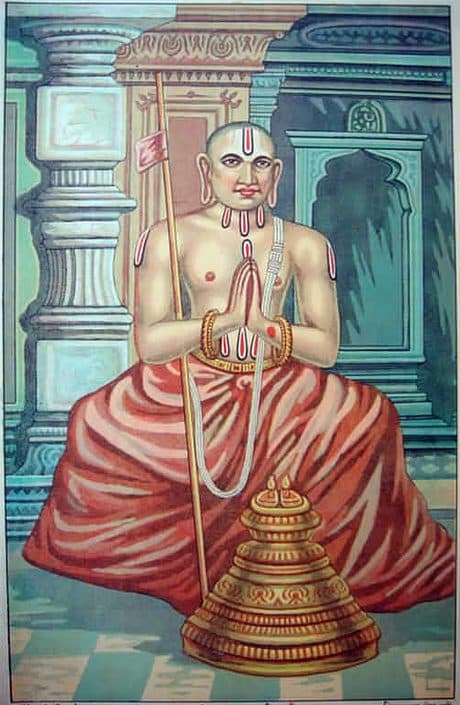
Rāmānuja · Viśiṣṭādvaita
English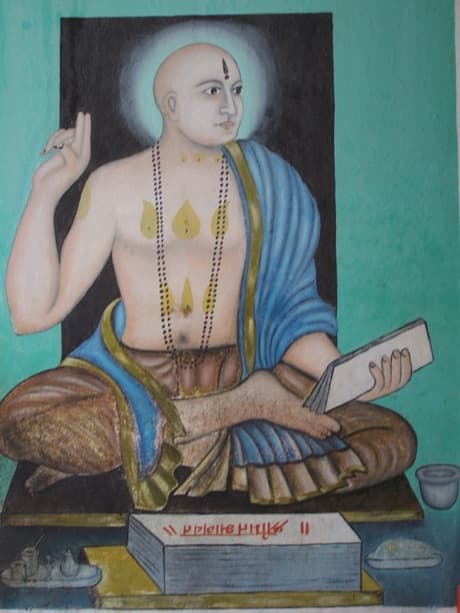
Madhvācārya · Dvaita
SanskritEnglishOn verses 17.27–17.28
“सत्सम्बन्धित्वादेव कर्मादि सत् | ॐ तत्सदितिनाम्नां विष्णोः प्रसिद्धत्वात् | सवत्यनोङ्कृतं ब्रह्म परस्ताच्च विशीर्षते | अनोङ्कृतमासुरं कर्म इति श्रुतेरनोङ्कृतस्यासुरत्वप्रसिद्धेः | अनर्थज्ञोदितो मनो निरस्वाति मानतः | यन्मन्त्रस्तेन कथितो मन्त्रार्थो ज्ञेय एव तत् || इति पैङ्गीश्रुतेश्च || तदर्थत्वेन फलानभिसन्धिपूर्वककर्मण एव सात्विकत्वाच्च || तदभक्त्या तत्स्मरणपूर्वकमेव कर्म सदन्यदसदेवेति भावः || राजसस्याप्यसदन्तर्भाव एव | विष्णुशब्दारहितत्वात् | साच्चिकं मोक्षदं कर्म राजसं मृतिदुःखदम् | तामसं पातदं ज्ञेयं तत् कुर्यात् कर्म वैष्णवम् || इत्याग्नेये ||” - Since the performance all the actions are in reference to Him alone they are known as sat. Sri Vishnu is famous with His three-fold name, Aum tat sat. The vedic hymns gain power if these words are uttered in the beginning and lose the power if they are uttered at the end. The hymns which are sung without uttering these words, they are called asura – non-luminous. Thus, in Paingi scripture = “The recitation of the hymns without knowing their meaning is worthless. Because the hymns protect the reciter, they are known as mantras (the hymns). Therefore the meaning of the hymns should ever be known”. The performance of the actions after knowing their meaning but without expectation of the fruits, is known as saatvik, luminous. Therefore those actions done remembering Him are called sat and all other actions are called asat. raajasik works are also included as asat because the same being devoid of receptivity towards Sri Vishnu. Luminous, saatvik actions lead one to deliverance. Energetic raajasik actions lead one to samsara and misery. The obscure, taamasik actions lead to inferior worlds. Therefore one should always perform actions which please Sri Vishnu.
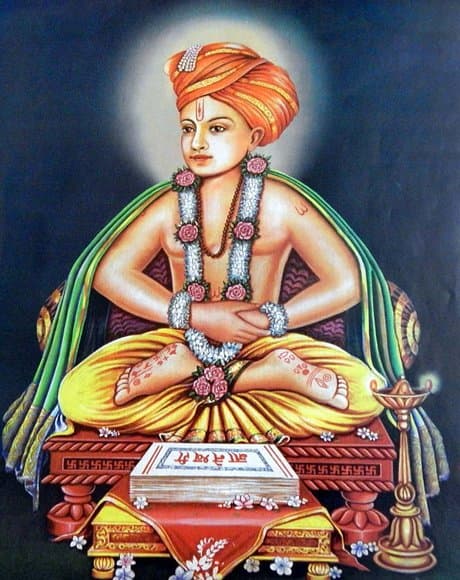
Jñāneśvar · Vārkarī
English28 "What is (in Fire) preferred, or given away—whatever austerity is practised or act performed—(but) without faith; that is, O Son, of Pṛthā, called 'Asat'. That (avails) neither hereafter nor here." (414)
Performance of crores of sacrifices, making charity consisting of gem-stuffed earth or practising austerities by balancing the body on a single toe lasting thousands of Tapa (तप- equal to a period of 12 years), or constructing reservoirs of water of the magnitude of the sea-actions like these when performed, discarding this (above-mentioned) arrangement, or breaking the very backbone of faith, or increasing the conceit of perverseness—are all of no avail. They are like rain fallen on rock, or oblations made on ash, or like trying to embrace a shadow or like slapping the sky, Oh Arjuna. All pomp and labours pertaining to them prove useless. Such actions only bring on poverty, just as by crushing stones in an oil-mill (one) gains neither oil nor oil-cake. If a man, tying a potsherd in the hem of his garment, goes round his own country or that of others (for selling it), it would fetch no value whatever, but would on the contrary bring starvation. In that way performance of actions in such a way (with no faith absolutely) gives no enjoyment of happiness here, in this world; what then of the other world? Therefore, transactions done with no faith whatever in Supreme Brahman, prove only a source of worry in this as well as in the other world. So spake the Lion, the destroyer of the elephant in the form of sins, the Sun, the expeller of the darkness in the form of the three kinds of afflictions, the Lord of Goddess Lakshmi, the warrior Narahari—Lord Krishna. At this, Arjuna found himself engulfed in the bliss of the Self in the way the Moon gets gulped in moonlight. A war is a sort of merchant, who measures, with the measure (in the form) of sharp points of arrows, the flesh of fallen victims, one after another. In such a terrible crisis how could Arjuna (afford to) enjoy the kingdom of Self-bliss? Nowhere else could be found such a unique rise of luck. Samjaya said, “O King of Kauravas, my heart melts at the sight of such a merit in an enemy, and he has become (as it were) our Preceptor preaching us happiness, for had he not asked any questions of the Lord how would the latter have given out the secret of his heart, and how could we have got the vision of the Supreme. We were in a darkness of ignorance, rotating in the wheel of births, and he brought us into the temple of the Light of Supreme Brahman. Arjuna has put us—you and me, under such great obligation and so he must be looked upon as the very brother of sage Vyāsa in relationship to preceptorship. At that stage Samjaya thought to himself that that sort of extravagance (in this regard to Arjun’s praise) would only prick (wound) the heart of Dhritarāshtra, and consequently he had better stop it there. Dropping therefore that subject Samjaya started with the topic of which Pārtha asked Lord Krishna. Jnanadev, the disciple of Nivrttināth, said, “I shall also follow his (Samjaya’s) course and be attentive.” (433)
श्रद्धात्रयविभागयोगो नाम सप्तदशोऽध्यायः ॥ १७ ॥
Swami Ramsukhdas · Modern
English'Aśraddhayā hutaṁ dattaṁ tapastaptaṁ kṛtaṁ ca yat'—If acts of sacrifice, penance and charity, which are sanctioned by scriptures, are performed without faith, these are called 'Asat'. Demoniac people, do not believe, in the next world (hereafter), rebirth, righteousness and God. They act against scriptures. Sacrifice and penance, performed by them, are against the ordinance of scriptures.
Now the question arises as to why they perform sacrifices and penance, when they have no faith in them. The answer is, that they perform these to win praise, regard and honour.
'Asadityucyate pārtha na ca tatpretya no iba'—An action, such as sacrifice etc., which is performed without faith, is called 'Asat'. It is useless in this life, as well as, in the next. If actions are performed, expecting a reward, with faith, according to the ordinance of scriptures, they bear fruit here, in the form of riches, prosperity, obedient sons and chaste wife etc., and hereafter, in the form of the attainment of heaven etc. If they are performed, without expecting any reward, with faith and in accordance with scriptures, these having purified the heart and lead to God-realization. But if these are performed without faith, they are of no avail, either in this world, or in the next world.
Now, a question arises, that sinful acts such as injustice, tyranny, fraud, falsehood and forgery etc., should not bear any fruit, because these are performed, without faith and the person, does not expect any reward. The answer is, that they bear fruit, because whatever action is performed with attachment, bears fruit, even though the doer (agent) does not want it. So, people
of demoniac nature, go to demoniac wombs, and to hell.
Any simple and insignificant act, if it is performed, without expecting any reward, for the Lord's sake, becomes 'Sat', and leads to God-realization. But, if an important act, such as sacrifice and penance, is performed with faith, and according to the ordinance of the scriptures in expectation of reward, it perishes, by bearing fruit and does not lead to God-realization. If an act is performed without faith, it becomes 'Asat' i.e., it does not bear any fruit, here or hereafter. It means, that in God-realization it is faith (feelings), not an act, which has predominance.
Sadbhāva (existence of God), Sādhubhāva (noble dispositions of the mind), noble deeds, steadfastness in 'Sat', and actions for the sake of the Supreme—these five are called 'Sat', as these are conducive to God-realization.
Why do acts without faith become 'Asat'? The Lord, by His grace has described virtuous actions, in the scriptures, so that a man by performing these, may attain God-realization. But those actions turn to be 'Asat', when these are performed without faith. Their faithlessness should induce the people to hell etc., but because actions performed by them, are good (virtuous), so their actions are of no avail, i.e., they do not bear any fruit, and this is punishment, for such people.
It is proper, on the part of a man, that he should perform acts of sacrifice, penance, gift and pilgrimage etc., which are sanctioned by scriptures, with faith, having no expectation for fruit. The Lord, by His special grace, has bestowed upon us this human body, so that we may perform virtuous actions, with faith for the Lord's sake. Those actions, will prove to be useful for the welfare of all beings, here as well as, hereafter. So, such noble actions should be performed with faith, in order to please God.
**Appendix**—In the expression 'kṛtañ ca yat', chanting and loud
chanting the holy names of God will not be included because in them there is affinity with God, so they are not actions, but they are worship to 'God'.
ॐ तत्सदिति श्रीमद्भगवद्गीतासूपनिषत्सु ब्रह्मविद्यायां योगशास्त्रे
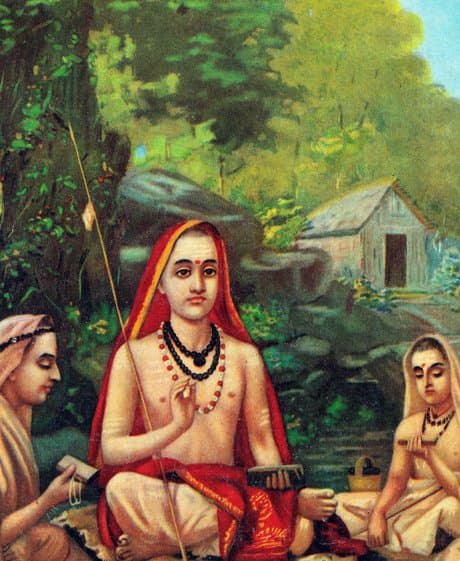
Ādi Śaṅkarācārya · Advaita
Sanskritअश्रद्धया हुतं हवनं कृतम्, अश्रद्धया दत्तं ब्राह्मणेभ्यः, अश्रद्धया तपः तप्तं अनुष्ठितम्, तथा अश्रद्धया एव कृतं यत् स्तुति-नमस्कार-आदि, तत् सर्वं असत् इति उच्यते, मत्-प्राप्ति-साधन-मार्ग-बाह्यत्वात् पार्थ । न च तत् बहुल-आयासम् अपि प्रेत्य फलाय न उ अपि इह-अर्थम्, साधुभिः निन्दितत्वात् इति ॥
Ādi Śaṅkarācārya · Advaita
Hindiक्योंकि सभी जगह श्रद्धाकी प्रधानतासे ही सब कुछ किया जाता है, इसलिये—
बिना श्रद्धाके किया हुआ हवन, बिना श्रद्धाके ब्राह्मणोंको दिया हुआ दान, तपा हुआ तप तथा और भी जो कुछ बिना श्रद्धाके किया हुआ स्तुति—नमस्कारादि कर्म है वह सब, हे पार्थ! मेरी प्राप्तिके साधनमार्गसे बाह्य होनेके कारण असत् है, ऐसा कहा जाता है। क्योंकि वह बहुत परिश्रमयुक्त होनेपर भी साधु पुरुषोंद्वारा निन्दित होनेके कारण न तो मरनेके पश्चात् फल देनेवाला होता है और न इस लोकमें ही सुखदायक होता है
Jñāneśvar · Vārkarī
MarathiOn verses 17.27–17.28
तें याग अथवा दानें । तपादिकेंही गहनें । तियें निफजतु कां न्यूनें । होऊनि ठातु ॥ ४०६ ॥ परी परीसाचा वरकली । नाहीं चोखाकिडाची बोली । तैसी ब्रह्मीं अर्पितां केलीं । ब्रह्मचि होती ॥ ४०७ ॥ उणिया पुरियाची परी । नुरेचि तेथ अवधारीं । निवडूं न येती सागरीं । जैसिया नदी ॥ ४०८ ॥ एवं पार्था तुजप्रती । ब्रह्मनामाची हे शक्ती । सांगितली उपपत्ती । डोळसा गा ॥ ४०९ ॥ आणि येकेकाही अक्षरा । वेगळवेगळा वीरा । विनियोगु नागरा । बोलिलों रीती ॥ ४१० ॥ एवं ऐसें सुमहिम । म्हणौनि हें ब्रह्मनाम । आतां जाणितलें कीं सुवर्म । राया तुवां ? ॥ ४११ ॥ तरी येथूनि याचि श्रद्धा । उपलविली हो सर्वदा । जयाचें जालें बंधा । उरों नेदी ॥ ४१२ ॥ जिये कर्मीं हा प्रयोगु । अनुष्ठिजे सद्विनियोगु । तेथ अनुष्ठिला सांगु । वेदुचि तो ॥ ४१३ ॥
Jñāneśvar · Vārkarī
Hindi(17.414) अन्यथा, यह मार्ग छोड़ कर, श्रद्धा का आसरा छोड़ कर, दुराग्रह की सीमा बढ़ा कर (17.415) कोई कोटि अश्वमेध करे, रत्नों-सहित पृथ्वी का दान दे, एक अँगूठे पर खड़े रह कर सहस्रावधि तप करे,
(17.416) जलाशय की जगह चाहे नवीन समुद्र ही रचे, तथापि बहुत क्या कहें, ये सम्पूर्ण बातें वृथा हैं।
(17.417) जैसे पत्थर पर जल बरसना, अथवा राख में हवन करना, अथवा छाया का आलिंगन देना,
(17.418) अथवा हे अर्जुन! जैसे आकाश का थप्पड़ मारना — वैसे ही वह कर्म भी वृथा जाता है।
(17.419) और कोल्हू में पत्थर पेलने से जैसे न तेल और न खली हाथ आती है, वैसे ही उस कर्म से केवल दरिद्रता का ही लाभ होता है।
(17.420) गाँठ में केवल खपरी बँधी हो तो वह जैसे, देश हो या परदेश हो, कहीं नहीं बिकती और भूखों मारती है,
(17.421) वैसे ही उपयुक्त कर्म-समूह से इस लोक के ही भोग प्राप्त नहीं हो सकते तो फिर परलोक की इच्छा ही कौन कर सकता है? (17.422) अतः ब्रह्म नाम की श्रद्धा छोड़ कर जो कुछ कर्म किया जाय वह, बहुत क्या कहें, इस लोक या परलोक दोनों के सम्बन्ध से केवल कष्ट करना है।
(17.423) इस प्रकार पापरूपी हाथी के नाशक सिंह, त्रिताप-रूपी अन्धकार के सूर्य, कमलापति सकल वीरों के राजा श्रीकृष्ण ने कहा।
(17.424) तब जैसे चन्द्रमा चाँदनी से ढँक जाता है वैसे ही अर्जुन निःसीम आत्मानन्द में डूब गया।
(17.425) आश्चर्य है कि यह संग्राम एक ऐसा व्यापार है जिसमें बाणों की नोकें मानों माप हैं, और उनमें शरीर का मांस और जीवन भी भर कर मापा जाता है,
(17.426) ऐसे कठिन अवसर पर स्वानन्द का राज्य कैसे भोगा जा सकता है! आज ऐसा भाग्योदय और दूसरी जगह नहीं है।
(17.427) संजय कहते हैं कि हे कौरवराज! शत्रु है तथापि उसके सद्गुणों से आनन्द होता है। इस समय तो वह हमें यह आनन्द प्राप्त करा देनेवाला गुरु ही है।
(17.428) अर्जुन यदि यह बात न निकालता तो श्रीकृष्ण क्यों यह मर्म प्रकट करते? और हमें परमार्थ की प्राप्ति कैसे होती? (17.429) हम अज्ञान के अँधेरे में अपनी जन्मपीड़ा काटते हुए पड़े थे वहाँ से वह हमें आत्म-प्रकाशरूपी मन्दिर में ले आया।
(17.430) इतना बड़ा उपकार उसने तुम्हारे और हमारे ऊपर किया है इस लिए वह मुझे गुरुत्व की दृष्टि से व्यास मुनि का भाई ही दिखाई देता है।
(17.431) इतने में संजय ने मन में सोचा कि हम क्या बोल रहे हैं, यह बड़ाई राजा के हृदय में चुभेगी।
(17.432) अतः उसने वह वर्णन छोड़ दिया और दूसरी बात छोड़ दी जिसके विषय में अर्जुन ने श्रीकृष्ण से प्रश्न किया
(17.433) निवृत्तिनाथ के ज्ञानदेव कहते हैं कि जैसा संजय ने वर्णन किया वैसा मैं भी करता हूँ, सुनिए।
इति श्रीज्ञानदेवकृत भावार्थदीपिकायां सप्तदशोऽध्यायः।
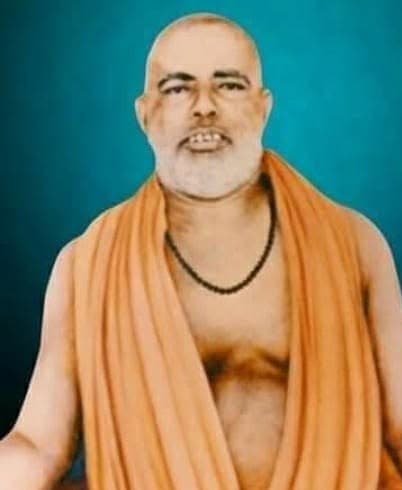
Sri Udiya Baba · Modern
Hindiभावार्थ— हे अर्जुन! अश्रद्धापूर्वक जो भी हवन, दान, तप या कर्म किया जाता है वह असत् कहलाता है। वह न मरने पर काम आता है, न इस लोक में। [अतः जो भी शुभ कर्म किया जाय वह श्रद्धापूर्वक होना चाहिये।]
Swami Ramsukhdas · Modern
Hindi‘अश्रद्धया हुतं दत्तं तपस्तप्तं कृतं च यत्’—अश्रद्धापूर्वक यज्ञ, दान और तप किया जाय, और ‘कृतं च यत्’* अर्थात् जिसकी शास्त्रमें आज्ञा आती है, ऐसा जो कुछ कर्म अश्रद्धापूर्वक किया जाय—वह सब ‘असत्’ कहा जाता है।
‘अश्रद्धया’ पदमें श्रद्धाके अभावका वाचक ‘नञ्’ समास है, जिसका तात्पर्य है कि आसुरलोग परलोक, पुनर्जन्म, धर्म, ईश्वर आदिमें श्रद्धा नहीं रखते।
बरन धर्म नहीं आश्रम चारी।
श्रुति विरोध रत सब नर नारी॥
(मानस ७।१८।१)
—इस प्रकारके विरुद्ध भाव रखकर वे यज्ञ, दान आदि क्रियाएँ करते हैं।
जब वे शास्त्रमें श्रद्धा ही नहीं रखते, तो फिर वे यज्ञ आदि शास्त्रीय कर्म क्यों करते हैं? वे उन शास्त्रीय कर्मोंको इसलिये करते हैं कि लोगोंमें उन क्रियाओंका ज्यादा प्रचलन है, उनको करनेवालोंका लोग आदर करते हैं तथा उनको करना अच्छा समझते हैं। इसलिये समाजमें अच्छा बननेके लिये और जो लोग यज्ञ आदि शास्त्रीय कर्म करते हैं, उनकी श्रेणीमें गिने जानेके लिये वे श्रद्धा न होनेपर भी शास्त्रीय कर्म कर देते हैं।
‘असदित्युच्यते पार्थ न च तत्प्रेत्य नो इह’—अश्रद्धापूर्वक यज्ञ आदि जो कुछ शास्त्रीय कर्म किया जाय, वह सब ‘असत्’ कहा जाता है। उसका न इस लोकमें फल होता है और न परलोकमें—जन्म-जन्मान्तरमें ही फल होता है। तात्पर्य यह कि सकामभावसे श्रद्धा एवं विधिपूर्वक शास्त्रीय कर्मोंको करनेपर यहाँ धन-वैभव, स्त्री-पुत्र आदिकी प्राप्ति और मरनेके बाद स्वर्गादि लोकोंकी प्राप्ति हो सकती है और उन्हीं कर्मोंको निष्कामभावसे श्रद्धा एवं विधिपूर्वक करनेपर अन्तःकरणकी शुद्धि होकर परमात्मप्राप्ति हो जाती है; परन्तु अश्रद्धापूर्वक कर्म करनेवालोंको इनमेंसे कोई भी फल प्राप्त नहीं होता।
यदि यहाँ यह कहा जाय कि अश्रद्धापूर्वक जो कुछ भी किया जाता है, उसका इस लोकमें और परलोकमें कुछ भी फल नहीं होता, तो जितने पाप-कर्म किये जाते हैं, वे सभी अश्रद्धासे ही किये जाते हैं, तब तो उनका भी कोई फल नहीं होना चाहिये! और मनुष्य भोग भोगने तथा संग्रह करनेकी
इच्छाको लेकर अन्याय, अत्याचार, झूठ, कपट, धोखेबाजी आदि जितने भी पाप-कर्म करता है, उन कर्मोंका फल दण्ड भी नहीं चाहता! पर वास्तवमें ऐसी बात है नहीं। कारण कि कर्मोंका यह नियम है कि रागी पुरुष रागपूर्वक जो कुछ भी कर्म करता है, उसका फल कर्ताके न चाहनेपर भी कर्ताको मिलता ही है। इसलिये आसुरी-सम्पदावालोंको बन्धन और आसुरी योनियों तथा नरकोंकी प्राप्ति होती है।
छोटे-से-छोटा और साधारण-से-साधारण कर्म भी यदि उस परमात्माके उद्देश्यसे ही निष्कामभावपूर्वक किया जाय, तो वह कर्म ‘सत्’ हो जाता है अर्थात् परमात्माकी प्राप्ति करानेवाला हो जाता है; परन्तु बड़े-से-बड़ा यज्ञादि कर्म भी यदि श्रद्धापूर्वक और शास्त्रीय विधि-विधानसे सकामभावपूर्वक किया जाय, तो वह कर्म भी फल देकर नष्ट हो जाता है; परमात्माकी प्राप्ति करानेवाला नहीं होता तथा वे यज्ञादि कर्म यदि अश्रद्धापूर्वक किये जायें, तो वे सब असत् हो जाते हैं अर्थात् ‘सत्’ फल देनेवाले नहीं होते। तात्पर्य यह है कि परमात्माकी प्राप्तिमें क्रियाकी प्रधानता नहीं है, प्रत्युत श्रद्धाभावकी ही प्रधानता है।
पूर्वोक्त सद्भाव, साधुभाव, प्रशस्त कर्म, सत्-स्थिति और तदर्थीय कर्म—ये पाँचों परमात्माकी प्राप्ति करानेवाले होनेसे अर्थात् ‘सत्’—परमात्माके साथ सम्बन्ध जोड़नेवाले होनेसे ‘सत्’ कहे जाते हैं।
अश्रद्धासे किये गये कर्म ‘असत्’ क्यों होते हैं? वेदोंने, भगवान्ने और शास्त्रोंने कृपा करके मनुष्योंके कल्याणके लिये ही ये शुभकर्म बताये हैं, पर जो मनुष्य इन तीनोंपर अश्रद्धा करके शुभकर्म करते हैं, उनके ये सब कर्म ‘असत्’ हो जाते हैं। इन तीनोंपर की हुई अश्रद्धाके कारण उनको नरक आदि दण्ड मिलने चाहिये; परन्तु उनके कर्म शुभ (अच्छे) हैं, इसलिये उन कर्मोंका कोई फल नहीं होता—यही उनके लिये दण्ड है।
मनुष्यको उचित है कि वह यज्ञ, दान, तप, तीर्थ, व्रत आदि शास्त्रविहित कर्मोंको श्रद्धापूर्वक और निष्कामभावसे करे। भगवान्ने विशेष कृपा करके मानव-शरीर दिया है और इसमें शुभकर्म करनेसे अपनेको और सब लोगोंको लाभ होता है। इसलिये जिससे अभी और परिणाममें सबका हित हो—ऐसे श्रेष्ठ कर्तव्य-कर्म श्रद्धापूर्वक और भगवान्की प्रसन्नताके लिये करते रहना चाहिये।
* यहाँ ‘सहचरितासहचरितयोर्मध्ये सहचरितस्यैव ग्रहणम्’—व्याकरणके इस न्यायके अनुसार यज्ञ, दान और तपके साहचर्यसे ‘कृतम्’ पदसे शास्त्रीय कर्म ही लिये जायेंगे।
परिशिष्ट भाव—‘कृतं च यत्’ पदोंमें नामजप, कीर्तन आदि नहीं आयेंगे; क्योंकि उनमें भगवान्का सम्बन्ध होनेसे वे ‘कर्म’ नहीं हैं, प्रत्युत ‘उपासना’ है।
Lord Krishna concludes this chapter by emphasizing that even if prescribed Vedic activities are performed meticulously according to the ordinances and injunctions of the Vedic scriptures;
if they are devoid of śraddhā or resolute faith they have absolutely no value and are known as a-sat the antithesis of SAT or perpetual goodness.
Without the prerequisite faith in the Supreme Lord Krishna, in the absolute authority of the Vedic scriptures, in the Vaiṣṇava spiritual preceptor;
the performance of prescribed Vedic activities bestow no rewards in this life or in subsequent reincarnations.
For all time and energy, all efforts are wasted for nothing is obtained in the present life and nothing is attained in a future life for the practitioner of prescribed Vedic activities who is devoid of śraddhā.
So the indispensable value of resolute faith cannot be overestimated.