

Bhagavad Gītā · Chapter 17 · Śraddhātraya Vibhāga Yoga
तदित्यनभिसन्धाय फलं यज्ञतपःक्रियाः
दानक्रियाश्च विविधाः क्रियन्ते मोक्षकाङ्क्षिभि:
tadityanabhisandhāya phalaṃ yajñatapaḥkriyāḥ|
dānakriyāśca vividhāḥ kriyante mokṣakāṅkṣibhi:||
Translation
With the idea that all this belongs to God, who is denoted by the appellation TAT, acts of sacrifice and austerity as well as acts of charity of various kinds are performed by the seekers of blessedness expecting no return for them.
Commentary
The commentators seated around this verse
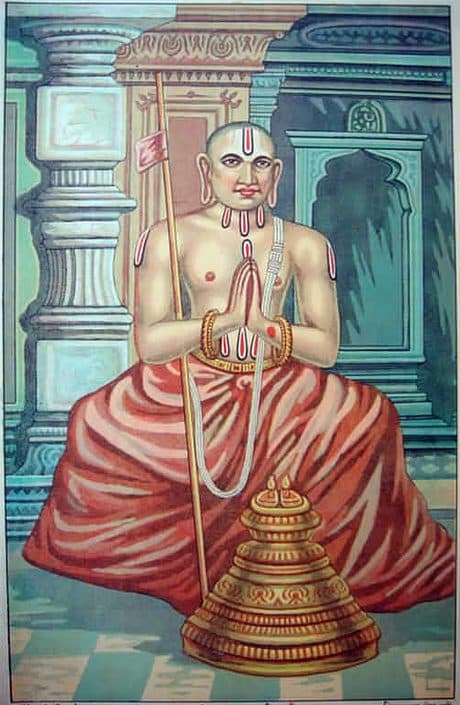
Rāmānuja · Viśiṣṭādvaita
English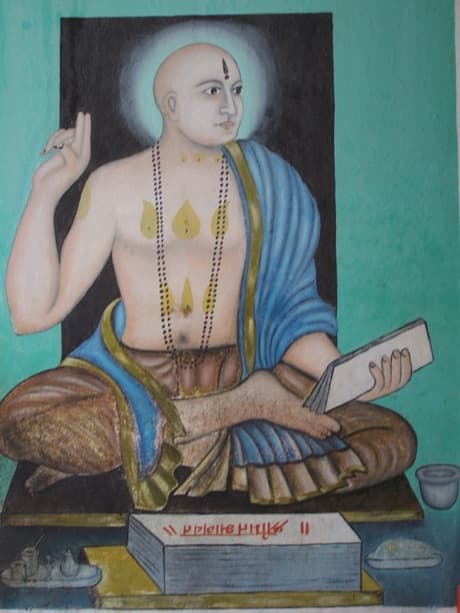
Madhvācārya · Dvaita
SanskritEnglishOn verses 17.24–17.25
“तत् फलं मे स्याद् इत्यनिभिसन्धाय |” — The utterance of the word tat, without expecting that the fruits be mine.

Jñāneśvar · Vārkarī
English25 *'Tat'—uttering this (symbol), without aiming at their fruit, the activities relating to sacrifices and austerities, and the various activities relating to gifts, are undertaken by those seeking Salvation.* (369)
They (the righteous seekers) meditate upon that Supreme Brahman as the origin of all and they clearly visualise it mentally by uttering its name, which is beyond the universe, which alone is omniscient and which is expressed by the word 'Tat'. They say, 'Let all the actions with their fruit be dedicated to the 'Tat' which represents Supreme Brahman, leaving no residue for us to enjoy. Thus they dedicate all actions to Supreme Brahman as represented by the word 'Tat', and shake off all liability (thus absolving themselves) by uttering the words 'Not Mine'. Now an action started with 'Omkār' and dedicated to Supreme Brahman with 'TAT', attains Supreme Brahman (status). Yet, this is so far as the action that is perceptible is concerned. Yet that is not sufficient. The egoistic duality on the part of the doer as being the doer (of actions), still abides in the doer (and does not merge in Supreme Brahman by the dedication of the action itself). Salt gets dissolved in water, still its saltish taste remains behind; in that way the sense of duality as being the doer remains in one who has dedicated all his actions to Supreme Brahman, and so long as this consciousness of duality remains intact, the dread of mundane existence accompanies (persists); and this is being declared by the Vedas, that are the mouth (piece) of God Almighty. Therefore, the word 'Sat' is reserved with the object that the Supreme Brahman, which is felt as being something distinct from one through egotism as being the doer, should be experienced (by the doer) as his very self. 'The actions that have merged in Brahman through words 'Om' and 'Tat', are commended in the word 'right' (proper). (And with regard to such 'right' actions) the word 'Sat' has a special application. And that very word I shall now make plain as it is, hear (about it).
Swami Ramsukhdas · Modern
English'Tadityanabhisandhāya phalam yajñatapaḥkriyāḥ dānakriyāśca vividhāḥ kriyante mokṣakāṅkṣibhiḥ'—All actions, such as sacrifice, penance and gifts etc., should be performed, in order to please God, without expecting any reward whatsoever. Every action, has a beginning and an end. Similarly, there is union and disunion, of its fruit. But the Lord ever remains the same, without undergoing any kind of change. So, the expression 'Tat' denotes, that the Lord ever remains, the same while the expression 'Anabhisandhāya phalam', denotes that all actions, and their fruits, are perishable. So a striver, should ever remember the everlasting Lord, and he should never aim, at the perishable rewards.
We cannot behold the Lord, Who ever pervades everywhere, because we assume the kaleidoscopic and perishable world, as real. So a striver, by having the aim of God-realization, and renouncing the feelings of 'Tness and 'Mineness', should perform, the acts of sacrifice, penance and gift, by regarding them as His own, with the power given by Him, for His sake only. This is the real achievement of human life. So a striver, has to realize God, Who is known as 'Tat', and he has to renounce affinity, for the world which seems real.
Devotees of the Lord, uttering other names of the Lord such as Rāma, Kṛṣṇa, Govinda, Nārāyaṇa, Vāsudcva and Śiva etc., begin their acts. All these names also denote the term, 'Tat'.
Seekers of salvation, perform various acts of sacrifice, penance, gift, pilgrimage, meditation, trance, chanting and study of scriptures etc., for the Lord's sake by obeying Him, to please Him. The reasons is, that all bodies, organs, minds, hearts, souls etc., and also we belong, to the Lord. Thus our so-called, property and riches, also belong to Him. So we belong to God and God is ours and with this conviction, all actions, should be performed, to please Him, only.
**Appendix—**The Lord by the term 'tat' (that) referring to
distance and invisibility means that the Supreme Person is 'alaukika' (unearthly)—'uttamaḥ puruṣastvanyaḥ' (Gītā 15/17). The Supreme Person (God) is not an object to be reflected upon, but is an object of faith and belief.
*Link:—Having explained the two names, 'Aum' (Om) and 'Tat' of the Lord, in the twenty-fourth verse and the twenty-fifth verse respectively, now He explains, the third name of God 'Sat', in the next two verses, in five different senses.*
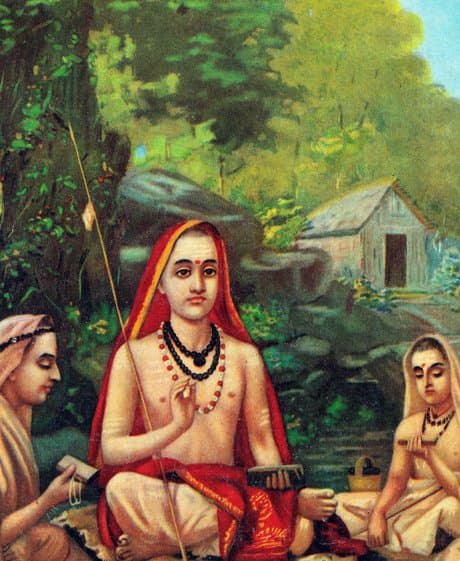
Ādi Śaṅkarācārya · Advaita
Sanskritतत् इति अनभिसन्धाय, ``तत्'' इति ब्रह्म-अभिधानं उच्चार्य अनभिसन्धाय च यज्ञ-आदि-कर्मणः फलं यज्ञ-तपः-क्रियाः यज्ञ-क्रियाः च तपः-क्रियाः च यज्ञ-तपः-क्रियाः दान-क्रियाः च विविधाः क्षेत्र-हिरण्य-प्रदान-आदि-लक्षणाः क्रियन्ते निर्वर्त्यन्ते मोक्ष-काङ्क्षिभिः मोक्ष-अर्थिभिः मुमुक्षुभिः ॥ ओं-तत्-शब्दयोः विनियोगः उक्तः । अथ इदानीं सत्-शब्दस्य विनियोगः कथ्यते --
Ādi Śaṅkarācārya · Advaita
Hindi'तत्' ऐसे इस ब्रह्मके नामका उच्चारण करके और कर्मोंके फलको न चाहकर नाना प्रकारकी यज्ञ और तपरूप तथा दान अर्थात् भूमि, सोना आदिका दान करनारूप क्रियाएँ मोक्षको चाहनेवाले मुमुक्षु पुरुषोंद्वारा की जाती हैं
Jñāneśvar · Vārkarī
Marathiजें सर्वांही जगापरौतें । जें एक सर्वही देखतें । तें तच्छब्दें बोलिजे तें । पैल वस्तु ॥ ३६९ ॥ तें सर्वादिकत्वें चित्तीं । तद्रूप ध्यावूनियां सुमती । उच्चारेंही व्यक्ती । आणिती पुढती ॥ ३७० ॥ म्हणती तद्रूपा ब्रह्मा तया । फळेंसीं क्रिया इयां । तेंचि होतु आम्हां भोगावया । कांहींचि नुरो ॥ ३७१ ॥ ऐसेनि तदात्मकें ब्रह्में । तेथ उगाणूनि कर्में । आंग झाडिती न ममें । येणें बोलें ॥ ३७२ ॥ आतां ओंकारें आदरिलें । तत्कारें समर्पिलें । इया रिती जया आलें । ब्रह्मत्व कर्मा ॥ ३७३ ॥ तें कर्म कीर ब्रह्माकारें । जालें तेणेंही न सरे । जे करी तेणेंसी दुसरें । आहे म्हणौनि ॥ ३७४ ॥ मीठ आंगें जळीं विरे । परी क्षारता वेगळी उरे । तैसें कर्म ब्रह्माकारें । गमे तें द्वैत ॥ ३७५ ॥ आणि दुजे जंव जंव घडे । तंव तंव संसारभय जोडे । हें देवो आपुलेनि तोंडें । बोलती वेद ॥ ३७६ ॥ म्हणौनि परत्वें ब्रह्म असे । तें आत्मत्वें परीयवसे । सच्छब्द या रिणादोषें । ठेविला देवें ॥ ३७७ ॥ तरी ओंकार तत्कारीं । कर्म केलें जें ब्रह्मशरीरीं । जें प्रशस्तादि बोलवरी । वाखाणिलें ॥ ३७८ ॥ प्रशस्तकर्मीं तिये । सच्छब्दा विनियोगु आहे । तोचि आइका होये । तैसा सांगों ॥ ३७९ ॥
Jñāneśvar · Vārkarī
Hindi(17.369) तत् शब्द से वह परब्रह्म कहा गया है जे सम्पूर्ण जगत् के परे है तथा जो एक सर्व-साक्षी है।
(17.370) ज्ञानीजन उसे सबका आदि जान अन्तःकरण में उसके रूप का ध्यान कर उसे उच्चारण-द्वारा भी प्रत्यक्ष करते हैं, (17.371) और फिर कहते हैं कि तद्रूप ब्रह्म को ये सब क्रियाएँ इनके फलों-सहित अर्पण हों, हमारे भोगों के लिए कुछ शेष न रहे।
(17.372) इस प्रकार वे तत्स्वरूपी ब्रह्म को सब कर्म समर्पण कर “न मम” (यह मेरा नहीं है) कह कर अलग हो जाते हैं।
(17.373) अब जो ओंकार से आरम्भ किया जाता है और तत्कार से समर्पित किया जाता है (इस प्रकार जिस कर्म को ब्रह्मत्व प्राप्त होता है)
(17.374) वह वास्तव में ब्रह्माकार हो जाता है; तथापि उससे भी कुछ सफलता नहीं होती क्योंकि जो कर्म करता है उसका द्वैत-भाव रह जाता है।
(17.375) लवण जल में गल जाता है पर उसकी क्षारता शेष रह जाती है, वैसे ही ब्रह्माकार कर्म द्वैत ही जान पड़ता है।
(17.376) और देव ने ही निज मुख से वेद-वाणी-द्वारा कहा है कि जब-जब द्वैत की घटना होती है तब-तब संसार-भय प्राप्त होता है।
(17.377) अतएव निज से परे जो ब्रह्म उसका पर्यवसान आत्मस्वरूप में हो, इस बात की पूर्ति के लिए देव ने सत्शब्द की योजना की है। (17.378) अतः ओंकार और तत्कार के द्वारा जो कर्म ब्रह्माकार हो जाते हैं, जो प्रशस्त इत्यादि नामों से प्रसिद्ध हैं
(17.379) उन प्रशस्त कर्मों में सत्शब्द का जो विनियोग किया जाता है वह सुनने योग्य है। उसका हम वर्णन करते हैं।
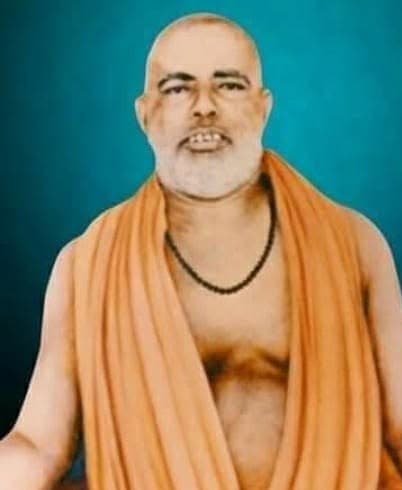
Sri Udiya Baba · Modern
Hindiभावार्थ— 'तत्' ऐसा उच्चारण करके मुमुक्षुलोग फल की इच्छा त्यागकर यज्ञ, तप और दान आदि अनेकों कर्म करते हैं।
Swami Ramsukhdas · Modern
Hindi‘तदित्यनभिसन्धाय...’मोक्षकाङ्क्षिभिः’— केवल उस परमात्माकी प्रसन्नताके उद्देश्यसे, किंचिन्मात्र भी फलकी इच्छा न रखकर शास्त्रीय यज्ञ, तप, दान आदि शुभकर्म किये जायें। कारण कि विहित-निषिद्ध, शुभ-अशुभ आदि क्रियामात्रका आरम्भ होता है और समाप्ति होती है। ऐसे ही उस क्रियाका जो फल होता है, उसका भी संयोग होता है और वियोग होता है अर्थात् कर्मफलके भोगका भी आरम्भ होता है और समाप्ति होती है। परन्तु परमात्मा तो उस क्रिया और फलभोगके आरम्भ होनेसे पहले भी हैं तथा क्रिया और फलभोगकी समाप्तिके बाद भी हैं एवं क्रिया और फलभोगके समय भी वैसे—के—वैसे हैं। परमात्माकी सत्ता नित्य-निरन्तर है। नित्य-निरन्तर रहनेवाली इस सत्ताकी तरफ ध्यान दिलानेमें ही ‘तत् इति’ पदोंका तात्पर्य है; और उत्पत्ति-विनाशशील फलकी तरफ ध्यान न देनेमें ही ‘अनभिसन्धाय फलम्’ पदोंका तात्पर्य है; अर्थात् नित्य-निरन्तर रहनेवाले तत्त्वकी स्मृति रहनी चाहिये और नाशवान् फलकी अभिसंधि (इच्छा) बिलकुल नहीं रहनी चाहिये।
नित्य-निरन्तर वियुक्त होनेवाले, प्रतिक्षण अभावमें
जानेवाले इस संसारमें जो कुछ देखने, सुनने और जाननेमें आता है, उसीको हम प्रत्यक्ष, सत्य मान लेते हैं और उसीकी प्राप्तिमें हम अपनी बुद्धिमानी और बलको सफल मानते हैं। इस परिवर्तनशील संसारको प्रत्यक्ष माननेके कारण ही सदा-सर्वदा सर्वत्र परिपूर्ण रहता हुआ भी वह परमात्मा हमें प्रत्यक्ष नहीं दीखता। इसलिये एक परमात्मप्राप्तिका ही उद्देश्य रखकर उस संसारका अर्थात् अहंता-ममता (मैं-मेरेपन)-का त्याग करके, उन्हींकी दी हुई शक्तिसे, यज्ञ आदिको उन्हींका मानकर निष्कामभावपूर्वक उन्हींके लिये यज्ञ आदि शुभकर्म करने चाहिये। इसीमें ही मनुष्यकी वास्तविक बुद्धिमानी और बल-(पुरुषार्थ-) की सफलता है। तात्पर्य यह है कि जो संसार प्रत्यक्ष प्रतीत हो रहा है, उसका तो निराकरण करना है और जिसको अप्रत्यक्ष मानते हैं, उस ‘तत्’ नामसे कहे जानेवाले परमात्माका अनुभव करना है, जो नित्य-निरन्तर प्राप्त है।
भगवान्के भक्त (भगवान्का उद्देश्य रखकर) ‘तत्’ पदके बोधक राम, कृष्ण, गोविन्द, नारायण, वासुदेव, शिव आदि नामोंका उच्चारण करके सब क्रियाएँ आरम्भ करते हैं।
अपना कल्याण चाहनेवाले मनुष्य यज्ञ, दान, तप, तीर्थ, व्रत, जप, स्वाध्याय, ध्यान, समाधि आदि जो भी क्रियाएँ करते हैं, वे सब भगवान्के लिये, भगवान्की प्रसन्नताके लिये, भगवान्की आज्ञा-पालनके लिये ही करते हैं, अपने लिये नहीं। कारण कि जिनसे क्रियाएँ की जाती हैं, वे शरीर, इन्द्रियाँ, अन्तःकरण आदि सभी परमात्माके ही हैं,
**परिशिष्ट भाव**—परमात्माके लिये परोक्षवाचक 'तत्' (वह) पदके प्रयोगका तात्पर्य है कि परमात्मा अलौकिक हैं—'उत्तमः पुरुषस्त्वन्यः' (गीता १५। १७)। वे विचारके विषय नहीं हैं, प्रत्युत श्रद्धा-विश्वासके विषय हैं।
**सम्बन्ध**—चौबीसवें श्लोकमें 'ॐ' की और पचीसवें श्लोकमें 'तत्' शब्दकी व्याख्या करके अब भगवान् आगेके दो श्लोकोंमें पाँच प्रकारसे 'सत्' शब्दकी व्याख्या करते हैं।
Whatever prescribed Vedic activities performed by the Vaiṣṇavas and brāhmaṇas, such as study of the Vedic scriptures and yajña or propitiation and worship by ritual to the Supreme Lord,
tapaḥ or austerities by the kṣatriyas or royal warrior class and dānaṁ or charity by the Vaiṣyas or merchant class - are all done out of devotion and dedicated to the Supreme Lord Krishna or any of His authorised incarnations and expansions as revealed in Vedic scriptures without the slightest desire for material rewards.
Such activities devoid of motivation for mundane results are designated as TAT signifying that such acts are for ātma tattva or realisation of the immortal soul, perception of the Brāhman or spiritual substratum pervading all existence and attaining communion with the Supreme Lord.
The Vishnu Sahasrasa confirms that: saḥ, vah, kah, klim, and tat denote the Supreme absolute.
Hence the ontology of TAT has been demonstrated to signify its connection to transcendental and eternal activities, which independently bestow Mokṣa or freedom from material existence and promotion to the eternal spiritual realms.