

Bhagavad Gītā · Chapter 14 · Guṇatraya Vibhāga Yoga
तत्र सत्त्वं निर्मलत्वात्प्रकाशकमनामयम्
सुखसङ्गेन बध्नाति ज्ञानसङ्गेन चानघ
tatra sattvaṃ nirmalatvātprakāśakamanāmayam|sukhasaṅgena badhnāti jñānasaṅgena cānagha||
Word meanings
अनघ = O sinless Arjuna
तत्र = among these
सत्त्वम् = sattva
निर्मलत्वात् = being pure
प्रकाशकम् = illuminating
च = and
अनामयम् = unblemished
ज्ञानसङ्गेन = through attachment to wisdom
सुखसङ्गेन = through attachment to joy
बध्नाति = binds
Translation
Of these Sattva, being immaculate, is illuminating and flawless, Arjuna; it binds through identification with joy and wisdom.
Commentary
The commentators seated around this verse
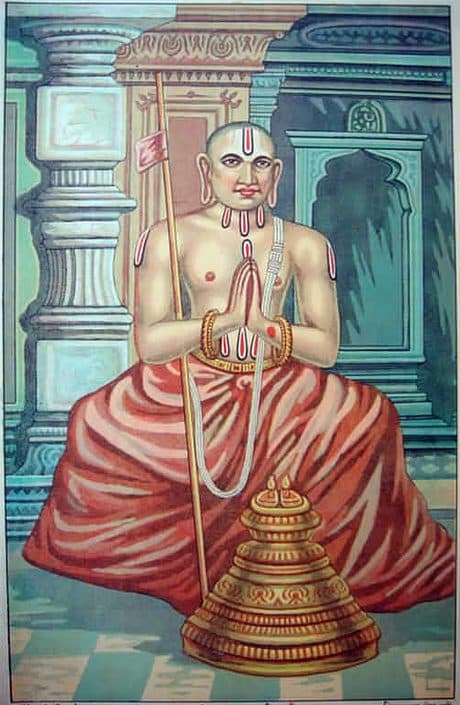
Rāmānuja · Viśiṣṭādvaita
English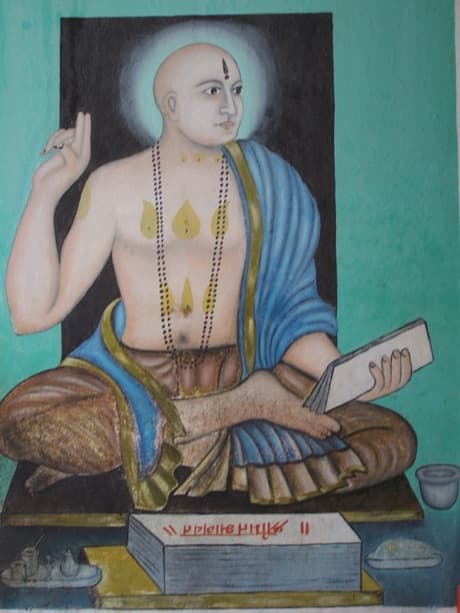
Madhvācārya · Dvaita
SanskritEnglishOn verses 14.5–14.6
“बन्धप्रकारं दर्शयति साधनानुष्ठानाय - सत्त्वम् इत्यादिना |” - The forms of attachment in the course of performance of actions by the self are explained here.
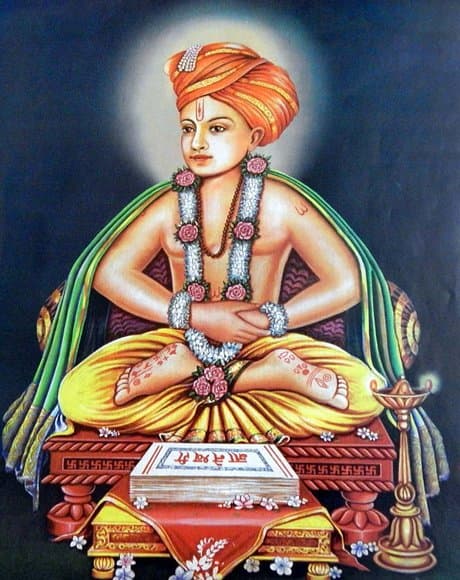
Jñāneśvar · Vārkarī
English6 *“Of them, the Sattva, because of its taintlessness, is luminous and free from disorder; through fondness for comfort it fetters, and through fondness for knowledge, O Sinless One. (148)*
The hunter Sattva begins to gather in the snares in the form of pleasure and knowledge, then he (individual soul) goes on indulging in loose and vain talk in his conceit as being one of knowledge, chafes and kicks (struggles vainly) as he realises his actual state and thus banishes that autochthonous bliss of the self which was already his. He feels greatly pleased when honoured as being a learned person, is elated at every trifling gain, and begins to boast of being a really happy person. He says, “Is it not a great luck of mine? Who else is as happy as myself,” and while indulging in such talks the eight affections of the body (considered as) indicating the prevalence of Sattva quality begin to surge up all through his body. The matter does not stop here. Another sticky thing gets at him, viz. the ghost in the form of his erudition possesses him. He does not feel sorry in the least for ignoring the fact that he himself is the essence of knowledge, but he has lost that primal nature of his and feels he is distended infinitely like the sky with the mundane knowledge of sense-objects. It is just like a king turned into a beggar in his dreams and then making a boast of being as lucky as God Indra on his going around abegging in his capital and securing a little grain. In that way one above form, getting into form (body) thus gets (deluded) by external knowledge. He becomes expert in active worldly life, well-versed in sacrificial learning, nay he considers even heaven as too low in magnitude for himself. And then he boasts, “No one else has got as much knowledge as I have” and says, “my mind is (as boundless as) the sky which harbours the moon in the form of dexterity”. In this way the Sattva Guna drags the soul with a chord of happiness and knowledge tied round his ears, in the way a decorated bull is reduced to a (helpless) state by his trainer. Now I tell you and you do hear how this embodied soul is fettered by the Rajas Guna.
Swami Ramsukhdas · Modern
English'Tatra sattvaṁ nirmalatvāt'—In the preceding verse, the Lord described the three guṇas. Out of these three, Sattva is stainless and so it is conducive to, the knowledge of God-realization.
'Prakāśakam'—Sattva being stainless and pure is illuminating, and free from morbidity, of any kind. As in light, all objects are clearly visible, with the predominance of Sattvaguṇa, all the propensities of Rajoguṇa and Tamoguṇa, are clearly seen. Desire, anger, greed, pride and envy etc., which evolve from Rajoguṇa and Tamoguṇa, are clearly seen in that light. With the predominance of Sattva, the senses become animated and the mind, works more promptly in understanding mundane, as well as, the spiritual, topics.
The quality of Sattva (mode of goodness) can be divided into two parts—(i) Pure Sattva (ii) Impure Sattva. The former aims at God-realization, while the latter at mundane pleasures and prosperity.*
With the predominance of the mode of pure Sattva, a striver,
* The impure Sattva is called so because it does not aim at God-realization. This impure Sattva has 'Rājasa' in it.
having the aim of God-realization, has a natural inclination for spiritual progress, while a person possessing the mode of impure Sattva, hankers after worldly pleasures and prosperity, which lead him to bondage. Even in the impure Sattva the intellect scans and grasps worldly objects properly and minutely. Having this mode, scientists make inventions, but having no aim for God-realization, because of their pride of success and desire for praise and money etc., get bound.
'Anāmayam'—In fact, the quality of Sattva is not totally flawless, but it is more flawless than either Rajoguna or Tamoguna. Only the Lord, or the self, is totally flawless, but Sattvaguna has been called flawless, because, it is conducive to God-realization.
'Sukhasaṅgena badhnāti jñānasaṅgena cānagha'—Due to predominance of Sattva, a striver experiences, joy and peace. He is attached, to joy and peace, and he does not want to be deprived of these. This attachment, leads him to bondage.
During this period, his faculty of knowledge develops. He comes to know, several wonderful facts and topics, never known before. So he is attached to this knowledge, and he has a desire to maintain it forever. This attachment is the cause of his bondage. Moreover, his pride of superiority, that he knows more than others, also leads him to bondage. Thus he cannot transcend, the three guṇas. This attachment, is the quality of Rajas, which binds a striver (Gītā 13/21). If the striver, is not attached to joy and knowledge, he transcends, the three guṇas, including the Sattvaguna and realizes, the self.
A striver, should not enjoy that pleasure and knowledge, nor should he aim at them. He should think, that they are not conducive to attainment of his goal. Moreover, he has to attain that goal, which is an illuminator of pleasure and knowledge. Knowledge and pleasure, are mental projections during the preponderance of Sattva. These wax and wane, they come and
go, while the self remains uniform, and constant. It knows no increase or decrease. Therefore, a striver should remain quite unconcerned and indifferent, to these modifications. He should not enjoy them. Thus he will not get entangled, in pleasure and knowledge, the evolutes of Sattva. If he is not attached to them, he realizes, God quickly. Even if he does not renounce this attachment, by having an aim of God-realization, in course of time, he develops a disinclination for pleasure and knowledge, and then he attains, God.
Appendix—Here the Lord has declared that Sattvaguṇa is flawless—this is singularity of Sattvaguṇa. The reason is that Sattvaguṇa is very close to the transcendental position (state). Though Sattvaguṇa is flawless, but because of attachment it becomes full of flaws—'sukhasaṅgena badhnāti jñānasaṅgena cānagha'; because attachment is the nature of Rajoguṇa—'rajo rāgātmakam viddhi' (Gītā 14/7). Happiness and knowledge are not obstructive to the transcendental position. But attachment to them is obstructive. Attachment means to assume them one's own. In fact Sattvaguṇa is not one's own, but it is of 'Prakṛti'.
A man has the predominance of Rajoguṇa—'rajasi pralayaṃ gatvā karmasaṅgiṣu jāyate' (14/15), 'madhye tiṣṭhanti rājasāḥ' (14/18). Therefore so long as attachment persists, salvation is not attained; the Real Self being totally detached, complete detachment is essential for salvation.
The Lord has said Sattvaguṇa 'anāmaya' (free from blemish or flaw) and also the Supreme State as 'anāmaya'—'padam gacchantyanāmayaṃ' (2/51). By this it should be understood that Sattvaguṇa is relatively flawless while the Supreme State is absolute flawless.
Though all the three modes are born of 'Prakṛti', yet Rajoguṇa evolves from longing and attachment and Tamoguṇa is born of ignorance (14/7-8), but Sattvaguṇa is born only of 'Prakṛti'. It means that 'Sattvaguṇa' is born of 'Prakṛti' but it does not evolve
from any flaw. Therefore it has said to be 'anāmaya'.
Sāttvika happiness and Sāttvika knowledge are also not the nature of the self but being born of 'Prakṛti', are of others (alien) viz., are dependent. Sāttvika happiness is dependent, it is not one's own nature, it is not bliss of the self.
Difference between Sāttvika knowledge and divine knowledge (self-realization)—In Sāttvika jñāna 'I am Jñānī (wise)'—this attachment persists but 'Tattvajñāna' is totally free from attachment viz., on self-realization, wisdom persists, but 'I am wise'—this (sense) does not remain. In Sāttvika knowledge the onlooker remains and he is conscious of his speciality but in 'Tattvajñāna' there is no spectator, the self-realized soul becomes perfect but he is not conscious of his speciality because he loses his individuality. This consciousness of speciality is attachment. When he accepts 'I am wise', then he is conscious of his speciality. On self-realization, the self-realized soul realizes the bliss in the self. In the twenty-seventh verse of the thirteenth chapter, there is the description of 'Sāttvika jñāna' and in the twenty-eighth verse of the same chapter, there is description of self-realization.
*Link—In the next verse the Lord describes the characteristic of rajoguna and shows how, it binds, the spirit.*
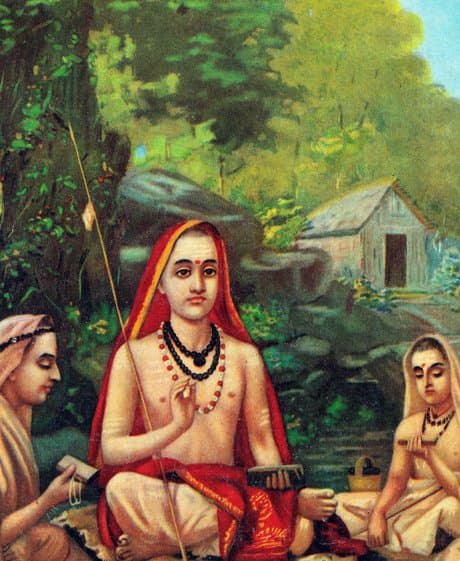
Ādi Śaṅkarācārya · Advaita
Sanskritनिर्मलत्वात् स्फटिकमणिरिव प्रकाशकं अनामयं निरुपद्रवं सत्त्वं तन्निबध्नाति । कथम्? सुखसङ्गेन ``सुखी अहम्'' इति विषयभूतस्य सुखस्य विषयिणि आत्मनि संश्लेषापादनं मृषैव सुखे सञ्जनं इति । सैषा अविद्या । न हि विषयधर्मः विषयिणः भवति । इच्छादि च धृत्यन्तं क्षेत्रस्यैव विषयस्य धर्मः इति उक्तं भगवता । अतः अविद्ययैव स्वकीयधर्मभूतया विषयविषय्यविवेकलक्षणया अस्वात्मभूते सुखे सञ्जयति इव, आसक्तमिव करोति, असङ्गं सक्तमिव करोति, असुखिनं सुखिनमिव । तथा ज्ञानसङ्गेन च, ज्ञानमिति सुखसाहचर्यात् क्षेत्रस्यैव विषयस्य अन्तःकरणस्य धर्मः, न आत्मनः; आत्मधर्मत्वे सङ्गानुपपत्तेः, बन्धानुपपत्तेश्च । सुखे इव ज्ञानादौ सङ्गः मन्तव्यः । हे अनघ अव्यसन ॥
Ādi Śaṅkarācārya · Advaita
Hindiउन सत्त्व आदि तीन गुणोंमेंसे पहले सत्त्वगुणका लक्षण बतलाया जाता है—
सत्त्वगुण स्फटिक-मणिकी भाँति निर्मल होनेके कारण, प्रकाशशील और उपद्रवरहित है (तो भी) वह बाँधता है।
कैसे बाँधता है? सुखकी आसक्तिसे। (वास्तवमें) विषयरूप सुखका विषयी आत्माके साथ 'मैं सुखी हूँ' इस प्रकार सम्बन्ध जोड़ देना यह आत्माको मिथ्या ही सुखमें नियुक्त कर देना है। यही अविद्या है।
क्योंकि विषयके धर्म विषयीके (कभी) नहीं होते और इच्छासे लेकर धृतिपर्यन्त सब धर्म विषयरूप क्षेत्रके ही हैं—ऐसा भगवान्ने कहा है।
सुतरां यह सिद्ध हुआ कि जो आरोपितभावसे आत्माकी स्वकीय धर्मरूपा हो रही है और विषय- विषयीका अज्ञान ही जिसका स्वरूप है, ऐसी अविद्याद्वारा ही सत्त्वगुण अनात्मस्वरूप सुखमें (आत्माको) मानो नियुक्त—आसक्त कर देता है, यानी जो (वास्तवमें) सुखके सम्बन्धसे रहित है, उसे सुखी-सा कर देता है। इसी प्रकार (यह सत्त्वगुण उसे) ज्ञानके सङ्गसे भी (बाँधता है)।
ज्ञान भी सुखका साथी होनेके कारण, क्षेत्र अर्थात् अन्तःकरणका ही धर्म है, आत्माका नहीं— क्योंकि आत्माका धर्म मान लेनेपर उसमें आसक्त होना और उसका बाँधना नहीं बन सकता। इसलिये हे निष्पाप! अर्थात् व्यसन-दोष-रहित अर्जुन! सुखकी भाँति ही ज्ञान आदिके 'सङ्ग' को भी (बन्धन करनेवाला) समझना चाहिये
Jñāneśvar · Vārkarī
Marathiतेवीं सत्त्वें लुब्धकें । सुखज्ञानाचीं पाशकें । वोढिजती मग खुडके । मृगु जैसा ॥ १४८ ॥ मग ज्ञानें चडफडी । जाणिवेचे खुरखोडी । स्वयं सुख हें धाडी । हातींचें गा ॥ १४९ ॥ तेव्हां विद्यामानें तोखे । लाभमात्रें हरिखे । मी संतुष्ट हेंही देखे । श्लाघों लागे ॥ १५० ॥ म्हणे भाग्य ना माझें ? । आजि सुखियें नाहीं दुजें । विकाराष्टकें फुंजे । सात्त्विकाचेनि ॥ १५१ ॥ आणि येणेंही न सरे । लांकण लागे दुसरें । जें विद्वत्तेचें भरे । भूत आंगीं ॥ १५२ ॥ आपणचि ज्ञानस्वरूप आहे । तें गेलें हें दुःख न वाहे । कीं विषयज्ञानें होये । गगनायेवढा ॥ १५३ ॥ रावो जैसा स्वप्नीं । रंकपणें रिघे धानीं । तो दों दाणां मानी । इंद्रु ना मी ॥ १५४ ॥ तैसें गा देहातीता । जालेया देहवंता । हों लागे पंडुसुता । बाह्यज्ञानें ॥ १५५ ॥ प्रवृत्तिशास्त्र बुझे । यज्ञविद्या उमजे । किंबहुना सुझे । स्वर्गवरी ॥ १५६ ॥ आणि म्हणे आजि आन । मीवांचूनि नाहीं सज्ञान । चातुर्यचंद्रा गगन । चित्त माझें ॥ १५७ ॥ ऐसें सत्त्व सुखज्ञानीं । जीवासि लावूनि कानी । बैलाची करी वानी । पांगुळाचिया ॥ १५८ ॥ आतां हाचि शरीरीं । रजें जियापरी । बांधिजे तें अवधारीं । सांगिजैल ॥ १५९ ॥
Jñāneśvar · Vārkarī
Hindi(14.149) – वैसे ही सत्त्वरूपी व्याधा सुख और ज्ञान के पाश से इस आत्मा को खींचता है। फिर वह मृग जैसा तड़फता,
(14.150) ज्ञान से क्षुब्ध होता, और मानों ज्ञात्त्वरूपी लात मार कर गाँठ का आत्मसुख बहा देता है।
(14.151) कोई उसकी विद्या का सन्मान करे तो उसे सन्तोष होता है, थोड़ा-सा लाभ हो तो उसे हर्ष होता है, यह जानकर कि मैं सन्तुष्ट हूँ वह निज को धन्य समझने लगता है।
(14.152) वह समझता है कि मेरा कितना बड़ा भाग्य है कि आज मेरे समान सुखी दूसरा कोई नहीं है। इस प्रकार वह अष्ट सात्विक भावों के गर्व से फूलता है।
(14.153) इतना ही नहीं किन्तु उसे और दूसरा बन्धन लगता है। उसके शरीर में विद्वत्तारूपी भूत का संचार हो जाता है। (14.154) उसे इस बात का दुःख नहीं होता कि खुद ज्ञान-स्वरूप हो कर भी मुझे उसकी विस्मृति हो गई है, किन्तु विषयज्ञान से वह आकाश में फूला नहीं समाता।
(14.155) राजा जैसे स्वप्न में दरिद्री हो भिक्षा माँगे तो दो दाने मिलते ही निज को इन्द्र मानने लगता है,
(14.156) वही हाल, हे पाण्डुसुत! देहातीत का — देहवन्त हो जाने पर — बाह्य-ज्ञान के कारण होने लगता है।
(14.157) वह प्रवृत्तिशास्त्र समझता है, यज्ञविद्या जानता है, किंबहुना, उसे स्वर्ग का भी ज्ञान हो जाता है।
(14.158) और वह समझता है कि आज मेरे सिवाय कोई ज्ञानी नहीं है, चातुर्यरूपी चन्द्र के लिए मेरा चित्त गगन हो रहा है।
(14.159) इस प्रकार सत्त्व गुण जीव का सुख और ज्ञान की नाथें लगा कर लूले मनुष्य को बैल जैसा बना देता है।
(14.160) अब यही आत्मा जिस प्रकार रज से बाँधा जाता है उसका वर्णन सुने।
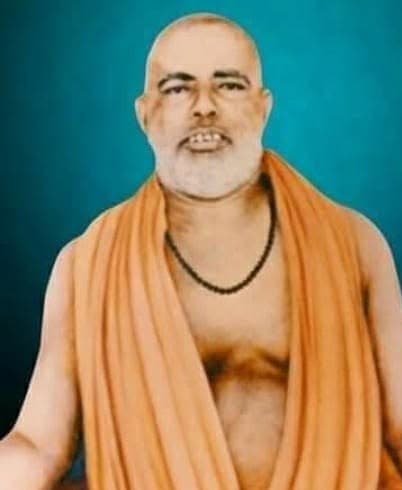
Sri Udiya Baba · Modern
Hindiसंगति— अगले श्लोक में यह बतलाते हैं कि सत्त्वगुण किस प्रकार जीव को बाँधता है—
भावार्थ— हे निष्पाप! इन तीनों गुणों में सत्त्वगुण निर्मल होने के कारण प्रकाशक और दुःखरहित है। वह जीव को सुख और ज्ञान की आसक्ति से बाँधता है।
व्याख्या— सुख की आसक्ति अर्थात् रसास्वाद और ज्ञान की आसक्ति ज्ञानाभिमान। ये भी गुणजनित होने के कारण जीव को बाँधने वाले हैं। यह सुख और ज्ञान का बन्धन दुःख और मोह के बन्धन की अपेक्षा भी सुदृढ़ होता है, क्योंकि इसमें जीव की गुणबुद्धि होती है, इसलिये वह इससे छूटना नहीं चाहता।
प्रश्न— सुख-संग और ज्ञान-संग बाँधने वाले हैं—इसका क्या भाव है?
उत्तर— साधक जब एकाग्रता का अभ्यास करता है तो उसे बड़ा सुख जान पड़ता है। उसे ही रस कहते हैं। अनेकों साधक इतने में ही अपने को कृतकृत्य मान लेते हैं। अतः उससे असंग न होने के कारण वे वहीं रुक जाते हैं। यह सुखासक्ति का बंधन है। इसी प्रकार अनेकों साधक द्रष्टा-दृश्य-विवेक होने पर ही अपने को ज्ञानी मान बैठते हैं तथा दूसरों को हीन दृष्टि से देखते हैं। यह ज्ञानाभिमान-जनित बन्धन है। ये दोनों परिस्थितियाँ सत्त्वगुण की कार्य होने पर भी हैं बन्धन ही, इनके कारण साधक आगे नहीं बढ़ पाता। इसी से कहा है—‘येन त्यजसि तत्त्यज’ अर्थात् जिस त्यागाभिमान से सब कुछ त्याग किया है उसे भी त्याग।
Swami Ramsukhdas · Modern
Hindi'तत्र सत्त्वं निर्मलत्वात्'—पूर्वश्लोकमें सत्त्व, रज और तम—इन तीनों गुणोंकी बात कही। इन तीनों गुणोंमें सत्त्वगुण निर्मल (मलरहित) है। तात्पर्य है कि रजोगुण और तमोगुणकी तरह सत्त्वगुणमें मलिनता नहीं है, प्रत्युत यह रजोगुण और तमोगुणकी अपेक्षा निर्मल, स्वच्छ है। निर्मल होनेके कारण यह परमात्मतत्त्वका ज्ञान करानेमें सहायक है।
'**प्रकाशकम्**'—सत्त्वगुण निर्मल, स्वच्छ होनेके कारण प्रकाश करनेवाला है। जैसे प्रकाशके अन्तर्गत वस्तुएँ साफ-साफ दीखती हैं, ऐसे ही सत्त्वगुणकी अधिकता होनेसे रजोगुण और तमोगुणकी वृत्तियाँ साफ-साफ दीखती हैं। रजोगुण और तमोगुणसे उत्पन्न होनेवाले काम, क्रोध, लोभ, मद, मात्सर्य आदि दोष भी साफ-साफ दीखते हैं अर्थात् इन सब विकारोंका साफ-साफ ज्ञान होता है।
सत्त्वगुणकी वृद्धि होनेपर इन्द्रियोंमें प्रकाश, चेतना और हलकापन विशेषतासे प्रतीत होता है, जिससे प्रत्येक पारमार्थिक अथवा लौकिक विषयको अच्छी तरह समझनेमें बुद्धि पूरी तरह कार्य करती है और कार्य करनेमें बड़ा उत्साह रहता है।
सत्त्वगुणके दो रूप हैं—(१) शुद्ध सत्त्व, जिसमें उद्देश्य परमात्माका होता है, और (२) मलिन सत्त्व, जिसमें उद्देश्य सांसारिक भोग और संग्रहका होता है*।
शुद्ध सत्त्वगुणमें परमात्माका उद्देश्य होनेसे परमात्माकी तरफ चलनेमें स्वाभाविक रुचि होती है। मलिन सत्त्वगुणमें पदार्थोंके संग्रह और सुखभोगका उद्देश्य होनेसे सांसारिक प्रवृत्तियोंमें रुचि होती है, जिससे मनुष्य बँध जाता है।
मलिन सत्त्वगुणमें भी बुद्धि सांसारिक विषयको अच्छी
* परमात्माका उद्देश्य न रहनेके कारण इसको 'मलिन सत्त्व' कहा गया है। मलिन सत्त्वमें रजोगुण साथ रहता है।
तरह समझनेमें समर्थ होती है। जैसे, सत्त्वगुणकी वृद्धिमें ही वैज्ञानिक नये-नये आविष्कार करता है; किन्तु उसका उद्देश्य परमात्माकी प्राप्ति न होनेसे वह अहंकार, मान-बड़ाई, धन आदिसे संसारमें बँधा रहता है।
‘अनामयम्’—सत्त्वगुण रज और तमकी अपेक्षा विकाररहित है। वास्तवमें प्रकृतिका कार्य होनेसे यह सर्वथा निर्विकार नहीं है। सर्वथा निर्विकार तो अपना स्वरूप अथवा परमात्मतत्त्व ही है, जो कि गुणातीत है। परमात्मतत्त्वकी प्राप्तिमें सहायक होनेसे भगवान्ने सत्त्वगुणकी भी विकाररहित कह दिया है।
‘सुखसंगेन बध्नाति ज्ञानसंगेन चानघ’—जब अन्तःकरणमें सात्त्विक वृत्ति होती है, कोई विकार नहीं होता है, तब एक सुख मिलता है, शान्ति मिलती है। उस समय साधकके मनमें यह विचार आता है कि ऐसा सुख हरदम बना रहे, ऐसी शान्ति हरदम बनी रहे, ऐसी निर्विकारता हरदम बनी रहे। परन्तु जब ऐसा सुख, शान्ति, निर्विकारता नहीं रहती, तब साधकको अच्छा नहीं लगता। यह अच्छा लगना और अच्छा न लगना ही सत्त्वगुणके सुखमें आसक्ति है, जो बाँधनेवाली है।
जब सत्त्व, रज और तम—इन तीनों गुणोंका, इनकी वृत्तियोंका, विकारोंका साफ-साफ ज्ञान होता है और साधकको ऐसी बहुत-सी आश्चर्यजनक बातोंकी जानकारी होती है, जो पहले कभी जानी हुई नहीं होती, तब साधकके मनमें आता है कि यह ज्ञान हरदम बना रहे। यह ज्ञानमें आसक्ति है, जो बाँधनेवाली है। ‘मैं दूसरोंकी अपेक्षा अधिक (विशेष) जानता हूँ’—यह अभिमान भी बाँधनेवाला होता है।
**परिशिष्ट भाव**—यहाँ भगवान्ने सत्त्वगुणकी अनामय (निर्विकार) बताया है—यह सत्त्वगुणकी विलक्षणता है। कारण कि सत्त्वगुण गुणातीत होनेके बहुत नजदीक है। यद्यपि सत्त्वगुण निर्विकार है, पर संगके कारण वह विकारी हो जाता है—‘सुखसंगेन बध्नाति ज्ञानसंगेन चानघ’; क्योंकि संग रजोगुणका स्वरूप है—‘रजो रागात्मकं विद्धि’ (गीता १४।७)। सुख और ज्ञान बाधक नहीं हैं, प्रत्युत उनका संग बाधक है। संग है—उनको अपना मान लेना। वास्तवमें सत्त्वगुण अपना है ही नहीं, वह तो प्रकृतिका है।
मनुष्यमें रजोगुणकी मुख्यता रहती है—‘रजसि प्रलयं गत्वा कर्मसंगिषु जायते’ (१४।१५), ‘मध्ये तिष्ठन्ति राजसाः’ (१४।१८)। अतः जबतक संग रहता है, तबतक मुक्ति नहीं होती; क्योंकि स्वरूप असंग है।
भगवान्ने सत्त्वगुणकी भी अनामय कहा है और परमपदकी भी अनामय कहा है—‘पदं गच्छन्त्यनामयम्’ (२।५१)। इससे यह समझना चाहिये कि सत्त्वगुण तो सापेक्ष अनामय है और परमपद निरपेक्ष अनामय है।
तीनों गुण प्रकृतिजन्य होते हुए भी रजोगुण तृष्णा तथा आसक्तिसे पैदा होनेवाला और तमोगुण अज्ञानसे पैदा होनेवाला है (इसी अध्यायका सातवाँ-आठवाँ श्लोक); परन्तु सत्त्वगुण केवल प्रकृतिजन्य है। तात्पर्य है कि सत्त्वगुण प्रकृतिजन्य तो है, पर किसी विकारसे जन्म नहीं है। इसलिये इसको ‘अनामय’ कहा गया है।
सात्त्विक सुख और सात्त्विक ज्ञान भी स्वयंके नहीं हैं, प्रत्युत प्रकृतिजन्य होनेसे ‘पर’ के हैं अर्थात् पराधीन
इस तरह सत्त्वगुण सुख और ज्ञानके संग—(आसक्ति-) से साधकको बाँध देता है अर्थात् उसको गुणातीत नहीं होने देता। यह संग ही रजोगुण है, जो बाँधनेवाला है (गीता—तेरहवें अध्यायका इक्कीसवाँ श्लोक)। यदि साधक सुख और ज्ञानका संग न करे तो सत्त्वगुण उसको बाँधता नहीं, प्रत्युत उसको गुणातीत कर देता है। तात्पर्य है कि यदि संग न हो तो साधक सत्त्वगुणसे भी ऊँचा उठ जाता है और अपने गुणातीत स्वरूपका अनुभव कर लेता है।
सत्त्वगुणसे सुख और ज्ञान होनेपर साधकको यह सावधानी रखनी चाहिये कि यह सुख और ज्ञान मेरा लक्ष्य नहीं है। ये मेरे भोग्य नहीं हैं। ये तो लक्ष्यकी प्राप्तिमें कारण हैं। मेरेको तो उस लक्ष्यको प्राप्त करना है, जो इस सुख और ज्ञानकी भी प्रकाशित करनेवाला है।
सुख, ज्ञान आदि सभी सत्त्वगुणकी वृत्तियाँ हैं। ये कभी घटती हैं, कभी बढ़ती हैं; कभी आती हैं, कभी जाती हैं। परन्तु अपना स्वरूप निरन्तर एकरस रहता है। उसमें कभी घट-बढ़ नहीं होती। अतः साधकको सत्त्वगुणकी वृत्तियोंसे सदा तटस्थ, उदासीन रहना चाहिये। उनका उपभोग नहीं करना चाहिये। इससे वह सुख और ज्ञानकी आसक्तिमें फँसेगा नहीं।
अगर साधक सत्त्वगुणसे होनेवाले सुख और ज्ञानका संग न करे, तो उसको शीघ्र ही परमात्मप्राप्ति हो जाती है। परन्तु अगर वह इनके संगका त्याग न करे तो (परमात्मप्राप्तिका लक्ष्य होनेसे) समय पाकर उसकी इस सुख और ज्ञानसे स्वतः अरुचि हो जाती है और वह परमात्मप्राप्ति कर लेता है।
हैं। इनमें पराधीनताका सुख है, अपने स्वरूपका सुख नहीं है।
**सात्त्विक ज्ञान और तत्त्वज्ञानमें अन्तर**—सात्त्विक ज्ञानमें तो 'मैं ज्ञानी हूँ' यह संग है, पर तत्त्वज्ञान सर्वथा असंग है अर्थात् तत्त्वज्ञान होनेपर ज्ञान रहता है, पर 'मैं ज्ञानी हूँ'—यह (ज्ञानी) नहीं रहता। सात्त्विक ज्ञानमें द्रष्टा रहता है और अपनेमें विशेषताका भान होता है; परन्तु तत्त्वज्ञानमें कोई द्रष्टा नहीं रहता और अपनेमें कोई कमी भी नहीं रहती तथा विशेषताका भान भी नहीं होता; क्योंकि व्यक्तित्व नहीं रहता। अपनेमें विशेषताका अनुभव होना ही संग है। विशेषताका अनुभव 'मैं ज्ञानी हूँ'—ऐसा स्वीकार करनेसे होता है। तत्त्वज्ञान होनेपर निजानन्दका अनुभव होता है। तेरहवें अध्यायके सत्ताईसवें श्लोकमें सात्त्विक ज्ञानका और अट्ठाईसवें श्लोकमें तत्त्वज्ञानका वर्णन हुआ है।
*सम्बन्ध—रजोगुणका स्वरूप और उसके बाँधनेका प्रकार क्या है—इसको आगेके श्लोकमें बताते हैं।*
The characteristics given by Lord Krishna of sattva or the mode of goodness within the three guṇas or modes of material nature is that it is pure and lucid and shines brightly.
Purity and clarity is that which negates obscuration of brightness and happiness. As illumination and happiness can only result from sattva it is understood to be their cause.
The word prakāśakam means illuminates, enlightens, reveals the exact knowledge of.
The word anāmayam means of peaceful quality, which has no inherent cause for producing discomfort, pain or sickness, denoting that sattva is the cause of good health.
The quality of sattva produces in the jīva or embodied being the predisposition for happiness and knowledge.
When the dispositions for happiness and knowledge arise in life one embarks upon such worldly material enterprises and spiritual pursuits as correlates to the level of one's development and evolution.
Hence the jīva is propelled to take birth in such wombs that are favourably suited for the enjoyment of one's karma or resultant reactions to actions which arising out of sattva are positive.
Born in sattva the inclinations and disposition that one has again gravitates towards happiness and knowledge and in this way lifetime by lifetime in sattva guṇa the mode of goodness one has the opportunity to advance in spiritual life.
But this opportunity is not accessible to those born in the two inferior guṇas of Rājas or passion and tamas or ignorance as will be described next.