

Bhagavad Gītā · Chapter 14 · Guṇatraya Vibhāga Yoga
इदं ज्ञानमुपाश्रित्य मम साधर्म्यमागताः
सर्गेऽपि नोपजायन्ते प्रलये न व्यथन्ति च
idaṃ jñānamupāśritya mama sādharmyamāgatāḥ|sarge'pi nopajāyante pralaye na vyathanti ca||
Word meanings
इदम् = this
ज्ञानम् = wisdom
उपाश्रित्य = having taken refuge in
मम = my
साधर्म्यम् = the same nature
आगताः = have attained
सर्गे = at creation
अपि = also
न, उपजायन्ते = are not born
च = and
प्रलये = at dissolution
न, व्यथन्ति = are not disturbed
Translation
Those who, by practising this wisdom, have entered into My Being are not born again at the cosmic dawn nor feel disturbed even during the cosmic night.
Commentary
The commentators seated around this verse

Rāmānuja · Viśiṣṭādvaita
English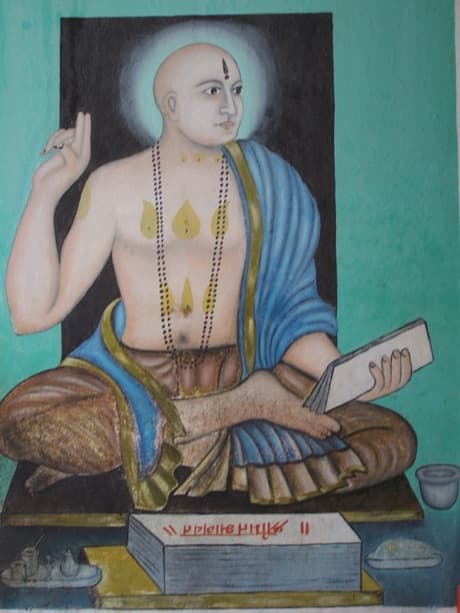
Madhvācārya · Dvaita
Madhva BhāṣyaSanskritEnglishOn verses 14.1–14.4
“महद् ब्रह्म प्रकृतिः | सा च श्रीभूद्विगेति या भिन्ना | उमासरस्वत्याद्यास्तु तदशयुतान्यजीवाः || तथा च काशायणश्रुतिः - श्रीभूमिदुर्गा महती तु माया सा लोकमूर्तिर्जगतो वन्धकी च | उमावागाधा अन्यजीवास्तदशास्तदात्मना सर्ववेदेषु गीता | इति | मम योनिः | इति गर्भधारार्था योनिः | न तु माता | वाक्यशेषात् || तथा हि सामवेदे शार्कराक्ष्यस्मृती - विष्णोर्विनिर्गर्भसन्धारणार्था महामाया सर्वदुःखैर्विहीना | तथाऽप्यात्मानं दुःखिवन्मोहनार्थं प्रकाशयन्ति सह विष्णुना सा || इति | अतः सीतादुःखाधिकं सर्वं मृषाप्रदर्शनमेव | तथा च कूर्म पुराणे || न चेयं भूः | तथाच सोकरायणश्रुतिः - अन्या भूमिभूरियं रस्य छाया भूतावमा सा हि भूतैकयोनिः || इति | अवाप स्वेच्छया दास्यं जगतां प्रपितामही || इति | अनाभिस्नातश्रुतेर्मात्म्यपुराणोक्तमपि स्वेच्छयैव || महद्ब्रह्म शब्दवाच्याऽपि प्रकृतिरेव - महती ब्रह्मणि द्वे तु प्रकृतिश्च महेश्वरः || इति तत्रैव ||” - महद् ब्रह्म is the Prakriti. She separately exists as Sri, Bhu, Durga etc. Uma, Saraswati and other Jivas are her partial manifestations. “Sri, Bhu, Durga are the three forms of illusion that bind Jivas and the World. Uma, Vac (Saraswati) and others even though distinct Jivas, since they partial manifestation of Sri in Agama, they are also known as Sri” thus in Kashayana scripture. मम योनि means not the mother, but the feminine sakti existing to accept the seed of consciousness from the Supreme Lord and give birth to all life forms. “For giving birth by Sri Vishnu Sri Lakshmi, the great Maya, is devoid of all miseries. But along with Sri Vishnu she displays as if she is in misery for deluding the ignoble people”, thus in Sharkarakshya section of Samaveda. An examples is the sorrow of Sita which is merely a performance. “Bhu is distinct and the Earth is but her reflection. Even though she (the earth) is the last among the five elements, she is the origin of all the elements”, thus in Sankaryana scripture. “She accepted servitude willingly even though she is the grandmother of all the worlds”, thus in Anabhimaan Shruti. “Both Prakriti and the great Lord are both known as mahad Brahma”, even thus in Matsya Puraana.
Madhvācārya · Dvaita
Gītā Tātparya NirṇayaSanskritEnglishOn verses 14.1–14.4
“योनिर्भायां तथा स्थानं योनिः कारणमेव च | इति शब्दनिर्णये || अत्र योनिर्भायां - तस्मिन् गर्भं दधाम्यहम् || इति वाक्यशेषात् ||” – There are three meanings for the word योनिः - wife, female generative organ and the cause. Here योनिः means wife, because special use in the sentence – ‘in that womb I give birth’.

Jñāneśvar · Vārkarī
English2 "Betaking themselves to this Knowledge and attaining similarity of essence with Me, they do not become born even at the (Cosmic) Creation, and are not, at the (Cosmic) Dissolution, distressed. (52)
They become eternal through my eternity Oh Son of Pāndu, and get perfect through my perfection. They become as really accomplished with eternal bliss as I am, there remaining no distinction whatsoever between us. They attain the aspect, of the same magnitude and nature as my own, just as the sky visible in the earthen jar gets extinguished in the sky with the breaking of the jar or just as the light of the several other (lamp-) flames, is merged into that of the original lamp-flame when mingled together. In that way, Oh Arjuna, with the extinction of all duality all names and forms are merged into one mass, occupying the same status without any distinction such as 'I' or 'you'. And for this very reason they have not got to subject themselves to the process at the advent of world-creation. Thus (they) being unfettered with the body-form at the creation of the world—how is it possible for them to meet death at the world-dissolution? Those, therefore, that follow this knowledge, Oh Dhananjaya, become one with me, having transcended (the cycle of) births and deaths." In this way, the Lord praised with great liking the greatness of knowledge in order to create a taste (predilection) for it in the mind of Pārtha. At this, he (Pārtha) got into a wonderful state, as if there were created ears all over his body and he himself got into rapt concentration. (Arjuna) got so much pervaded with the God's affection for him, that its description could not be contained even in the sky. God said, 'Oh you, the master-talent, my oration has become glorified to-day, since I have secured in you a hearer equal to the discourse itself. I shall now tell you, and you do hear how, even though all single, I have got myself entangled in the body-form through the agency of the hunters in the form of the three Gunas and how, with my union with the Field (Prakriti) the entire universe gets created. It is because the entire crop in the form of the beings is created from the seed in the form of my union with Prakriti, that the latter (प्रकृति) is called the 'Field'.
Swami Ramsukhdas · Modern
English'Idaṁ jñānamupāśritya'—In the preceding verse, the term 'wisdom' was qualified by the adjectives, supreme and best. Having acquired that wisdom, a man's doubts perish, and he becomes, an embodiment of wisdom.
'Mama sādharmyamāgatāḥ'—Having acquired that wisdom, people enter into the Lord's Being i.e., they become free from doership and enjoyership, like the Lord and realize that they are uniform and untainted, like Him.
The wise, become uniform and untainted, like the Lord, but they cannot create, sustain and destroy the universe, like Him. Some of the Yogis by the practice of Yoga, acquire some exceptional power, but that cannot be on a par with, the Lord's power, which is but natural. The power of a Yogi, is limited,
while that of the Lord is unlimited, as He is, omnipotent.
**'Sarge'pi nopajāyante'**—Here, the term 'api' (also), denotes that the wise are not born, even at the time of creation, when different worlds come into existence, and their masters or officers are born. Those wise men, being free from contact with the Guṇas, are not born, because it is contact with the Guṇas which determines, one's birth.
**'Pralaye na vyathanti ca'**—At the time of final dissolution, all beings are scorched or drowned by floods. There is commotion and lamentation in the entire universe. But, those wise men are not tormented, they do not undergo any commotion or lamentation.
They are neither born, at the time of new creation, nor are tormented at the time of final dissolution, because their contact with Prakṛti and its Guṇas, which is the cause of birth, death and lamentation etc., is totally, renounced.
**Appendix**—Till affinity with the causal body, persists in mediation, a striver attains 'nirvikalpa sthiti' (a state of trance) and when this affinity goes away, then there is natural transcendental awareness—'nirvikalpa bodha'. There is relapse from the 'nirvikalpa sthiti' but from 'nirvikalpa bodha' there is no such relapse. It means that there is deviation in 'nirvikalpa sthiti' but there is never any such deviation at all in 'nirvikalpa bodha'; this transcendental awareness ever remains the same. This fact has been pointed out here by the expression 'sarge'pi nopajāyante pralaye na vyathanti ca'.
There are new creation and final dissolution in 'Prakṛti'. Having attained God, Who transcends 'Prakṛti', there is no effect of the new creation and final dissolution because that God-realized soul has no affinity with 'Prakṛti'. That state, when there is no affinity with 'Prakṛti', is also called 'ātyantika pralaya'. It means that when a man has affinity with the body, the evolute
of 'Prakṛti', he becomes dependent* and follows the cycle of birth and death; but having totally renounced affinity with the evolute of 'Prakṛti', he becomes independent, unconcerned and is freed from birth and death forever.
'Mama sādharmyamāgatāḥ'—This expression means that as God is Truth-Consciousness-Bliss solidified, so do the self-realized exalted souls become Truth-Consciousness-Bliss solidified.
Link:—Those who have become one with God, are not born again, at the time of creation. But, what about those who are born? The process of their emanation, is described, in the next verse.
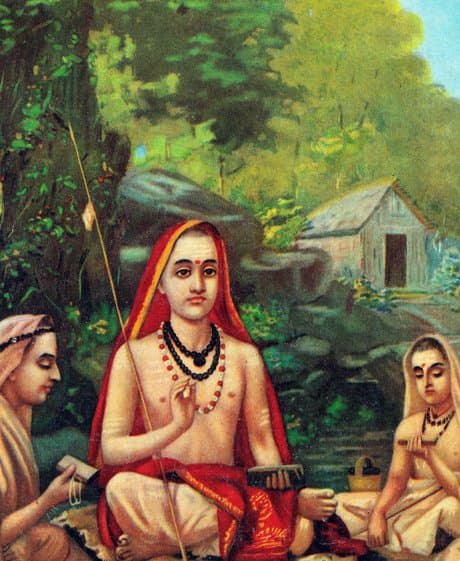
Ādi Śaṅkarācārya · Advaita
Sanskritइदं ज्ञानं यथोक्तमुपाश्रित्य, ज्ञानसाधनं अनुष्ठाय इत्येतत्, मम परमेश्वरस्य साधर्म्यं मत्स्वरूपतां आगताः प्राप्ताः इत्यर्थः । न तु समानधर्मता साधर्म्यम्, क्षेत्रज्ञेश्वरयोः भेदानभ्युपगमात् गीताशास्त्रे । फलवादश्च अयं स्तुत्यर्थं उच्यते । सर्गेऽपि सृष्टिकालेऽपि न उपजायन्ते । न उत्पद्यन्ते । प्रलये ब्रह्मणोऽपि विनाशकाले न व्यथन्ति च व्यथां न आपद्यन्ते, न च्यवन्ति इत्यर्थः ॥ क्षेत्रक्षेत्रज्ञसंयोगः ईदृशः भूतकारणं इत्याह --
Ādi Śaṅkarācārya · Advaita
Hindiइस (ज्ञानद्वारा प्राप्त हुई) सिद्धिकी अव्यभिचारिता- नित्यता दिखलाते हैं—
इस उपर्युक्त ज्ञानका भलीभाँति आश्रय लेकर अर्थात् ज्ञानके साधनोंका अनुष्ठान करके, मुझ परमेश्वरकी समानताको—मेरे साथ एकरूपताको प्राप्त हुए पुरुष सृष्टिके उत्पत्तिकालमें भी फिर उत्पन्न नहीं होते और प्रलयकालमें—ब्रह्माके विनाशकालमें भी व्यथाको प्राप्त नहीं होते अर्थात् गिरते नहीं। यह फलका वर्णन ज्ञानकी स्तुतिके लिये किया गया है। यहाँ 'साधर्म्य' का अर्थ 'समानधर्मता' नहीं है; क्योंकि गीताशास्त्रमें क्षेत्रज्ञ और ईश्वरका भेद स्वीकार नहीं किया गया
Jñāneśvar · Vārkarī
Marathiजे माझिया नित्यता । तेणें नित्य ते पंडुसुता । परिपूर्ण पूर्णता । माझियाची ॥ ५२ ॥ मी जैसा अनंतानंदु । जैसाचि सत्यसिंधु । तैसेचि ते भेदु । उरेचि ना ॥ ५३ ॥ जें मी जेवढें जैसें । तेंचि ते जाले तैसें । घटभंगीं घटाकाशें । आकाश जेवीं ॥ ५४ ॥ नातरीं दीपमूळकीं । दीपशिखा अनेकीं । मीनलिया अवलोकीं । होय जैसें ॥ ५५ ॥ अर्जुना तयापरी । सरली द्वैताची वारी । नांदे नामार्थ एकाहारीं । मीतूंविण ॥ ५६ ॥ येणेंचि पैं कारणें । जैं पहिलें सृष्टीचें जुंपणें । तेंही तया होणें । पडेचिना ॥ ५७ ॥ सृष्टीचिये सर्वादी । जयां देहाची नाहीं बांधी । ते कैचें प्रळयावधी । निमतील पां ? ॥ ५८ ॥ म्हणौनि जन्मक्षयां- । अतीत ते धनंजया । मी जालें ज्ञाना इया । अनुसरोनी ॥ ५९ ॥ ऐसी ज्ञानाची वाढी । वानिली देवें आवडी । तेवींचि पार्थाही गोडी । लावावया ॥ ६० ॥ तंव तया जालें आन । सर्वांगीं निघाले कान । सणई अवधान । आतला पां ॥ ६१ ॥ आतां देवाचिया ऐसें । जाकळीजत असे वोरसें । जें निरूपण आकाशें । वेंटाळेना ॥ ६२ ॥ मग म्हणे गा प्रज्ञाकांता । उजवली आजि वक्तृत्वता । जे बोलायेवढा श्रोता । जोडलासी ॥ ६३ ॥ तरि एकु मी अनेकीं । गोंविजे देहपाशकीं । त्रिगुणीं लुब्धकीं । कवणेपरी ॥ ६४ ॥ कैसा क्षेत्रयोगें । वियें इयें जगें । तें परिस सांगें । कवणेपरी ॥ ६५ ॥ पैं क्षेत्र येणें व्याजें । यालागीं हें बोलिजे । जे मत्संगबीजें । भूतीं पिके ॥ ६६ ॥
Jñāneśvar · Vārkarī
Hindi(14.53) हे पाण्डुसुत! वे मेरी नित्यता से नित्य और मेरी पूर्णता से परिपूर्ण हो रहते हैं।
(14.54) मैं जैसा अनन्त और आनन्दरूप हूँ मैं जैसा सत्य-प्रतिज्ञ हूँ वैसे ही वे हो रहते हैं। उनमें और मुझमें कुछ भी अन्तर नहीं रह जाता। (14.55) मैं जो हूँ, जितना हूँ और जैसा हूँ वे भी वही और वैसे ही हो जाते हैं। जैसे घट का भंग होने पर घटाकाश आकाश हो रहता है,
(14.56) अथवा दीपक की अनेक ज्योतियों के मूल ज्योति में मिल जान से जैसी स्थिति होती है,
(14.57) वैसे ही हे अर्जुन! उनके लिए द्वैत की फेरी बन्द हो जाती है और हम-तुम इत्यादि भेद
का लोप हो कर नाम और अर्थ एक ही पंक्ति में आ बैठते हैं।
(14.58) इसी कारण से जब सृष्टि की मूल कल्पना होती है तब भी उन्हें उत्पन्न नहीं होना पड़ता।
(14.59) सृष्टि के मूलारम्भ में जिनकी देहरचना ही नहीं होती उनका प्रलयकाल में नाश कैसे हो सकता है?
(14.60) अतएव हे धनंजय! वे इस ज्ञान का अनुसरण करते हुए जन्म और क्षय के परे हो मद्रूप हो जाते हैं।
(14.61) इस प्रकार श्रीकृष्ण ने प्रेम से ज्ञान की महिमा वर्णन की. वह इस हेतु से भी की
कि अर्जुन का इस ज्ञान की रति उत्पन्न हो। (14.62) पर उसकी स्थिति और ही हो गई। वह ऐसा पूर्ण अवधानमय हो गया कि मानों उसके सब शरीर में कान उत्पन्न हो गये हों।
(14.63) अतएव श्रीकृष्ण का हृदय भी प्रेम से भर गया और उनकी निरूपण की इच्छा आकाश में भी समा न सकी।
(14.64) वे बोले, हे प्रज्ञाकान्त अर्जुन! हमारी वक्तृता आज सफल हो चुकी जो हमारे निरूपण के अनुरूप तुम्हारा जैसा श्रोता प्राप्त हुआ है।
(14.65) मैं एक हूँ पर तो भी मुझे त्रिगुणरूपी बहेलिये अनेक देहरूपी पाशों में कैसे बाँध लेते हैं,
(14.66) क्षेत्र के संयोग से मैं इस जगत् को कैसे उत्पन्न करता हूँ, अब इस विषय का निरूपण सुनो।
(67) इसे क्षेत्र नाम इस कारण दिया जाता है कि इसमें मेरे संगरूपी बीज से प्राणिमात्र उत्पन्न होते हैं।

Sri Udiya Baba · Modern
Hindiसंगति— अब अगले श्लोक में यह बतलाते हैं कि इस परा सिद्धि को प्राप्त करने का क्या फल है—
भावार्थ— इस तत्त्वज्ञान का आश्रय लेने पर मेरे स्वरूप को प्राप्त हुए पुरुष सृष्टि होने पर उत्पन्न नहीं होते और प्रलयावस्था में दुःखित नहीं होते।
व्याख्या— 'मम साधर्म्यमागताः'—मेरे साधर्म्य अर्थात् समानता को प्राप्त हुए वे लोग, जिस प्रकार सृष्टि के उत्पत्ति, स्थिति और प्रलय में मैं असंग रहता हूँ उसी प्रकार असंग रहते हैं। उन पर इनका कोई प्रभाव नहीं होता। वे सृष्टि होने पर उत्पन्न नहीं होते और जब प्रलयकाल में सौ वर्ष तक तूफान चलता है, सौ वर्ष तक सौ गुने तेज से सूर्य तपता है और सौ वर्ष तक निरन्तर वर्षा होती है तब इन्हें कोई
कष्ट नहीं होता; क्योंकि उन सब कष्टों को ये मरु-मरीचिका के समान असत् देखते हैं।
यहाँ जो 'मम साधर्म्यमागताः' ऐसा कहा है, इससे पूर्णत्व की प्राप्ति सूचित होती है। अतः यह श्लोक ज्ञानपरक है। उपासना के द्वारा भगवल्लोक की प्राप्ति तो हो सकती है, किन्तु भगवत्ता की प्राप्ति नहीं होती। कुछ भेद रहता ही ही है। परन्तु ज्ञान के द्वारा ऐसा नहीं होता। जैसे घटाकाश और मठाकाश का भेद निवृत्त होने पर एक महाकाश ही रहता है, उसी प्रकार तत्त्वज्ञान के द्वारा सम्पूर्ण उपाधियों की निवृत्ति होकर एक निरुपाधिक निर्विशेष ब्रह्म ही रहता है। उससे किसी का कोई भेद नहीं रहता, क्योंकि उससे भिन्न किसी की सत्ता ही नहीं है।
Swami Ramsukhdas · Modern
Hindi‘इदं ज्ञानमुपाश्रित्य’—पूर्वश्लोकमें भगवान्ने उत्तम और पर—इन दो विशेषणोंसे जिस ज्ञानकी महिमा कही थी, उस ज्ञानका अनुभव करना ही उसका आश्रय लेना है। उस ज्ञानका अनुभव होनेसे मनुष्यके सम्पूर्ण संशय मिट जाते हैं और वह ज्ञानस्वरूप हो जाता है।
‘मम साधर्म्यमागताः’—उस ज्ञानका आश्रय लेकर मनुष्य मेरी सधर्मताको प्राप्त हो जाते हैं अर्थात् जैसे मेरेमें कर्तृत्व-भोक्तृत्व नहीं है, ऐसे ही उनमें भी कर्तृत्व-भोक्तृत्व नहीं रहता। जैसे मैं सदा ही निर्लिप्त-निर्विकार रहता हूँ, ऐसे ही उनको भी अपनी निर्लिप्तता-निर्विकारताका अनुभव हो जाता है।
ज्ञानी महापुरुष भगवान्के समान निर्लिप्त-निर्विकार तो हो जाते हैं, पर वे भगवान्के समान संसारकी उत्पत्ति, पालन और संहारका कार्य नहीं कर सकते। हाँ, योगाभ्यासके बलसे किसी योगीमें कुछ सामर्थ्य आ जाती है, पर वह सामर्थ्य भी भगवान्की सामर्थ्यके समान नहीं होती। कारण कि वह ‘युंजान योगी’ है अर्थात् उसने अभ्यास करके कुछ सामर्थ्य प्राप्त की है। परन्तु भगवान् ‘युक्त योगी’ हैं अर्थात् भगवान्में सामर्थ्य सदासे स्वतःसिद्ध है। भगवान् सब कुछ करनेमें समर्थ हैं—‘कर्तुमकर्तुमन्यथा कर्तुं समर्थः।’
मरण देनेवाली, बन्धनमें डालनेवाली, परमात्मप्राप्तिमें बाधा डालनेवाली हैं। परन्तु परमात्मप्राप्तिरूप जो सिद्धि है, वह सर्वोत्कृष्ट है; क्योंकि उसको प्राप्त होनेपर मनुष्य जन्म-मरणसे छूट जाता है।
योगिकी सामर्थ्य तो सीमित होती है, पर भगवान्की सामर्थ्य असीम होती है।
‘सर्गेऽपि नोपजायन्ते’—यहाँ ‘अपि’ पदसे यह मालूम होता है कि वे ज्ञानी महापुरुष महासर्गके आरम्भमें भी उत्पन्न नहीं होते। महासर्गके आदिमें चौदह लोकोंकी तथा उन लोकोंके अधिकारियोंकी उत्पत्ति होती है, पर वे महापुरुष उत्पन्न नहीं होते अर्थात् उनको फिर कर्मपरवश होकर शरीर धारण नहीं करना पड़ता।
‘प्रलये न व्यथन्ति च’—महाप्रलयमें संवर्तक अग्निसे चर-अचर सभी प्राणी भस्म हो जाते हैं। समुद्रके बढ़ जानेसे पृथ्वी डूब जाती है। चौदह लोकोंमें हलचल, हाहाकार मच जाता है। सभी प्राणी दुःखी होते हैं, नष्ट होते हैं। परन्तु महाप्रलयमें उन ज्ञानी महापुरुषोंको कोई दुःख नहीं होता, उनमें कोई हलचल नहीं होती, विकार नहीं होता। वे महापुरुष जिस तत्त्वको प्राप्त हो गये हैं, उस तत्त्वमें हलचल, विकार है ही नहीं, तो फिर वे महापुरुष व्यथित कैसे हो सकते हैं? नहीं हो सकते।
महासर्गमें भी उत्पन्न न होने और महाप्रलयमें भी व्यथित न होनेका तात्पर्य यह है कि ज्ञानी महापुरुषका
प्रकृति और प्रकृतिजन्य गुणोंसे सर्वथा सम्बन्ध-विच्छेद हो जाता है। इसलिये प्रकृतिका सम्बन्ध रहनेसे जो जन्म-मरण रहित महापुरुषमें वह जन्म-मरण, दुःख आदि नहीं होते।
**परिशिष्ट भाव**—कारणशरीरके सम्बन्धसे 'निर्विकल्प स्थिति' होती है और कारणशरीरसे सम्बन्ध-विच्छेद होनेपर (स्वयंमें) 'निर्विकल्प बोध' होता है। निर्विकल्प स्थिति तो सविकल्पमें बदल जाती है, पर निर्विकल्प बोध सविकल्पमें नहीं बदलता। तात्पर्य है कि निर्विकल्प स्थितिमें परिवर्तन होता है, पर निर्विकल्प बोधमें कभी परिवर्तन नहीं होता, वह सदा ज्यों-का-त्यों रहता है। इस बातको यहाँ 'सर्गेऽपि नोपजायन्ते प्रलये न व्यथन्ति च' पदोंसे कहा गया है।
महासर्ग और महाप्रलय प्रकृतिमें होते हैं। प्रकृतिसे अतीत तत्त्व (परमात्मा)-की प्राप्ति होनेपर महासर्ग और महाप्रलयका कोई असर नहीं पड़ता; क्योंकि प्रकृतिसे सम्बन्ध ही नहीं रहता। प्रकृतिसे सम्बन्ध न रहनेको 'आत्यन्तिक प्रलय' भी कहा गया है। तात्पर्य है कि प्रकृतिके कार्य शरीरको पकड़नेसे मनुष्य परतन्त्र हो जाता है*, जन्म-मरणमें पड़ जाता है; परन्तु प्रकृतिके कार्यसे सम्बन्ध-विच्छेद करनेपर वह स्वतन्त्र हो जाता है, निरपेक्ष जीवन हो जाता है, जन्म-मरणसे सदाके लिये छूट जाता है।
'मम साधर्म्यमागताः' पदोंका तात्पर्य है कि जैसे परमात्मा सत्-चित्-आनन्दस्वरूप हैं, ऐसे ही उनको प्राप्त होनेवाले ज्ञानी महापुरुष भी सत्-चित्-आनन्दस्वरूप हो जाते हैं।
सम्बन्ध—जो भगवान्की सधर्मताको प्राप्त हो जाते हैं, वे तो महासर्गमें भी पैदा नहीं होते; परन्तु जो प्राणी महासर्गमें पैदा होते हैं, उनके उत्पन्न होनेकी क्या प्रक्रिया है—इसको आगेके श्लोकमें बताते हैं।
**मम योनिर्महद्ब्रह्म तस्मिन्नार्भं दधाम्यहम्।**
This knowledge and wisdom which the great sages possess is what Lord Krishna is elaborating about in this chapter.
The words mama sadharmyam means endowed with a similar divine eternality like the Supreme Lord.
The word sarge, meaning “creation” denotes the time of beginning and the word pralaye denotes the time of dissolution.
Those who have acquired this knowledge and realised its wisdom, having transcended, are exempt from both and subject neither to birth nor death.
The explanation of how all existing beings result in their forms by the combination of matter and spirit
and how the qualities of prakṛti or the material substratum pervading physical existence come to manifest was already eloquently delineated in chapter 13 verse 22.