

Bhagavad Gītā · Chapter 14 · Guṇatraya Vibhāga Yoga
मां च योऽव्यभिचारेण भक्तियोगेन सेवते
स गुणान्समतीत्यैतान् ब्रह्मभूयाय कल्पते
māṃ ca yo'vyabhicāreṇa bhaktiyogena sevate|sa guṇānsamatītyaitān brahmabhūyāya kalpate||
Word meanings
च = and
यः = he who
अव्यभिचारेण = unswerving
भक्तियोगेन = through the yoga of devotion
माम् = Me
सेवते = serves
सः = that
एतान् = these
गुणान् = the guṇas
समतीत्य = having transcended
ब्रह्मभूयाय = for becoming brahman
कल्पते = becomes fit
Translation
He too who constantly worships Me through the Yoga of exclusive devotion,-transcending these three Gunas, becomes eligible for attaining Brahma.
Commentary
The commentators seated around this verse
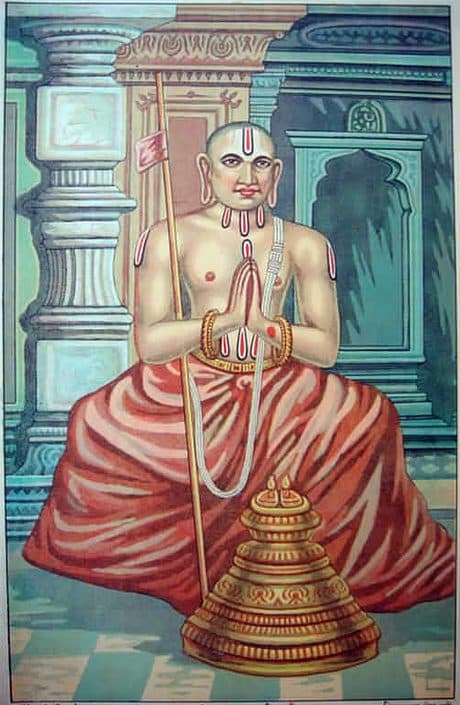
Rāmānuja · Viśiṣṭādvaita
English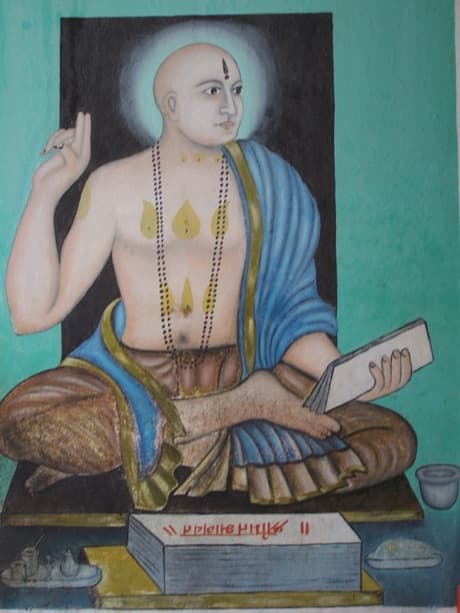
Madhvācārya · Dvaita
Madhva BhāṣyaSanskritEnglishOn verses 14.25–14.26
“तुल्यत्वार्थ उक्तः पुरस्तयत् | ब्रह्मवत् प्रकृतिवत् भगवत्प्रियं ब्रह्मभूयम् | न तु तावत्प्रियत्वम् | किन्तु प्रियत्वमात्रम् | बद्धा वाऽपितु मुक्ता वा न रमावत् प्रिया हरेः | इति पादमे | भूयाय भावाय |” - Even as with Brahma i.e. the Prakriti, even so being pleased with the Resplendent Lord he reaches the state of Brahman. Not becoming pleased in the same manner as from Prakriti. But becoming pleased like her. As mentioned in Padma Puraana, “No one bound or the liberated are dear to Sri Hari like Ramaa (Lakshmi)”. भूयाय means भावाय the state of being similar.
Madhvācārya · Dvaita
Gītā Tātparya NirṇayaSanskritEnglishOn verses 14.25–14.26
“उदासीनवदित्युक्तेश्च न केवलोदासीनत्वं | नेङ्गत इत्युदासीनवृत्तिनिशेषः | सर्वरम्भपरित्यागीति विशेषप्रयोजनापेक्षयाऽपि नावैष्णवारम्भ इति | इङ्गनं क्षणिकं कर्म दीर्घमारम्भ उच्यते | इति शब्दनिष्पपये ||” - Being impassive does not mean being unconcerned with essential principles (concerned with Sri Vishnu). nengate means being indifferent to influences (of the attributes). sarvaarambha parityaagi means those who have given up all enterprises unrelated to the devotion to Sri Vishnu. “karma means lasting or permanent actions”, thus in Shabda Nirnaya.
“लक्ष्यादिभिः कुतो बन्धो योऽनादिः पुरुषस्य तु | तमत्येतीह यो विद्वान् स विज्ञेयो गुणात्ययी || इति च प्रवृत्ते || तत्कृतबन्धात्ययात् तदधीकविष्णुप्राप्तेश्च तदत्ययीत्युच्यते | तथा द्वारपालमतीत्य राजानां गच्छतीति | अतीत्य त्रीणि रूपाणि महालक्ष्मीं प्रपद्यते | तया त्वनुगृहीतोऽसौ वैष्णवो विष्णुगो भवेत् || इति च ||” - Whoever crosses the hundreds and thousands of eternal shackles created by Sri Lakshmi, is, verily, the purusha. He alone is called the wise, and is known as gunateeta - one who has transcended the attributes. Thus in Pravritti texts. More than the crossing the shackles, the one who reaches the status of Sri Vishnu is said to be beyond the attributes, gunaateeta. Like the one who, crossing the door keeper, reaches the King himself. Here Brahma means Prakriti, Maha Lakshmi - “In three forms Maha Lakshmi is being eulogized. By her grace alone the devotee of Sri Vishnu reaches the state similar to Sri Vishnu”.
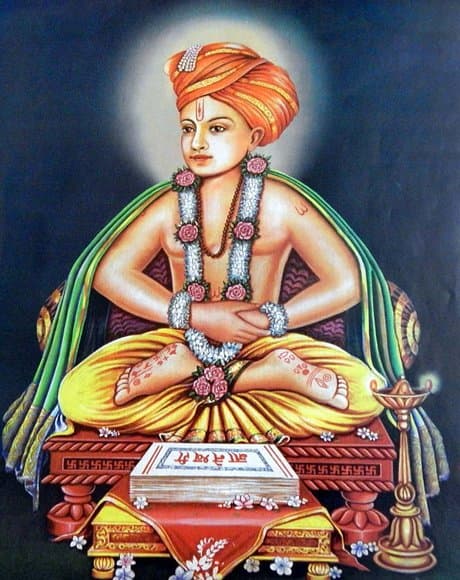
Jñāneśvar · Vārkarī
English26 “Further, who serves Me by the Path of unswerving Devotion: he, having fully transcended these Gunas, becomes qualified to realise his oneness of essence with the Brahman. (371)
One who renders service unto me with unswerving mind and devotion is alone able to burn the Gunas. It is now necessary to make it clear to you who I am, what is the nature of devotion to me, and what is unswerving devotion. So hear, Oh Pārtha, I am in this universe in the way the gem and its brilliance are one; or (I am) what is liquidity is water or what is cavity is the sky or what is sweetness is the sugar or as flames mean fire or the petals mean lotus or the branches and the fruit mean the tree: or the massing together of snow means the Himālaya or the curdled milk means curds, in all these ways what is called universe is all only myself. It is not necessary to peel off the Moon-disc (in order to see the Moon); or getting frozen on the part of clarified butter does not make it lose its quality (of clarified butter); or a wristlet of gold, even if not melted, remains all gold as it is; or a piece of cloth even without being unravelled is all yarn; or an earthen jar even without being dissolved (into its original state) is all earth. Therefore, it is not stipulated that one should set aside the phenomenal world to be able to secure me, since I am all-inclusive (of all this). To know in this way is the only “unswerving devotion to me”. To make any deviation from this or allow any drawback to creep into it, is swerving devotion. Therefore, dropping all distinctions, you should view me along with yourself. Were a small speck (टिक) of gold soldered to another piece of gold (both these do no more remain separate), in that way it is not proper (for one) to take himself to be distinct from the universe. A streak or a band of splendour emanating from and coming back to get extinguished into the (same) splendour, is called a ray; the same is the aspect of the Self and the universe. There are atoms at the core of the earth or particles of snow in the Himālaya, in that way there is “Self” (अहं) in me. A ripple, however small, is not distinct from the (mass of the) sea; in that way, the ‘Self’ is not distinct from the Supreme God. The enlightened and joyous state of vision, emanating from this consciousness of full identity, is what we call devotion. The essence of knowledge and the entirety of the Yoga, constitute this enlightened and joyous vision. This enlightened and joyous state (of vision) abides, Oh Warrior, like the uninterrupted showers descending from the clouds to the sea (leaving no gap between them). There is no joint (as such) connecting the mouth of a well with the sky, but they both are one without any such joint; of that type is the oneness between a man of knowledge and the Supreme God. Light is stretched out straight between the Sun and his reflection (in water), in that way the notion, “I am myself Supreme Brahman” is stretched outside (filling the cavity) between the individual soul and the Supreme Self. With such a notion once formed reciprocally, he (the man of knowledge) automatically gets merged into Supreme Spirit along with that notion. When a crystal of salt is once dissolved in the sea (water), its property (act) of dissolution ceases to exist, Oh Son of Pāṇḍu: or the fire gets extinguished with the reducing of dry grass to ashes: in that way once all sense of distinction is destroyed through knowledge, that knowledge itself ceases to exist. The idea that I am on the yonder side, while the devotee is on this side (of the sea in the form of mundane existence) ceases to exist and there remains behind only the original eternal union between the two. With such an embrace, in the form of this union, all talk, Oh Kiriti, of conquering the Gunas ceases to exist. In short, such a state is the Brahmic state, Oh Knower of essence, and this is attained only by such a one as worships Me. I further proclaim that to one who is my devotee in this universe, this Brahmic state will serve as a loyal and faithful wife. The water making the rippling noise and flowing along the bed of the Ganges has no other (final) place but the sea. In that way one rendering me service, Oh Kiriti, with the vision of knowledge becomes the gem in the diadem of the Brahmic state. Oh Pārtha, this Brahmic state (state of Supreme Brahman) is what is called “Sāyujya” (सायुज्य—the absorption of the soul into the state of Supreme Brahman) and it is (also named emancipation) the fourth of the four principal objects of human life (पुरुषार्थ). But my worship is the path (stair) leading to the Brahmic state; but do not hold (Me) as only a “means”. The Brahman is not anything distinct from Me (I tell you), since such a misconception (of my being only a means) might possibly spread in your heart.
Swami Ramsukhdas · Modern
English[Though the Lord, discussed the means of rising above the
modes, in the nineteenth and the twentieth verses of this chapter, yet Arjuna, in the twenty-first verse again asked the question: What is the means of attaining to the transcendental position? It means, that Arjuna wants to know of any other means, besides the one, already discussed. Therefore, the Lord regarding Arjuna as eligible for devotion, explains the path of devotion.]
**'Mām ca yo'vyabhicāreṇa bhaktiyogena sevate'**—In this clause the term 'Yaḥ' (Who), denotes the server (worshipper), the term 'Mām' (Me), denotes the worshipped and the expression 'Avyabhicāreṇa bhaktiyogena sevate', denotes exclusive devotion (worship). In exclusive devotion—a devotee, without depending either on the world or even on the Discipline of Knowledge, and devotion, etc., depends only on God, and takes refuge only in Him.
**'Sa guṇānsamatītiyaltān'**—He, who worships the Lord, with exclusive devotion, has not to rise above the three modes, but by the Lord's grace the modes are automatically transcended, by him (Gītā 12/6-7).
**'Brahmabhūyāya kalpate'**—Having transcended the modes, he becomes eligible for attaining, Brahma. Here the Lord, has talked about devotion. So He should have said, that the devotee becomes eligible for attaining Him, instead of saying that he becomes eligible for attaining Brahma. The reason is, that Arjuna asked the means of transcending the modes (attainment of Brahma, the Absolute). So, the Lord answered accordingly.
Also in the scriptures it is mentioned, that he who worships the Lord, with exclusive devotion, has not to adopt any other means, even in the Discipline of Knowledge, for becoming eligible to attain Brahma. He automatically, becomes eligible to attain Brahma. But a devotee is not satisfied with this attainment, he wants to please the Lord. He regards the Lord's pleasure, as his own pleasure. It means, that one who surrenders himself to the Lord, becomes eligible, for attaining Brahma, automatically. This is something different, whether he attaches importance to this attainment, or not.
The Absolute, Who is attained by the Disciplines of Knowledge and Action etc., is also attained, by the Discipline of Devotion. The means to attain Him, may be different, but what is attained, is the same Absolute.
**Appendix**—Whatever a striver wants to attain that is all attained by devotion. The striver who predominantly wants to attain Brahma viz., salvation or enlightenment, he attains Brahma by devotion because God is the abode of Brahma (Gītā 14/27). Brahma is an integral part of the entire form of God (Gītā 7/29-30). In the tenth verse of the thirteenth chapter also the Lord has declared that exclusive devotion is a means to Self-realization.
In Śrīmadbhāgavata the worship of God Who is endowed with attributes, has been mentioned 'nirguṇa' (transcending the modes); as—'manniketam tu nirguṇam' (11/25/25), 'matsevāyām tu nirguṇā' (11/25/27) etc. Therefore he, who worships God endowed with attributes, transcends the three guṇas (modes). God endowed with attributes is not dependent on attributes but attributes are dependent on Him. He who is swayed (controlled) by Sattva-Raja-Tama, is not 'Saguṇa' (God endowed with attributes), but Saguṇa is He Who is endowed with endless divine qualities such as limitless grandeur, sweetness, loveliness and generosity etc. Sāttvika, Rājasa and Tāmasa actions can be performed by God but He is not controlled by those modes.
A devotee by having an inclination to God, naturally and easily transcends the modes of nature. Not only this, he also comes to know the entire form of God.
*Link:—How does a devotee, who worships the Lord, become eligible for attaining Brahma? The Lord, answers the question, in the next verse.*
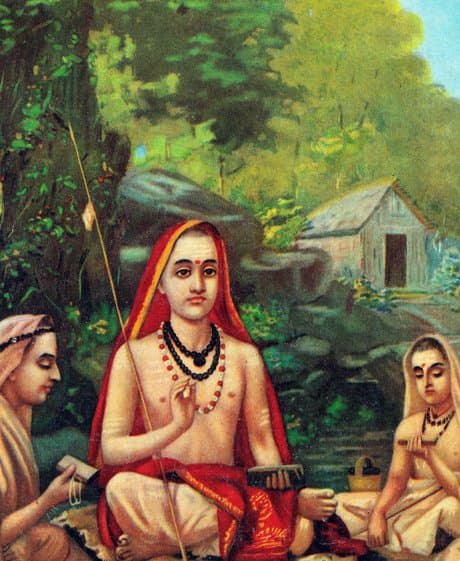
Ādi Śaṅkarācārya · Advaita
Sanskritमां च ईश्वरं नारायणं सर्वभूतहृदयाश्रितं यो यतिः कर्मी वा अव्यभिचारेण न कदाचित् यो व्यभिचरति भक्तियोगेन भजनं भक्तिः सैव योगः तेन भक्तियोगेन सेवते, सः गुणान् समतीत्य एतान् यथोक्तान् ब्रह्मभूयाय, भवनं भूयः, ब्रह्मभूयाय ब्रह्मभवनाय मोक्षाय कल्पते समर्थो भवति इत्यर्थः ॥ कुत एतदिति उच्यते --
Ādi Śaṅkarācārya · Advaita
Hindiमनुष्य इन तीनों गुणोंसे किस प्रकार अतीत होता है? इस प्रश्नका उत्तर अब देते हैं—
जो संन्यासी या कर्मयोगी सब भूतोंके हृदयमें स्थित मुझ परमेश्वर नारायणको, कभी व्यभिचरित (विचलित) न होनेवाले अव्यभिचारी भक्तियोगद्वारा सेवन करता है—भजनका नाम भक्ति है, वही योग है, उस भक्तियोगके द्वारा जो मेरी सेवा करता है—वह इन ऊपर कहे हुए गुणोंको अतिक्रमण करके ब्रह्मलोकको पानेके लिये, अर्थात् मोक्ष प्राप्त करनेके लिये योग्य समझा जाता है, अर्थात् (मोक्ष प्राप्त करनेमें) समर्थ होता है
Jñāneśvar · Vārkarī
MarathiOn verses 14.26–14.27
तरी व्यभिचाररहित चित्तें । भक्तियोगें मातें । सेवी तो गुणातें । जाकळूं शके ॥ ३७१ ॥ तरी कोण मी कैसी भक्ती । अव्यभिचारा काय व्यक्ती । हे आघवीचि निरुती । होआवी लागे ॥ ३७२ ॥ तरी पार्था परियेसा । मी तंव येथ ऐसा । रत्नीं किळावो जैसा । रत्नचि कीं तो ॥ ३७३ ॥ कां द्रवपणचि नीर । अवकाशचि अंबर । गोडी तेचि साखर । आन नाहीं ॥ ३७४ ॥ वन्हि तेचि ज्वाळ । दळाचि नांव कमळ । रूख तेंचि डाळ- । फळादिक ॥ ३७५ ॥ अगा हिम जें आकर्षलें । तेंचि हिमवंत जेवीं जालें । नाना दूध मुरालें । तेंचि दहीं ॥ ३७६ ॥ तैसें विश्व येणें नांवें । हें मीचि पैं आघवें । घेईं चंद्रबिंब सोलावें । न लगे जेवीं ॥ ३७७ ॥ घृताचें थिजलेंपण । न मोडितां घृतचि जाण । कां नाटितां कांकण । सोनेंचि तें ॥ ३७८ ॥ न उकलितां पटु । तंतुचि असे स्पष्टु । न विरवितां घटु । मृत्तिका जेवीं ॥ ३७९ ॥ म्हणौनि विश्वपण जावें । मग तैं मातें घेयावें । तैसा नव्हे आघवें । सकटचि मी ॥ ३८० ॥ ऐसेनि मातें जाणिजे । ते अव्यभिचारी भक्ति म्हणिजे । येथ भेदु कांहीं देखिजे । तरी व्यभिचारु तो ॥ ३८१ ॥ याकारणें भेदातें । सांडूनि अभेदें चित्तें । आपण सकट मातें । जाणावें गा ॥ ३८२ ॥ पार्था सोनयाची टिका । सोनयासी लागली देखा । तैसें आपणपें आणिका । मानावें ना ॥ ३८३ ॥ तेजाचा तेजौनि निघाला । परी तेजींचि असे लागला । तया रश्मी ऐसा भला । बोधु होआवा ॥ ३८४ ॥ पैं परमाणु भूतळीं । हिमकणु हिमाचळीं । मजमाजीं न्याहाळीं । अहं तैसें ॥ ३८५ ॥ हो कां तरंगु लहानु । परी सिंधूसी नाहीं भिन्नु । तैसा ईश्वरीं मी आनु । नोहेचि गा ॥ ३८६ ॥ ऐसेनि बा समरसें । दृष्टि जे उल्हासे । ते भक्ति पैं ऐसे । आम्ही म्हणों ॥ ३८७ ॥ आणि ज्ञानाचें चांगावें । इयेचि दृष्टि नांवें । योगाचेंही आघवें । सर्वस्व हें ॥ ३८८ ॥ सिंधू आणि जळधरा- । माजीं लागली अखंड धारा । तैसी वृत्ति वीरा । प्रवर्ते ते ॥ ३८९ ॥ कां कुहेसीं आकाशा । तोंडीं सांदा नाहीं तैसा । तो परमपुरुषीं तैसा । एकवटे गा ॥ ३९० ॥ प्रतिबिंबौनि बिंबवरी । प्रभेची जैसी उजरी । ते सोऽहंवृत्ती अवधारीं । तैसी होय ॥ ३९१ ॥ ऐसेनि मग परस्परें । ते सोऽहंवृत्ति जैं अवतरे । तैं तियेहि सकट सरे । अपैसया ॥ ३९२ ॥ जैसा सैंधवाचा रवा । सिंधूमाजीं पांडवा । विरालेया विरवावा । हेंही ठाके ॥ ३९३ ॥ नातरी जाळूनि तृण । वन्हिही विझे आपण । तैसें भेदु नाशूनि जाण । ज्ञानही नुरे ॥ ३९४ ॥ माझें पैलपण जाये । भक्त हें ऐलपण ठाये । अनादि ऐक्य जें आहे । तेंचि निवडे ॥ ३९५ ॥ आतां गुणातें तो किरीटी । जिणे या नव्हती गोष्टी । जे एकपणाही मिठी । पडों सरली ॥ ३९६ ॥ किंबहुना ऐसी दशा । तें ब्रह्मत्व गा सुदंशा । हें तो पावें जो ऐसा । मातें भजे ॥ ३९७ ॥ पुढतीं इहीं लिंगीं । भक्तु जो माझा जगीं । हे ब्रह्मता तयालागीं । पतिव्रता ॥ ३९८ ॥ जैसें गंगेचेनि वोघें । डळमळित जळ जें निघे । सिंधुपद तयाजोगें । आन नाहीं ॥ ३९९ ॥ तैसा ज्ञानाचिया दिठी । जो मातें सेवी किरीटी । तो होय ब्रह्मतेच्या मुकुटीं । चूडारत्न ॥ ४०० ॥ यया ब्रह्मत्वासीचि पार्था । सायुज्य ऐसी व्यवस्था । याचि नांवें चौथा । पुरुषार्थ गा ॥ ४०१ ॥ परी माझें आराधन । ब्रह्मत्वीं होय सोपान । एथ मी हन साधन । गमेन हो ॥ ४०२ ॥ तरी झणीं ऐसें । तुझ्या चित्तीं पैसें । पैं ब्रह्म आन नसे । मीवांचूनि ॥ ४०३ ॥
Jñāneśvar · Vārkarī
Hindi(14.372) जो मनुष्य चित्त में दूसरा विषय न रख कर भक्तियोग से मेरी सेवा करता है वह गुणों का नाश कर सकता है।
(14.373) अतएव मैं कैसा हूँ, भक्ति कैसी होती है, एकनिष्ठ भक्ति का क्या लक्षण है, सब बातें स्पष्ट कहनी चाहिए।
(14.374) हे पार्थ! सुनो। संसार में मैं ऐसा हूँ जैसे रत्न का तेज और रत्न (यानी एक ही वस्तु), (375) अथवा जैसे द्रवत्व ही पानी हैं, अवकाश ही आकाश हैं, या मधुरता ही शक्कर है दूसरी वस्तु नहीं।
(14.376) जैसे अग्नि ही ज्वाला है, कमलदल का ही नाम जैसे कमल है, वृक्ष ही जैसे शाखा या फूल इत्यादि हैं,
(14.377) अथवा आकर्षित किया हुआ हिम ही जैसे हिमाचल कहा जाता अथवा जमा हुआ दूध ही जैसे दही कहलाता है,
(14.378) वैसे ही विश्व के नाम से सम्पूर्ण मैं ही प्रकट हुआ हूँ। चन्द्रकला को जैसे चन्द्र से छील कर अलग करने की आवश्यकता नहीं है,
(14.379) जमा हुआ घी जैसे पिघलाया न जाय तथापि घी ही है, अथवा कंकण जैसे गलाया न जाय तथापि सोना ही है, (14.380) वस्त्र की तह जैसे खोली न जाय तथापि तन्तु ही है, घट जैसे चूर न किया जाय तथापि मट्टी ही है,
(14.381) वैसे ही मैं ऐसा नहीं हूँ कि विश्वत्व दूर करते पर ही दिखाई दूँ। सब विश्व-समेत मैं ही हूँ।
(14.382) इस प्रकार मुझे जानना अव्यभिचारिणी भक्ति कहाती है। संसार में कुछ भी भेद जान पड़ा कि वह व्यभिचार हुआ।
(14.383) इसलिए भेद को छोड़ अभेद-चित्त से निज के समेत सब मद्रूप ही जानो।
(14.384) हे पार्थ! जैसे सोने के ताबीज में सोने का ही कुन्दा रहता है वैसे ही निज को कोई दूसरा मत मानो।
(14.385) रश्मि जैसे सूर्य की होती है, सूर्य से ही उत्पन्न होती है, परन्तु सूर्य से ही लगी हुई है, ऐसे ही निज को जानो।
(14.386) पृथ्वी पर जैसे परमाणु रहते हैं, अथवा हिमाचल में जैसे हिमकण रहते हैं, वैसे ही निज को मुझमें जानो।
(14.387-388) तरंगें छोटी हों परन्तु जैसे वे समुद्र से भिन्न नहीं रहतीं, वैसे ही जब दृष्टि ऐसी एकता से विकसित होती है कि मैं ईश्वर में हूँ, अतएव जुदा नहीं हूँ, तब उसे हम भक्ति कहते हैं। (14.389) ज्ञान की उत्तम स्थिति भी इसी दृष्टि का समझनी चाहिए, तथा योग का सर्वस्व भी यही है।
(14.390) समुद्र और मेघ दोनों के बीच जैसे अखण्ड धारा लगी रहने से दोनों एक हुए दिखाई देते हैं वैसे ही यह भक्ति की वृत्ति प्रवृत्त होती है;
(14.391) अथवा जैसे कुएँ के मुँह और आकाश में कोई जोड़ न रह कर दोनों एक में ही मिल रहते हैं वैसे ही वह भक्त परमपुरुष में मिला रहता है।
(14.392) सूर्यबिम्ब से लेकर जल में पड़े हुए उसके प्रतिबिम्ब तक, जैसे सूर्य-प्रभा का ही उत्कर्ष दिखाई देता है वैसे ही उस भक्त की सोहं वृत्ति हो जाती है।
(14.393) इस प्रकार जब उससे ईश्वर तक उसकी सोहं वृत्ति प्रकट होती है, तब वह उस वृत्ति-समेत आप ही आप ईश्वर में लीन हो जाता है।
(14.394) जैसे सैन्धव का कण जल में गलते ही उसका गलना बन्द हो जाता है,
(14.395) अथवा घास का जला कर आग जैसे आप भी बुझ जाती है, वैसे ही भेद का नाश कर ज्ञान आप भी नहीं रहता। (14.396) यह भेद नहीं रहता कि मैं दूर हूँ और भक्त यहीं है। अनादि काल से जो हमारी एकता है वही बनी रहती है।
(14.397) फिर गुणों को जीतने की बात ही नहीं रहती, क्योंकि वहाँ एकता की प्राप्ति की चेष्टा भी बन्द हो जाती है।
(14.398) बहुत क्या कहें, हे मर्मज्ञ अर्जुन! ऐसी जो दशा है वही ब्रह्मत्व है। यह दशा उसे प्राप्त होती है जो मेरी भक्ति करता है,
(14.399) और इन लक्षणों से युक्त जो मेरा भक्त हो उसकी यह ब्रह्मता पतिव्रता कामिनी बनती है।
(14.400) जैसे गंगा के प्रवाह में जो पानी बहता हुआ जाता है उसके लिए योग्य स्थल समुद्र ही है, दूसरा नहीं,
(14.401) वैसे ही हे किरीटी! जो ज्ञान-दृष्टि से मेरी भक्ति करता है वह ब्रह्मता के मुकुट का चूड़ामणि बनता है।
(14.402) इसी ब्रह्मत्व को सायुज्यता कहते हैं। इसी का नाम चौथा पुरुषार्थ है।
(14.403) परन्तु यह देख कर कि मेरी सेवा ब्रह्मत्व का पहुँचने का मार्ग है, कहीं यह न समझ लेना कि मैं ब्रह्मत्व का साधन हूँ, क्योंकि
(14.404) मेरे अतिरिक्त ब्रह्म कुछ दूसरी वस्तु नहीं है।
Sri Udiya Baba · Modern
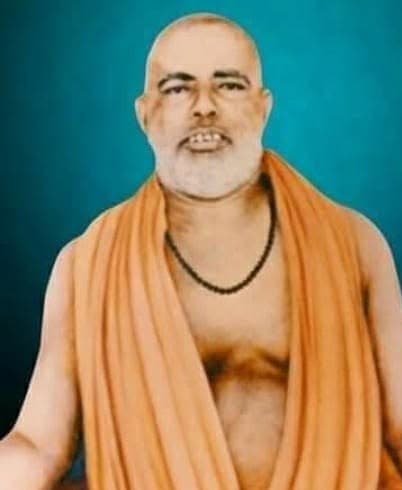
Hindiभावार्थ— जो पुरुष अनन्य भक्तियोग के द्वारा मेरा भजन करता है वह इन गुणों को पार करके ब्रह्मस्वरूप की प्राप्ति में समर्थ होता है।
व्याख्या— भक्ति दो प्रकार की होती है—व्यभिचारिणी और अव्यभिचारिणी। आज शिवजी की, कल कृष्ण की, परसों राम की—इस प्रकार जिसकी उपासना बदलती रहती है वह व्यभिचारिणी भक्ति है। ऐसे उपासक का कभी कल्याण नहीं होता और यदि निरन्तर एक इष्ट, एक गुरु, एक मन्त्र और एक शास्त्र रहे तो यह अव्यभिचारिणी भक्ति है। अथवा जो भक्ति इस लोक, परलोक और सिद्धियों के सुख को त्याग कर निष्काम भाव से की जाय वह अव्यभिचारिणी है। उसी को अहैतुकी भक्ति भी कहते हैं। अथवा 'उत्तम के अस बस मन माहीं। सपनेहुँ आन पुरुष जग नाहीं', इस उक्ति के अनुसार जिसकी दृष्टि में अपने इष्ट के सिवा दृश्य की कोई सत्ता ही नहीं है, जिसे सम्पूर्ण प्रपञ्च इष्टमय प्रतीत होता है उसकी भक्ति अव्यभिचारिणी है। इसे ही अनन्य भक्ति भी कहते हैं, क्योंकि यहाँ अन्य का अत्यन्ताभाव है। जो ऐसी भक्ति करता है वह ब्रह्मभाव को प्राप्त होने में समर्थ होता है। वह भक्त पूर्ण परिपक्व होने पर सगुण भाव को पार करके निर्गुण ब्रह्मभाव प्राप्त कर सकता है। इस प्रकार भक्ति करते-करते जब वैराग्य होगा तब विचार द्वारा तत्त्वज्ञान की प्राप्ति होगी।
Swami Ramsukhdas · Modern
Hindi[यद्यपि भगवान्ने इसी अध्यायके उन्नीसवें-बीसवें श्लोकोंमें गुणोंका अतिक्रमण करनेका उपाय बता दिया था, तथापि अर्जुनने इक्कीसवें श्लोकमें गुणातीत होनेका उपाय पूछ लिया। इससे यह मालूम होता है कि अर्जुन उस उपायके सिवाय गुणातीत होनेके लिये दूसरा कोई उपाय जानना चाहते हैं। अतः अर्जुनको भक्तिका अधिकारी समझकर भगवान् उनको गुणातीत होनेका उपाय भक्ति बताते हैं।]
‘मां च योऽव्यभिचारेण भक्तियोगेन सेवते’—इन
जिनमें साधारण आदमियोंकी तो विषमता हो ही जाती है, साधकोंकी भी कभी-कभी विषमता हो जाती है। ऐसे इन आठ कठिन स्थलोंमें जिसकी समता हो जाती है, उसके लिये अन्य सभी अवस्थाओंमें समता रखना सुगम हो जाता है। अतः यहाँ उन्हीं आठ कठिन स्थलोंका नाम लेकर भगवान् यह बताते हैं कि गुणातीत महापुरुषकी इन आठों स्थलोंमें स्वतः-स्वाभाविक समता होती है।
गुणातीत मनुष्यकी जो स्वतःसिद्ध निर्विकारता है, उसकी जो स्वाभाविक स्थिति है, उसमें अनुकूल-प्रतिकूल परिस्थितियोंके आने-जानेका कुछ भी फरक नहीं पड़ता। उसकी निर्विकारता, समता ज्यों-की-त्यों अटल रहती है। उसकी शान्ति कभी भंग नहीं होती।
[चौबीसवें और पचीसवें—इन दो श्लोकोंमें भगवान्ने गुणातीत महापुरुषकी समताका वर्णन किया है।]
पदोंमें उपासक, उपास्य और उपासना—ये तीनों आ गये हैं अर्थात् ‘यः’ पदसे उपासक, ‘माम्’ पदसे उपास्य और ‘अव्यभिचारेण भक्तियोगेन सेवते’ पदोंसे उपासना आ गयी है।
‘अव्यभिचारेण’ पदका तात्पर्य है कि दूसरे किसीका भी सहारा न हो। सांसारिक सहारा तो दूर रहा, ज्ञानयोग, कर्मयोग आदि योगों-(साधनों-) का भी सहारा न हो! और ‘भक्तियोगेन’ पदका तात्पर्य है कि केवल भगवान्का ही सहारा हो, आश्रय हो, आशा हो, बल हो, विश्वास हो।
इस तरह 'अव्यभिचारेण' पदसे दूसरोंका आश्रय लेनेका निषेध करके 'भक्तियोगेन' पदसे केवल भगवान्का ही आश्रय लेनेकी बात कही गयी है।
'सेवते' पदका तात्पर्य है कि अव्यभिचारी भक्तियोगके द्वारा भगवान्का भजन करे, उनकी उपासना करे, उनके शरण हो जाय, उनके अनुकूल चले।
'स गुणान्समतीत्यैतान्'—जो अनन्यभावसे केवल भगवान्के ही शरण हो जाता है, उसको गुणोंका अतिक्रमण करना नहीं पड़ता, प्रत्युत भगवान्की कृपासे उसके द्वारा स्वतः गुणोंका अतिक्रमण हो जाता है (गीता—बारहवें अध्यायका छठों-सातवाँ श्लोक)।
'ब्रह्मभूयाय कल्पते'—वह गुणोंका अतिक्रमण करके ब्रह्मप्राप्तिका पात्र (अधिकारी) हो जाता है। भगवान्ने जब यहाँ भक्तिकी बात बतायी है, तो फिर भगवान्को यहाँ ब्रह्मप्राप्तिकी बात न कहकर अपनी प्राप्तिकी बात बतानी चाहिये थी। परन्तु यहाँ ब्रह्मप्राप्तिकी बात बतानेका तात्पर्य यह है कि अर्जुनने गुणातीत होने-(निर्गुण ब्रह्मकी प्राप्ति-) का उपाय पूछा था। इसलिये भगवान्ने अपनी भक्तिको ब्रह्मप्राप्तिका उपाय बताया।
**परिशिष्ट भाव**—भक्तिसे साधक जो भी चाहता है, उसीकी प्राप्ति हो जाती है। जो साधक मुख्यरूपसे ब्रह्मकी प्राप्ति अर्थात् मुक्ति, तत्त्वज्ञान चाहता है, उसको भक्ति करनेसे ब्रह्मकी प्राप्ति हो जाती है; क्योंकि ब्रह्मकी प्रतिष्ठा भगवान् ही हैं (इसी अध्यायका सत्ताईसवाँ श्लोक), ब्रह्म समग्र भगवान्का ही एक अंग है, स्वरूप है (गीता—सातवें अध्यायका उन्तीसवाँ-तीसवाँ श्लोक)। तेरहवें अध्यायके दसवें श्लोकमें भी भक्तिको ज्ञानप्राप्तिका साधन बताया गया है।
श्रीमद्भगवतमें सगुणकी उपासनाको निर्गुण (गुणोंसे अतीत) बताया है; जैसे—'मन्निकेतं तु निर्गुणम्' (११। २५। २५), 'मत्सेवायां तु निर्गुणम्' (११। २५। २७) आदि। इसलिये सगुणकी उपासना करनेवाला तीनों गुणोंसे अतीत हो जाता है। सगुण भगवान् भी गुणोंके आश्रित नहीं हैं, प्रत्युत गुण उनके आश्रित हैं। जो सत्त्व-रज-तम गुणोंके वशमें हैं, उसका नाम 'सगुण' नहीं है, प्रत्युत जिसमें असीम ऐश्वर्य, माधुर्य, सौन्दर्य, औदार्य आदि अनन्त दिव्य गुण नित्य विद्यमान रहते हैं, उसका नाम 'सगुण' है। भगवान्के द्वारा सात्त्विक, राजस अथवा तामस क्रियाएँ हो सकती हैं, पर वे उन गुणोंके वशमें नहीं होते।
भगवान्की तरफ चलनेसे भक्त स्वतः और सुगमतासे गुणातीत हो जाता है। इतना ही नहीं, उसको भगवान्के समग्ररूपका भी ज्ञान हो जाता है।
सम्बन्ध—उपासना तो करे भगवान्की और पात्र बन जाय ब्रह्मप्राप्तिका—यह कैसे? इसका उत्तर आगेके श्लोकमें देते हैं।
So from this verse it can be understood that not by only comprehending the relationship between matter and spirit, the physical body and the soul in meditation does one achieve the desired goal.
For can one surmount the three guṇas by mere reflection and contemplation which is always liable to be violated by the obstacles of old habits inimical to them by the mind which has been contracted out in service to them for countless lifetimes.
Māṃ=unto Me the infallibly willed, the infinitely loving, the ocean of mercy to His devotees.
avyabhicāreṇa means without adulteration, interruption or error in exclusive devotion.
Bhakti yoga means communion with the Supreme Lord through intense loving emotions. Only the devotee of bhakti yoga will be able to surmount the guṇas and attain Lord Krishna
Brahma-bhūyāya = Brahma bhāvaya or eligibility and qualification for realising the Brāhman.
The Brāhman is the spiritual substratum pervading all existence. Although it is eternal and imperishable it is only the impersonal aspect of the Supreme Lord Krishna, manifesting from the effulgence emanating from His inconceivable spiritual form.
It also contains elements of the nature of the ātma or the localised immortal soul as well as paramātma the omnipresent Supreme Soul within the etheric heart of all sentient beings in all dimensions and manifestations of creation in existence.