

Bhagavad Gītā · Chapter 14 · Guṇatraya Vibhāga Yoga
समदुःखसुखः स्वस्थः समलोष्टाश्मकाञ्चनः
तुल्यप्रियाप्रियो धीरस्तुल्यनिन्दात्मसंस्तुतिः
samaduḥkhasukhaḥ svasthaḥ samaloṣṭāśmakāñcanaḥ|tulyapriyāpriyo dhīrastulyanindātmasaṃstutiḥ||
Word meanings
for verses 14.24–14.25
धीरः = the steadfast one
समदुःख-सुखः = equal in sorrow and joy
स्वस्थः = self-abiding
समलोष्टाश्म-काञ्चनः = regarding a clod, a stone, and gold alike
मित्रारिपक्षयोः = toward friend and foe alike
तुल्यप्रियाप्रियः = equal toward the pleasant and unpleasant
तुल्यः = equal
तुल्यनिन्दात्म-संस्तुतिः = equal in blame and self-praise
सर्वारम्भपरित्यागी = who has abandoned all undertakings
मानापमानयोः = in honor and dishonor
सः = he
गुणातीतः = one beyond the guṇas
उच्यते = is called
Translation
He who is ever established in the Self, takes woe and joy alike, regards a clod of earth, a stone and a piece of gold as equal in value, is possessed of wisdom, perceives the pleasant as well as the unpleasant in the same spirit, and views censure and praise alike.
Commentary
The commentators seated around this verse
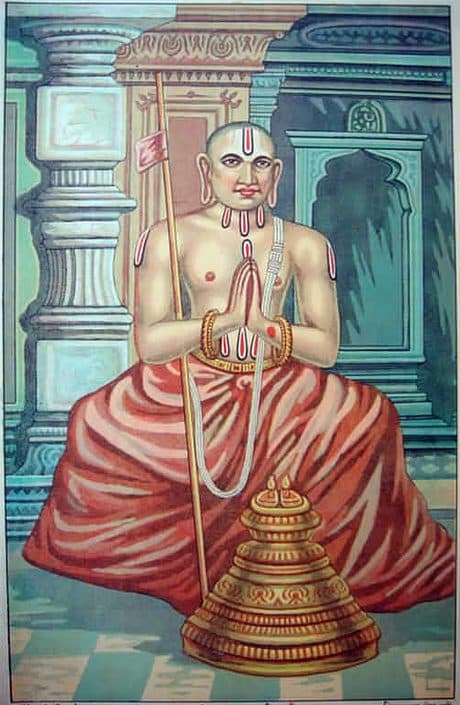
Rāmānuja · Viśiṣṭādvaita
EnglishOn verses 14.22–25
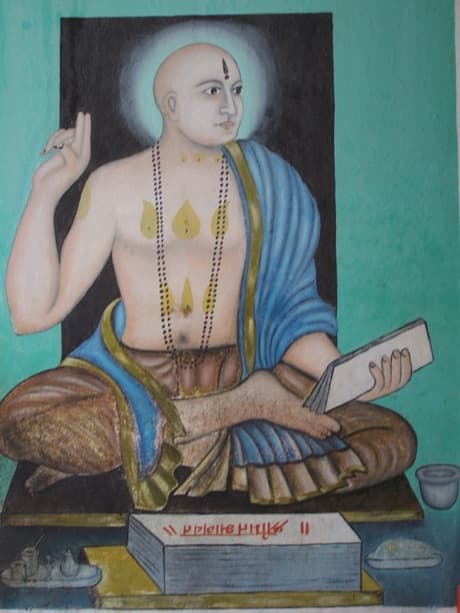
Madhvācārya · Dvaita
Madhva BhāṣyaSanskritEnglishOn verses 14.22–14.24
“प्रायो न द्वेष्टि न काङ्क्षति । तथा हि सामवेदे भाल्लवेयशाखायाम् - रजस्तमः सत्वगुणान् प्रवृत्तान् प्रायो न च द्वेष्टि न चापि काङ्क्षेत् । तथाऽपि सूक्ष्मं सत्वगुणं च काङ्क्षेद् यदि प्रविष्टं सुतमश्च जह्यात् ॥ इति । न हि देवा ऋषयश्च सत्त्वस्था नुपसत्तम । हीनाः सूक्ष्मेण सत्त्वेन ततो वैकारिकाः स्मृताः । कथं वैकारिको गच्छेत् पुरुषः पुरुषोत्तमम् ॥ इति हि मोक्षधर्मे । सात्त्विकः पुरुषव्याघ्र भवेन्मोक्षार्थनिश्चितः । इति च ॥” - Primarily he neither hates nor hankers for. Thus in Bhallaveya section of Samaveda - “The one who goes beyond the three attributes neither hates nor hankers for. Even then he would desire for the subtle saatvic attribute, but if subtle taamasic attributes come even by destiny, he will reject them”. Thus in Moksha Dharma - “Neither the gods nor seers, O King, established in satva can ever be insignificant in subtle attributes. In which case they would be modified in their convictions. One who is not firm in their convictions can never reach the Person, the Best of the Persons”. Thus similarly in the same text - “The person who is firm in his saatvic attributes becomes, verily, a man-Lion assured of his liberation”.
Madhvācārya · Dvaita
Gītā Tātparya NirṇayaSanskritEnglishOn verses 14.22–14.24
“लोकस्थितान् प्रकाशादीन् प्रायो न द्वेष्टि नेच्छति । स्वयंप्रकाशी मोहोज्ज्ञस्तथाऽपि पुनरिच्छति । विष्णोः प्रकाशं तं चापि नित्यभक्तव्याभिसेवते । सुखदुःखादिभावेऽपि विष्णुभक्तौ ममः सदा । अर्थार्थं वा प्रियार्थं वा निन्दादीनां भयादपि । न विष्णुभक्तिहासोऽस्य किन्तु साम्यमथोन्नतिः । अवैष्णवारम्भवर्जो विष्णुं याति न संशयः ॥ इति च |” - The illumination which is established in other people is neither desired nor hated (by the one who is beyond the three attributes). The illumined beings under delusion, however may again succumb to desires. The illumination of Sri Vishnu being in them, they are ever in communion with Him. Even if sometimes deluded, they will again desire communion with Sri Vishnu alone. Even in the absence of happiness or unhappiness, the devotees of Sri Vishnu are ever equipoise. For the sake of wealth, of dear ones or those who are inimical or because of fright, there is never any decrease in their devotion to Sri Vishnu. It is either stable or increases. Those who give up things which are not pleasing to Sri Vishnu will undoubtedly reach Him.
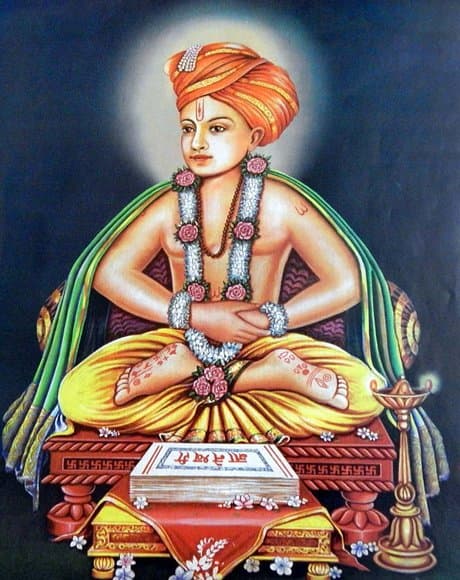
Jñāneśvar · Vārkarī
English24 "Even (-poised) in woe and weal, stabilised in self, holding equal a clod, a stone, or gold; putting the loved and the unloved on the same level: the man of wisdom whom censure and personal commendation affect alike: (349)
Just as there is nothing else in the fabric, Oh Kiriti, but yarn in and out, so he (man of knowledge) sees that there is nothing else in the entire universe but my own 'Self'. Lord Hari makes gifts in equal proportions both to foes and friends; in the same way he, like a balance with two pans treats equally both pleasure and pain. Normally the being must experience pleasure and pain while going about in the body—form, in the way the fish does in the water. But he, (the man of knowledge) has dropped it all (all feelings, etc. in regard to body) and has attained unto Supreme Self. The grain inside (seed) becomes visible when the external chaff is removed; or the rippling (noise), the hurry and the bustle of a river-flow, subside as soon as the river falls into the sea. In that way, Oh Dhananjaya, in the case of one who has attained unto Supreme Self, the pleasure and pain automatically abide quietly in the body without making their presence felt in any way. Day and night are both treated alike by a pillar in the house. In that way the embodied one who has already become one with Supreme Self, treats alike all pairs of opposites (like woe and weal, etc.). The bodily contact with a serpent or Urvashi (the Heavenly nymph) are both one and the same to one in deep slumber, in that way the bodily duals pairs of opposite sentiments ( ढ़ढे ) such as pleasure and pain etc. are one and the same to one that has become one with the Supreme Self. The vision of such a one makes no distinction between an animal dung and gold and between gems and pebbles. His Brahmic equanimity (even-poised self) is never disturbed were the very Heavens to visit his house or a ferocious tiger to raid it. The evenness of his temper never gets ruffled in the way a corpse cannot rise up again or the baked seed cannot germinate. Whether praised as God Brahmdeo or slandered as one base, he remains (as unaffected as) a mass of ashes neither burning nor getting extinguished. Similarly neither slander nor praise (of any one else) emerges out of him in the way there is neither darkness nor a lighted lamp (wick) in the house of the Sun.
Swami Ramsukhdas · Modern
EnglishOn verses 14.24–14.25
'Dhīraḥ samaduḥkhasukhaḥ'—A person, having transcended the modes of nature, discriminates the real from the unreal, and remains firm (fixed), in the self.
He remains the same, in desirable and undesirable circumstances viz., pleasure and pain, which appear as the fruit of his past actions. They cannot make him happy and sad.
'Svasthaḥ'—In the self, there is neither pleasure nor pain. The self, is their illuminator. He remains established in the self.
'Samaloṣṭāśmakāñcanaḥ'—He has neither attachment nor aversion, to a clod of earth, a piece of stone and a piece of
gold. He makes proper use of these but remains alike, in their gain and loss. Not to know the distinction between a clod of earth, a stone and gold is not, even-mindedness. Having known their distinction, not to have attraction and aversion for them, is even-mindedness. The knowledge of their distinction is not a fault, but to be affected by these is an evil.
'Tulyapriyāpriyah'—He remains alike, in success and failure, which he gets, as the fruit of his actions.
'Tulyanindātmasamstutih'—Praise and blame, mainly relate to name. The man beyond gunas has no connection at all, with the name. He is neither pleased, when he is praised, nor displeased when he is blamed. He has neither attachment for those, who praise him nor aversion to those, who blame him. It is a common trait, that a man likes praise but dislikes blame. He who rises above gunas, knows the two, but he treats both of these alike. He remains established, in the self, where praise and blame, have no access.
Both praise and blame, are activities done by others. To be pleased or displeased with these is a mistake. Whatever one's nature is, and whatever his conviction is, he will speak, accordingly. It is not just if a striver, expects of others, that they should not censure him. It is rather unjust, if he compels other persons to praise him, and not to blame him. He should be pleased, when someone blames him, because in that case his sins are wiped out and he is purified. When someone praises him, then his virtues are destroyed. So, he should not be pleased, with praise, because it involves danger.
'Mānāpamānayostulyah'—A person, regards honour and dishonour of a body or a name as his own, when he identifies himself, with the body. But the person, who has transcended the modes, having snapped his connection with the body, is neither pleased with honour nor displeased with dishonour, because he remains established in the self, which is free from all alterations and modifications. So he feels neither happy when he is honoured,
nor sad, when he is dishonoured. He remains alike. To have knowledge of honour and dishonour, is not an evil. But to be happy and unhappy, is an evil. Both are modifications of nature.
**Tulyo mitrāripakṣayoḥ**—He entertains no feeling of friendship or enmity, towards anyone. But, people find their own sentiments of friendship or enmity, reflected in him. So, even by knowing the fact that some other persons, regard him as their friend or enemy, he maintains an attitude of impartiality, towards them.
If he has to divide a thing, between two—one, who regards him as a friend and the other, who regards him as an enemy, he gives a bit less to the former, than to the latter, because he is generous to the latter, even in judgement. This is also, equanimity or even-mindedness.
**Sarvārambhaparityāgī**—He abandons all new undertakings for pleasure and prosperity. He performs actions, according to circumstances, being free from feelings of egoism, attachment, having no desire for their fruit, and abandons these, without having any desire for praise and honour etc.
**Guṇātitaḥ sa ucyate**—Such a person, is said to have risen above, the three guṇas (modes of nature).
In fact, the person, who has transcended the three modes of nature, cannot, have any marks. Marks vest in the modes of prakṛti or in prakṛti. How can he, who has marks, transcend guṇas? Arjuna, has inquired of the marks, of such a person. The Lord has described those marks. In fact, these are marks of his so-called inner sense, and body. These marks, are only hints about such a person. They cannot describe him. The modes, are the evolutes of nature, while a body, senses, mind and intellect, are the evolutes of modes. So the senses, mind and intellect cannot even, fully describe the modes which are, their cause. How can these describe prakṛti, the cause of modes? Then, how is it possible for these to describe the one, who has transcended the modes?
Here the Lord, has mentioned four pairs of opposites—pleasure and pain, pleasant and unpleasant, praise and blame and honour and dishonour, to denote that one who becomes equanimous in them, he becomes equanimous in other pairs of opposites, also easily. A person, having transcended the three modes, regards these pairs alike. He always remains balanced, and his peace, is never disturbed.
[In the twenty-fourth and the twenty-fifth verses, the Lord has described equanimity, of a great person, who has transcended the three modes of nature.]
**Appendix**—Flaws such as attachment and aversion neither abide in the non-Self nor in the Self nor they are the intrinsic characteristic of the mind but they abide in the ego (identification of the Self with the body). In fact there is no real identification but it is merely assumed out of indiscrimination. It means that there are no flaws in the Self but a man assumes them in the Self because of indiscrimination. He realizes that flaws appear and disappear, while the Self ever exists as it is; but he does not attach importance to this realization. If he discriminately realizes that the Self is free from these flaws, he will not become their experiencer (happy and sad).
*Link:—Now, the Lord, in the next verse, answers Arjuna's third question—'How does he transcend, the three modes?'*
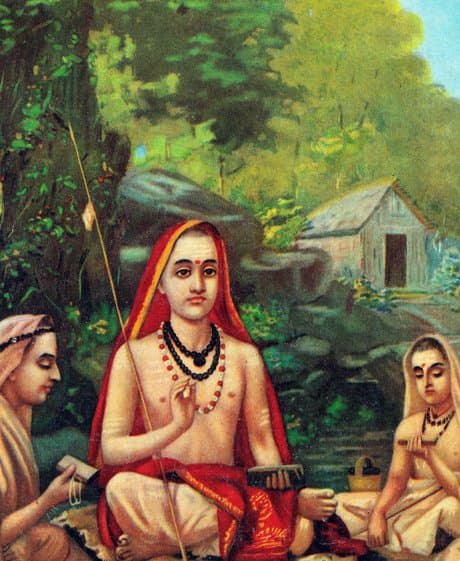
Ādi Śaṅkarācārya · Advaita
Sanskritसमदुःखसुखः समे दुःखसुखे यस्य सः समदुःखसुखः, स्वस्थः स्वे आत्मनि स्थितः प्रसन्नः, समलोष्टाश्मकाञ्चनः लोष्टं च अश्मा च काञ्चनं च लोष्टाश्मकाञ्चनानि समानि यस्य सः समलोष्टाश्मकाञ्चनः, तुल्यप्रियाप्रियः प्रियं च अप्रियं च प्रियाप्रिये तुल्ये समे यस्य सोऽयं तुल्यप्रियाप्रियः, धीरः धीमान्, तुल्यनिन्दात्मसंस्तुतिः निन्दा च आत्मसंस्तुतिश्च निन्दात्मसंस्तुती, तुल्ये निन्दात्मसंस्तुती यस्य यतेः सः तुल्यनिन्दात्मसंस्तुतिः ॥ किञ्च --
Ādi Śaṅkarācārya · Advaita
Hindiजो सुख-दुःखमें समान है अर्थात् सुख और दुःख जिसको समान प्रतीत होते हैं, जो स्वस्थ अर्थात् अपने आत्मस्वरूपमें स्थित—प्रसन्न है, जो समलोष्टाश्मकाञ्चन है अर्थात् मिट्टी, पत्थर और सुवर्ण जिसके (विचारमें) समान हो गये हैं।
जो तुल्यप्रियाप्रिय है अर्थात् प्रिय और अप्रिय दोनों हीको जो समान समझता है और जो धीर अर्थात् बुद्धिमान् है तथा जो तुल्यनिन्दात्मसंस्तुति है अर्थात् जिसके विचारमें अपनी निन्दा और स्तुति समान हो गयी है, ऐसा अपनी निन्दा-स्तुतिको समान समझनेवाला यति है
Jñāneśvar · Vārkarī
Marathiतरी वस्त्रासि पाठीं पोटीं । नाहीं सुतावांचूनि किरीटी । ऐसें सुये दिठी । चराचर मद्रूपें ॥ ३४९ ॥ म्हणौनि सुखदुःखासरिसें । कांटाळें आचरे ऐसें । रिपुभक्तां जैसें । हरीचें देणें ॥ ३५० ॥ एऱ्हवीं तरी सहजें । सुखदुःख तैंचि सेविजे । देहजळीं होईजे । मासोळी जैं ॥ ३५१ ॥ आतां तें तंव तेणें सांडिलें । आहे स्वस्वरूपेंसीचि मांडिलें । सस्यांतीं निवडिलें । बीज जैसें ॥ ३५२ ॥ कां वोघ सांडूनि गांग । रिघोनि समुद्राचें आंग । निस्तरली लगबग । खळाळाची ॥ ३५३ ॥ तेवीं आपणपांचि जया । वस्ती जाली गा धनंजया । तया देहीं अपैसया । सुख तैसें दुःख ॥ ३५४ ॥ रात्रि तैसें पाहलें । हें धारणा जेवीं एक जालें । आत्माराम देहीं आतलें । द्वंद्व तैसें ॥ ३५५ ॥ पैं निद्रिताचेनि आंगेंशीं । सापु तैशी उर्वशी । तेवीं स्वरूपस्था सरिशीं । देहीं द्वंद्वें ॥ ३५६ ॥ म्हणौनि तयाच्या ठायीं । शेणा सोनया विशेष नाहीं । रत्ना गुंडेया कांहीं । नेणिजे भेदु ॥ ३५७ ॥ घरा येवों पां स्वर्ग । कां वरिपडो वाघ । परी आत्मबुद्धीसि भंग । कदा नव्हे ॥ ३५८ ॥ निवटलें न उपवडे । जळीनलें न विरूढे । साम्यबुद्धी न मोडे । तयापरी ॥ ३५९ ॥ हा ब्रह्मा ऐसेनि स्तविजो । कां नीच म्हणौनि निंदिजो । परी नेणें जळों विझों । राखोंडी जैसी ॥ ३६० ॥ तैसी निंदा आणि स्तुती । नये कोण्हेचि व्यक्ती । नाहीं अंधारें कां वाती । सूर्या घरीं ॥ ३६१ ॥
Jñāneśvar · Vārkarī
Hindi(14.350) हे किरीटी! जैसे वस्त्र में आगे-पीछे सूत के सिवाय और कुछ नहीं रहता वैसे ही वह चराचर में मेरा ही रूप देखता है।
(14.351) इसलिए जैसे श्रीहरि अपने वैरी अथवा भक्तों का समान ही फल देते हैं, वैसे ही वह सुख और दुःख का समान जान कर ही आचरण करता है। (14.352) यों भी, स्वभावतः सुख-दुःख तभी भोगे जाते हैं जब मनुष्य देह-रूपी जल में मछली बन कर रहे।
(14.353) उस देहाभिमान का त्याग कर वह पुरुष आत्मस्वरूप प्राप्त कर चुका होता है। जैसे अनाज की उड़ावनी कर बीज निकाल लिया जाता है,
(14.354) अथवा प्रवाह छोड़ कर गंगा समुद्र में मिलती है तो जैसे उसका खलबलाना एकदम बन्द हो जाता है,
(14.355) वैसे ही हे धनंजय! जो आत्मस्वरूप में बस्ती करता है उसे आप ही आप देह में रहते हुए सुख-दुःख समान हो जाते हैं।
(14.356) जैसे खम्भे को रात और दिन समान ही हैं, वैसे ही आत्मानन्द में निमग्न पुरुष के देह में प्राप्त हुए सुख-दुःख समान हैं।
(14.357) सोते हुए मनुष्य के शरीर को साँप का स्पर्श, अथवा उर्वशी अप्सरा का आलिंगन, दोनों समान दी हैं, वैसे ही स्वरूपस्थित पुरुष को देह के सुख-दुःख समान ही होते हैं।
(14.358) इसलिए उसे सुवर्ण और गोबर में अन्तर नहीं जान पड़ता, अथवा रत्न और पत्थर में भी कुछ भेद नहीं दिखाई देता। (14.359) मूर्तिमान स्वर्ग प्राप्त हो, अथवा बाघ ऊपर आ पड़े, तथापि उसकी आत्मबुद्धि का कदापि भंग नहीं होता।
(14.360) जैसे मरा हुआ जीव कभी जीवित नहीं होता, अथवा भूँजा हुआ बीज कभी उगता नहीं, वैसे ही उसकी एकरूपता की स्थिति का भंग नहीं होता।
(14.361) 'आप ब्रह्मदेव हैं' — इस प्रकार उसकी स्तुति कीजिए, अथवा — 'तू नीच है' — इस प्रकार निन्दा कीजिए, परन्तु राख जैसे न जलती है न बुझती है,
(14.362) वैसे ही निन्दा और स्तुति उसे कुछ भी नहीं जान पड़ती। सूर्य के घर न अँधेरा रहता है न दिया-बाती होती है।
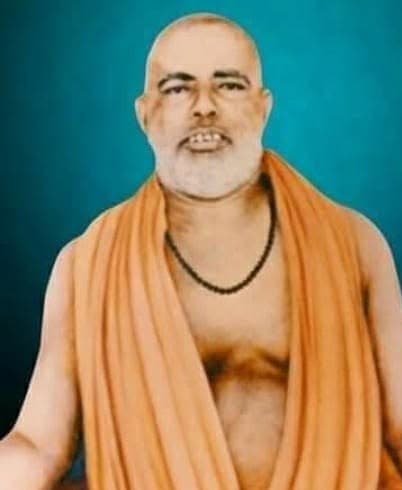
Sri Udiya Baba · Modern
Hindiभावार्थ— वह स्वस्वरूप में स्थित हुआ सुख-दुःख में समान दृष्टि रखने वाला होता है। ढेले, पत्थर, और सुवर्ण में उसकी समान दृष्टि रहती है। प्रिय और अप्रिय में वह एक-सा रहता है तथा निन्दा-स्तुति में भी वह वीर-पुरुष समान ही रहता है।
व्याख्या— बाईसवें श्लोक में कहा है कि वह प्रवृत्ति और निवृत्ति में समान रहता है, क्योंकि उसे सुख-प्राप्ति और दुःख-निवृत्ति की इच्छा नहीं रहती। अर्थात् उसकी वृत्ति न सुख में रहती है न दुःख में। शरीर अनात्मा है और सुख-दुःख शरीर के ही धर्म हैं, अतः अनात्म-धर्म होने के कारण इनसे भी आत्मा का कोई सम्बन्ध नहीं है। इनसे असङ्ग होने के कारण वह समभाव में स्थित रहता है।
प्रश्न— जब वृत्ति सुख-दुःख में नहीं रहती तो कहाँ रहती है?
उत्तर— यहाँ 'समदुःख-सुख' के पश्चात् कहा है 'स्वस्थः' अर्थात् वह अपने में ही रहती है। उस समय आत्मा अपनी महिमा में स्थित रहता है।
वह 'समलोष्टाश्मकाञ्चनः' होता है। अर्थात् ढेले, पत्थर, लोहे और सोने में उसकी समान दृष्टि होती है, न किसी में प्रीति होती है न अप्रिति। इसका यह अर्थ नहीं कि उसे उनका भेद प्रतीत नहीं होता, किन्तु ठीक-ठीक परिचय होने पर भी उसका किसी में राग या द्वेष नहीं होता। अथवा यह समझना चाहिये कि उसकी देह में अहंता नहीं होती। अहंता होने पर ही धन संग्रह किया जाता है। वह तो इन सबको मायामात्र देखता है इसलिये उसके लिये ये सब समान ही है। उसकी
किसी में ममता नहीं होती। प्रिय-अप्रिय तथा निन्दा स्तुति में भी उसका समान भाव रहता है। वह स्वस्थ है, सर्वज्ञ है और बुद्धि का प्रेरक है इसलिये धीर भी है। [धियं राति प्रेरयति इति धीरः।]
Swami Ramsukhdas · Modern
HindiOn verses 14.24–14.25
‘धीरः, समदुःखसुखः’—नित्य-अनित्य, सार-असार आदिके तत्त्वको जानकर स्वतःसिद्ध स्वरूपमें स्थित होनेसे गुणातीत मनुष्य धैर्यवान् कहलाता है।
पूर्वकर्मोंके अनुसार आनेवाली अनुकूल-प्रतिकूल परिस्थितिका नाम सुख-दुःख है अर्थात् प्रारम्भके अनुसार शरीर, इन्द्रियों आदिके अनुकूल परिस्थितिको ‘सुख’ कहते हैं और शरीर, इन्द्रियों आदिके प्रतिकूल परिस्थितिको ‘दुःख’ कहते हैं। गुणातीत मनुष्य इन दोनोंमें सम रहता है। तात्पर्य है कि सुख-दुःखरूप बाह्य परिस्थितियाँ उसके कहे जानेवाले अन्तःकरणमें विकार पैदा नहीं कर सकतीं, उसको सुखी-दुःखी नहीं कर सकतीं।
‘स्वस्थः’—स्वरूपमें सुख-दुःख है ही नहीं। स्वरूपसे तो सुख-दुःख प्रकाशित होते हैं। अतः गुणातीत मनुष्य आने-जानेवाले सुख-दुःखका भोक्ता नहीं बनता, प्रत्युत अपने नित्य-निरन्तर रहनेवाले स्वरूपमें स्थिर रहता है।
‘समलोष्टाश्मकाञ्चनः’—उसका मिट्टीके ढेले, पत्थर और स्वर्णमें न तो आकर्षण (राग) होता है और न विकर्षण (द्वेष) होता है। परन्तु व्यवहारमें वह ढेलेको
ढेलेकी जगह रखता है, पत्थरको पत्थरकी जगह रखता है और स्वर्णको स्वर्णकी जगह (तिजोरी आदिमें) रखता है। तात्पर्य है कि यद्यपि उनकी प्राप्ति-अप्राप्तिमें उसको हर्ष-शोक नहीं होते, वह सम रहता है, तथापि उनसे व्यवहार तो यथायोग्य ही करता है।
ढेले, पत्थर और स्वर्णका ज्ञान न होना समता नहीं कहलाती। समता वही है कि इन तीनोंका ज्ञान होते हुए भी इनमें राग-द्वेष न हों। ज्ञान कभी दोषी नहीं होता, विकार ही दोषी होते हैं।
‘तुल्यप्रियाप्रियः’—क्रियमाण कर्मोंकी सिद्धि-असिद्धिमें अर्थात् उनके तात्कालिक फलकी प्राप्ति-अप्राप्तिमें भी वह सम रहता है।
‘तुल्यनिन्दात्मसंस्तुतिः’—निन्दा और स्तुतिमें नामकी मुख्यता होती है। गुणातीत मनुष्यका नामके साथ कोई सम्बन्ध नहीं रहता; अतः कोई निन्दा करे तो उसके चित्तमें खिन्नता नहीं होती और कोई स्तुति करे तो उसके चित्तमें प्रसन्नता नहीं होती। इसी प्रकार निन्दा करनेवालोंके प्रति उसका द्वेष नहीं होता और स्तुति करनेवालोंके प्रति उसका राग नहीं होता।
साधारण मनुष्योंकी यह एक आदत बन जाती है कि उनको अपनी निन्दा बुरी लगती है और स्तुति अच्छी लगती है। परन्तु जो गुणोंसे ऊँचे उठ जाते हैं, उनको निन्दा-स्तुतिका ज्ञान तो होता है और वे बर्ताव भी सबके साथ यथोचित ही करते हैं, पर उनमें निन्दा-स्तुतिको लेकर खिन्नता-प्रसन्नता नहीं होती। कारण कि वे जिस तत्त्वमें स्थित हैं, वहाँ गुणोंवाली परकृत निन्दा-स्तुति पहुँचती ही नहीं।
निन्दा और स्तुति—ये दोनों ही परकृत क्रियाएँ हैं। उन क्रियाओंसे राजी-नाराज होना गलती है। कारण कि जिसका जैसा स्वभाव है, जैसी धारणा है, वह उसके अनुसार ही बोलता है। वह हमारे अनुकूल ही बोले, हमारी निन्दा न करे—यह न्याय नहीं है अर्थात् उसको बोलनेमें बाध्य करनेका भाव न्याय नहीं है, अन्याय है। दूसरोंपर हमारा क्या अधिकार है कि तुम हमारी निन्दा मत करो? हमारी स्तुति ही करो? दूसरी बात, कोई निन्दा करता है तो उसमें साधकको प्रसन्न होना चाहिये कि इससे मेरे पाप कट रहे हैं, मैं शुद्ध हो रहा हूँ। अगर कोई हमारी प्रशंसा करता है, तो उससे हमारे पुण्य नष्ट होते हैं। अतः प्रशंसामें राजी नहीं होना चाहिये; क्योंकि राजी होनेमें खतरा है!
‘मानापमानयोस्तुत्वः’—मान और अपमान होनेमें शरीरकी मुख्यता होती है। गुणातीत मनुष्यका शरीरके साथ तादात्म्य नहीं रहता। अतः कोई उसका आदर करे या निरादर करे, मान करे या अपमान करे, इन परकृत क्रियाओंका उसपर कोई असर नहीं पड़ता।
निन्दा-स्तुति और मान-अपमान—इन दोनों ही परकृत क्रियाओंमें गुणातीत मनुष्य सम रहता है। इन दोनों परकृत क्रियाओंका ज्ञान होना दोषी नहीं है, प्रत्युत निन्दा और अपमानमें दुःखी होना तथा स्तुति और मानमें हर्षित होना दोषी है; क्योंकि ये दोनों ही प्रकृतिके विकार हैं। गुणातीत पुरुषको निन्दा-स्तुति और मान-अपमानका ज्ञान तो होता है, पर गुणोंसे सम्बन्ध-विच्छेद होनेसे, नाम और शरीरके साथ तादात्म्य न रहनेसे वह सुखी-दुःखी नहीं होता। कारण कि वह जिस तत्त्वमें स्थित है, वहाँ ये विकार नहीं हैं। वह तत्त्व गुणरहित है, निर्विकार है।
‘तुल्यो मित्रारिपक्षयोः’—वह मित्र और शत्रुके पक्षमें सम रहता है। यद्यपि गुणातीत मनुष्यकी दृष्टिमें कोई मित्र और शत्रु नहीं होता, तथापि दूसरे लोग अपनी भावनाके अनुसार उसे अपना मित्र अथवा शत्रु भी मान
सकते हैं। साधारण मनुष्यको भी दूसरे लोग अपनी भावनाके अनुसार मित्र या शत्रु मान सकते हैं; किन्तु इस बातका पता लगनेपर उस मनुष्यपर इसका असर पड़ता है, जिससे उसमें राग-द्वेष उत्पन्न हो सकते हैं। परन्तु गुणातीत मनुष्यपर इस बातका पता लगनेपर भी कोई असर नहीं पड़ता। वस्तुतः मित्र और शत्रुकी भावनाके कारण ही व्यवहारमें पक्षपात होता है। गुणातीत मनुष्यके कहलानेवाले अन्तःकरणमें मित्र-शत्रुकी भावना ही नहीं होती; अतः उसके व्यवहारमें पक्षपात नहीं होता।
एक व्यक्ति उस महापुरुषके साथ मित्रता रखता है और दूसरा व्यक्ति अपने स्वभाववश उस महापुरुषके साथ शत्रुता रखता है। जब उन दोनों व्यक्तियोंकी किसी बातको लेकर न्याय करनेका अवसर आ जाय, तब (व्यवहारमें) वह मित्रता रखनेवालेकी अपेक्षा शत्रुता रखनेवालेका कुछ अधिक पक्ष लेता है। जैसे—पदार्थदिका बँटवारा करते समय वह मित्रता रखनेवालेको कम (उतना ही, जितना वह प्रसन्नतापूर्वक सहन कर सकता हो) और शत्रुता रखने-वालोंको कुछ ज्यादा पदार्थ देता है। यह भी समता ही कहलाती है; क्योंकि अपने पक्षवालोंके साथ न्याय और विपक्षवालोंके साथ उदारता होनी चाहिये।
‘सर्वारम्भपरित्यागी’—वह महापुरुष सम्पूर्ण कर्मोंके आरम्भका त्यागी होता है। तात्पर्य है कि धन-सम्पत्तिके संग्रह और भोगोंके लिये वह किसी तरहका कोई नया कर्म आरम्भ नहीं करता। स्वतः प्राप्त परिस्थितिके अनुसार ही उसकी प्रवृत्ति और निवृत्ति होती है अर्थात् क्रियाओंमें उसकी प्रवृत्ति कामना, वासना, ममतासे रहित होती है और निवृत्ति भी मान-बड़ाई आदिकी इच्छासे रहित होती है।
‘गुणातीतः स उच्यते’—यहाँ ‘उच्यते’ पदसे यही ध्वनि निकलती है कि उस महापुरुषकी ‘गुणातीत’ संज्ञा नहीं है; किन्तु उसके कहे जानेवाले शरीर, अन्तःकरणके लक्षणोंको लेकर ही उसको गुणातीत कहा जाता है।
वास्तवमें देखा जाय तो जो गुणातीत है, उसके लक्षण नहीं हो सकते। लक्षण तो गुणोंसे ही होते हैं; अतः जिसके लक्षण होते हैं, वह गुणातीत कैसे हो सकता है? परन्तु अर्जुनने भी गुणातीतके ही लक्षण पूछे हैं और भगवान्ने भी गुणातीतके ही लक्षण कहे हैं। इसका तात्पर्य यह है कि लोग पहले उस गुणातीतकी जिस शरीर और अन्तःकरणमें स्थिति मानते थे, उसी शरीर और अन्तःकरणके लक्षणोंको लेकर वे उसमें आरोप करते हैं कि यह गुणातीत मनुष्य है।
अतः ये लक्षण गुणातीत मनुष्यको पहचाननेके संकेत-मात्र हैं।
प्रकृतिके कार्य गुण हैं और गुणोंके कार्य शरीर-इन्द्रियाँ-मन-बुद्धि हैं। अतः मन-बुद्धि आदिके द्वारा अपने कारण गुणोंका भी पूरा वर्णन नहीं हो सकता, फिर गुणोंके भी कारण प्रकृतिका वर्णन हो ही कैसे सकता है? जो प्रकृतिसे भी सर्वथा अतीत (गुणातीत) है, उसका वर्णन करना तो उन मन-बुद्धि आदिके द्वारा सम्भव ही नहीं है। वास्तवमें गुणातीतके ये लक्षण स्वरूपमें तो होते ही नहीं; किन्तु अन्तःकरणमें मानी हुई अहंता-ममताके नष्ट हो जानेपर उसके कहे जानेवाले अन्तःकरणके माध्यमसे ही ये लक्षण-गुणातीतके लक्षण कहे जाते हैं।
यहाँ भगवान्ने सुख-दुःख, प्रिय-अप्रिय, निन्दा-स्तुति और मान-अपमान-ये आठ परस्पर विरुद्ध नाम लिये हैं,
**परिशिष्ट भाव**—राग-द्वेषादि विकार न जड़में रहते हैं, न चेतनमें रहते हैं और न ये अन्तःकरणके धर्म हैं, प्रत्युत ये देहाभिमानमें रहते हैं। देहाभिमान भी वास्तवमें है नहीं, प्रत्युत अविवेक-अविचारपूर्वक माना हुआ है। तात्पर्य है कि वास्तवमें विकार अपनेमें नहीं हैं, पर मनुष्य अविवेकके कारण अपनेमें मान लेता है। वह विकारोंके भाव और अभावका तथा स्वयंके भावका अनुभव तो करता है, पर इस अनुभवको महत्त्व नहीं देता। अगर वह विवेक-विचारपूर्वक अपनेमें विकारोंके अभावका अनुभव कर ले तो वह उनका भोक्ता (सुखी-दुःखी) नहीं बनेगा।
सम्बन्ध-अर्जुनने तीसरे प्रश्नके रूपमें गुणातीत होनेका उपाय पूछा था। उसका उत्तर भगवान् आगेके श्लोकमें देते हैं।
The word prakāśa means illumination, lucidity, the brightness of disposition and are the effects of sattva guṇa or the mode of goodness.
The word pravṛtti means enthusiastic effort or the disposition to endeavour actively and are the effects of raja guṇa the mode of passion.
The word moha means delusion, bewilderment or having a distorted perception.
All things external to the ātma or immortal soul are of two categories: One is what causes attraction and the second is what causes aversion.
The fundamental symptom of discerning who is beyond the three guṇas or modes of material nature is that such a being neither desire to accept anything nor does such a one desire to reject anything.
Whatever the Supreme Lord Krishna designates to come, such a one remains equipoise in all situations.
Such a one is udāsīnavad or unconcerned with external circumstances because of being enraptured within by ātma tattva or realisation of the immortal soul. Therefore one is naturally indifferent to anything external.
One who is never agitated by attraction and aversion which arise from the three guṇas and who lucid and tranquil reflects within that it is natural for the impulses of the three guṇas to occasionally parade themselves in one's consciousness, is never deluded by them into being impelled to act as the qualities might provoke one to respond.
The word sama means equanimity or keeping oneself equipoise in both joy and distress.
The word svasthaḥ means solidly situated, established firmly within on the immortal ātma, filled with rapture and bliss by its communion.
Such a one is never even distracted by external things let alone influenced by them. Even when exposed to great events of joy or catastrophic events of grief, such a one is undisturbed and does not succumb to delusion or illusion.
To such a one a clod of earth or a precious jewel or a nugget of gold all are looked upon alike as merely modifications of prakṛti. So there is nothing in material existence which such a one has any special attraction or aversion towards.
The word dhīraḥ means sober and denotes the wisdom of one who is knowledgeable of the distinction between prakṛti or the material substratum pervading physical existence and the eternal ātma or immortal soul.
Hence such a one remains equanimous in both praise and censure.
It is the desire for praise and adulation that shows the consequence of egotism which abides in the mind and is erroneously mistaken for the ātma and deludes one into thinking that it is a great honour to be praised.
Similarly aversion to being ridiculed and censured is also the consequence of same egotism which makes one think it is ignoble and shameful to receive such infamy.
But both conceptions are the results of delusion and one who is established in ātma tattva or realisation of the immortal soul is never implicated in illusion
as such a being is unlimited in consciousness knowing that all material designations are all transcended by communion with the ātma.
In the same way that egotism is alienated from the ātma what pertains to egotism such as honour and disgrace, friends and enemies, praise and censure does not affect the ātma.
One who is illuminated by ātma tattva is unconcerned and indifferent to worldly matters.
Similarly, since such a one comprehends that all efforts of activity are the cause and perpetuation of physical embodiment, such a one abandons all efforts not related to the ātma.
Such a person is known to be a conqueror of the three guṇas.
Next the primary means to overcome them will be given.