

Bhagavad Gītā · Chapter 14 · Guṇatraya Vibhāga Yoga
उदासीनवदासीनो गुणैर्यो न विचाल्यते
गुणा वर्तन्त इत्येव योऽवतिष्ठति नेङ्गते
udāsīnavadāsīno guṇairyo na vicālyate|guṇā vartanta ityeva yo'vatiṣṭhati neṅgate||
Word meanings
यः = who
उदासीनवत् = like one indifferent
आसीनः = seated
गुणैः = by the guṇas
न, विचाल्यते = is not moved
गुणाः = guṇas
एव = indeed
वर्तन्ते = operate
इति = thus
Translation
He who, sitting like a witness is not disturbed by the Gunas and who knowing that the Gunas alone move among the Gunas, remains established in identity with God, and never falls off from that state.
Commentary
The commentators seated around this verse
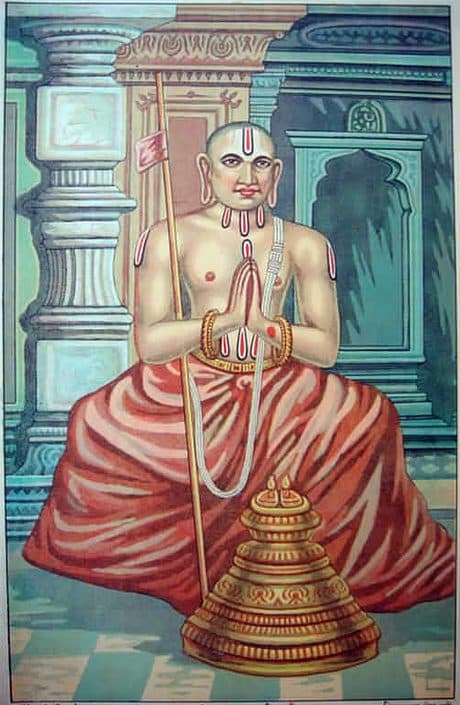
Rāmānuja · Viśiṣṭādvaita
EnglishOn verses 14.22–25
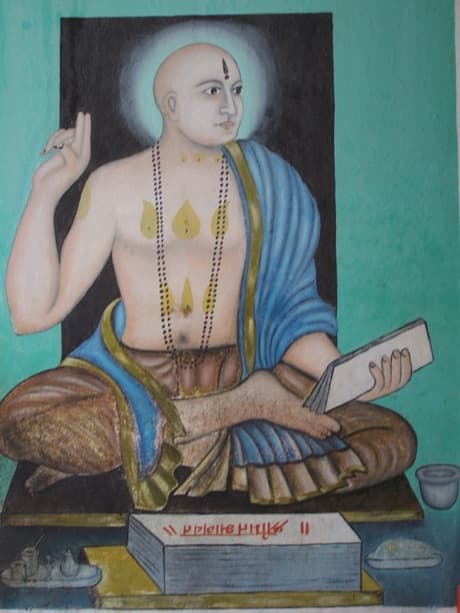
Madhvācārya · Dvaita
Madhva BhāṣyaSanskritEnglishOn verses 14.22–14.24
“प्रायो न द्वेष्टि न काङ्क्षति । तथा हि सामवेदे भाल्लवेयशाखायाम् - रजस्तमः सत्वगुणान् प्रवृत्तान् प्रायो न च द्वेष्टि न चापि काङ्क्षेत् । तथाऽपि सूक्ष्मं सत्वगुणं च काङ्क्षेद् यदि प्रविष्टं सुतमश्च जह्यात् ॥ इति । न हि देवा ऋषयश्च सत्त्वस्था नुपसत्तम । हीनाः सूक्ष्मेण सत्त्वेन ततो वैकारिकाः स्मृताः । कथं वैकारिको गच्छेत् पुरुषः पुरुषोत्तमम् ॥ इति हि मोक्षधर्मे । सात्त्विकः पुरुषव्याघ्र भवेन्मोक्षार्थनिश्चितः । इति च ॥” - Primarily he neither hates nor hankers for. Thus in Bhallaveya section of Samaveda - “The one who goes beyond the three attributes neither hates nor hankers for. Even then he would desire for the subtle saatvic attribute, but if subtle taamasic attributes come even by destiny, he will reject them”. Thus in Moksha Dharma - “Neither the gods nor seers, O King, established in satva can ever be insignificant in subtle attributes. In which case they would be modified in their convictions. One who is not firm in their convictions can never reach the Person, the Best of the Persons”. Thus similarly in the same text - “The person who is firm in his saatvic attributes becomes, verily, a man-Lion assured of his liberation”.
Madhvācārya · Dvaita
Gītā Tātparya NirṇayaSanskritEnglishOn verses 14.22–14.24
“लोकस्थितान् प्रकाशादीन् प्रायो न द्वेष्टि नेच्छति । स्वयंप्रकाशी मोहोज्ज्ञस्तथाऽपि पुनरिच्छति । विष्णोः प्रकाशं तं चापि नित्यभक्तव्याभिसेवते । सुखदुःखादिभावेऽपि विष्णुभक्तौ ममः सदा । अर्थार्थं वा प्रियार्थं वा निन्दादीनां भयादपि । न विष्णुभक्तिहासोऽस्य किन्तु साम्यमथोन्नतिः । अवैष्णवारम्भवर्जो विष्णुं याति न संशयः ॥ इति च |” - The illumination which is established in other people is neither desired nor hated (by the one who is beyond the three attributes). The illumined beings under delusion, however may again succumb to desires. The illumination of Sri Vishnu being in them, they are ever in communion with Him. Even if sometimes deluded, they will again desire communion with Sri Vishnu alone. Even in the absence of happiness or unhappiness, the devotees of Sri Vishnu are ever equipoise. For the sake of wealth, of dear ones or those who are inimical or because of fright, there is never any decrease in their devotion to Sri Vishnu. It is either stable or increases. Those who give up things which are not pleasing to Sri Vishnu will undoubtedly reach Him.
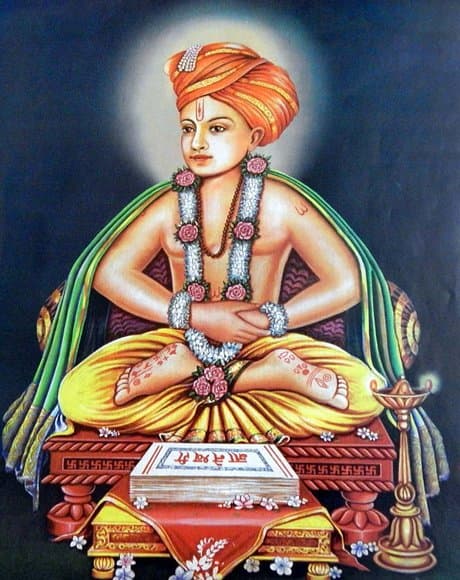
Jñāneśvar · Vārkarī
English23 “Remaining like one unconcerned, (one) who is not perturbed by the Gunas: who, in the sole thought that it is the Gunas that are (at work), abides firm and does not move: (336) So also he considers the totality of the doings of the Gunas as constituting his own self and does not therefore bring about any separation (from them). With such full realization, he lives in the body in the way a traveller lives in some rest-house on his way. The battlefield itself never takes any part either in victory or in defeat; in that way he takes no part either in gains or losses or gets in no way mixed up with the Gunas. He remains as indifferent as the life in the body or as a passing Brahmin (uninvited) guest or as a signpost in a public place. He (man of knowledge) remains unperturbed in his heart at the ingress and egress of the Gunas, just as the Mountain Meru does not totter by the flood of a mirage. Enough of this description. The wind does not make the sky flutter; can the darkness ever devour the Sun? The dream does not deceive one who is wide awake; in that way a man of knowledge is not fettered by the Gunas. He is never caught by the Gunas but as he sees them from a distance, he marks their deeds in the way a spectator in a theatre views indifferently the dancing of the dolls. The Sattva remains engaged in good actions, the Rajas in objects pertaining to Rajas, while the Tamas in actions involved in infatuation, nescience, etc. All these different dealings on the part of the Gunas, know it well, are due to the power of the Supreme Brahman, in the way the world transactions all do take place because of the Sun (he remaining quite neutral). The coming into tide on the part of the sea, the oozing out on the part of the Moon-stone, and getting full-blown on the part of the white (night) lotuses are all because of the Moon, she remaining all inactive. The sky remains calm, even though the winds blow violently and get lulled down in it; in that way he (the one of knowledge) remains unstaggered in spite of the buzzing of the Gunas. Oh Arjuna, these are the marks by which one can recognise a person who has transcended the (three) Gunas. Now hear how he conducts himself.
Swami Ramsukhdas · Modern
English'Udāsīnavadāsīnaḥ'—When two persons fight, he who sides with either is called, partial. He who is just, to both is a mediator, while 'Udāsīna' is he, who sees the two but has an attitude of indifference, towards either of the two. From the view point of a realized soul, who has risen above the three guṇas, there is no existence of the world, except God. He himself has merged in God. So to whom should he be indifferent? Therefore, no question
of his being indifferent, arises. But to common people, he seems indifferent to the world. That state is described as 'Udāsīnavat'.
'Guṇāryo na vicālyate'—The propensities of modes of goodness, passion, and ignorance, appear in his mind but he is not moved, by these. He is unconcerned, as he remains when those propensities come to the minds of others, because he perceives that nothing exists, besides the Lord.
'Guṇā vartanta ityeva yo'vatiṣṭhati'—He remains, fixed in the self, by understanding that it is the modes, which are acting, on the modes (Gītā 3/28).
'Neṅgate'—A person, who rises above the three modes of nature, does not perform any action himself, because in the imperishable pure self, there is no activity.
[In the above-mentioned two verses, the Lord has described the attitude of indifference and untaintedness of the person, who has transcended, the modes of nature.]
Appendix—'Na vicālyate', 'avatiṣṭhati' and 'neṅgate'—in fact these three expressions have the same meaning. But the purpose of giving these three expressions is that the transcendental exalted soul remains fixed (established) in the Self. He neither wavers himself nor can be moved by anyone else.
'To do', 'to be or to occur' and 'is'—there are these three states. If 'to do' is changed into 'to be' and 'to be' is changed into 'is', then ego is totally wiped out. A worldly minded person (not a striver) holds, 'I am doing actions'—'ahaṅkāravimūḍhātmā kartāhamiti manyate' (Gītā 3/27). He, who becomes a doer, has to become an enjoyer also. The striver with the predominance of discrimination, realizes that 'actions are occurring'—'guṇā guṇeṣu vartanta' (Gītā 3/28) viz., 'I do nothing'—'naiva kiñcitkaromiti' (Gītā 5/8). But he who has realized the Self, such an enlightened exalted soul realizes only an entity ('is')—'yo'vatiṣṭhati neṅgate'. That divine entity equally pervades all actions. Actions come to an end but the consciousness remains the same. An exalted
soul, instead of having an eye on actions, has an eye only on the conscious entity ('is').
*Link:—In the next two verses, the Lord answers Arjuna's second question, 'What is his conduct?'*
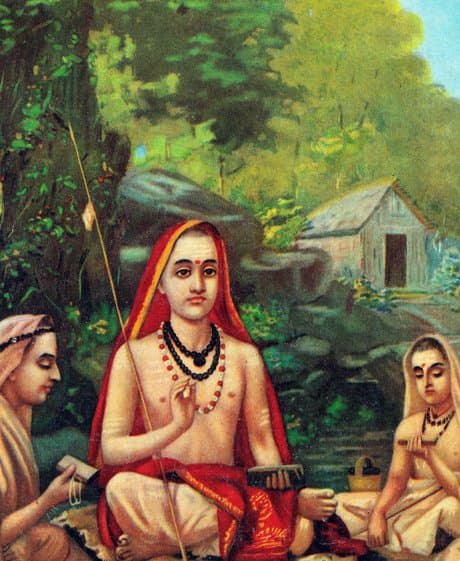
Ādi Śaṅkarācārya · Advaita
Sanskritउदासीनवत् यथा उदासीनः न कस्यचित् पक्षं भजते, तथा अयं गुणातीतत्वोपायमार्गेऽवस्थितः आसीनः आत्मवित् गुणैः यः सन्न्यासी न विचाल्यते विवेकदर्शनावस्थातः । तदेतत् स्फुटीकरोति -- गुणाः कार्यकरणविषयाकारपरिणताः अन्योन्यस्मिन् वर्तन्ते इति यः अवतिष्ठति । छन्दोभङ्गभयात् परस्मैपदप्रयोगः । योऽनुतिष्ठतीति वा पाठान्तरम् । न इङ्गते न चलति, स्वरूपावस्थ एव भवति इत्यर्थः ॥ किञ्च --
Ādi Śaṅkarācārya · Advaita
Hindiअब, गुणातीत पुरुष किस प्रकारके आचरणवाला होता है, इस प्रश्नका उत्तर देते हैं—
उदासीनकी भाँति स्थित हुआ, अर्थात् जैसे उदासीन पुरुष किसीका पक्ष नहीं लेता, उसी भावसे गुणातीत होनेके उपायरूप मार्गमें स्थित हुआ जो आत्मज्ञानी—संन्यासी, गुणोंद्वारा विवेकज्ञानकी स्थितिसे विचलित नहीं किया जा सकता।
इसीको स्पष्ट करते हैं कि कार्य-करण और विषयोंके आकारमें परिणत हुए गुण ही एकमें एक बर्त रहे हैं—जो ऐसा समझकर स्थित रहता है, चलायमान नहीं होता अर्थात् अविचलभावसे स्वरूपमें ही स्थित रहता है। यहाँ छन्दोभङ्ग होनेके भयसे 'आत्मनेपद' (अवतिष्ठते) के स्थानमें 'परस्मैपद' (अवतिष्ठति)-का प्रयोग किया गया है अथवा 'योऽवतिष्ठति' के स्थानमें 'योऽनुतिष्ठति' ऐसा पाठान्तर समझना चाहिये
Jñāneśvar · Vārkarī
Marathiतैसे गुणागुणकार्य हें । आघवेंचि आपण आहे । म्हणौनि एकेका नोहे । तडातोडी ॥ ३३६ ॥ येवढे गा प्रतीती । तो देहा आलासे वस्ती । वाटे जातां गुंती- । माजीं जैसा ॥ ३३७ ॥ तो जिणता ना हरवी । तैसा गुण नव्हे ना करवी । जैसी कां श्रोणवी । संग्रामींची ॥ ३३८ ॥ कां शरीरा{आं}तील प्राणु । घरीं आतिथ्याचा ब्राह्मणु । नाना चोहटांचा स्थाणु । उदासु जैसा ॥ ३३९ ॥ आणि गुणाचा यावाजावा । ढळे चळे ना पांडवा । मृगजळाचा हेलावा । मेरु जैसा ॥ ३४० ॥ हें बहुत कायि बोलिजे । व्योम वारेनि न वचिजे । कां सूर्य ना गिळिजे । अंधकारें ? ॥ ३४१ ॥ स्वप्न कां गा जियापरी । जगतयातें न सिंतरी । गुणीं तैसा अवधारीं । न बंधिजे तो ॥ ३४२ ॥ गुणांसि कीर नातुडे । परी दुरूनि जैं पाहे कोडें । तैं गुणदोष सायिखडें । सभ्यु जैसा ॥ ३४३ ॥ सत्कर्में सात्त्विकीं । रज तें रजोविषयकीं । तम मोहादिकीं । वर्तत असे ॥ ३४४ ॥ परिस तयाचिया गा सत्ता । होती गुणक्रिया समस्ता । हें फुडें जाणे सविता । लौकिका जेवीं ॥ ३४५ ॥ समुद्रचि भरती । सोमकांतचि द्रवती । कुमुदें विकासती । चंद्रु तो उगा ॥ ३४६ ॥ कां वाराचि वाजे विझे । गगनें निश्चळ असिजे । तैसा गुणाचिये गजबजे । डोलेना जो ॥ ३४७ ॥ अर्जुना येणें लक्षणें । तो गुणातीतु जाणणें । परिस आतां आचरणें । तयाचीं जीं ॥ ३४८ ॥
Jñāneśvar · Vārkarī
Hindi(14.337) उसी प्रकार, सब गुणागुणों का कार्य स्वयं आप ही होने के कारण उसे किसी एक वस्तु की जुदाई नहीं मालूम होती।
(14.338) ऐसे अनुभव के साथ वह देह में इस प्रकार रहता है, जैसे कोई मार्ग से चलता हुआ बटोही किसी प्रतिबन्ध के कारण बीच में ठहर गया है। (14.339) रणभूमि के समान उसकी न जीत होती है और न हार, वैसे ही वह न गुणों के वश होता और न उनसे कर्म करवाता है।
(14.340) अथवा वह ऐसा उदासीन रहता है जैसे शरीर में रहनेवाला प्राण, या घर आया हुआ ब्राह्मण-अतिथि, या चौरस्ते का खम्भा।
(14.341) हे पाण्डव! मृगजल के आन्दोलन से जैसे मेरु पर्वत नहीं डिगता वैसे ही वह गुणों के आवागमन से नहीं हिलता-डुलता।
(14.342) बहुत कहाँ तक कहें, आकाश जैसे वायु से नहीं हिलता, सूर्य जैसे अन्धकार से नहीं लीला जाता,
(14.343) अथवा जागते हुए मनुष्य को जैसे स्वप्न का भ्रम नहीं होता, वैसे ही उस पुरुष को गुण नहीं बाँध सकते।
(14.344) वह निश्चय से गुणों के वश नहीं होता परन्तु उन्हें दूर से कुतूहल के साथ देखता है, मानों वे पुतलियाँ हों और आप खेल देखने-बाला प्रेक्षक
(14.345) वह सत्कर्म के द्वारा सात्विक गुणों में, रजो-विषयक कर्मों के द्वारा रजोगुण में, और तम-मोहादिक विषयों में व्यवहार करता है। (14.346) परन्तु सूर्य जैसे लौकिक व्यवहारों का साक्षी है वैसे ही वह निश्चय से जानता है कि ये गुणों की क्रियाएँ उसी की सत्ता से होती हैं।
(14.347) समुद्र में ज्वार-भाटा होता है, सोमकान्त मणि पसीजती है, चन्द्र-विकासी कमल खिलते हैं, परन्तु चन्द्र जैसे कुछ नहीं करता,
(14.348) अथवा आकाश में वायु चलती और बन्द होती है, परन्तु आकाश जैसे निश्चल रहता है, वैसे हो जो गुणों की गड़बड़ से नहीं डिगता
(14.349) उस पुरुष का, हे अर्जुन! उपर्युक्त लक्षणों के कारण गुणातीत समझना चाहिए। अब वह पुरुष जो आचरण करता है सो सुनो।
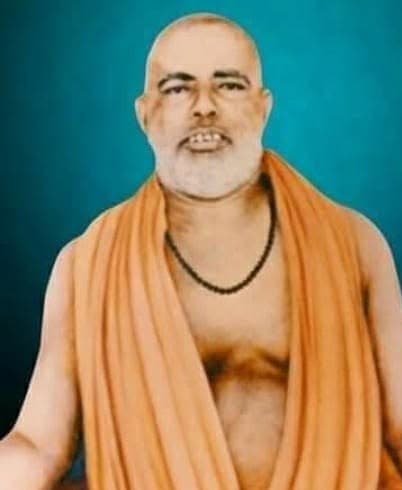
Sri Udiya Baba · Modern
Hindiसंगति— अब चार श्लोकों में गुणातीत के आचरण बतलाते हैं—
भावार्थ— जो उदासीन (निष्पक्ष व्यक्ति) की तरह रहता हुआ गुणों के द्वारा चलायमान नहीं होता तथा गुण ही गुणों में वर्त रहे हैं—इस प्रकार वर्तता हुआ जो किसी प्रकार की चेष्टा नहीं करता [वह गुणातीत है।]
व्याख्या— गुणातीत उदासीन की तरह स्थित रहता है। यदि दो व्यक्तियों में कोई विवाद उपस्थित हो तो वह किसी को बुरा नहीं कहता। तटस्थ होकर साक्षीरूप से देखता रहता है। जैसे नदी के तल में कोई बड़ी शिला पड़ी हो तो उसके ऊपर होकर कितने ही जल, बुदबुद और फेन आदि चले जायें उस पर उनका कोई प्रभाव नहीं होता, उसी प्रकार बोध होने पर किसी भी प्रकार प्रवृत्ति उसे बोधनिष्ठा से विचलित नहीं कर सकती। इस श्लोक से यह भी निश्चय होता है कि गुणातीत में भी रहते तो हैं, परन्तु वह बोधवान् को उसकी निष्ठा से विचलित नहीं कर सकते। यदि गुण रहते ही नहीं तो गुणातीत के लक्षण भी क्या कहे जाते। अतः यह निश्चय हुआ कि तत्त्ववेत्ता प्रवृत्ति और निवृत्तिसे चलायमान नहीं होता। वह जैसे निर्विकल्प समाधि को देखता है वैसे ही विशेष में भी रहता है। वह तीनों गुणों से क्या, क्रियामात्र से ही उदासीन रहता है, क्योंकि वे सब देह-धर्म हैं, इनका आत्मा से तो कोई सम्बन्ध है नहीं। वह दुःखों में उद्विग्न नहीं होता और सुखों की इच्छा नहीं करता। इन्हें इस प्रकार देखता है मानों किसी अन्य के शरीर में हों अथवा वह जो कुछ देखता है सबको मायामात्र समझता है, जैसा कि योगवासिष्ठ में कहा है—‘ये केचन जगद्भावा विद्धि मायां मनोमयीम्’ अर्थात् जगत् के जितने भी पदार्थ हैं उन्हें मनःकल्पित माया ही मानो।
इस श्लोक में यह बतलाया है कि ठीक-ठीक विवेक होने से ही साधक गुणातीत हो जाता है। इसके लिये समाधि की आवश्यकता नहीं है। यहाँ निष्काम कर्म या उपासना द्वारा अभिमत क्रममुक्ति की भी चर्चा नहीं है। केवल विचार द्वारा ही ज्ञान की प्राप्ति बतलायी है।
Swami Ramsukhdas · Modern
Hindi‘उदासीनवदासीनः’—दो व्यक्ति परस्पर विवाद करते हों, तो उन दोनोंमेंसे किसी एकका पक्ष लेनेवाला ‘पक्षपाती’ कहलाता है और दोनोंका न्याय करनेवाला ‘मध्यस्थ’ कहलाता है। परन्तु जो उन दोनोंको देखता तो है, पर न तो किसीका पक्ष लेता है और न किसीसे कुछ कहता ही है, वह ‘उदासीन’ कहलाता है। ऐसे ही संसार और परमात्मा—दोनोंको देखनेसे गुणातीत मनुष्य उदासीनकी तरह दीखता है।
वास्तवमें देखा जाय तो संसारकी स्वतन्त्र सत्ता है ही नहीं। सत्-स्वरूप परमात्माकी सत्तासे ही संसार सत्तावाला दीख रहा है। अतः जब गुणातीत मनुष्यकी दृष्टिमें संसारकी सत्ता है ही नहीं, केवल एक परमात्माकी सत्ता ही है, तो फिर वह उदासीन किससे हो? परन्तु जिनकी दृष्टिमें संसार और परमात्माकी सत्ता है, ऐसे लोगोंकी दृष्टिमें वह गुणातीत मनुष्य उदासीनकी तरह दीखता है।
**‘गुणैर्यो न विचाल्यते’**—उसके कहलानेवाले अन्तःकरणमें सत्त्व, रज, और तम—इन गुणोंकी वृत्तियाँ तो आती हैं, पर वह इनसे विचलित नहीं होता। तात्पर्य है कि जैसे अपने सिवाय दूसरोंके अन्तःकरणमें गुणोंकी वृत्तियाँ आनेपर अपनेमें कुछ भी फरक नहीं पड़ता, ऐसे
ही उसके कहलानेवाले अन्तःकरणमें गुणोंकी वृत्तियाँ आनेपर उसमें कुछ भी फरक नहीं पड़ता अर्थात् वह उन वृत्तियोंके द्वारा विचलित नहीं किया जा सकता। कारण कि उसके कहे जानेवाले अन्तःकरणमें अन्तःकरणसहित सम्पूर्ण संसारका अत्यन्त अभाव एवं परमात्मतत्त्वका भाव निरन्तर स्वतः-स्वाभाविक जाग्रत् रहता है।
**‘गुणा वर्तन्त इत्येव योऽवतिष्ठति’**—गुण ही गुणोंमें बरत रहे हैं (गीता—तीसरे अध्यायका अङ्गाईसवाँ श्लोक) अर्थात् गुणोंमें ही सम्पूर्ण क्रियाएँ हो रही हैं—ऐसा समझकर वह अपने स्वरूपमें निर्विकाररूपसे स्थित रहता है।
**‘न इङ्गते’**—पहले ‘गुणा वर्तन्त इत्येव’ पदोंसे उसका गुणोंके साथ सम्बन्धका निषेध किया, अब ‘न इङ्गते’ पदोंसे उसमें क्रियाओंका अभाव बताते हैं। तात्पर्य है कि गुणातीत पुरुष खुद कुछ भी चेष्टा नहीं करता। कारण कि अविनाशी शुद्ध स्वरूपमें कभी कोई क्रिया होती ही नहीं।
[बाईसवें और तेईसवें—इन दो श्लोकोंमें भगवान्ने गुणातीत महापुरुषकी तटस्थता, निलिप्तताका वर्णन किया है।]
**परिशिष्ट भाव—‘न विचाल्यते’, ‘अवतिष्ठति’ और ‘नेङ्गते’**—ये तीनों पद वास्तवमें एक ही अर्थ रखते हैं। फिर भी ये तीनों पद देनेका तात्पर्य है कि गुणातीत महापुरुष स्वतः-स्वाभाविक अचल (स्थिरतामें) रहता है। वह न तो स्वयं विचलित होता है और न किसीसे विचलित किया जा सकता है।
‘करना’, ‘होना’ और ‘है’—ये तीन विभाग हैं। ‘करना’ होनेमें और ‘होना’ ‘है’ में बदल जाय तो अहंकार सर्वथा नष्ट हो जाता है। जिसके अन्तःकरणमें क्रिया और पदार्थका महत्त्व है, ऐसा असाधक (संसारी मनुष्य) मानता है कि ‘मैं क्रिया कर रहा हूँ’—**‘अहंकारविमूढात्मा कर्ताहिमिति मन्यते’** (गीता ३।२७)। जो कर्ता बनता है, उसको भोक्ता बनना ही पड़ता है। जिसमें विवेककी प्रधानता है, ऐसा साधक अनुभव करता है कि ‘क्रिया हो रही है’—**‘गुणा गुणेषु वर्तन्ते’** (गीता ३।२८) अर्थात् ‘मैं कुछ भी नहीं करता हूँ’—**‘नैव किंचित्करोमीति’** (गीता ५।८)। परन्तु जिसको तत्त्वज्ञान हो गया है, ऐसा सिद्ध महापुरुष केवल सत्ता तथा ज्ञप्तिमात्र (‘है’) का ही अनुभव करता है—**‘योऽवतिष्ठति नेङ्गते’**। वह चिन्मय सत्ता सम्पूर्ण क्रियाओंमें ज्यों-की-त्यों परिपूर्ण है। क्रियाओंका तो अन्त हो जाता है, पर चिन्मय सत्ता
ज्यों-की-त्यों रहती है। महापुरुषकी दृष्टि क्रियाओंपर न रहकर स्वतः एकमात्र चिन्मय सत्ता ('है') पर ही रहती है।
सम्बन्ध—इक्कीसवें श्लोकमें अर्जुनने दूसरे प्रश्नके रूपमें गुणातीत मनुष्यके आचरण पूछे थे। उसका उत्तर अब आगेके दो श्लोकोंमें देते हैं।
The word prakāśa means illumination, lucidity, the brightness of disposition and are the effects of sattva guṇa or the mode of goodness.
The word pravṛtti means enthusiastic effort or the disposition to endeavour actively and are the effects of raja guṇa the mode of passion.
The word moha means delusion, bewilderment or having a distorted perception.
All things external to the ātma or immortal soul are of two categories: One is what causes attraction and the second is what causes aversion.
The fundamental symptom of discerning who is beyond the three guṇas or modes of material nature is that such a being neither desire to accept anything nor does such a one desire to reject anything.
Whatever the Supreme Lord Krishna designates to come, such a one remains equipoise in all situations.
Such a one is udāsīnavad or unconcerned with external circumstances because of being enraptured within by ātma tattva or realisation of the immortal soul. Therefore one is naturally indifferent to anything external.
One who is never agitated by attraction and aversion which arise from the three guṇas and who lucid and tranquil reflects within that it is natural for the impulses of the three guṇas to occasionally parade themselves in one's consciousness, is never deluded by them into being impelled to act as the qualities might provoke one to respond.
The word sama means equanimity or keeping oneself equipoise in both joy and distress.
The word svasthaḥ means solidly situated, established firmly within on the immortal ātma, filled with rapture and bliss by its communion.
Such a one is never even distracted by external things let alone influenced by them. Even when exposed to great events of joy or catastrophic events of grief, such a one is undisturbed and does not succumb to delusion or illusion.
To such a one a clod of earth or a precious jewel or a nugget of gold all are looked upon alike as merely modifications of prakṛti. So there is nothing in material existence which such a one has any special attraction or aversion towards.
The word dhīraḥ means sober and denotes the wisdom of one who is knowledgeable of the distinction between prakṛti or the material substratum pervading physical existence and the eternal ātma or immortal soul.
Hence such a one remains equanimous in both praise and censure.
It is the desire for praise and adulation that shows the consequence of egotism which abides in the mind and is erroneously mistaken for the ātma and deludes one into thinking that it is a great honour to be praised.
Similarly aversion to being ridiculed and censured is also the consequence of same egotism which makes one think it is ignoble and shameful to receive such infamy.
But both conceptions are the results of delusion and one who is established in ātma tattva or realisation of the immortal soul is never implicated in illusion
as such a being is unlimited in consciousness knowing that all material designations are all transcended by communion with the ātma.
In the same way that egotism is alienated from the ātma what pertains to egotism such as honour and disgrace, friends and enemies, praise and censure does not affect the ātma.
One who is illuminated by ātma tattva is unconcerned and indifferent to worldly matters.
Similarly, since such a one comprehends that all efforts of activity are the cause and perpetuation of physical embodiment, such a one abandons all efforts not related to the ātma.
Such a person is known to be a conqueror of the three guṇas.
Next the primary means to overcome them will be given.