

Bhagavad Gītā · Chapter 15 · Puruṣottama Yoga
निर्मानमोहा जितसङ्गदोषा अध्यात्मनित्या विनिवृत्तकामाः
द्वन्द्वैर्विमुक्ताः सुखदुःखसंज्ञै र्गच्छन्त्यमूढाः पदमव्ययं तत्
nirmānamohā jitasaṅgadoṣā adhyātmanityā vinivṛttakāmāḥ|dvandvairvimuktāḥ sukhaduḥkhasaṃjñai rgacchantyamūḍhāḥ padamavyayaṃ tat||
Word meanings
निर्मानमोहाः = free from pride and delusion
विनिवृत्तकामाः = whose desires have ceased entirely
जितसङ्गदोषाः = who have conquered the faults of attachment
सुखदुःखसञ्ज्ञैः = known by the names pleasure and pain
अध्यात्मनित्याः = ever fixed on the Self
द्वन्द्वैः = from the pairs of opposites
विमुक्ताः = freed
अमूढाः = undeluded (sages)
तत् = that
अव्ययम् = imperishable
पदम् = the (supreme) state
गच्छन्ति = attain
Translation
Those wise men who are free from pride and delusion, who have conquered the evil of attachment, who are in eternal union with God, whose cravings have altogether ceased and who are completely immune from all pairs of oposites going by the names of pleasure and pain, reach that supreme immortal state.
Commentary
The commentators seated around this verse
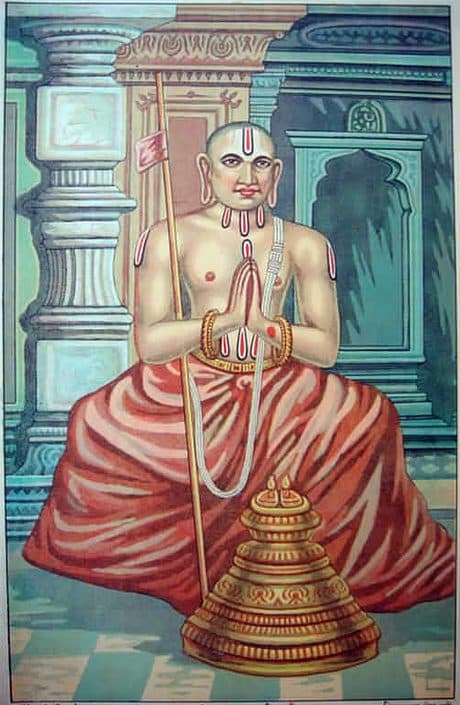
Rāmānuja · Viśiṣṭādvaita
English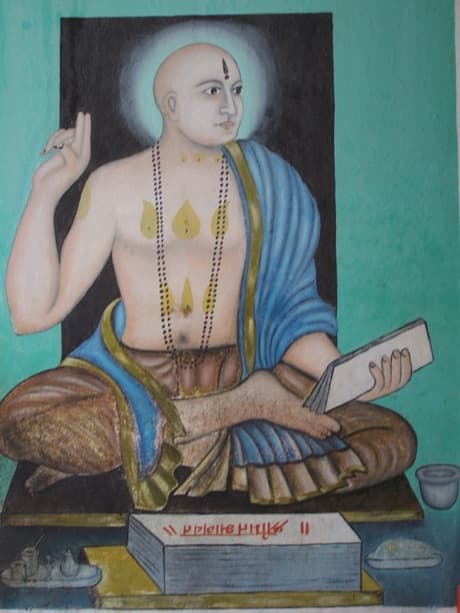
Madhvācārya · Dvaita
Madhva BhāṣyaSanskritEnglishOn verses 15.5–15.7
“साधनान्तरमाह – निर्मान इति । स्वरूपं कथयति – न तद् इत्यादिना ॥” - In this verse Sri Krishna tells other means of spiritual discipline. He explains His divine form.
Madhvācārya · Dvaita
Gītā Tātparya NirṇayaSanskritEnglishOn verses 15.5–15.7
“किञ्चित्सादृश्यमात्रेण भिन्नोऽप्यंश इवोच्यते । ईश्वरस्तु यदा त्वस्य शरीरं विशति प्रभुः । मनः षष्टानीन्द्रियाणि प्रकृतिस्थानि कर्षति ॥” - Due to slight similarity, even though distinct, the Jivas are spoken as partial manifestations. The Lord, verily, when enveloping his body energizes the six senses including the Mind to the objects of the Prakriti. The statement that it attracts towards sound etc. may give rise to the assumption that the Jiva is independent.
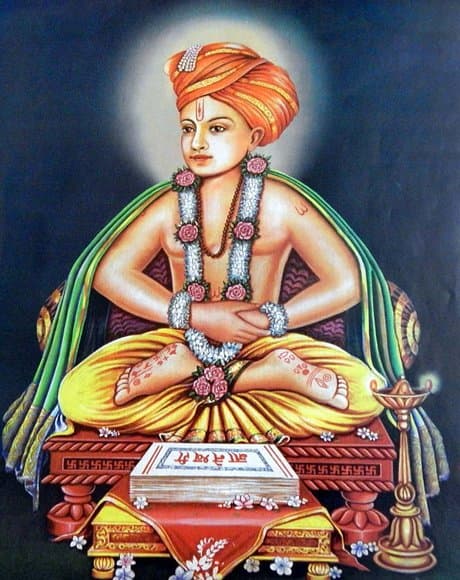
Jñāneśvar · Vārkarī
English5 “Rid of (all) arrogance and infatuation—having conquered the foible of attachment—incessantly absorbed in the Self—with the passions driven backwards—released of (all) dualisms known as ‘pleasure-pain’ (and the like)—they, the unbewildered, attain that Place Immutable.” (285)
Only those whose minds have dropped all sense of dignity and infatuation, in the way clouds clear out from the sky at the close of the monsoon; or those that never get into the clutches of emotions and passions that surround them in the way kinsmen discard poverty-stricken and cruel ones getting sick of them; or those whose activism has gradually dropped down on account of their powerful attainment of the Supreme Self in the way a plantain tree topples down after bearing fruit; or those whom all fancies and ideas have left altogether in the way the birds leave off and fly away from a tree on fire; or those in whose mind is not left even an iota of that distinction on the soil of which grass in the form of weak points and shortcomings sprout out vigorously; or those from whom conceit for the body as also ignorance have run away like darkness from the Sun; or those whom the duality full of ignorance has altogether deserted in the way the body of a being suddenly drops down with the expiry of the life-period; or those with whom there is a perpetual famine of dualism in the way there is (famine) of iron in relation to ‘Paris’ (परिस), or of darkness with the Sun; or those, before whom do not stand, even for a moment, the pairs of opposites such as pleasure and pain (and others) that are always perceived in the human body; or those that are not attacked by pairs of opposites like pleasure and pain and others in the way securing a kingdom or meeting death, both seen in a dream, do not with the return of the awakened state cause any delight or sorrow; or those swans in the form of contemplative men that have taken in the milk of the Bliss of the Supreme Self separating (and discarding) water in the form of things not spiritual; or those that have with the vision of knowledge brought together and consolidated into an undivided solid mass the Supreme Self, which out of Nescience, appears to have been scattered in a dozen (myriad) different directions, in the way the Sun showers down rain (water) on the earth and through his rays gets it back again to his own disc (by the process of evaporation); or those whom right thinking immerses into the determination of the Self, in the way the flow of the Ganges does into the sea; or those in whom there remains no greed for anything, being able to perceive that they themselves are all in all, (fully perfect) in the way the sky does not need shifting to any yonder place, (the very idea of yonder, here, there etc. being impossible); or those in whose mind never arise any ill-feelings in the way there cannot sprout out any seedlings on a volcano; or those whose minds are never agitated with passions or any other sort of feelings, in the way the ocean of milk remains calm and steady, once the churning rod in the form of mountain Mandar is taken from it; or those in whom can be traced no shortcomings in the form of desires in the way no imperfection can be traced in the full Moon complete in all (her) 16 phases. But to what length one may carry this incomparable subject? In short, before such (people) the objects of senses cannot take a stand, in the way small particles cannot take a stand before (violent) wind. Those that get purified, with the alloy (in them) burnt up in the fire of knowledge, get merged in 'there' (Supreme Self) in the way pure gold is mingled with pure gold. Now were you to ask what place the term 'there' (used above) represents, know it then that 'there' means that which is 'Immutable'; that which is neither an object of vision nor an object of knowledge, nor yet anything that can be particularised.
Swami Ramsukhdas · Modern
English'Nirmānamohā'—When a person, has a sense of 'I' and 'mine' in the body, he has a desire to win, honour (respect) etc. He, by identifying the self, with a body, regards the honour of the body, as honour of the self, and he gets entangled. But those devotees, who regard only God, as theirs, have no sense of egoism and possession in the body, and so they do not get pleased, by honour (respect), of the body. Having taken refuge only in God, they are not attached to a body and so they have no desire, for honour (respect).
Having only the aim of God-realization and by depending on God only, those devotees, develop a disinclination, for the world. They become detached, from the world. So, they become free from worldly delusion.
'Jitasaṅgadoṣā'—Attraction towards God, is called devotion (love), and attraction towards the world, is called attachment. It is because of attachment, that evils such as a sense of possession, desire, lust and hope etc., arise. It is by taking refuge in God, that a striver gets victory over, all these evils.
A man, can be attached to both the objects acquired, as well unacquired. But, there is desire, only for unacquired ones. So the expression 'Vinivṛttakāmāḥ' (desires completely stilled), has been used separately.
'Adhyātmanityāḥ'—When a devotee, takes refuge in God, his egoism changes.* He believes that he is God's and not of
* Though all beings constantly dwell in the omnipresent Lord who is
the world. Thus, he constantly dwells in Him. As a person, according to his birth, accepts that he is a Brāhmaṇa or Vaiśya and he always remains, assured of it, even without, remembering it, so, do the devotees, who accept their affinity, for God, always dwell in Him.
**Vinivṛttakāmaḥ**—A man, desires mundane objects and favourable circumstances, only when he aims at mundane pleasure and prosperity. But those devotees, whose aim, is not to acquire mundane objects, become totally free, from desires.
It is sense of mineness in the body, which gives birth to desires. When a man is thus attached to a body, he wants it to be healthy and strong. So is the case with, other mundane objects and riches etc. As a devotee, is not attached to a body and the world, all his desires are stilled. He thinks that his so-called body, senses, mind, intellect and egoism (Tness), are only God's, and only God is his. The desires of such a devotee, are totally silenced.
An Important Fact
In fact, this body is constantly decaying (perishing). A striver, has to accept this reality, in a practical way. All desires are born of having contact with perishable objects, such as body etc. One day this process of decay, will be over, and then it will be said, that the body has decayed (died). But actually, the body has not died today. The process of constant decay has completed today. Therefore, in order to be free from desires, a striver should realize this fact, that mundane objects, such as the body etc., are not, his, because these are transient while he (the self) is permanent and eternal.
the illuminator of the entire creation yet they by an error assume that they dwell in the world as 'I belong to a particular caste or creed or sect etc.' It is because of this contrary assumption (belief) that they are bound and are born in good and evil wombs.
In fact, desires are never satisfied. When a desire seems to be satisfied, another one appears, and so a person tries to satisfy that one. The more, they are satisfied, the more they arise. All persons and objects of the world cannot satisfy desires, of even a single person, so if a person desires limited objects of the world, in order to derive pleasure out of them, it is an error on his part one who entertains desires, cannot attain peace (Gītā 2/70). Therefore, renouncement of desires, is a means of attaining, supreme peace. So a striver, should renounce desires, instead of trying to satisfy them.
The belief, that mundane objects, provide pleasure, gives birth, to desire. The keener the desire, to acquire an object, the greater the pleasure, a person derives out of that object. But, the fact is, that it is not the object which provides pleasure, as it is renouncement of attachment of that object, which gives pleasure. This renouncement occurs, when he acquires, the object. If he renounces the desire to acquire the object he cannot feel happy on getting the object or sad on not getting that object.
In fact, mundane objects have no independent existence, as they are perishing all the time. So how the desire for such transitory objects can remain lasting? Thus all strivers, can be freed from desires.
**'Dvandvairvīmuktāḥ sukhaduḥkhasañjñaiḥ'**—Devotees are liberated from contrary experiences, known as pleasure and pain, attachment and aversion, because according to them, all the favourable and unfavourable circumstances, are regarded as God's gift, presented to them, by Him. They have an eye on God's grace, rather than on desirable or undesirable circumstances. So they are easily liberated from the pairs of opposites.
God is a disinterested friend, of all beings (Gītā 5/29). So He never think, of evil of His fragment, the soul (self). Whatever, He does, is only for the welfare, of beings. So devotees, ever remain pleased, with His will. Though their senses, mind and
intellect, know of desirable and the undesirable circumstances, yet they themselves, are free from the pairs of opposites.
An Important Fact
This contrary experience (of attachment and aversion etc.,) is the root of sins. In order, to renounce such experience a striver, should not attach importance to perishable objects. This opposite feeling is of two kinds—
(1) Gross (practical) contrary experience between pleasure and pain, a agreeable and disagreeable etc. Beings, including men, birds, beasts and even trees etc., desire the agreeable and have an aversion for the disagreeable.
(2) Subtle (Spiritual) opposite feelings. It is essential and useful, to regard one's own way of adoration, and one's own favourite Deity, as supreme. But the sentiment in which a striver, honours and praises his method of worship, and his favourite deity, regarding them as superior, to the worship and deity of others whom he discredits and blames, by considering them, inferior, is harmful for a striver.
In fact, all spiritual practices, aim at a total renouncement of affinity, for the world. Spiritual practices (disciplines), may differ according to tastes, faiths, beliefs and qualifications of each devotee but their aim is the same. So a striver, instead of having an eye on, the difference of spiritual practices, should have an eye on the aim and be devoted to his spiritual practice. By doing so his subtle opposite feeling comes to an end.
In the *Gītā*, the gross is called 'Mohakalīlam' (mire of delusion) (2/52) while subtle is called 'Śrutivipratipannā' (bewildered by the Vedic text)* (2/53). So long as a striver, is
* Śrutivipratipannā means that the person remains in a dilemma and cannot take the decision which of the paths as mentioned in the scriptures of knowledge, of action, of devotion, of dualism, of non-dualism, of pure non-dualism, of dualism-non-dualism, of action for reward or action without
attached to the world or attaches importance, to the world, this opposite experience exists. So it is necessary to root out this.
So long as, there is delusion, contrary experiences exist? He who perceives pair of opposites in the self is deluded. This contrary experience of attachment and aversion, pleasure and pain, happiness and sadness etc., abides in the mind rather than in the self. The mind is insentient, while the self is sentient and is an illuminator of the insentient. Therefore, the self has no affinity for the mind, this affinity is merely assumed.
Everybody knows, that he remains the same, in the pairs of opposites, such as pleasure and pain etc. But out of delusion, by identifying the self with these, he becomes happy and sad. If he remains established in the self, whichever remains, the same without assuming that the pairs of opposites (such as pleasure and pain) are in him, he will be liberated from the duality of pleasure and pain etc.
The Lord, has pointed out an easy way, to be liberated from the dualities of attachment and aversion etc., by declaring 'Attachment and aversion of man abide in sense objects through the feeling of pleasantness and unpleasantness; let, none come under their sway' (Gītā 3/34). It means, that a striver, should not act by coming under their sway, because they are strengthened by doing so.
'Gacchantyamūdhāḥ padamavyayam tat'—He, who desires perishable objects, who makes efforts to acquire them, and feels happy or sad by acquiring them, or without acquiring them, is deluded. In fact, the world is kaleidoscopic while God is eternal, and it is because of His existence that the world, seems to exist. He, who accepts the existence of the world, is deluded.
As a deluded person, perceives the world clearly, so does
reward is better. Similarly he cannot decide which of the deities—Lord Viṣṇu, Lord Rāma, Lord Kṛṣṇa, Lord Śiva, Lord Gaṇeśa or Goddess Durgā should be worshipped.
an undeluded great soul, perceive God clearly. He, who accepts the existence of the world, is deluded, while he who accepts it as kaleidoscopic, is undeluded. The undeluded one, is not affected by pleasure and pain, and he, who remains the same, in pleasure and pain is fit, for attaining Immortality (Gītā 2/15). Therefore, here in this verse, the Lord has laid emphasis two times, on the renouncement of delusion, by using the expression 'Nirmānamohāh', and also the term Amūḍhāh'.
Delusion can be of two kinds—(1) inclination to the world, rather than to God, (2) not to know the reality about God. In this verse, the expression 'Nirmānamohāh' stands for, freedom from delusion of the world, while the term 'Amūḍhāh'* stands for true knowledge about God.
God, Who has been mentioned by the expression 'Ūrdhvamūlam' (root above), in the first verse, Who has been called, the Supreme Goal, which should be sought in the fourth verse, and Who has been glorified in the sixth verse, the same supreme abode has been called here, 'Avyayam padam' (the Eternal Goal). Strivers who have become totally free from evils, such as honour, delusion and attachment etc., attain the Eternal Goal, from where, there is no return.
In fact, Eternal Goal, is naturally ever-attained by every human being but a man does not realize this fact as he has turned his eye away from that Goal (God). This can be explained by an illustration. When our train stops at a station, an other train suddenly starts moving, our eye being on the moving train we feel as if our train has started moving. But we come to know the reality, when we look out at the station. Similarly, when a person is attached to the world, he finds himself moving (kaleidoscopic). But, when he looks at the self, he realizes that he (the self), is
* As the devotee who knows attributeless God becomes undeluded (5/20) so does the devotee who worships the Lord endowed with attributes and form also becomes undeluded (10/3;15/19).
the same (uniform), it is not kaleidoscopic.
**Appendix**—Within Jñānayoga and Karmayoga, devotion is not included but within devotion both Jñānayoga and Karmayoga are included (Gītā 10/10-11). So here the term 'adhyātmanityāḥ' may mean 'Jñānayoga' and the term 'vinivṛttakāmāḥ' may mean 'Karmayoga'.
*Link:—The Lord in the next verse, describes the characteristics of the Eternal Goal (Abode) referred Which is attained by the devotees in the preceding verse.*
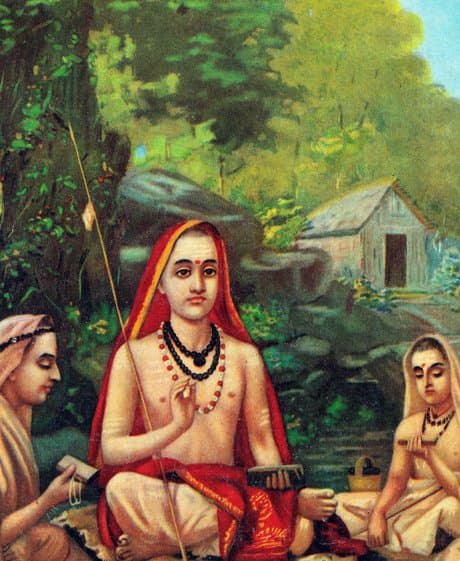
Ādi Śaṅkarācārya · Advaita
Sanskritनिर्मानमोहाः मानश्च मोहश्च मानमोहौ, तौ निर्गतौ येभ्यः ते निर्मानमोहाः मानमोहवर्जिताः । जितसङ्गदोषाः सङ्ग एव दोषः सङ्गदोषः, जितः सङ्गदोषः यैः ते जितसङ्गदोषाः । अध्यात्मनित्याः परमात्मस्वरूपालोचननित्याः तत्पराः । विनिवृत्तकामाः विशेषतो निर्लेपेन निवृत्ताः कामाः येषां ते विनिवृत्तकामाः यतयः सन्न्यासिनः द्वन्द्वैः प्रियाप्रियादिभिः विमुक्ताः सुखदुःखसंज्ञैः परित्यक्ताः गच्छन्ति अमूढाः मोहवर्जिताः पदं अव्ययं तत् यथोक्तम् ॥ तदेव पदं पुनः विशेष्यते --
Ādi Śaṅkarācārya · Advaita
Hindiउस परमपदको कैसे पुरुष प्राप्त करते हैं? सो कहते हैं—
जो मान-मोहसे मुक्त हैं—जिनका अभिमान और अज्ञान नष्ट हो गया है, ऐसे जो मान-मोहसे रहित हैं, जो जितसङ्गदोष हैं—जिन्होंने आसक्तिरूप दोषको जीत लिया है, जो नित्य अध्यात्मविचारमें लगे हुए हैं—सदा परमात्माके स्वरूपकी आलोचना करनेमें तत्पर हैं, जो कामनासे रहित हैं—जिनकी समस्त कामनाएँ निर्लेपभावसे (मूलसहित) निवृत्त हो गयी हैं, ऐसे यति—संन्यासी जो कि सुख-दुःख नामक प्रिय और अप्रिय आदि द्वन्द्वोंसे छूटे हुए हैं, वे मोहरहित ज्ञानी, उस उपर्युक्त अविनाशी पदको पाते हैं
Jñāneśvar · Vārkarī
Marathiजया पुरुषांचें कां मन । सांडोनि गेलें मोह मान । वर्षांतीं जैसें घन । आकाशातें ॥ २८५ ॥ निकवड्या निष्ठुरा । उबगिजे जेवीं सोयरा । तैसें नागवती विकारां । वेटाळूं जे ॥ २८६ ॥ फळली केळी उन्मूळे । तैसी आत्मलाभें प्रबळे । तयाची क्रिया ढाळेंढाळें । गळती आहे ॥ २८७ ॥ आगी लगलिया रुखीं । देखोनि सैरा पळती पक्षी । तैसें सांडिलें अशेखीं । विकल्पीं जे ॥ २८८ ॥ आइकें सकळ दोषतृणीं । अंकुरिजती जिये मेदिनी । तिये भेदबुद्धीची काहाणी । नाहीं जयातें ॥ २८९ ॥ सूर्योदयासरिसी । रात्री पळोनि जाय अपैसी । गेली देहाहंता तैसी । अविद्येसवें ॥ २९० ॥ पैं आयुष्यहीना जीवातें । शरीर सांडी जेवीं अवचितें । तेवीं निदसुरें द्वैतें । सांडिले जे ॥ २९१ ॥ लोहाचें साम्कडें परिसा । न जोडे अंधारु रवि जैसा । द्वैतबुद्धीचा तैसा । सदा दुकाळ जया ॥ २९२ ॥ अगा सुखदुःखाकारें । द्वंद्वें देहीं जियें गोचरें । तियें जयां कां समोरें । होतीचिना ॥ २९३ ॥ स्वप्नींचें राज्य कां मरण । नोहे हर्षशोकांसि कारण । उपवढलिया जाण । जियापरी ॥ २९४ ॥ तैसेम् सुखदुःखरूपीं । द्वंद्वीं जे पुण्यपापीं । न घेपिजती सर्पीं । गरुड जैसें ॥ २९५ ॥ आणि अनात्मवर्गनीर । सांडूनि आत्मरसाचें क्षीर । चरताति जे सविचार । राजहंसु ॥ २९६ ॥ जैसा वर्षोनि भूतळीं । आपला रसु अंशुमाळी । मागौता आणी रश्मिजाळीं । बिंबासीचि ॥ २९७ ॥ तैसें आत्मभ्रांतीसाठीं । वस्तु विखुरली बारावाटीं । ते एकवटिती ज्ञानदृष्टी । अखंड जे ॥ २९८ ॥ किंबहुना आत्मयाचा । निर्धारीं विवेकु जयांचा । बुडाला वोघु गंगेचा । सिंधूमाजीं जैसा ॥ २९९ ॥ पैं आघवेंचि आपुलेंपणें । नुरेचि जया अभिलाषणें । जैसें येथूनि पऱ्हां जाणें । आकाशा नाहीं ॥ ३०० ॥ जैसा अग्नीचा डोंगरु । नेघे कोणी बीज अंकुरु । तैसा मनीं जयां विकारु । उदैजेना ॥ ३०१ ॥ जैसा काढिलिया मंदराचळु । राहे क्षीराब्धि निश्चळु । तैसा नुठी जयां सळु । कामोर्मीचा ॥ ३०२ ॥ चंद्रमा कळीं धाला । न दिसे कोणें आंगी वोसावला । तेवीं अपेक्षेचा अवखळा । न पडे जयां ॥ ३०३ ॥ हें किती बोलूं असांगडें । जेवीं परमाणु नुरे वायूपुढें । तैसें विषयांचें नावडे । नांवचि जयां ॥ ३०४ ॥ एवं जे जे कोणी ऐसे । केले ज्ञानाग्नि हुताशें । ते तेथ मिळती जैसें । हेमीं हेम ॥ ३०५ ॥ तेथ म्हणिजे कवणें ठाईं । ऐसेंही पुससी कांहीं । तरी तें पद गा नाहीं । वेंचु जया ॥ ३०६ ॥ दृश्यपणें देखिजे । कां ज्ञेयत्वें जाणिजे । अमुकें ऐसें म्हणिजे । तें जें नव्हे ॥ ३०७ ॥
Jñāneśvar · Vārkarī
Hindi(15.285) वर्षा के अन्त में जैसे मेघ आकाश का त्याग कर चले जाते हैं, वैसे ही जिन पुरुषों के मनों ने मोह और मान को छोड़ दिया है, या
(15.286) जो पुरुष विकारों के पंजे में वैसे ही नहीं फँसते, जैसे कि दरिद्री मनुष्य ने नातेदार उसका तिरस्कार करते हैं,
(15.287) केले का वृक्ष फलते ही जैसे उसकी बाढ़ समाप्त हो जाती है, वैसे ही जिनकी क्रिया आत्मस्वरूप के लाभ से प्रबल हो धीरे-धीरे बन्द हो जाती है,
(15.288) वृक्ष में आगल लगी देखकर जैसे पक्षी इधर-उधर भाग जाते हैं, वैसे ही जिन्हें देखकर सम्पूर्ण विकल्प भाग जाते हैं,
(15.289) सकल तृणरूपी दोष उत्पन्न करनेवाली पृथ्वीरूपी भेद-बुद्धि जिनमें नहीं रहती, (15.290) सूर्योदय होते ही जैसे रात्रि आप ही आप चली जाती है वैसे ही जिनका देहाहंकार अविद्या सहित चला गया है,
(15.291) आयुष्य-हीन जीव को जैसे शरीर एकदम छोड़ देता है, वैसे ही जिन्हें मोहकारक द्वैत ने छोड़ दिया है,
(15.292) पारस को जैसे लोहे का दारिद्र्य रहता है, अथवा सूर्य को जैसे अंधेरा नहीं जुड़ता, वैसे ही जिन्हें द्वैत-बुद्धि का अकाल बना रहता है,
(15.293) देह में सुख-दुःख के रूप से जो द्वन्द्व दिखाई देते हैं, वे जिनके सन्मुख आते भी नहीं,
(15.294) स्वप्न का राज्य या मरण जैसे जागृत होने पर हर्ष या शोक का हेतु नहीं होता,
(15.295) अथवा गरुड़ जैसे कभी सर्पों से पराजित नहीं होते, वैसे ही जो सुख-दुःखरूपी द्वन्द्व या पाप-पुण्यों के वश नहीं होते,
(15.296) जो विवेकी राजहंस अनात्मारूपी जल का त्याग कर आत्मरसरूपी दूध का पान करते हैं,
(15.297) पृथ्वीतल पर वर्षा कर सूर्य जैसे पुनः अपना रस अपने बिम्ब में खींच लेता है (15.298) वैसे ही आत्मभ्रम के कारण जो ब्रह्मवस्तु अनेक-रूप से बिखरी हुई है, उसे जो पुरुष निरन्तर ज्ञान-दृष्टि से एकरूप कर लेते हैं,
(15.299) किंबहुना, गंगा का प्रवाह जैसे समुद्र में जा डूबता है वैसे ही जिनका विवेक आत्मनिश्चय में ही डूब रहा है,
(15.300) आकाश जैसे यहाँ से अन्यत्र नहीं जाता वैसे ही सर्वत्र आत्मा होने के कारण जिन्हें और कुछ अभिलाषा नहीं होती,
(15.301) अग्नि के पर्वत पर जैसे कोई बीज नहीं उगता वैसे ही जिनके मन में कोई विकार उत्पन्न नहीं होता,
(15.302) मन्दराचल निकाल लेने पर क्षीर-समुद्र जैसा निश्चल हो रहा था, वैसे ही जिनमें काम की ऊर्मि नहीं उठती,
(15.303) सम्पूर्ण कलाओं से तृप्त हुआ चन्द्रमा जैसे किसी भाग में न्यून दिखाई नहीं देता वैसे ही जिनमें अपेक्षारूपी न्यूनता नहीं रहती
(15.304) (यह अनुपम वर्णन कहाँ तक करें) वायु के सन्मुख जैसे परमाणु नहीं रहता वैसे ही जिन्हें विषयों का नाम भी नहीं भाता, (15.305) ऐसे जो पुरुष ज्ञानरूपी अग्नि में तृप्त हो ऊपर कहे हुए गुणों से युक्त हो गये हैं, वे उस पद में ऐसे मिल जाते हैं, जैसे सोने में सोना।
(15.306) यदि तुम पूछो कि “उस पद में मिल जाते हैं” कहने से किस पद का निर्देश किया तो सुनो। वह पद ऐसा पद है कि जिसका नाश नहीं होता।
(15.307) तथा वह ऐसा नहीं है कि जो दृश्यरूप से दिखाई दे अथवा ज्ञेयरूप से जाना जा सके, अथवा, ‘यह अमुक है’ यों पहचाना जा सको
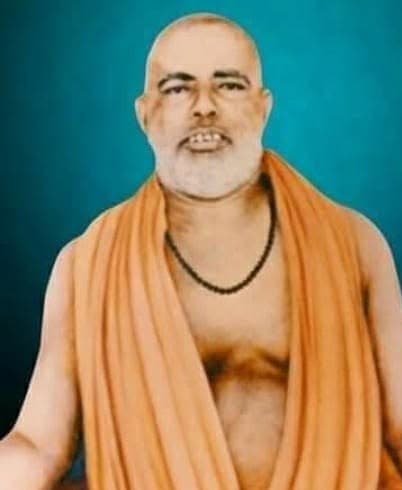
Sri Udiya Baba · Modern
Hindiसंगति— उसके पश्चात् जिज्ञासु की जो स्थिति होती है वह अगले श्लोक में बतलाते हैं —
भावार्थ— जो मान और मोह से रहित हैं, जिन्होंने आसक्ति रूप दोष को जीत लिया है, जो निरन्तर आत्मविचार में लगे हुए हैं, जिनकी कामनाएँ दूर हो गयी हैं और जो सुख-दुःखरूप द्वन्द्व से मुक्त हो चुके हैं वे विचारशील पुरुष ही उस पद को प्राप्त होते हैं।
व्याख्या— ‘निर्मानमोहा:’ अभिमान और मोह से रहित अर्थात् सर्वदा साधक भाव में रहने वाले, सिद्धि के अभिमान से दूर रहने वाले ‘जितसंगदोषा:’— स्त्री-पुत्रादि की ममता और संसार की आसक्ति से शून्य हो जाने पर भी प्रपञ्च की प्रतीति तो रहेगी ही, उसमें आसक्ति न हो इसलिये कहा—‘जितसंगदोषा:’। फिर ‘अध्यात्मनित्या:’ कहकर सूचित करते हैं कि इस अनासक्ति के लिये यह आवश्यक है कि सर्वदा आत्मविचार में लगा रहे। इससे साधक ‘विनिवृत्तकामा:’ अर्थात् कामनाहीन हो जायेंगे तथा सुख-दुःखरूप द्वन्द्व भी नहीं रहेंगे। ऐसे ‘अमूढा’ मूढताहीन विचारशील पुरुष ही उस अविनाशी पद को प्राप्त होते हैं।
अथवा जो असंग-शस्त्र से संसार वृक्ष का छेदन कर चुके हैं, वे मान-मोह से रहित होते हैं। मान-मोह से रहित होने पर वह संग-दोष को जीत लेते हैं। संग-दोष को जीत लेने पर वे निरन्तर अध्यात्मविचार में संलग्न रहते हैं। इससे उनकी सब कामनाएँ निवृत्त हो जाती हैं और पूर्ण निष्काम हो जाने पर सुख-दुःख रूप द्वन्द्वों का प्रभाव भी नहीं पड़ता। ऐसे विचारशील पुरुष ही उस परम पद को प्राप्त कर सकते हैं।
प्रश्न— संसार को मिथ्या जान लेने पर भी इसमें आसक्ति क्यों हो जाती है? यह जान लेने पर कि हाथी कागज का है फिर उसका तो कोई आकर्षण नहीं रहता।
उत्तर— नकली हाथी की आसक्ति छूटकर तो असलीहाथी में हो जाती है, परन्तु संसार को मिथ्या जान लेने पर भी उसकी आसक्ति इसलिये नहीं छूटती कि आत्मा निरालम्ब पद है, चित्त संसार से उपरत हो जाने पर भी अकस्मात् उसकी प्रवृत्ति दृश्य की ओर ही होती है। इसकी आसक्ति तभी छूट सकती है जब आत्मा में आसक्ति हो। इसलिये निरन्तर अभ्यास में लगे रहने की बहुत आवश्यकता है।
प्रश्न— अभ्यास करने की आवश्यकता कब तक है?
उत्तर— अभ्यास को कभी छोड़े नहीं। ऐसा अभ्यास करे कि और सब छूट जाय तथा आत्मा में आसक्ति हो जाय। अथवा ऐसा अनुभव होने लगे कि शरीर की सब चेष्टाएँ मानो परप्रेरित ही हो रही हैं।
Swami Ramsukhdas · Modern
Hindi‘निर्मानमोहा:’—शरीरमें मैं-मेरापन होनेसे ही मान, आदर-सत्कारकी इच्छा होती है। शरीरसे अपना सम्बन्ध माननेके कारण ही मनुष्य शरीरके मान-आदरको भूलसे स्वयंका मान-आदर मान लेता है और फँस जाता है। जिन भक्तोंका केवल भगवान्में ही अपनापन होता है, उनका शरीरमें मैं-मेरापन नहीं रहता; अतः वे शरीरके मान-आदरसे प्रसन्न नहीं होते। एकमात्र भगवान्के शरण होनेपर उनका शरीरसे मोह नहीं रहता, फिर मान-आदरकी इच्छा उनमें हो ही कैसे सकती है?
केवल भगवान्का ही उद्देश्य, ध्येय होनेसे और केवल भगवान्के ही शरण, परायण रहनेसे वे भक्त संसारसे विमुख हो जाते हैं। अतः उनमें संसारका मोह नहीं रहता।
‘जितसङ्गदोषाः’—भगवान्में आकर्षण होना ‘प्रेम’ और संसारमें आकर्षण होना ‘आसक्ति’ कहलाती है। ममता, स्फुहा, वासना, आशा आदि दोष आसक्तिके कारण ही होते हैं। केवल भगवान्के ही परायण होनेके कारण भक्तोंकी सांसारिक भोगोंमें आसक्ति नहीं रहती। आसक्ति न रहनेके कारण भक्त आसक्तिसे होनेवाले ममता आदि
दोषोंको जीत लेते हैं।
आसक्ति प्राप्त और अप्राप्त—दोनोंकी होती है; किन्तु कामना अप्राप्तकी ही होती है। इसलिये इस श्लोकमें ‘विनिवृत्तकामाः’ पद अलगसे आया है।
‘अध्यात्मनित्या:’—केवल भगवान्के ही शरण रहनेसे भक्तोंकी अहंता बदल जाती है। मैं भगवान्का हूँ और भगवान् मेरे हैं, मैं संसारका नहीं हूँ और संसार मेरा नहीं है—इस प्रकार अहंता बदलनेसे उनकी स्थिति निरन्तर भगवान्में ही रहती है। कारण कि मनुष्यकी जैसी अहंता होती है, उसकी स्थिति वहाँ ही होती है। जैसे मनुष्य जन्मके अनुसार अपनेको ब्राह्मण मानता है, तो उसकी ब्राह्मणपनकी मान्यता नित्य-निरन्तर रहती है अर्थात् वह नित्य-निरन्तर ब्राह्मणपनमें स्थित रहता है, चाहे याद करे या न करे। ऐसे ही जो भक्त अपना सम्बन्ध केवल भगवान्के साथ ही मानते हैं, वे नित्य-निरन्तर भगवान्में ही स्थित रहते हैं।
‘विनिवृत्तकामाः’—संसारका ध्येय, लक्ष्य रहनेसे ही संसारकी वस्तु, परिस्थिति आदिकी कामना होती है अर्थात् ‘अमुक वस्तु, व्यक्ति आदि मुझे मिल जाय’—इस तरह
* यद्यपि मात्र प्राणियोंकी स्थिति निरन्तर उसी सर्वव्यापक, सर्वप्रकाशक, सर्वेश्वर भगवान्में ही रहती है, तथापि वे भूलसे अपनी स्थिति भगवान्में न मानकर संसारमें मान लेते हैं; जैसे—मैं अमुक वर्ण, आश्रम, सम्प्रदाय, नाम, जाति आदिका हूँ। अपनी इस विपरीत मान्यताके कारण ही वे बँध जाते हैं और बार-बार जन्मते-मरते हैं।
अप्राप्तकी कामना होती है। परन्तु जिन भक्तोंका सांसारिक वस्तु आदिको प्राप्त करनेका उद्देश्य है ही नहीं, वे कामनाओंसे सर्वथा रहित हो जाते हैं।
शरीरमें ममता होनेसे कामना पैदा हो जाती है कि मेरा शरीर स्वस्थ रहे, बीमार न हो जाय; शरीर हृष्टपुष्ट रहे, कमजोर न हो जाय। इसीसे सांसारिक धन, पदार्थ, मकान आदिकी अनेक कामनाएँ पैदा होती हैं। शरीर आदिमें ममता न रहनेसे भक्तोंकी कामनाएँ मिट जाती हैं।
भक्तोंका यह अनुभव होता है कि शरीर, इन्द्रियाँ, मन, बुद्धि और अहम् (मैं-पन)—ये सभी भगवान्के ही हैं। भगवान्के सिवाय उनका अपना कुछ होता ही नहीं। ऐसे भक्तोंकी सम्पूर्ण कामनाएँ विशेष और निःशेषरूपसे नष्ट हो जाती हैं। इसलिये उन्हें यहाँ 'विनिवृत्तकामाः' कहा गया है।
विशेष बात
वास्तवमें शरीर आदिका वियोग तो प्रतिक्षण हो ही रहा है। साधकको प्रतिक्षण होनेवाले इस वियोगको स्वीकारमात्र करना है। इन वियुक्त होनेवाले पदार्थोंसे संयोग माननेसे ही कामनाएँ पैदा होती हैं। जन्मसे लेकर आजतक निरन्तर हमारी प्राणशक्ति नष्ट हो रही है और शरीरसे प्रतिक्षण वियोग हो रहा है। जब एक दिन शरीर मर जायगा, तब लोग कहेंगे कि आज यह मर गया। वास्तवमें देखा जाय तो शरीर आज नहीं मरा है, प्रत्युत प्रतिक्षण मरनेवाले शरीरका मरना आज समाप्त हुआ है! अतः कामनाओंसे निवृत्त होनेके लिये साधकको चाहिये कि वह प्रतिक्षण वियुक्त होनेवाले शरीरादि पदार्थोंको स्थिर मानकर उनसे कभी अपना सम्बन्ध न माने।
वास्तवमें कामनाओंकी पूर्ति कभी होती ही नहीं। जबतक एक कामना पूरी होती हुई दीखती है, तबतक दूसरी अनेक कामनाएँ उत्पन्न हो जाती हैं। उन कामनाओंमेंसे जब किसी एक कामनाकी पूर्ति होनेपर मनुष्यको सुख प्रतीत होता है, तब वह दूसरी कामनाओंकी पूर्तिके लिये चेष्टा करने लग जाता है। परन्तु यह नियम है कि चाहे कितने ही भोग-पदार्थ मिल जायें, पर कामनाओंकी पूर्ति कभी हो ही नहीं सकती। कामनाओंकी पूर्तिके सुखभोगसे नयी-नयी कामनाएँ पैदा होती रहती हैं—'जिमि प्रतिलाभ लोभ अधिकाई'। संसारके सम्पूर्ण व्यक्ति, पदार्थ एक साथ मिलकर एक व्यक्तिकी भी कामनाओंकी पूर्ति नहीं कर सकते, फिर सीमित पदार्थोंकी
कामना करके सुखकी आशा रखना महान् भूल ही है। कामनाओंके रहते हुए कभी शान्ति नहीं मिल सकती—'स शान्तिमाप्नोति न कामकामी' (गीता २।७०)। अतः कामनाओंकी निवृत्ति ही परम-शान्तिका उपाय है। इसलिये कामनाओंकी निवृत्ति ही करनी चाहिये, न कि पूर्तिकी चेष्टा।
सांसारिक भोग-पदार्थोंके मिलनेसे सुख होता है—यह मान्यता कर लेनेसे ही कामना पैदा होती है। यह कामना जितनी तेज होगी, उस पदार्थके मिलनेमें उतना ही सुख होगा। वास्तवमें कामनाकी पूर्तिसे सुख नहीं होता। जब मनुष्य किसी पदार्थके अभावका दुःख मानकर कामना करके उस पदार्थका मनसे सम्बन्ध जोड़ लेता है, तब उस पदार्थके मिलनेपर अर्थात् उस पदार्थका मनसे सम्बन्ध-विच्छेद होनेपर (अभावकी मान्यताका दुःख मिट जानेपर) सुख प्रतीत होता है। यदि वह पहलेसे ही कामना न करे तो पदार्थके मिलनेपर सुख और न मिलनेपर दुःख होगा ही नहीं।
मूलमें कामनाकी सत्ता है ही नहीं क्योंकि जब काम्यपदार्थकी ही स्वतन्त्र सत्ता नहीं है, तब उसकी कामना कैसे रह सकती है? इसलिये सभी साधक निष्काम होनेमें समर्थ हैं।
'द्वन्द्वैर्विमुक्ताः सुखदुःखसञ्जैः'—वे भक्त सुख-दुःख, हर्ष-शोक, राग-द्वेष आदि द्वन्द्वोंसे रहित हो जाते हैं। कारण कि उनके सामने अनुकूल-प्रतिकूल जो भी परिस्थिति आती है, उसको वे भगवान्का ही दिया हुआ प्रसाद मानते हैं। उनकी दृष्टि केवल भगवत्कृपापर ही रहती है, अनुकूल-प्रतिकूल परिस्थितिपर नहीं। अतः 'जो कुछ होता है, वह हमारे प्यारे प्रभुका ही मंगलमय विधान है'—ऐसा भाव होनेसे उनके द्वन्द्व सुगमतापूर्वक मिट जाते हैं।
भगवान् सबके सुहृद हैं—'सुहृदं सर्वभूतानाम्' (गीता ५।२९)। उनके द्वारा अपने अंश-(जीवात्मा-) का कभी अहित हो ही नहीं सकता। उनके मंगलमय विधानसे जो भी परिस्थिति हमारे सामने आती है, वह हमारे परमहितके लिये ही होती है। इसलिये भक्त भगवान्के विधानमें परम प्रसन्न रहते हैं। शरीर, इन्द्रियाँ, मन, बुद्धिको अनुकूल-प्रतिकूल परिस्थितिका ज्ञान होनेपर भी 'ऐसी परिस्थिति क्यों आ गयी? ऐसी परिस्थिति आती रहे' आदि विकार, द्वन्द्व उनमें नहीं होते।
विशेष बात
द्वन्द्व (राग-द्वेषादि) ही विषमता है, जिनसे सब प्रकारके पाप पैदा होते हैं। अतः विषमताका त्याग करनेके लिये साधकको नाशवान् पदार्थोंके माने हुए महत्त्वको अन्तःकरणसे निकाल देना चाहिये। द्वन्द्वके दो भेद हैं—
(१) **स्थूल (व्यावहारिक) द्वन्द्व**—सुख-दुःख, अनुकूलता-प्रतिकूलता आदि स्थूल द्वन्द्व हैं। प्राणी सुख, अनुकूलता आदिकी इच्छा तो करते हैं, पर दुःख, प्रतिकूलता आदिकी इच्छा नहीं करते। यह स्थूल द्वन्द्व मनुष्य, पशु, पक्षी, वृक्ष आदि सभीमें देखनेमें आता है।
(२) **सूक्ष्म (आध्यात्मिक) द्वन्द्व**—यद्यपि अपनी उपासना और उपास्यको सर्वश्रेष्ठ मानकर उसको आदर (महत्त्व) देना आवश्यक एवं लाभप्रद है, तथापि दूसरोंकी उपासना और उपास्यको नीचा बताकर उसका खण्डन, निन्दा आदि करना 'सूक्ष्म द्वन्द्व' है जो साधकके लिये हानिकारक है।
वास्तवमें सभी उपासनाओंका एकमात्र उद्देश्य संसार-(जडता-) से सर्वथा सम्बन्ध-विच्छेद करना है। साधकोंकी रुचि, श्रद्धा-विश्वास और योग्यताके अनुसार उपासनाओंमें भिन्नता होती है, जिसका होना उचित भी है। अतः साधकको उपासनाओंकी भिन्नतापर दृष्टि न रखकर 'उद्देश्य'की अभिन्नतापर ही दृष्टि रखनी चाहिये। दूसरेकी उपासनाको न देखकर अपनी उपासनामें तत्परतापूर्वक लगे रहनेसे उपासना-सम्बन्धी 'सूक्ष्म द्वन्द्व' स्वतः मिट जाता है।
गीतामें 'स्थूल द्वन्द्व' को 'मोहकलिलम्' (२।५२) और 'सूक्ष्म द्वन्द्व' को 'श्रुतिविप्रतिपन्ना' (२।५३) पदोंसे कहा गया है। साधकके अन्तःकरणमें जबतक संसार-(जडता-) का सम्बन्ध या महत्त्व रहता है, तभीतक ये द्वन्द्व रहते हैं। 'स्थूल द्वन्द्व' संसारको विशेषरूपसे सत्ता और महत्ता देता है। अतः 'स्थूल द्वन्द्व' को मिटाना बहुत जरूरी है।
जबतक मूढ़ता रहती है, तभीतक द्वन्द्व रहते हैं। वास्तवमें देखा जाय तो अपनेमें द्वन्द्व मानना ही मूढ़ता है। राग-द्वेष, सुख-दुःख, हर्ष-शोक आदि द्वन्द्व अन्तःकरणमें होते हैं, स्वयं-(अपने स्वरूप-) में नहीं। अन्तःकरण जड है और 'स्वयं' चेतन एवं जडका प्रकाशक है। अतः
अन्तःकरणसे 'स्वयं' का सम्बन्ध है ही नहीं। केवल मान्यतासे ही यह सम्बन्ध प्रतीत होता है।
यह सभीका अनुभव है कि सुख-दुःखादि द्वन्द्वोंके आनेपर हम तो वही रहते हैं। ऐसा नहीं होता कि सुख आनेपर हम और होते हैं तथा दुःख आनेपर और। परन्तु मूढ़तावश इन सुख-दुःखादिसे मिलकर सुखी और दुःखी होने लगते हैं। यदि हम इन आने-जानेवालोंसे न मिलकर अपने स्वरूपमें स्थित (स्वस्थ) रहें, तो सुख-दुःखादि द्वन्द्वोंसे स्वतः रहित हो जायेंगे। इसलिये साधकको बदलनेवाली अर्थात् आने-जानेवाली अवस्थाओं-(सुख-दुःख, हर्ष-शोकादि-) पर दृष्टि न रखकर कभी न बदलनेवाले अपने स्वरूपपर ही दृष्टि रखनी चाहिये, जो सब अवस्थाओंसे अतीत है।
गीतामें भगवान्ने राग-द्वेष आदि द्वन्द्वोंसे मुक्त होनेका बड़ा सुगम उपाय बताया है कि अनुकूलता-प्रतिकूलतामें राग-द्वेष छिपे हुए हैं। उनसे बचनेके लिये साधकको केवल इतनी सावधानी रखनी है कि वह इनके वशमें न हो (गीता—तीसरे अध्यायका चौतीसवाँ श्लोक)। तात्पर्य यह है कि राग-द्वेष दीखनेपर भी साधक इनके वशीभूत होकर तदनुसार क्रिया न करे; क्योंकि क्रिया करनेसे ही ये पुष्ट होते हैं।
'गच्छन्त्यमूढाः पदमव्ययं तत्'—आने-जानेवाले पदार्थोंको प्राप्त करनेकी इच्छा या चेष्टा करना तथा उनसे सुखी-दुःखी होना 'मूढ़ता' है। वास्तवमें संसार निरन्तर परिवर्तनशील है और परमात्मा नित्य रहनेवाला है। परमात्माकी सत्तासे ही संसारकी सत्ता दीखती है। परन्तु अविनाशी परमात्मा और विनाशी संसारकी सत्ताको मिलाकर 'संसार है' ऐसा मान लेना 'मूढ़ता' है।
जिस प्रकार मूढ़ (अज्ञानी) मनुष्योंको 'संसार है' ऐसा स्पष्ट दिखायी देता है, उसी प्रकार अमूढ़ (मोहरहित) भक्तोंको 'परमात्मा है' ऐसा स्पष्ट अनुभव होता है। संसार जैसा दिखायी देता है, वैसा ही है—इस प्रकार संसारको स्थायी मान लेना 'मूढ़ता' (मोह) है। जिनकी यह मूढ़ता चली गयी, उन भक्तोंको यहाँ 'अमूढाः' कहा गया है। मूढ़ता चले जानेके बाद सुख-दुःखका असर नहीं पड़ता। जिसपर सुख-दुःख आदि द्वन्द्वोंका असर नहीं पड़ता, वह
* 'श्रुतिविप्रतिपन्न' का अर्थ है—शास्त्रोंमें ज्ञान, कर्म और भक्ति; द्वैत, अद्वैत, शुद्धाद्वैत, द्वैताद्वैत आदि सिद्धान्त; विष्णु, राम, कृष्ण, शिव, शक्ति, गणेश आदि उपास्यदेव; सकाम और निष्कामभाव इत्यादि भिन्न-भिन्न विचारोंको देखकर किसी एक विचारपर अपना निश्चय या निर्णय नहीं कर सकना अर्थात् किंकर्तव्यविमूढ़ हो जाना।
मुक्तिका पात्र होता है (गीता—दूसरे अध्यायका पन्द्रहवाँ श्लोक)। इसीलिये इस श्लोकमें भगवान्ने दो बार मूढ़ताके त्यागकी बात ('निर्मानमोहाः' और 'अमूढाः') कहकर मूढ़ताके त्यागपर विशेष जोर दिया है।
मूढ़ता अर्थात् मोह दो प्रकारका होता है—(१) परमात्माकी ओर न लगकर संसारमें ही लग जाना और (२) परमात्माकी ठीक तरहसे न जानना। इस श्लोकमें पहले 'निर्मानमोहाः' पदसे संसारका मोह चले जानेकी बात कही है और यहाँ 'अमूढाः' पदसे परमात्माकी ठीक तरहसे जान लेनेकी बात कही है।
जिस परमात्माकी इसी अध्यायके पहले श्लोकमें 'ऊर्ध्वमूलम्' पदसे कहा गया तथा जिस परमपदरूप परमात्माकी खोज करनेके लिये चौथे श्लोकमें प्रेरणा की गयी और आगे छठे श्लोकमें जिसकी महिमाका वर्णन किया गया है, उसी परमात्मरूप परमपदको यहाँ 'अव्ययम् पदम्' कहा है। जो ऊँची स्थितिके साधक भक्त मान, मोह, ममता आदि दोषोंसे सर्वथा रहित हो जाते हैं, वे उस
अविनाशी परमपदको अवश्य प्राप्त होते हैं, जिसको प्राप्त कर लेनेपर मनुष्य लौटकर नाशवान् संसारमें नहीं आता।
वास्तवमें तो मनुष्यमात्र उस पदको स्वतः प्राप्त है, पर उधर दृष्टि न रहनेसे उसको वैसा अनुभव नहीं होता। इसे एक उदाहरणसे समझना चाहिये। हम रेलगाड़ीसे यात्रा कर रहे हैं। हमारी गाड़ी एक स्टेशनपर रुक जाती है। हमारी गाड़ीके पास (दूसरी पटरीपर) खड़ी हुई दूसरी गाड़ी सहसा चलने लगती है। उस समय (उस चलती हुई गाड़ीपर दृष्टि रहनेसे) भ्रमसे हमें अपनी गाड़ी चलती हुई दीखने लगती है। परन्तु जब हम वहाँसे अपनी दृष्टि हटाकर स्टेशनकी तरफ देखते हैं, तब पता लगता है कि हमारी गाड़ी तो ज्यों-की-त्यों (अपने स्थानपर) खड़ी हुई है। इसी प्रकार संसारसे सम्बन्ध होनेपर मनुष्य अपनेको संसारकी तरह क्रियाशील (आने-जानेवाला) देखने लगता है। पर जब वह संसारसे दृष्टि हटाकर अपने स्वरूपको देखता है, तो उसको पता लगता है कि मैं स्वयं तो ज्यों-का-त्यों ही हूँ।
**परिशिष्ट भाव**—ज्ञानयोग और कर्मयोगके अन्तर्गत भक्ति नहीं आती, पर भक्तिके अन्तर्गत ज्ञानयोग और कर्मयोग दोनों आ जाते हैं (गीता—दसवें अध्यायका दसवाँ-ग्यारहवाँ श्लोक)। इसलिये यहाँ 'अध्यात्मनित्याः' पदसे ज्ञानयोग और 'विनिवृत्तकामाः' पदसे कर्मयोग ले सकते हैं।
सम्बन्ध—पूर्वश्लोकमें वर्णित जिस अविनाशी पदको भक्तलोग प्राप्त होते हैं, वह अविनाशी पद कैसा है—इसका भगवान् विवेचन करते हैं।
Those blessed jīvas or embodied beings who have relinquished such illusions as love for things not related to the ātma or immortal soul, attain unto the Supreme Lord Krishna as their saviour.
The evils of desire and attachment captivate one by sense gratification, bewildered by the three guṇas or modes of material nature.
Those that surmount this are:
1) nirmāna mohan means free from pride and false ego conception of being their body
2) adhyātma-nityah means those engrossed in the eternal knowledge of the ātma
3) vinivṛtta kāmāḥ means totally free from lusty desires by only desiring the ātma
4) vimukta dvandvair means completely liberated from conceptions of dualities.
Those that achieve the above attain avyayam padam or the eternal supreme transcendental state by ātma tattva or realisation of the immortal soul and its unlimited intelligence characterised by it infinitely expanded consciousness.
To those whose faith in the Supreme Lord Krishna is bona fide by acceptance of a spiritual guru in authorised disciple succession
and whose devotion is absolute due to the mercy of the spiritual master and receiving knowledge of bhakti or exclusive loving devotion unto the Supreme Lord.
Then Lord Krishna Himself initiates the previously mentioned four attributes and their success is effected solely by His grace. Then they are all easily traversed until perfection comes and the goal is reached.