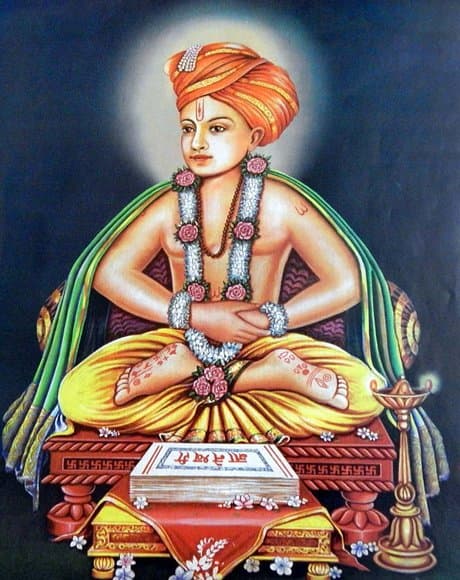
Jñāneśvar · Vārkarī
English

Chapter 15 · 20 verses
The Yoga of the Supreme Person
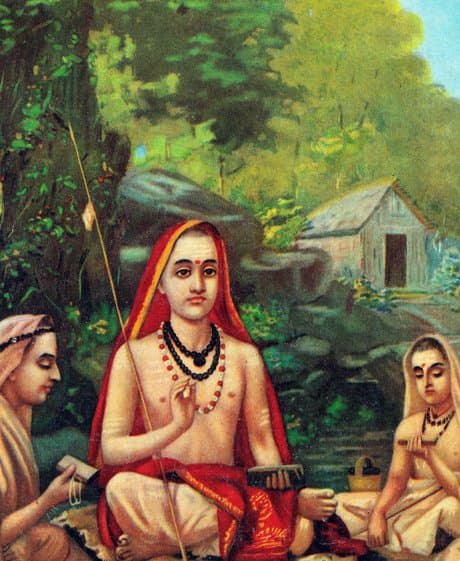 Ādi Śaṅkarācārya · Jñāneśvar expands this whole chapterAdvaita · Vārkarī · English · Sanskrit · Marathi · Hindi
Krishna. Men call the Aswattha,--the Banyan-tree,-- Which hath its boughs beneath, its roots above,-- The ever-holy tree. Yea! for its leaves Are green and waving hymns which whisper Truth! Who knows the Aswattha, knows Veds, and all. Its branches shoot to heaven and sink to earth, Even as the deeds of men, which take their birth From qualities: its silver sprays and blooms, And all the eager verdure of its girth, Leap to quick life at kiss of sun and air, As men's lives quicken to the temptings fair Of wooing sense: its hanging rootlets seek The soil beneath, helping to hold it there, As actions wrought amid this world of men Bind them by ever-tightening bonds again. If ye knew well the teaching of the Tree, What its shape saith; and whence it springs; and, then How it must end, and all the ills of it, The axe of sharp Detachment ye would whet, And cleave the clinging snaky roots, and lay This Aswattha of sense-life low,--to set New growths upspringing to that happier sky,-- Which they who reach shall have no day to die, Nor fade away, nor fall--to Him, I mean, FATHER and FIRST, Who made the mystery Of old Creation; for to Him come they From passion and from dreams who break away; Who part the bonds constraining them to flesh, And,--Him, the Highest, worshipping alway-- No longer grow at mercy of what breeze Of summer pleasure stirs the sleeping trees, What blast of tempest tears them, bough and stem To the eternal world pass such as these! Another Sun gleams there! another Moon! Another Light,--not Dusk, nor Dawn, nor Noon-- Which they who once behold return no more; They have attained My rest, life's Utmost boon! When, in this world of manifested life, The undying Spirit, setting forth from Me, Taketh on form, it draweth to itself From Being's storehouse,--which containeth all,-- Senses and intellect. The Sovereign Soul Thus entering the flesh, or quitting it, Gathers these up, as the wind gathers scents, Blowing above the flower-beds. Ear and Eye, And Touch and Taste, and Smelling, these it takes,-- Yea, and a sentient mind;--linking itself To sense-things so. The unenlightened ones Mark not that Spirit when he goes or comes, Nor when he takes his pleasure in the form, Conjoined with qualities; but those see plain Who have the eyes to see. Holy souls see Which strive thereto. Enlightened, they perceive That Spirit in themselves; but foolish ones, Even though they strive, discern not, having hearts Unkindled, ill-informed! Know, too, from Me Shineth the gathered glory of the suns Which lighten all the world: from Me the moons Draw silvery beams, and fire fierce loveliness. I penetrate the clay, and lend all shapes Their living force; I glide into the plant-- Root, leaf, and bloom--to make the woodlands green With springing sap. Becoming vital warmth, I glow in glad, respiring frames, and pass, With outward and with inward breath, to feed The body by all meats. For in this world Being is twofold: the Divided, one; The Undivided, one. All things that live Are "the Divided." That which sits apart, "The Undivided." Higher still is He, The Highest, holding all, whose Name is LORD, The Eternal, Sovereign, First! Who fills all worlds, Sustaining them. And--dwelling thus beyond Divided Being and Undivided--I Am called of men and Vedas, Life Supreme, The PURUSHOTTAMA. Who knows Me thus, With mind unclouded, knoweth all, dear Prince! And with his whole soul ever worshippeth Me. Now is the sacred, secret Mystery Declared to thee! Who comprehendeth this Hath wisdom! He is quit of works in bliss! HERE ENDS CHAPTER XV. OF THE BHAGAVAD-GITA Entitled "Purushottamapraptiyog," Or "The Book of Religion by attaining the Supreme."
Edwin Arnold · Poetic (Victorian) — Public domain
Expansions that unfold the whole chapter, not verse by verse
Jñāneśvar · Vārkarī
EnglishĀdi Śaṅkarācārya · Advaita
Sanskritयस्मात् मदधीनं कर्मिणां कर्मफलं ज्ञानिनां च ज्ञानफलम्, अतः भक्तियोगेन मां ये सेवन्ते ते मम प्रसादात् ज्ञानप्राप्तिक्रमेण गुणातीताः मोक्षं गच्छन्ति । किमु वक्तव्यं आत्मनः तत्त्वमेव सम्यक् विजानन्तः इति अतः भगवान् अर्जुनेन अपृष्टोऽपि आत्मनः तत्त्वं विवक्षुः उवाच ``ऊर्ध्वमूलम्'' इत्यादिना । तत्र तावत् वृक्षरूपककल्पनया वैराग्यहेतोः संसारस्वरूपं वर्णयति -- विरक्तस्य हि संसारात् भगवत्तत्त्वज्ञाने अधिकारः, न अन्यस्येति ॥
Jñāneśvar · Vārkarī
Marathi॥ ॐ श्री परमात्मने नमः ॥ ॥ अथ श्रीमद्भगवद्गीता ॥ । अथ पञ्चदशोऽध्यायः - अध्याय पंधरावा । । । पुरुषोत्तमयोगः ।
आतां हृदय हें आपुलें । चौफाळुनियां भलें । वरी बैसऊं पाउलें । श्रीगुरूंचीं ॥ १ ॥ ऐक्यभावाची अंजुळी । सर्वेंद्रिय कुड्मुळी । भरूनियां पुष्पांजुळी । अर्घ्यु देवों ॥ २ ॥ अनन्योदकें धुवट । वासना जे तन्निष्ठ । ते लागलेसे अबोट । चंदनाचें ॥ ३ ॥ प्रेमाचेनि भांगारें । निर्वाळूनि नूपरें । लेवऊं सुकुमारें । पदें तियें ॥ ४ ॥ घणावली आवडी । अव्यभिचारें चोखडी । तिये घालूं जोडी । आंगोळिया ॥ ५ ॥ आनंदामोदबहळ । सात्त्विकाचें मुकुळ । तें उमललें अष्टदळ । ठेऊं वरी ॥ ६ ॥ तेथे अहं हा धूप जाळूं । नाहं तेजें वोवाळूं । सामरस्यें पोटाळूं । निरंतर ॥ ७ ॥ माझी तनु आणि प्राण । इया दोनी पाउवा लेऊं श्रीगुरुचरण । करूं भोगमोक्ष निंबलोण । पायां तयां ॥ ८ ॥ इया श्रीगुरुचरणसेवा । हों पात्र तया दैवा । जे सकळार्थमेळावा । पाटु बांधे ॥ ९ ॥ ब्रह्मींचें विसवणेंवरी । उन्मेख लाहे उजरी । जें वाचेतें इयें करी । सुधासिंधु ॥ १० ॥ पूर्णचंद्राचिया कोडी । वक्तृत्वा घापें कुरोंडी । तैसी आणी गोडी । अक्षरांतें ॥ ११ ॥ सूर्यें अधिष्ठिली प्राची । जगा राणीव दे प्रकाशाची । तैशी वाचा श्रोतयां ज्ञानाची । दिवाळी करी ॥ १२ ॥ नादब्रह्म खुजें । कैवल्यही तैसें न सजे । ऐसा बोलु देखिजे । जेणें दैवें ॥ १३ ॥ श्रवणसुखाच्या मांडवीं । विश्व भोगी माधवीं । तैसी सासिन्नली बरवी । वाचावल्ली ॥ १४ ॥ ठावो न पवता जयाचा । मनेंसी मुरडली वाचा । तो देवो होय शब्दाचा । चमत्कारु ॥ १५ ॥ जें ज्ञानासि न चोजवे । ध्यानासिही जें नागवे । तें अगोचर फावे । गोठीमाजीं ॥ १६ ॥ येवढें एक सौभग । वळघे वाचेचें आंग । श्रीगुरुपादपद्मपराग । लाहे जैं कां ॥ १७ ॥ तरी बहु बोलूं काई । आजि तें आनीं ठाईं । मातेंवाचूनि नाहीं । ज्ञानदेवो म्हणे ॥ १८ ॥ जे तान्हेनि मियां अपत्यें । आणि माझे गुरु एकलौतें । म्हणौनि कृपेंसि एकहातें । जालें तिये ॥ १९ ॥ पाहा पां भरोवरी आघवी । मेघ चातकांसी रिचवी । मजलागीं गोसावी । तैसें केलें ॥ २० ॥ म्हणौनि रिकामें तोंड । करूं गेलें बडबड । कीं गीता ऐसें गोड । आतुडलें ॥ २१ ॥ होय अदृष्ट आपैतें । तैं वाळूचि रत्नें परते । उजू आयुष्य तैं मारितें । लोभु करी ॥ २२ ॥ आधणीं घातलिया हरळ । होती अमृताचे तांदुळ । जरी भुकेची राखे वेळ । श्रीजगन्नाथु ॥ २३ ॥ तयापरी श्रीगुरु । करिती जैं अंगीकारु । तैं होऊनि ठाके संसारु । मोक्षमय आघवा ॥ २४ ॥ पाहा पां श्रीनारायणें । तया पांडवांचें उणें । कीजेचि ना पुराणें । विश्ववंद्यें ? ॥ २५ ॥ तैसें श्रीनिवृत्तिराजें । अज्ञानपण हें माझें । आणिलें वोजें । ज्ञानाचिया ॥ २६ ॥ परी हें असो आतां । प्रेम रुळतसे बोलतां । कें गुरुगौरव वर्णितां । उन्मेष असे ? ॥ २७ ॥ आतां तेणेंचि पसायें । तुम्हां संताचे मी पायें । वोळगेन अभिप्रायें । गीतेचेनि ॥ २८ ॥ तरी तोचि प्रस्तुतीं । चौदाविया अध्यायाच्या अंतीं । निर्णयो कैवल्यपती । ऐसा केला ॥ २९ ॥ जें ज्ञान जयाच्या हातीं । तोचि समर्थु मुक्ति । जैसा शतमख संपत्ती । स्वर्गींचिये ॥ ३० ॥ कां शत एक जन्मां । जो जन्मोनि ब्रह्मकर्मा । करी तोचि ब्रह्मा । आनु नोहे ॥ ३१ ॥ नाना सूर्याचा प्रकाशु । लाहे जेवीं डोळसु । तेवीं ज्ञानेंचि सौरसु । मोक्षाचा तो ॥ ३२ ॥ तरी तया ज्ञानालागीं । कवणा पां योग्यता आंगीं । हें पाहतां जगीं । देखिला एकु ॥ ३३ ॥ जें पाताळींचेंही निधान । दावील कीर अंजन । परी होआवे लोचन । पायाळाचे ॥ ३४ ॥ तैसें मोक्ष देईल ज्ञान । येथें कीर नाहीं आन । परी तेंचि थारे ऐसें मन । शुद्ध होआवें ॥ ३५ ॥ तरी विरक्तीवांचूनि कहीं । ज्ञानासि तगणेंचि नाहीं । हें विचारूनि ठाईं । ठेविलें देवें ॥ ३६ ॥ आतां विरक्तीची कवण परी । जे येऊनि मनातें वरी । हेंही सर्वज्ञें श्रीहरी । देखिलें असे ॥ ३७ ॥ जे विषें रांधिली रससोये । जैं जेवणारा ठाउवी होये । तैं तो ताटचि सांडूनि जाये । जयापरी ॥ ३८ ॥ तैसी संसारा या समस्ता । जाणिजे जैं अनित्यता । तैं वैराग्य दवडितां । पाठी लागे ॥ ३९ ॥ आतां अनित्यत्व या कैसें । तेंचि वृक्षाकारमिषें । सांगिजत असे विश्वेशें । पंचदशीं ॥ ४० ॥ उपडिलें कवतिकें । झाड येरिमोहरा ठाके । तें वेगें जैसें सुके । तैसें हें नोहे ॥ ४१ ॥ यातें एकेपरी । रूपकाचिया कुसरी । सारीतसे वारी । संसाराची ॥ ४२ ॥ करूनि संसार वावो । स्वरूपीं अहंते ठावो । होआवया अध्यावो । पंधरावा हा ॥ ४३ ॥ आतां हेंचि आघवें । ग्रंथगर्भींचें चांगावें । उपलविजेल जीवें । आकर्णिजे ॥ ४४ ॥ तरी महानंद समुद्र । झॊ पूर्ण पूर्णीमा चंद्र । तो द्वारकेचा नरेंद्र । ऐसें म्हणे ॥ ४५ ॥ अगा पैं पंडुकुमरा । येतां स्वरूपाचिया घरा । करीतसे आडवारा । विश्वाभासु जो ॥ ४६ ॥ तो हा जगडंबरु । नोहे येथ संसारु । हा जाणिजे महातरु । थांवला असे ॥ ४७ ॥ परी येरां रुखांसारिखा । हा तळीं मूळें वरी शाखा । तैसा नोहे म्हणौनि लेखा । नयेचि कवणा ॥ ४८ ॥ आगी कां कुऱ्हाडी । होय रिगावा जरी बुडीं । तरी हो कां भलतेवढी । वरिचील वाढी ॥ ४९ ॥ जे तुटलिया मूळापाशीं । उलंडेल कां शाखांशीं । परी तैशी गोठी कायशी । हा सोपा नव्हे ॥ ५० ॥ अर्जुना हें कवतिक । सांगतां असे अलौकिक । जे वाढी अधोमुख । रुखा यया ॥ ५१ ॥ जैसा भानू उंची नेणों कें । रश्मिजाळ तळीं फांके । संसार हें कावरुखें । झाड तैसें ॥ ५२ ॥ आणि आथी नाथी तितुकें । रुंधलें असे येणेंचि एकें । कल्पांतींचेनि उदकें । व्योम जैसें ॥ ५३ ॥ कां रवीच्या अस्तमानीं । आंधारेनि कोंदे रजनी । तैसा हाचि गगनीं । मांडला असे ॥ ५४ ॥ यया फळ ना चुंबितां । फूल ना तुरंबितां । जें कांहीं पंडुसुता । तें रुखुचि हा ॥ ५५ ॥ हा ऊर्ध्वमूळ आहे । परी उन्मूळिला नोहे । येणेंचि हा होये । शाड्वळु गा ॥ ५६ ॥ आणि ऊर्ध्वमूळ ऐसें । निगदिलें कीर असे । परी अधींही असोसें । मूळें यया ॥ ५७ ॥ प्रबळला चौमेरी । पिंपळा कां वडाचिया परी । जे पारंबियांमाझारीं । डहाळिया असती ॥ ५८ ॥ तेवींचि गा धनंजया । संसारतरु यया । अधींचि आथी खांदिया । हेंही नाहीं ॥ ५९ ॥ तरी ऊर्ध्वाहीकडे । शाखांचे मांदोडे । दिसताति अपाडें । सासिन्नलें ॥ ६० ॥ जालें गगनचि पां वेलिये । कां वारा मांडला रुखाचेनि आयें । नाना अवस्थात्रयें । उदयला असे ॥ ६१ ॥ ऐसा हा एकु । विश्वाकार विटंकु । उदयला जाण रुखु । ऊर्ध्वमूळु ॥ ६२ ॥ आतां ऊर्ध्व या कवण । येथें मूळ तें किं लक्षण । कां अधोमुखपण । शाखा कैसिया ॥ ६३ ॥ अथवा द्रुमा यया । अधीं जिया मूळिया । तिया कोण कैसिया । ऊर्ध्व शाखा ॥ ६४ ॥ आणि अश्वत्थु हा ऐसी । प्रसिद्धी कायसी । आत्मविदविलासीं । निर्णयो केला ॥ ६५ ॥ हें आघवेंचि बरवें । तुझिये प्रतीतीसि फावे । तैसेनि सांगों सोलिंवें । विन्यासें गा ॥ ६६ ॥ परी ऐकें गा सुभगा । हा प्रसंगु असे तुजचि जोगा । कानचि करीं हो सर्वांगा । हियें आथिलिया ॥ ६७ ॥ ऐसें प्रेमरसें सुरफुरें । बोलिलें जंव यादववीरें । तंव अवधान अर्जुनाकारें । मूर्त जालें ॥ ६८ ॥ देव निरूपिती तें थेंकुलें । येवढें श्रोतेपण फांकलें । जैसे आकाशा खेंव पसरिलें । दाही दिशीं ॥ ६९ ॥ श्रीकृष्णोक्तिसागरा । हा अगस्तीचि दुसरा । म्हनौनि घोंटु भरों पाहे एकसरा । अवघेयाचा ॥ ७० ॥ ऐसी सोय सांडूनि खवळिली । आवडी अर्जुनीं देवें देखिली । तेथ जालेनि सुखें केली । कुरवंडी तया ॥ ७१ ॥
Jñāneśvar · Vārkarī
Hindi(15.1) अब मैं उत्तम प्रकार से अपने हृदय की चौकी बना कर उस पर श्रीगुरु की पाँवड़ियों की प्रतिष्ठा करता हूँ।
(15.2) उन पर एकतारूपी अंजलि में सर्वेन्द्रियरूपी फूलों की कलियाँ भर कर पुष्पांजलि की अर्ध अर्पण करता हूँ,
(15.3) तथा उनके अनन्य भावरूपी जल से शुद्ध की हुई गुरुनिष्ठा के वासनारूपी चन्दन का लेप करता हूँ।
(15.4) उनके सुकुमार पदों में, प्रेम-रूपी सुवर्ण को शुद्ध कर के तैयार किये हुए, नूपुर पहनाता हूँ।
(15.5) उनकी अँगुलियों में एकनिष्ठता से जगमगाते हुए दृढ़ अनुराग-रूपी छल्ले पहनाता हूँ।
(15.6) उनके मस्तक पर आनन्दरूपी, सुगन्धित, आठ पातों का, खिला हुआ कमल चढ़ाता हूँ जो मानों अष्ट सात्विक भावों से विकसित हुआ हो। (15.7) उनके सन्मुख अहंकार-रूपी धूप जलाता हूँ, तथा निरभिमानता के दीप से उनकी आरती करता हूँ, और निरन्तर एक्यभाव से उन्हें आलिंगन देता हूँ।
(15.8) श्रीगुरु के चरणों में अपनी काया और प्राणरूपी पाँवड़ियाँ पहनाता हूँ, और उनके चरणों पर से भोग और मोक्षरूपी राई-नोन उतारता हूँ।
(15.9) इस प्रकार श्रीगुरु-चरणों की सेवा से मुझे ऐसा सौभाग्य प्राप्त होगा कि जिसकी प्राप्ति से सकल पुरुषार्थों का समुदाय मुझे पट्टाभिषेक करेगा,
(15.10) जिससे मेरे ज्ञान को ऐसा तेज प्राप्त होगा कि वह ब्रह्म में ही विश्राम पावेगा तथा वह मेरी वाचा को अमृत का समुद्र बना देगा,
(15.11) जिससे व्याख्यान के समय शब्दों में ऐसी मधुरता प्राप्त होगी कि उस वक्तृता पर से करोड़ों पूर्ण-चन्द्रों की निछावर कर दी जावे,
(15.12) तथा वह वाणी श्रोताओं को ऐसी ज्ञानरूपी दिवाली प्रकाशित कर दिखावेगी कि जैसे सूर्य के आश्रय से पूर्व दिशा जगत् को प्रकाश की सम्पत्ति अर्पण करती है। (15.13) उस सौभाग्य से मुझे ऐसी वाणी प्राप्त होगी कि उसके सामने वेद भी अल्प जान पड़ेंगे और कैवल्य भी उतनी शोभा न देगा।
(15.14) उस वाचारूपी लता की ऐसी उत्तम बहार आवेगी कि मानों संसार को श्रवण सुखरूपी मण्डल के नीचे वसन्त ऋतु के सुख का उपभोग मिल रहा हो।
(15.15) और आश्चर्य सुनो। जिसका ठाँव न पा कर मन-सहित वाणी पीछे पलट आती है वह ईश्वर उस वाणी के वश हो जावेगा,
(15.16) और जो वस्तु ज्ञान को अवगत नहीं होती, जो ध्यान के भी वश नहीं होता, वह अगोचर वस्तु उस वाणी से प्रकट हो जावेगी।
(15.17) श्रीगुरु के चरणकमलों का अनुराग प्राप्त हो तो वाणी को उपर्युक्त सौभाग्य प्राप्त हो जाता है।
(15.18) श्रीज्ञानदेव कहते हैं कि बहुत क्या वर्णन करें, श्रीगुरुचरणों का प्रेम आज मेरे सिवाय और कहीं नहीं है।
(15.19) क्योंकि मैं नन्हा बालक हूँ और अपने गुरु का इकलौता हूँ, इसलिए उनकी कृपा एक मेरी ही ओर प्रवृत्त हुई है। (15.20) देखिए, जैसे मेघ अपनी सम्पूर्ण सम्पत्ति चातकों के लिए खाली कर देता है वैसा ही सद्गुरु ने मेरे लिए किया है।
(15.21) इस कारण मैं वृथा बक बक करने लगा तो मुझे गीता जैसे माधुर्य का लाभ हो गया।
(15.22) प्रारब्ध अनुकूल हो तो मिट्टी भी रत्नरूप हो जाती है। आयुष्य सबल हो तो मृत्यु भी प्रेम करती है।
(15.23) उबलते पानी में चाहे कंकर छोड़े हों, तथापि श्रीजगन्नाथ की कृपा हो तो भूख के समय प्राप्त होते ही वे अमृत-तुल्य चावल बन जाते हैं।
(15.24) इसी प्रकार जो श्रीगुरु किसी को अंगीकार कर लें तो उसको सब संसार मोक्षमय हो जाता है।
(15.25) देखिए, क्या श्रीनारायण ने पाण्डवों की हीन स्थिति की कथा को ही पुराणों की योग्यता नहीं दे दी?
(15.26) उसी प्रकार श्रीनिवृत्तिराज ने मेरे अज्ञान को ज्ञान की योग्यता प्राप्त करा दी है।
(15.27) परन्तु अब यह बात रहने दो। इस विषय में बोलते हुए प्रेम उमड़ा आता है। गुरु की महिमा का वर्णन करते हुए कितना उल्लास हो रहा है! (15.28) मैं अब उसी उल्लास से, गीता के अभिप्राय सहित, आप सन्तों के चरणों का आश्रय करता हूँ,
(15.29) और उस अभिप्राय के निवेदन का आरम्भ करता हूँ। चौदहवें अध्याय के अन्त में श्रीकैवल्यपति ने यह निर्णय किया।
(15.30) कि जिसके हाथ ज्ञान प्राप्त हुआ हो वही मोक्ष के लिए समर्थ होता है। जैसे सौ यज्ञ करनेहारे को स्वर्ग की सम्पत्ति प्राप्त होती है,
(15.31) अथवा जो ब्रह्म-कर्म करता है वही ब्रह्मदेव होता है दूसरा नहीं,
(15.32) अथवा जो नेत्रवान् हो उसी को सूर्य के प्रकाश का लाभ होता है, वैसे ही ज्ञान ही मोक्ष का जीवन है
(15.33) तथापि इस विषय का विचार करते हुए कि जगत् में ज्ञान की योग्यता किसे प्राप्त होती है केवल एक ही बात दिखाई देती है।
(15.34) आँखों में अंजन लगाने से पाताल का द्रव्य भी दिखाई दे सकता है, परन्तु वे आँखें उस मनुष्य की-सी होनी चाहिए, जो उलटा जन्मा हो, (15.35) वैसे ही ज्ञान से मोक्ष प्राप्त हो सकता है, परन्तु उसके लिए मन ऐसा शुद्ध होना चाहिए कि ज्ञान स्थिर रह सको
(15.36) इसलिए श्रीकृष्ण ने अपने विवेचन से यह सिद्ध किया कि ज्ञान की स्थिरता कभी विरक्तता के बिना नहीं होती।
(15.37) तथा विरक्तता किस प्रकार मन को जयमाल पहनाती है, इस विषय में भी सर्वज्ञानी श्रीहरि ने निर्णय कर दिया
(15.38) कि जैसे भोजन को बैठा हुआ मनुष्य यह जानते ही कि रसोई विष मिला कर राँधी गई है, थाली का त्याग कर चला जाता है,
(15.39) वैसे ही यदि इस सम्पूर्ण संसार की अनित्यता का ज्ञान हो जाय तो वैराग्य पीछे दौड़ता है।
(15.40) अब इस संसार की अनित्यता का स्वरूप श्रीकृष्ण इस पन्द्रहवें अध्याय में उसे वृक्षाकार की उपमा दे बखानते हैं।
(15.41) सहज ही किसी पेड़ को उखाड़ लो तो वह जैसा उलटा हुआ हाथ आता है, और शीघ्र ही सूख जाता है, वैसा यह संसार का भाड़ नहीं है।
(15.42) इस प्रकार श्रीकृष्ण संसार का आवागमन बन्द करने के हेतु, रूपक की कुशलता के साथ, निरूपण करते हैं। (15.43) इस पन्द्रहवें अध्याय का यही हेतु है कि संसार का मिथ्यात्व सिद्ध हो और अहंकार स्वस्वरूप में स्थित हो।
(15.44) अब ग्रन्थ के इस सम्पूर्ण गर्भितार्थ का मैं विस्तार से सहृदयतापूर्वक वर्णन करता हूँ, उसे सुनिए।
(15.45) महा-आनन्दरूपी समुद्र के पूर्णमासी के पूर्णचन्द्र द्वारका के नरेन्द्र श्रीकृष्ण ने कहा,
(15.46) हे पाण्डुकुमार! स्वस्वरूपी घर को जाते हुए मार्ग में जो विश्वाभास प्रतिबन्ध करता है
(15.47) सो यह जगडम्बर है। यह संसार नहीं, इसे एक विशाल फैला हुआ वृक्ष ही समझो।
(15.48) परन्तु अन्य वृक्षों की नाई इसकी जड़ें नीचे और शाखाएँ ऊपर नहीं होती, इसलिए यह किसी के ध्यान में नहीं आता।
(15.49) जड़ में आग लगा दी जाय अथवा कुल्हाड़ी का घाव किया जाय तो, ऊपरी भाग कितना भी विस्तृत हो तथापि,
(15.50) साधारण वृक्ष जड़ से टूटने के कारण शाखाओं-सहित गिर पड़ेगा; परन्तु इस वृक्ष में वैसी बात कहाँ है? टूटने के लिए यह वृक्ष सहल नहीं है। (15.51) हे अर्जुन! यह कुतूहल वर्णन करने में अलौकिक मालूम होता है कि इस वृक्ष की बाढ़ नीचे की ओर होती है।
(15.52) जैसे सूर्य की ऊँचाई न जाने कितनी है, परन्तु उसकी किरणों का समुदाय नीचे की ओर फैलता है, वैसे ही यह संसार भी एक आश्चर्यकारक झाड़ है।
(15.53) और जैसे कल्पान्त के जल से आकाश व्याप्त हो जाता है, वैसे ही जगत् में जो कुछ है वह सब इसी वृक्ष से व्याप्त है।
(15.54) अथवा सूर्य के अस्त होने पर रात्रि जैसे अँधेरे से भर जाती है, वैसे ही यह वृक्ष आकाश में समाया हुआ है।
(15.55) खाने के लिए इसमें न कोई फल लगता है और न सूँघने के लिए कोई फूल लगता है। जो कुछ है सो सब यह वृक्ष ही है।
(15.56) इसकी जड़ ऊपर है परन्तु यह उखड़ा हुआ नहीं है। इसी लिए यह सर्वदा हरा-भरा रहता है।
(15.57) और यद्यपि हम करते हैं कि इसकी जड़ ऊपर होती है तथापि नीचे की ओर भी इसकी कई जड़ें होती हैं।
(15.58) यह प्रबलता से चारों ओर उगा हुआ है, जैसे कि पीपल या बड़ जिसके बीज-बीज में शाखाओं का विस्तार होता है। (15.59) और भी हे धनंजय! यह भी नहीं कि इस संसार-वृक्ष की शाखाएँ नीचे की ओर ही होती हों।
(15.60) ऊपर की ओर भी इसकी शाखाओं के अपार समूह फैले हुए हैं।
(15.61) मानो आकाश ही पल्लवित हुआ हो, अथवा वायु ही वृक्षाकार हो रही हो अथवा जागृति, स्वप्न और सुषुप्ति, तीनों अवस्थाएँ मूर्तिमती हो गई हों,
(15.62) ऐसा यह एक विश्वरूपी ऊर्ध्वमूल निविड़ वृक्ष उत्पन्न हुआ है।
(15.63) अब इसका ऊर्ध्व क्या है, जड़ किस प्रकार की है, अथवा इसका अधोमुखत्व या इसकी शाखाएँ कैसी हैं,
(15.64) अथवा इस वृक्ष की जो जड़ें नीचे की ओर हैं वे क्या हैं, ऊर्ध्व शाखाएँ कैसी हैं,
(15.65) और यह अश्वत्थ नाम से क्यों प्रसिद्ध है, तथा आत्मज्ञानियों ने इसके विषय में क्या-क्या निर्णय किये हैं
(15.66) इत्यादि बातें हम तुम्हें उत्तम प्रकार से ऐसे स्पष्ट निरूपण द्वारा समझाते हैं कि तुम्हें प्रतीति हो जाय! (15.67) हे सुभग! सुनो, यह निरूपण तुम्हारे ही सुनने योग्य है। अन्तःकरण सब शरीर अवधानमय कर दोष
(15.68) इस प्रकार ज्योंही यादववीर श्रीकृष्ण ने प्रेम से भर हुए वचन कहे, त्योंही मानो अवधान ही अर्जुनरूप से मूर्तिमान् हो गया।
(15.69) अर्जुन का श्रवणावधान ऐसा बढ़ गया कि देव का निरूपण उसके सामने अल्प दिखाई देने लगा; मानो दसों दिशाएँ आकाश को आलिंगन दे रही हों।
(15.70) श्रीकृष्ण के वचन रूपी सागर के लिए अर्जुन मानों दूसरा अगस्त्य ही उत्पन्न हो गया जो एकदम सम्पूर्ण उनके निरूपण का घूँट ही लिया चाहता हो।
(15.71) इस प्रकार श्रीकृष्ण ने अमर्याद उभराती हुई अर्जुन की उत्सुकता देखी, तो उन्हें जो आनन्द हुआ उससे उन्होंने उसकी बलियाँ ली।
Now, cleansing the heart and making it a boarded frame with feet (चौरंग), let there be installed on it the preceptor's feet (foot-prints). Filling the cavity formed by putting the hands side by side hollowing the palms (अंजुली) in the form of union, with partially blown flowers in the form of all of sense-centres, let the floral oblations be dedicated at the feet of the preceptor. Let the body of the preceptor be smeared with fragrant sandal paste in the form of single-pointed desire (to render service), cleansed with water in form of deep devotion. Let the tender feet of the preceptor be adorned with jingling anklets prepared of gold in the form of unalloyed love. Let the preceptor's toes be adorned with rings in the form of deep and unswerving devotion. Let there be placed on the feet of the worthy preceptor, fully blown lotus having eight petals constituted of the eight righteous feelings, laden with fragrance in the form of righteous joy. Let there be burnt before him incense in the form of conceit and let there be waved round him the lighted lamp—(निरंजन) in the form of the notion, 'I am myself Supreme Brahman.' Let the preceptor's feet be closely embraced with the feelings of complete identity. Let the feet of the preceptor wear the pair of wooden sandals in the form of my body and life and let enjoyment and liberation be waved around them. I should be eligible to (render) the service of the preceptor in such a way, that I should secure through such service all the qualifications for (attainment of) all the (four) objects of existence of man. The blaze of knowledge should go up straight to the abode of rest of Supreme Brahman in such a way that the faculty of speech is immediately transformed into the sea of nectar. Each letter (uttered) should have eloquence of such a type that crores of full-moons should be waved around it. When the East is dominated by the Sun it gives an empire of light to the entire universe; in that way the (faculty of) speech should be able to make a gift of Diwali-festival in the form of knowledge to the entire society of listeners. By offering service to the feet of the preceptor, the (faculty of) speech attains a unique luck—luck that brings out words from the mouth that make the divine resonance (नादब्रह्म) look small before them, and to whose level cannot come up even the dignity of the oneness of the Deity;—luck that makes the creeping plant of oration grow in abundance, so that the entire universe enjoys a lovely scenery of the spring season under its bower in the form of hearing,—luck that brings about the miracle of the words (oration) securing Supreme Brahman, which the mind along with speech was unable even to trace and they had to come back disappointed;—luck that makes it possible for the words to store in themselves the Supreme Spirit which is not intelligible to knowledge and also not securable by meditation. That the speech (of the disciple) is invested with such infinite beauty is due to the grace of the pollen of the lotus in the form of the dust of the preceptor's foot. What more should be said; it (preceptor's love) is not securable anywhere else but in the 'mother' declared Jñānadev. (He said further) 'I am only an infant, while the preceptor is the mother with an only child, with the result that the flow of her affection turns solely towards me. Oh hearers, the preceptor has showered his kindness on me, in the way the cloud pours down all its water-store for the sake of the bird Chātak. Therefore, even from the stray talk in which the unengaged mouth (the uncultivated tongue) might indulge, an eloquent discourse, like that on the Gītā, emerges. When luck is favourable, even sand could be converted into gems, and when (with) the longevity of life (it) has not ended, even as assassin turns friendly. Were the master of the universe to be pleased and give food for satisfying hunger, even small bits of stone turn into nectar (sweetened) rice when boiled. In that way when the good preceptor calls one his own, then even the mundane existence leads to liberation. Just see, did Lord Krishna—the incarnation of Nārāyana; the primeval man (पुराण पुरुष—God) the one (all-) revered by the entire universe—did he permit the Pāndavās to be ever in want of anything? In that way, Shri Nivrittināth brought up and exalted my ignorance to (the same) level of knowledge. But enough of this; I am overcome with feelings of affection while speaking. Whoever does possess knowledge to extol adequately the greatness of the preceptor? Now, through his grace, I am dedicating at the feet of you, saints, the interpretation of the Gītā. At the end of Chapter XIV the Lord of the Union (of the individual soul with the Deity) declared, as an established truth, that the man of knowledge is as much the master of deliverance as the God Indra is of the riches of the Heavens; or that one who performs religious duties enjoined to Brahmins (ब्रह्मकर्म) throughout a hundred births, alone becomes God Brahmadev and none else; or that the bliss of emancipation goes to the lot of the man of knowledge alone, in the way the light of the Sun becomes available only to the one having vision, and to none else. Looking (mentally) round for one who becomes qualified to attain such knowledge, (the Lord) found only one such. The magical collyrium shows treasures hidden underground, but the seer must be one born with feet foremost. There is thus no doubt that the mind must be very pure to enable knowledge to get deeply impressed on it. The Lord has, after careful consideration, laid down as an established truth, that knowledge cannot be firmly impressed, unless there is asceticism. Lord Hari has further thought out how the mind can get asceticism. Should one come to know that food has been cooked, mixed with poison, he walks away pushing aside (untouched) the plate (in which the food has been served). In that way, once the fact of the mundane existence being only transitory, is firmly impressed on the mind, asceticism, even though pushed away would closely follow you. The Lord is preaching in Chapter XV, how it (mundane existence) is transitory, by giving it the form of a sham tree. A (common) tree, if pulled out and re-planted with the roots upwards and the top downwards withers away; but this tree is not like that. With the aid of this simile (of a tree) the Lord has skilfully swept out clean the cycle of mundane existence. This Chapter XV is intended to prove the nullity of the mundane existence and to establish in one's self the truth of the proposition viz. 'I am myself Supreme Brahman.' I am now going heartily to lay bare the Secret of the Sacred Work (Gītā) and do hear about it.' The King of Dwārakā—the full moon, bringing into full tide the ocean of bliss, further said, 'Oh Son of Pāṇḍu (there is) the semblance of the universe that obstructs the way leading to the abode of the Supreme Self; this universe of vast expanse is not the mundane existence, this is the form of a giant tree, which is static. But is it not like other trees, that have their roots at the base and the branches upwards; and consequently it cannot normally be brought under control. However extensive the top, were an axe to be applied at the base or a fire applied there, the tree is cut at the base and topples down with its branches. But this tree cannot be easily felled down. Oh Arjuna, it is such a novel tale to narrate that all is extraordinary with this tree. The growth of this tree is all directed downwards. The Sun is at an immeasurable height, while his rays spread out downwards; in that way the growth of this tree is downwards in a very curious way. The floods of water occupy the entire cavity of the sky at the time of world dissolution; in that way every nook and corner of the universe is stuffed with this tree; or after sunset, the night gets fully stuffed with darkness; in that way the sky (space) is packed to its fullest capacity by this tree. It (tree) bears neither any fruit that could be tasted nor any flower that could be smelt. What exists is this tree by itself all alone, Oh Son of Pāṇḍu. It is top-rooted; yet it is not (first) up-rooted and (then) placed in that (topsy-turvy) position; and consequently it is ever fresh and green. Even though truly called up-rooted, still, it has also got innumerable roots at the base. Owing to rank growth of grass (round about) there, grow its branches in the tuft of its descending shoots (पार्व्या). As in the case of *Pimpal*, *Vata* and other trees, similarly, Oh Dhananjaya, it is also not the case that it has got branches only at the base. There appear in abundance branches on the top-side also. It looks as if the very sky has become its (tree's) foliage or the wind has taken the tree-form or the three different states (namely creation, sustenance and end) have appeared in incarnation (in the form of this tree). Such a big (world-tree), with its upwending roots has come into existence. What is its top, what are the marks of the base, how and why it is down-spreading, and how are its branches, what are the roots at the base, what and how are the branches in the upper region, and why it is called 'Ashvattha'—all these queries have been answered by that self-knowing God. All this I would make clear in select and choice phraseology, so that you will be able to realize it fully. Hear you, Oh lucky one; this is a befitting occasion for you; so hear it attentively, creating ears (to hear) all over your body! At these words dripping wet with affection for the hero amongst Yādavas, Arjuna became attention incarnate. His longing for hearing got as widely spread out as if all the ten directions wanted to embrace the sky with the result that what was preached by God (Lord Krishna) was felt (by Arjuna) as too scanty. Lord Krishna's discourse was as wide as the ocean; but a second sage Agastya was created in the form of Arjuna, who wanted to sip it at a single draught (ocean in the form of discourse). The Lord perceived a strong and sweeping wave of longing rising in Arjuna's heart at which the Lord got pleased and waved around him (his own happiness).