

Bhagavad Gītā · Chapter 15 · Puruṣottama Yoga
अहं वैश्वानरो भूत्वा प्राणिनां देहमाश्रितः
प्राणापानसमायुक्तः पचाम्यन्नं चतुर्विधम्
ahaṃ vaiśvānaro bhūtvā prāṇināṃ dehamāśritaḥ|prāṇāpānasamāyuktaḥ pacāmyannaṃ caturvidham||
Word meanings
प्राणिनाम् = of living beings
देहम् = in the body
आश्रितः = dwelling in, taking refuge in
अहम् = I
प्राणापान- = prāṇa and apāna (breaths)
समायुक्तः = united, joined together
युक्त = having become
वैश्वानरः = Vaiśvānara, the fire of digestion
Translation
Taking the form of fire lodged in the body of all creatures and united with the Prana (ingoing) and Apana (outgoing) breaths, it is I who consume the four kinds of food.
Commentary
The commentators seated around this verse
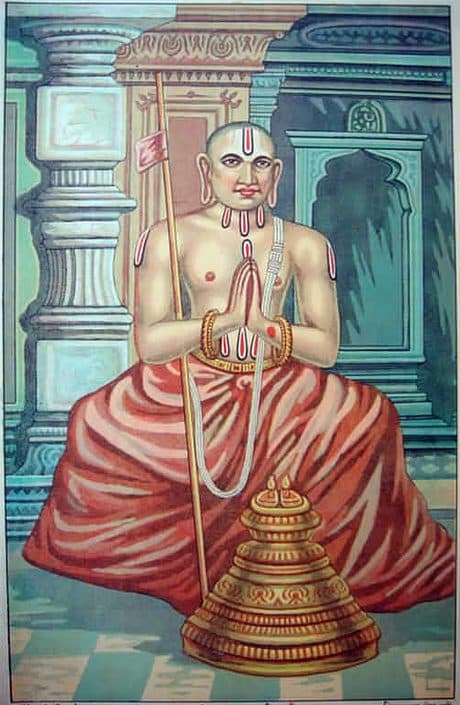
Rāmānuja · Viśiṣṭādvaita
English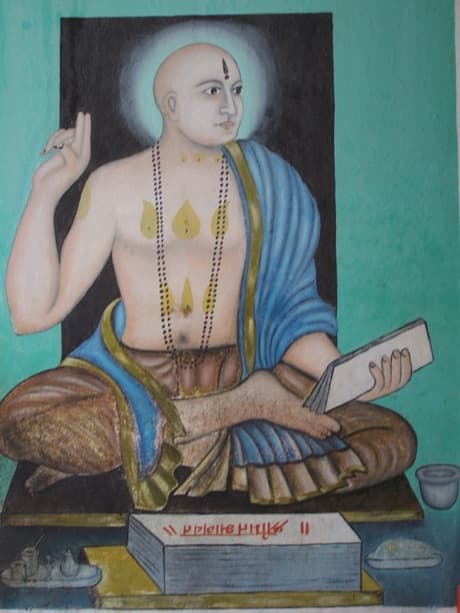
Madhvācārya · Dvaita
Madhva BhāṣyaSanskritEnglishOn verses 15.14–15.15
“वेदनिर्णयात्मिका मीमांसा वेदान्तः | तथाहि सामवेदे प्राचीनशालश्रुतिः - स वेदान्तकृत् स कालक इति | स ह्येव युक्तिमूत्रकृत् स कालक इति ||” – Here Vedanta means the conclusive premises of Vedas. “He is the Time, the creator of the Veda. He, verily, is the Time, the creator of the associated aphorisms” thus also in Samaveda.
Madhvācārya · Dvaita
Gītā Tātparya NirṇayaSanskritEnglishOn verses 15.14–15.15
“स एवाग्निस्थितो विष्णुर्नाम्ना वैश्वानरः सदा | सर्वेषां स नराणां यदुपजिव्यः सदैव च ||” - Sri Vishnu who is abiding thus in the Fire is known as Vaishvanara and ever abiding in all the human beings assists subsistence. “स एव व्यासरूपेण वेदान्तकृदुदाहृतः |” - He, verily as Vyasa, created Vedanta the document explaining the science of Absolute.
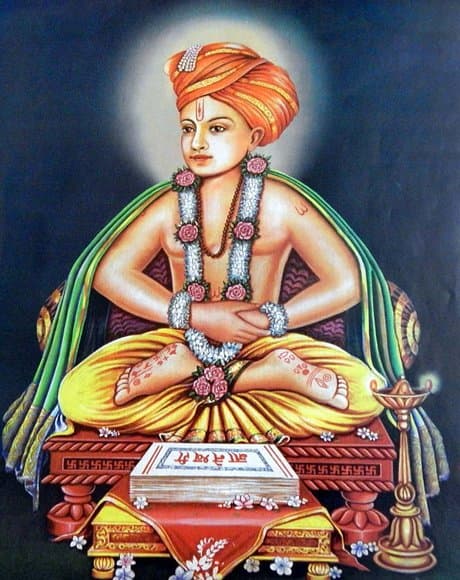
Jñāneśvar · Vārkarī
English14 *“I, becoming the Vaiśvānara (Fire), abide within the body of animals, and, in association with the out-going and incoming Vital Airs, effect the digestion of the fourfold food.”* (407)
Therefore, I become the fire by kindling it, Oh Kiriti, in the navel region of the body of all beings, and working day and night the pair of bellows (a contrivance to drive air into the fire) in the form of Prāna and Apāna (incoming and outgoing Vital airs), effect digestion of unlimited volume of food. I digest all the fourfold food viz. dry, oily, well-cooked, or badly-cooked. In short, I am the entire world as also the feed supplied to it, and I am likewise the fire, the principal means of digesting that feed. Now with all this, to what length I should preach to you the novelty of my pervasion. There is nothing else but myself and I pervade all. Why is it then that some are happy and some miserable in the world? How is it that some of the lamps should be without light when all lamps in the town derive light from one and the same source? Were any such doubt to arise in your mind, I now clear such doubts and hear. I am everywhere and there is nothing else except myself. Yet, I appear (in different ways) to different people, according to their (respective) discerning powers (बुद्धि). Sound is the sole property of the sky: but there naturally arise different sorts of sounds in it according to the varieties of the musical instruments: or there arises only one Sun, quite aloof from world transactions: yet he (Sun) is useful for (diverse) world-transactions: or water takes the form of different trees, according to the properties of the (different) seeds. In that way my spirit (which is homogeneous) is metamorphosed into heterogeneous manifestation of diverse beings. It is like this: There were two men, one an ignorant fool and the other a knowing one; they perceived a double braided necklace of blue gems; the ignorant took it as a serpent (and got frightened), while the knowing one felt happy coming to know of its real nature; or the same 'Swāti' (one of the 27 lunar mansions) rain-water gets converted into pearls in a pearl-oyster, as also into poison in serpents: in that way, I become the cause of pleasure to the wise, while of pain to the ignorant.
Swami Ramsukhdas · Modern
English'Ahaṁ vaiśvānaro bhūtvā prāṇinām dehamāśritaḥ'—Having described the light in the fire as His light, in the twelfth verse, here in this verse He describes, the gastric fire, that digests the four kinds of food.* It means, that it is by God's power, that the fire illumines objects and also digests food. This fire, digests food of immovable creation such as plants, trees and creepers, of movable beings such as birds and beasts etc., as it digests, the food of human beings and enables them to grow. It means, that God in the form of gastric fire, nourishes the bodies of beings.
'Prāṇapānasamāyuktaḥ'—In the body, there are five primary vital airs, known as 'Prāṇa', 'Apāna', 'Samāna', 'Udāna' and 'Vyāna' and there are five secondary vital airs known as 'Nāga', 'Kūrma', 'Kṛkara', 'Devadatta' and 'Dhanāñjaya'.† In the verse, the Lord
* The fire that abides in the stomach is called Vaiśvānara and it digests the food which is eaten.
† The functions of these ten vital airs are as follows:—
(1) Prāṇa:—It resides in the heart. It exhales air, digests the food and so on.
(2) Apāna:—It resides in anus. It inhales air, excretes waste matter and throw out the foetus from the womb.
(3) Samāna:—It resides in the navel. It circulates the essence of the digested food in all the limbs.
(4) Udāna:—It abides in the throat. It separates the solid and the liquid portions of food. It separates the subtle body from the physical body and transmigrates it to another body or to the world.
describes, only two main kinds of vital air— Prāṇa and Apāna which fan the fire, that abides in the stomach and also circulate the essence of the digested food, to every part of the body.
**'Pacāmyannam caturvidham'**—Beings, eat four kinds of food—
(1) Bhojya:—That which is eaten, having been chewed with teeth, such as bread and sweet cake etc.
(2) Peya:—That which is swallowed, as milk and juice etc.
(3) Coṣya:—That which is sucked, such as sugarcane and mango etc. The immovable beings, such as tree etc., receive food, in this way.
(4) Lehya:—That which has to be licked such, as sauce and honey etc.
These four kinds, can further be divided into many other sub-kinds. The Lord, declares that it is He, Who digests the four kinds of food, by becoming gastric fire. No food, can be digested without His power.
**Appendix**—Entering the earth to support all beings, becoming the moon to nourish all vegetation, and becoming the gastric fire to digest the food in the living creatures—all these activities are carried out by God's power. But a man by regarding them to be done by himself, feels proud for nothing—'ahaṁ karomīti vṛthābhimānaḥ'; as a dog, which moves under the bullock-cart in its shade, thinks that it itself alone drives the bullock-cart.
(5) Vyāna:—It abides in whole of the body. It shrinks and expands the body and its parts.
(6) Nāga:—It's function is belching.
(7) Kūrma:—It's function is shutting and opening the eyes.
(8) Kṛkara:—It's function is sneezing.
(9) Devadatta:—It's function is yawning.
(10) Dhanāñjaya:—It abides in the body even after death and puffs out the dead body. In fact, only one vital air is differentiated according to its various functions.
Link:—Having described His illuminating, nourishing and digesting powers, in the preceding three verses, the Lord in the next verse, while concluding the topic, declares that He is the only object, worth knowing.
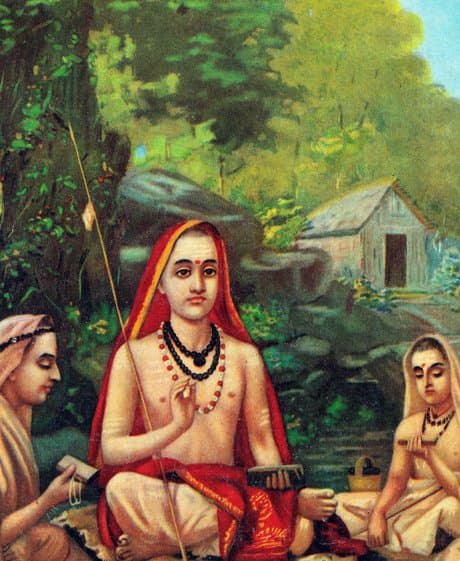
Ādi Śaṅkarācārya · Advaita
Sanskritअहमेव वैश्वानरः उदरस्थः अग्निः भूत्वा -- ``अयमग्निर्वैश्वानरो योऽयमन्तः पुरुषे येनेदमन्नं पच्यते'' (बृ. उ. ५-९-१)इत्यादिश्रुतेः; वैश्वानरः सन् प्राणिनां प्राणवतां देहम् आश्रितः प्रविष्टः प्राणापानसमायुक्तः प्राणापानाभ्यां समायुक्तः संयुक्तः पचामि पक्तिं करोमि अन्नं अशनं चतुर्विधं चतुष्प्रकारं भोज्यं भक्ष्यं चोष्यं लेह्यं च । ``भोक्ता वैश्वानरः अग्निः, अग्नेः भोज्यं अन्नं सोमः, तदेतत् उभयं अग्नीषोमौ सर्वम्'' इति पश्यतः अन्नदोषलेपः न भवति ॥ किञ्च --
Ādi Śaṅkarācārya · Advaita
Hindiमैं ही, पेटमें रहनेवाला जठराग्नि होकर अर्थात् 'यह अग्नि वैश्वानर है जो कि पुरुषके भीतर स्थित है और जिससे यह (खाया हुआ) अन्न पचता है' इत्यादि श्रुतियोंसे जिसका वर्णन किया गया है, वह वैश्वानर होकर, प्राणियोंके शरीरमें स्थित—प्रविष्ट होकर प्राण और अपानवायुसे संयुक्त हुआ भक्ष्य, भोज्य, लेह्य और चोष्य—ऐसे चार प्रकारके अन्नोंको पचाता हूँ।
वैश्वानर अग्नि खानेवाला है और सोम खाया जानेवाला अन्न है। सुतरां यह सारा जगत् अग्नि और सोमस्वरूप है, इस प्रकार देखनेवाला मनुष्य अन्नके दोषसे लिप्त नहीं होता
Jñāneśvar · Vārkarī
Marathiम्हणौनि प्राणिजातांच्या घटीं । करूनि कंदावरी आगिठी । दीप्ति जठरींही किरीटी । मीचि जालों ॥ ४०७ ॥ प्राणापानाच्या जोडभातीं । फुंकफुंकोनियां अहोराती । आटीतसें नेणों किती । उदरामाजीं ॥ ४०८ ॥ शुष्कें अथवा स्निग्धें । सुपक्वें कां विदग्धें । परी मीचि गा चतुर्विधें । अन्नें पचीं ॥ ४०९ ॥ एवं मीचि आघवें जन । जना निरवितें मीचि जीवन । जीवनीं मुख्य साधन । वन्हिही मीचि ॥ ४१० ॥ आतां ऐसियाहीवरी काई । सांगों व्याप्तीची नवाई । येथ दुजें नाहींचि घेईं । सर्वत्र मी गा ॥ ४११ ॥ तरी कैसेनि पां वेखें । सदा सुखियें एकें । एकें तियें बहुदुःखें । क्रांत भूतें ॥ ४१२ ॥ जैसी सगळिये पाटणीं । एकेंचि दीपें दिवेलावणी । जालिया कां न देखणी । उरलीं एकें ॥ ४१३ ॥ ऐसी हन उखिविखी । करित आहासि मानसीं कीं । तरी परिस तेही निकी । शंका फेडुं ॥ ४१४ ॥ पैं आघवा मीचि असें । येथ नाहीं कीर अनारिसें । परी प्राणियांचिया उल्लासें । बुद्धि ऐसा ॥ ४१५ ॥ जैसें एकचि आकाशध्वनी । वाद्यविशेषीं आनानीं । वाजावें पडे भिन्नीं । नादांतरीं ॥ ४१६ ॥ कां लोकचेष्टीं वेगळालां । जो हा एकचि भानु उदैला । तो आनानी परी गेला । उपयोगासी ॥ ४१७ ॥ नाना बीजधर्मानुरूप । झाडीं उपजविलें आप । तैसें परिणमलें स्वरूप । माझें जीवां ॥ ४१८ ॥ अगा नेणा आणि चतुरा । पुढां निळयांचा दुसरा । नेणा सर्पत्वें जाला येरा । सुखालागीं ॥ ४१९ ॥ हें असो स्वातीचें उदक । शुक्तीं मोतीं व्याळीं विख । तैसा सज्ञानांसी मी सुख । दुःख तों अज्ञानांसी ॥ ४२० ॥
Jñāneśvar · Vārkarī
Hindi(15.407) इसलिए सकल प्राणियों के शरीर में नाभिस्थान की जगह अँगीठी बना कर उसकी जठराग्नि भी हो किरीटी! मैं ही बनता हूँ।
(15.408) तथा पेट में प्राण और अपान वायु की जुड़ी हुई धौंकनी से रात-दिन धौंक-धौंक कर न जाने कितना अन्न पचाता हूँ।
(15.409) शुष्क हो या स्निग्ध हो, अच्छा पका हुआ हो या भूँजा हुआ हो, सब — चारों प्रकार का — अन्न मैं ही पचाता हूँ।
(15.410) भाव यह है कि मैं ही सम्पूर्ण प्राणिगण हूँ उनका निर्वाह करनेहारा जीवन भी मैं ही हूँ और जीवन का मुख्य साधन जो अग्नि है वह भी मैं ही हूँ। (15.411) अब इससे अधिक मैं अपनी व्यापकता की अपूर्वता और क्या वर्णन करूँ? संसार में दूसरी वस्तु ही नहीं है। सर्वत्र मुझे ही देख लो।
(15.412) तो फिर कोई प्राणी सर्वदा सुखी और कोई अत्यन्त दुःख से आक्रान्त दिखाई देते हैं सो किस वेष के कारण?
(15.413) नगर-भर में यदि एक ही दीपक से सब दीपक लगाये गये हों तो फिर उनमें कोई अप्रकाशित क्यों रह जायें?
(15.414) ऐसा यदि तुम मन में तर्क-वितर्क करते हो तो उस शंका का भी हम निवारण करते हैं, सुनो।
(15.415) यह बात वस्तुतः मिथ्या नहीं है कि सर्वत्र मैं ही हूँ। परन्तु मैं प्राणियों को उनकी बुद्धि के अनुसार ही प्रकट होता हूँ।
(15.416) जैसे आकाश का गुण जो ध्वनि है सो एक ही है, परन्तु वह जुदे-जुदे वाद्यों में भिन्न-भिन्न नादरूप हो बजती है,
(15.417) अथवा सूर्य एक ही है परन्तु जुदे-जुदे लोक-व्यवहारों के कारण उसका भिन्न-भिन्न उपयोग होता है,
(15.418) अथवा जल बीजधर्म के अनुरूप वृक्षों को उत्पन्न करता है, उसी प्रकार मेरा स्वरूप भी सम्पूर्ण जीवों में परिणत हुआ है। (15.419) अजी! जैसे अज्ञानियों और चतुरों के सन्मुख रखा हुआ दुलड़ा हार अज्ञानियों को सर्प प्रतीत होता है पर ज्ञानियों को सुख का हेतु होता है,
(15.420) और रहने दो, जैसे स्वाती का जल सीप में मोती और सर्प में विष उत्पन्न करता है वैसे ही ज्ञानियों को मैं सुखरूप हूँ और अज्ञानियों को दुःखरूप।
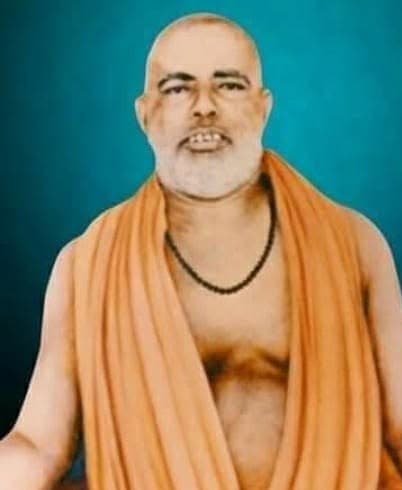
Sri Udiya Baba · Modern
Hindiभावार्थ— मैं वैश्वानर अग्नि होकर प्राणियों के देह में स्थित हो प्राण और अपान से मिलकर उनके लाये हुए चार प्रकार के अन्न को पचाता हूँ।
व्याख्या— चार प्रकार के अन्न—भक्ष्य, भोज्य, लेह्य और चोष्य। अथवा पृथ्वी, जल, तेज और वायु, जो विराट् भगवान् के अन्न हैं। इस प्रकार जड़-चेतन सब में ही हूँ।
प्रश्न— जो वस्तु जड़ होती है वह चेतन नहीं हो सकती। अतः यह कैसे सम्भव है कि जड़-चेतन सब में ही हूँ?
उत्तर— जैसे नख जड़ (निर्जीव) है, किन्तु वे चेतन (सजीव) शरीर से भिन्न नहीं है, उसी प्रकार मैं चराचर जगत् से भिन्न नहीं हूँ। 'सब में हूँ' ऐसी भावना करना उपासना है और ऐसा अनुभव करना ज्ञान है। परन्तु ऐसा अनुभव होने पर सब नहीं रहता, 'मैं' ही रह जाता है, इसलिये वह कहेगा किससे।
Swami Ramsukhdas · Modern
Hindi'अहं वैश्वानरो भूत्वा प्राणिनां देह-माश्रितः'—बारहवें श्लोकमें अग्निकी प्रकाशन-शक्तिमें अपने प्रभावका वर्णन करनेके बाद भगवान् इस श्लोकमें वैश्वानररूप अग्निकी पाचन-शक्तिमें अपने प्रभावका वर्णन करते हैं। तात्पर्य यह है कि अग्निके दोनों ही कार्य (प्रकाश करना और पचाना) भगवान्की ही शक्तिसे होते हैं।
प्राणियोंके शरीरको पुष्ट करने तथा उनके प्राणोंकी रक्षा करनेके लिये भगवान् ही वैश्वानर-(जठराग्नि-) के
रूपसे उन प्राणियोंके शरीरमें रहते हैं। मनुष्योंकी तरह लता, वृक्ष आदि स्थावर और पशु, पक्षी आदि जंगम प्राणियोंमें भी वैश्वानरकी पाचन-शक्ति काम करती है। लता, वृक्ष आदि जो खाद्य, जल ग्रहण करते हैं, पाचन-शक्तिके द्वारा उसका पाचन होनेके फलस्वरूप ही उन लता-वृक्षादिकी वृद्धि होती है।
'प्राणापानसमायुक्तः'—शरीरमें प्राण, अपान, समान, उदान और व्यान—ये पाँच प्रधान वायु एवं नाग, कूर्म, कूकर, देवदत्त और धनंजय—ये पाँच उपप्रधान वायु रहती
१-न विदुः सोम ते मायां ये च नक्षत्रयोनयः । त्वमादित्यपथादूर्ध्वं ज्योतिषां चोपरिस्थितः ॥
(पद्मपुराण, सृष्टि ४१। १२८)
२-'अयमग्निवैश्वानरो योऽयमन्तः पुरुषे येनेदमन्नं पच्यते यदिदमद्यते।' (बृहदारण्यक ५। १। १)
'जो यह पुरुषके भीतर अग्नि है, यह वैश्वानर है, जिससे यह अन्न जो भक्षण किया जाता है, पचाया जाता है।'
हैं। इस श्लोकमें भगवान् दो प्रधान वायु—प्राण और अपानका ही वर्णन करते हैं; क्योंकि ये दोनों वायु जठरागिनको प्रदीप्त करती हैं। जठरागिनसे पचे हुए भोजनके सूक्ष्म अंश या रसको शरीरके प्रत्येक अंगमें पहुँचानेका सूक्ष्म कार्य भी मुख्यतः प्राण और अपान वायुका ही है।
‘पचाम्यन्नं चतुर्विधम्’—प्राणी चार प्रकारके अन्नका भोजन करते हैं—
(१) **भोज्य**—जो अन्न दाँतोंसे चबाकर खाया जाता है; जैसे—रोटी, पुआ आदि।
(२) **पेय**—जो अन्न निगला जाता है; जैसे खिचड़ी, हलवा, दूध, रस आदि।
(३) **चोष्य**—दाँतोंसे दबाकर जिस खाद्य पदार्थका रस चूसा जाता है और बचे हुए असार भागको थूक दिया जाता है; जैसे—ऊख, आम आदि। वृक्षादि स्थावर योनियाँ इसी प्रकारसे अन्नको ग्रहण करती हैं।
(४) **लेह्य**—जो अन्न जिह्वासे चाटा जाता है; जैसे—चटनी, शहद आदि।
अन्नके उपर्युक्त चार प्रकारोंमें भी एक-एकके अनेक भेद हैं। भगवान् कहते हैं कि उन चारों प्रकारके अन्नोंको वैश्वानर-(जठरागिन-) रूपसे मैं ही पचाता हूँ। अन्नका ऐसा कोई अंश नहीं है, जो मेरी शक्तिके बिना पच सके।
**परिशिष्ट भाव**—पृथ्वीमें प्रविष्ट होकर सम्पूर्ण प्राणियोंको धारण करना, चन्द्रमा होकर सम्पूर्ण वनस्पतियोंका पोषण करना, फिर उनको खानेवाले प्राणियोंके भीतर जठरागिन होकर खाये हुए अन्नको पचाना आदि सम्पूर्ण कार्य भगवान्की ही शक्तिसे होते हैं। परन्तु मनुष्य उन कार्योंको अपने द्वारा किया जानेवाला मानकर मुफ्तमें ही अभिमान कर लेता है—‘अहं करोमीति वृथाभिमानः’; जैसे बैलगाड़ीके नीचे छायामें चलनेवाला कुत्ता समझता है कि बैलगाड़ी में ही चलाता हूँ!
सम्बन्ध—पीछेके तीन श्लोकोंमें अपनी प्रभावयुक्त विभूतियोंका वर्णन करके अब उस विषयका उपसंहार करते हुए भगवान् सब प्रकारसे जाननेयोग्य तत्त्व स्वयंको बताते हैं।
Lord Krishna declares that He is vaiśvānara - the digestive fire - which joins together with the vital breaths of prāṇa or exhalation and apāna or inhalation.
Together they digest in the stomach the four kinds of food which are foods that are khadva or chewed, soshva or sucked, lehya or licked and peya or drank.
In these last three verses Lord Krishna is specifying integral functions of the jīvas or embodied beings and of the Earth that are manifestations of His opulent glories.
The expressions that He becomes the light of the sun, moon and fire etc. are meant to indicate the predicated relationship that theses object have in regard to Him. That fact that such relationships exist in reference to all things is substantiated in the next verse.