

Bhagavad Gītā · Chapter 15 · Puruṣottama Yoga
यस्मात्क्षरमतीतोऽहमक्षरादपि चोत्तमः
अतोऽस्मि लोके वेदे च प्रथितः पुरुषोत्तमः
yasmātkṣaramatīto'hamakṣarādapi cottamaḥ|ato'smi loke vede ca prathitaḥ puruṣottamaḥ||
Word meanings
यस्मात् = because, since
अहम् = I
क्षरम् = the perishable
अतीतः = I am beyond
च = and
अक्षरात् = than the imperishable
अपि = also
उत्तमः = superior
अतः = therefore
लोके = in the world
च = and
वेदे = in the Veda
पुरुषोत्तमः = as Puruṣottama, the Supreme Person
प्रथितः = renowned, celebrated
अस्मि = I am
Translation
Since I am wholly beyond the perishable world of matter of Ksetra, and am superior even to the imperishable soul, hence I am known as the Purusottama in the world as well as in the Vedas.
Commentary
The commentators seated around this verse
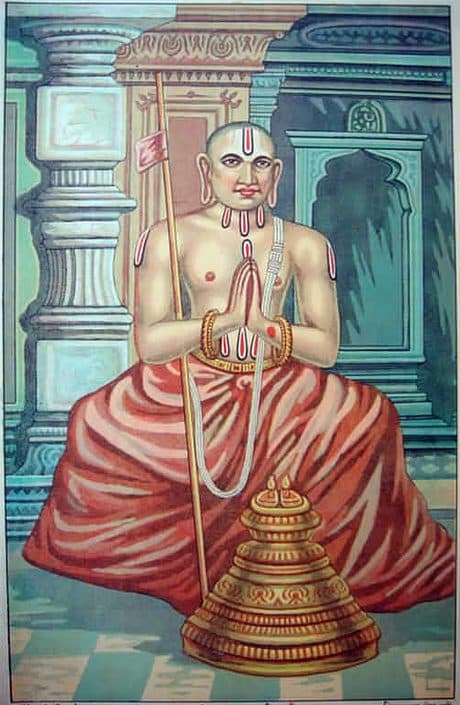
Rāmānuja · Viśiṣṭādvaita
English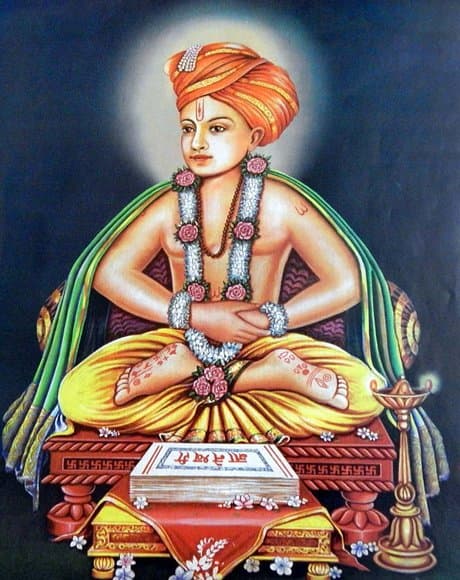
Jñāneśvar · Vārkarī
English18 *'Since I have transcended the Mutable and am even superior to the Immutable, therefore it is that, both in the world and in the Veda, I am proclaimed as the Purushottam (Highest Person).'* (557)
Oh Dhananjaya, he illumines himself—in fact, there is no need to say more, there is no duality in him. I (myself) am that one attribute-less—superior to the Kshara as well as Akshara and the sole single one: and therefore it is, that both the Vedas and the world proclaim me as 'Purushottama' (Highest Person).
Swami Ramsukhdas · Modern
English'Yasmātkṣaramatīto'ham'—The Lord declares, that the perishable (Nature) is kaleidoscopic, while He remains the same,
without undergoing any modifications. So, He transcends the perishable.
Senses are superior to a body, superior to the senses, is mind, superior to the mind, is intellect (Gītā 3/42). In spite of the superiority, of one to the other, the body, senses, mind and the intellect are insentient, and belong to the same class. But, God, transcends all of them, as He is sentient, while all of them, are insentient.
'Akṣarādapi cottamaḥ'—Though, being a fragment of God, the soul, (the imperishable) has Its identity with God, yet here the Lord, declares that He is superior even to the soul. How? There are few reasons: (1) The soul in spite of being a fragment of God, assumes Its affinity for the perishable Nature (Gītā 15/7) and is deluded by modes of Nature, while God (being beyond Nature) never gets deluded, (Gītā 7/13), (2) God, subduing His own Nature, manifests Himself (incarnates), (Gītā 4/6) while the embodied soul, being under compulsion by Nature, streams forth into being (Gītā 8/19), (3) God ever remains untainted (Gītā 4/14; 9/9), while the embodied soul, has to attain the state of untaintedness (Gītā 4/18; 7/14).
When the Lord declares, that He transcends the perishable, and is even higher, than the imperishable, He also means to mention, that the perishable and the imperishable, are also different. Had they not been different, the Lord would have declared, 'I transcend the perishable and the imperishable, or I am higher than the perishable and the imperishable.' It proves that the imperishable, also transcends the perishable, and is higher than it, in the same way as God, transcends the perishable and is higher than, the imperishable.
'Ato'smi loke vede ca prathitaḥ puruṣottamaḥ'—Here the term 'Loke', stand for scripture, in which God is celebrated as 'Puruṣottama', (Supreme Person).
The term 'Veda', means pure knowledge, which is
beginningless. The same knowledge was revealed serially, in the form of the Vedas, such as the Rk and the Yajuh etc. In the Vedas, God has been declared as 'Puruṣottama'.
The Lord, in the preceding verse, declared, 'Other than the perishable and the imperishable, is the Supreme Person.' So here He discloses the secret, that He is the Supreme Person, celebrated as 'Puruṣottama'.
An Important Fact
(1) The entire universe is perishable, while the soul, the fragment of God, is imperishable. Though the imperishable transcends the perishable, and is higher than it, yet the former errs, by assuming its affinity, for the latter. The body like running water of a river, is flowing continuously, while the soul like a fixed rock, ever remains immovable and detached. A body of childhood, changes into a body of boyhood, but 'I', ever remains the same. But we cannot say which day, childhood ended and boyhood, commenced. Had the imperishable, been kaleidoscopic and perishable, there would have been no question of its repeated birth and death. But in spite of, being uniform and imperishable, it assumes Its affinity for the kaleidoscopic and the perishable, and so, It is repeatedly born and dies. In order to, get rid of this birth and death, the perishable (body etc., should be used in rendering service to the world, to such an extent, that a body, becomes manure in the world-garden. God has bestowed upon a man, objects such as, human body etc., to render selfless service to others, rather than to lay claim on them. Therefore, it is the duty of a man, to use them in the service of others. To regard them as his own, is a blunder. (2) In the fifteenth chapter, the Lord first described the perishable Pīpala tree in the form of a world. Then He inspired, Arjuna to cut off this tree and take refuge, in the Supreme Person. Afterwards He described the soul and mentioned It, as His fragment. Then
(from the twelfth verse to the fifteenth verse) He explained, that the light (splendour) in the sun, the moon, and the fire, is His; and permeating the earth, He supports all beings and having become gastric fire, He digests food; He is seated in the hearts of all; He is the source of memory, knowledge and ratiocinative faculty; He is to be known by the Vedas; He is the author of the Vedānta, and knower of the Vedas. Having mentioned His supreme power, the Lord in this verse, reveals the secret of secrets, that He, Lord Kṛṣṇa, sitting before him, is the Supreme Person known as Puruṣottama.
Lord Kṛṣṇa, by His special grace, disclosed His identity to Arjuna, like a father who addresses his son of his secret treasure, or like an officer who discloses his identity to a person who is seeking him.
**Appendix**—The Lord has used the term ‘yasmāt’ (because) here in order to draw attention of the strivers towards His unworldliness (divinity).
‘Akṣarādapi cottamaḥ’—the term ‘imperishable’ has been used for both the Self and Brahma—‘akṣaram brahma paramam’ (Gītā 8/3). This term always stands for the sentient, it never stands for the insentient.
The perishable (world) and the imperishable (soul) have no independent existence but God has His independent existence. The perishable and the imperishable—both abide in God. But the imperishable (soul), being attached to the perishable, becomes dependent on the latter—‘yayedam dhāryate jagat’ (Gītā 7/5). God naturally remains detached, He does not become dependent on the perishable—‘yasmāt kṣaramatīto’ham’. Therefore God is superior even to the imperishable (soul). If the man (soul) instead of being attached to the world, gets attached to God, he will become one with God—‘jñānītvātmaiva me matam’ (Gītā 7/18).
In salvation a striver gets established in the imperishable (Self) but in devotion, the Supreme Person Who is superior to
the imperishable is attained. The Self is a fragment while the Supreme Person is the whole.
*Link:—The Lord, now in the next verse, concludes the topic of unswerving devotion, mentioned in the twenty-sixth verse of the fourteenth chapter, for attaining which, the world, the soul and the Supreme Person, have been described in detail in this chapter.*
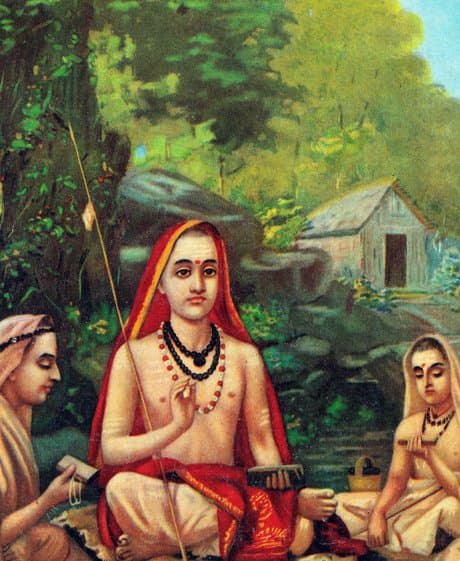
Ādi Śaṅkarācārya · Advaita
Sanskritयस्मात् क्षरं अतीतः अहं संसारमायावृक्षं अश्वत्थाख्यं अतिक्रान्तः अहम् अक्षरादपि संसारमायारूपवृक्षबीजभूतादपि च उत्तमः उत्कृष्टतमः ऊर्ध्वतमो वा, अतः ताभ्यां क्षराक्षराभ्यां उत्तमत्वात् अस्मि लोके वेदे च प्रथितः प्रख्यातः । पुरुषोत्तमः इत्येवं मां भक्तजनाः विदुः । कवयः काव्यादिषु च इदं नाम निबध्नन्ति । पुरुषोत्तम इत्यनेनाभिधानेनाभिगृणन्ति ॥ अथ इदानीं यथानिरुक्तं आत्मानं यो वेद, तस्य इदं फलं उच्यते --
Ādi Śaṅkarācārya · Advaita
Hindiउपर्युक्त ईश्वरका 'पुरुषोत्तम' यह नाम प्रसिद्ध है, उसका यह नाम किस कारणसे हुआ? इसकी हेतुसहित उपपत्ति बतलाकर, नामकी सार्थकता दिखलाते हुए भगवान् अपने स्वरूपको प्रकट करते हैं कि 'मैं निरतिशय ईश्वर हूँ'—
क्योंकि मैं क्षरभावसे अतीत हूँ अर्थात् अश्वत्थ नामक मायामय संसारवृक्षका अतिक्रमण किये हुए हूँ और संसारवृक्षके बीजस्वरूप अक्षरसे (मूल प्रकृतिसे) भी उत्तम—अतिशय उत्कृष्ट अथवा अतिशय उच्च हूँ। इसीलिये अर्थात् क्षर और अक्षरसे उत्तम होनेके कारण लोक और वेदमें मैं पुरुषोत्तम नामसे विख्यात हूँ। भक्तजन मुझे इसी प्रकार जानते हैं और कविजन भी काव्यादिमें इसी नामका प्रयोग करते हैं अर्थात् 'पुरुषोत्तम' इसी नामसे ही मेरा वर्णन करते हैं
Jñāneśvar · Vārkarī
Marathiजो आपणपेंचि आपणया । प्रकाशीतसे धनंजया । काय बहु बोलों जया । नाहीं दुजें ॥ ५५७ ॥ तो गा मी निरुपाधिकु । क्षराक्षरोत्तमु एकु । म्हणौनि म्हणे वेद लोकु । पुरुषोत्तमु ॥ ५५८ ॥
Jñāneśvar · Vārkarī
Hindi(15.557) हे धनंजय! जो आप ही निज को प्रकाशित करता है, बहुत क्या कहूँ, जिसे द्वैत नहीं है,
(15.558) ऐसा उपाधिरहित पुरुष एक मैं हूँ, जो क्षर और अक्षर पुरुषों से उत्तम हूँ। अतएव वेद और शास्त्र मुझे पुरुषोत्तम कहते हैं।
Sri Udiya Baba · Modern
Hindiभावार्थ— क्योंकि मैं क्षर से परे और अक्षर से भी उत्तम हूँ, इसलिये मैं लोक और वेद 'पुरुषोत्तम' नाम से प्रसिद्ध हूँ।
व्याख्या— अक्षर शब्द से जीव या माया ग्रहण किये जाते हैं तथा क्षर से प्रकृति और उसके कार्य। ये सभी नाशवान् और परप्रकाश्य हैं। तथा मैं क्षर से परे और अक्षर से उत्तम हूँ, इसलिये 'पुरुषोत्तम' कहा जाता हूँ। इससे सिद्ध हुआ कि पुरुषोत्तम तत्त्व सबसे बड़ा है, उसकी अपेक्षा क्षर और अक्षर छोटे हैं, क्योंकि जहाँ कोई बड़ा होता है वहाँ छोटे भी होते हैं। वास्तव में तो न कोई बड़ा है न छोटा, सब भगत्वस्वरूप ही हैं। जैसे पत्थर की मूर्ति पत्थर से भिन्न नहीं होती वैसे ही संसार परमात्मा से भिन्न नहीं है।
प्रश्न— यदि संसार परमात्मा से भिन्न नहीं है तो सभी परमात्मा को प्राप्त क्यों नहीं कर लेते?
उत्तर— परमात्मा को असम्मूद (विवेकी या बोधवान्) ही प्राप्त कर सकते हैं, स्त्री-पुत्रादि में आसक्ति वाले नहीं। यही बात आगे बतलाते हैं—
Swami Ramsukhdas · Modern
Hindi'यस्मात्क्षरमतीतोऽहम्'—इन पदोंमें भगवान्का यह भाव है कि क्षर (प्रकृति) प्रतिक्षण परिवर्तनशील है और मैं नित्य-निरन्तर निर्विकाररूपसे ज्यों-का-त्यों रहनेवाला हूँ। इसलिये मैं क्षरसे सर्वथा अतीत हूँ।
शरीरसे पर (व्यापक, श्रेष्ठ, प्रकाशक, सबल, सूक्ष्म) इन्द्रियाँ हैं, इन्द्रियोंसे पर मन है और मनसे पर बुद्धि है (गीता—तीसरे अध्यायका बयालीसवाँ श्लोक)। इस प्रकार एक-दूसरेसे पर होते हुए भी शरीर, इन्द्रियाँ, मन और बुद्धि एक ही जातिके, जड़ हैं। परन्तु परमात्मतत्त्व इनसे भी अत्यन्त पर है; क्योंकि वह जड़ नहीं है, प्रत्युत चेतन है।
'अक्षरादपि चोत्तमः'—यद्यपि परमात्माका अंश होनेके कारण जीवात्मा-(अक्षर-) की परमात्मासे तात्त्विक एकता है, तथापि यहाँ भगवान् अपनेको जीवात्मासे भी उत्तम बताते हैं। इसके कारण ये हैं—(१) परमात्माका अंश होनेपर भी जीवात्मा क्षर-(जड़ प्रकृति-) के साथ अपना सम्बन्ध मान लेता है (गीता—पन्द्रहवें अध्यायका सातवाँ श्लोक) और प्रकृतिके गुणोंसे मोहित हो जाता है, जबकि परमात्मा (प्रकृतिसे अतीत होनेके कारण) कभी मोहित नहीं होते (गीता—सातवें अध्यायका तेरहवाँ श्लोक)। (२) परमात्मा प्रकृतिको अपने अधीन करके लोकमें
आते, अवतार लेते हैं (गीता—चौथे अध्यायका छठा श्लोक), जबकि जीवात्मा प्रकृतिके वशमें होकर लोकमें आता है (गीता—आठवें अध्यायका उन्नीसवाँ श्लोक)। (३) परमात्मा सदैव निलिप्त रहते हैं, (गीता—चौथे अध्यायका चौदहवाँ और नवें अध्यायका नवाँ श्लोक), जबकि जीवात्माको निलिप्त होनेके लिये साधन करना पड़ता है (गीता—चौथे अध्यायका अठारहवाँ और सातवें अध्यायका चौदहवाँ श्लोक)।
भगवान्द्वारा अपनेको क्षरसे 'अतीत' और अक्षरसे 'उत्तम' बतानेसे यह भाव भी प्रकट होता है कि क्षर और अक्षर—दोनोंमें भिन्नता है। यदि उन दोनोंमें भिन्नता न होती, तो भगवान् अपनेको या तो उन दोनोंसे ही अतीत बताते या दोनोंसे ही उत्तम बताते। अतः यह सिद्ध होता है कि जैसे भगवान् क्षरसे अतीत और अक्षरसे उत्तम हैं, ऐसे ही अक्षर भी क्षरसे अतीत और उत्तम है।
'अतोऽस्मि लोके वेदे च प्रथितः पुरुषोत्तमः'—यहाँ 'लोके' पदका अर्थ है—पुराण, स्मृति आदि शास्त्र। शास्त्रोंमें भगवान् 'पुरुषोत्तम' नामसे प्रसिद्ध हैं।
शुद्ध ज्ञानका नाम 'वेद' है, जो अनादि है। वही ज्ञान आनुपूर्वरूपसे ऋक्, यजुः आदि वेदोंके रूपसे प्रकट हुआ है। वेदोंमें भी भगवान् 'पुरुषोत्तम' नामसे प्रसिद्ध हैं।
पूर्वश्लोकमें भगवान्ने कहा था कि क्षर और अक्षर—दोनोंसे उत्तम पुरुष तो अन्य ही है। वह उत्तम पुरुष कौन है—इसको बताते हुए भगवान् यह रहस्य प्रकट करते हैं कि वह उत्तम पुरुष—‘पुरुषोत्तम’ में ही हूँ।
विशेष बात
(१) भौतिक सृष्टिमात्र ‘क्षर’ (नाशवान्) है और परमात्माका सनातन अंश जीवात्मा ‘अक्षर’ (अविनाशी) है। क्षरसे अतीत और उत्तम होनेपर भी अक्षरने क्षरसे अपना सम्बन्ध मान लिया—इससे बढ़कर और कोई दोष, भूल या गलती है ही नहीं। क्षरके साथ यह सम्बन्ध केवल माना हुआ है, वास्तवमें एक क्षण भी रहनेवाला नहीं है। जैसे बाल्यावस्थासे अबतक शरीर बिलकुल बदल गया, फिर भी हम कहते हैं कि ‘मैं वही हूँ।’ यह भी हम नहीं बता सकते कि अमुक दिन बाल्यावस्था खत्म हुई और युवावस्था शुरू हुई। कारण कि नदीके प्रवाहकी तरह शरीर निरन्तर ही बहता रहता है, जब कि अक्षर (जीवात्मा) नदीमें स्थित शिला-(चट्टान-) की तरह सदा अचल और असंग रहता है। यदि अक्षर भी क्षरकी तरह निरन्तर परिवर्तनशील और नाशवान् होता तो इसकी आफत मिट जाती। परन्तु स्वयं (अक्षर) अपरिवर्तनशील और अविनाशी होते हुए भी निरन्तर परिवर्तनशील और नाशवान् क्षरको पकड़ लेता है—उसको अपना मान लेता है। होता यह है कि अक्षर क्षरको छोड़ता नहीं और क्षर एक क्षण भी ठहरता नहीं। इस आफतको मिटानेका सुगम उपाय है—क्षर-(शरीरादि-) को क्षर-(संसार-) की ही सेवामें लगा दिया जाय—उसको संसाररूपी वाटिकाकी खाद बना दी जाय।
मनुष्यको शरीरादि नाशवान् पदार्थ अधिकार करने अथवा अपना माननेके लिये नहीं मिले हैं, प्रत्युत सेवा करनेके लिये ही मिले हैं। इन पदार्थोंके द्वारा दूसरोंकी सेवा करनेकी ही मनुष्यपर जिम्मेवारी है, अपना माननेकी
बिलकुल जिम्मेवारी नहीं।
(२) पन्द्रहवें अध्यायमें भगवान्ने पहले क्षर—संसार-वृक्षका वर्णन किया। फिर उसका छेदन करके परम पुरुष परमात्माके शरण होने अर्थात् संसारसे अपनापन हटाकर एकमात्र परमात्माको अपना माननेकी प्रेरणा की। फिर अक्षर—जीवात्माको अपना सनातन अंश बताते हुए उसके स्वरूपका वर्णन किया। उसके बाद भगवान्ने (बारहवेंसे पन्द्रहवें श्लोकतक) अपने प्रभावका वर्णन करते हुए बताया कि सूर्य, चन्द्र और अग्निमें मेरा ही तेज है; मैं ही पृथ्वीमें प्रविष्ट होकर अपनी शक्तिसे चराचर सब प्राणियोंको धारण करता हूँ; मैं ही अमृतमय चन्द्रके रूपसे सम्पूर्ण वनस्पतियोंको पुष्ट करता हूँ; वैश्वानर अग्निके रूपमें मैं ही प्राणियोंके शरीरमें स्थित होकर उनके द्वारा खाये हुए अन्नको पचाता हूँ; मैं ही सब प्राणियोंके हृदयमें अन्तर्यामीरूपसे विद्यमान हूँ; मेरेसे ही स्मृति, ज्ञान और अपोहन (भ्रम, संशय आदि दोषोंका नाश) होता है; वेदादि सब शास्त्रोंके द्वारा मैं ही जाननेयोग्य हूँ; और वेदोंके अन्तिम सिद्धान्तका निर्णय करनेवाला तथा वेदोंको जाननेवाला भी मैं ही हूँ। इस प्रकार अपना प्रभाव प्रकट करनेके बाद इस श्लोकमें भगवान् यह गुह्यतम रहस्य प्रकट करते हैं कि जिसका यह सब प्रभाव है, वह (क्षरसे अतीत और अक्षरसे उत्तम) ‘पुरुषोत्तम’ में (साक्षात् साकाररूपसे प्रकट श्रीकृष्ण) ही हूँ।
भगवान् श्रीकृष्णने अर्जुनपर बहुत विशेष कृपा करके ही अपने रहस्यकी बात अपने मुखसे प्रकट की है; जैसे—कोई पिता अपने पुत्रके सामने अपनी गुप्त सम्पत्ति प्रकट कर दे अथवा कोई आदमी किसी भूले-भटके मनुष्यको अपना परिचय दे दे कि जिसके लिये तू भटक रहा है, वह मैं ही हूँ और तेरे सामने बैठा हूँ!
**परिशिष्ट भाव**—अपनी अलौकिकताकी तरफ दृष्टि करानेके लिये यहाँ भगवान्ने ‘यस्मात्’ पद दिया है। ‘अक्षरादपि चोत्तमः’—‘अक्षर’ शब्द जीवात्माके लिये भी आता है और ब्रह्मके लिये भी—‘अक्षरं ब्रह्म परमम्’ (गीता ८। ३)। यह शब्द सब जगह चेतनका वाचक ही आता है, जड़का वाचक कहीं नहीं आता।
क्षर और अक्षरकी स्वतन्त्र सत्ता नहीं है, पर परमात्माकी स्वतन्त्र सत्ता है। क्षर और अक्षर दोनों परमात्मामें ही रहते हैं। परन्तु अक्षर अर्थात् जीव क्षरके साथ सम्बन्ध जोड़कर उसके अधीन हो जाता है—‘ययेदं धार्यते जगत्’ (गीता ७। ५)। परमात्मा स्वतः असंग रहते हैं, वे क्षरके अधीन नहीं होते—‘यस्मात्क्षरमतीतोऽहम्’। इसलिये परमात्मा अक्षर (जीव) से भी उत्तम है। अगर जीव जगत्के साथ सम्बन्ध न जोड़कर उसके स्वामी परमात्माके साथ सम्बन्ध जोड़े तो वह परमात्मासे अभिन्न (आत्मीय) हो जायगा—‘ज्ञानी त्वात्मैव मे मतम्’ (गीता ७। १८)।
मुक्तिमें तो अक्षर (स्वरूप)में स्थिति होती है, पर भक्तिमें अक्षरसे भी उत्तम पुरुषोत्तमकी प्राप्ति होती है। स्वरूप अंश है, पुरुषोत्तम अंशी हैं।
सम्बन्ध—चौदहवें अध्यायके छब्बीसवें श्लोकमें भगवान्ने जिस अव्यभिचारिणी भक्तिकी बात कही थी और जिसको प्राप्त करानेके लिये इस पन्द्रहवें अध्यायमें संसार, जीव और परमात्माका विस्तृत विवेचन किया गया, उसका अब आगेके श्लोकमें उपसंहार करते हैं।
The reality of the Supreme Lord Krishna is transcendent to both the kṣara or perishable, which includes all jīvas or embodied beings, as well as akṣara or imperishable including all the ātmas or immortal souls.
He is celebrated and glorified as Puruṣottama the Supreme Being.
The word loke obviously means worlds but due to its proximity to vede meaning the Vedas it can refer to the smṛiti such as the Vishnu Purāṇa V.XVII.XXXIII which states:
“Incarnations of Puruṣottama descending from Vishnu are without a beginning, middle or end”.
An example from śruti is the Chāṇḍogya Upaniṣad VIII.XII.III beginning: evamevaisa samprasado asma charirat samuthaya param states:
“Achieving liberation the soul attains a glorious effulgent form revelling in its position at the feet of the Supreme Being.”
So in conclusion loke vede can mean that the Supreme Lord celebrated as Puruṣottama is glorified in both sections of the Vedic scriptures known as śruti and smriti and it can mean that He is glorified in all the worlds.