

Bhagavad Gītā · Chapter 15 · Puruṣottama Yoga
अधश्चोर्ध्वं प्रसृतास्तस्य शाखा गुणप्रवृद्धा विषयप्रवालाः
अधश्च मूलान्यनुसन्ततानि कर्मानुबन्धीनि मनुष्यलोके
adhaścordhvaṃ prasṛtāstasya śākhā guṇapravṛddhā viṣayapravālāḥ|adhaśca mūlānyanusantatāni karmānubandhīni manuṣyaloke||
Word meanings
तस्य = its
गुणप्रवृद्धाः = nourished by the guṇas
विषयप्रवालाः = with sense-objects for shoots
शाखाः = branches
अधः = below
च = and
ऊर्ध्वम् = above
प्रसृताः = spread
मनुष्यलोके = in the world of men
कर्मानुबन्धीनि = bound by action
मूलानि = roots
अधः = below
च = and
अनुसन्ततानि = extended
Translation
Fed by the three Gunas and having sense-objects for their tender leaves, the branches of the aforesaid tree (in the shape of the different orders of creation) extend both downwards and upwards; and its roots, which bind the soul according to its action in the human body, are spread in all regions, higher as well as lower.
Commentary
The commentators seated around this verse

Rāmānuja · Viśiṣṭādvaita
English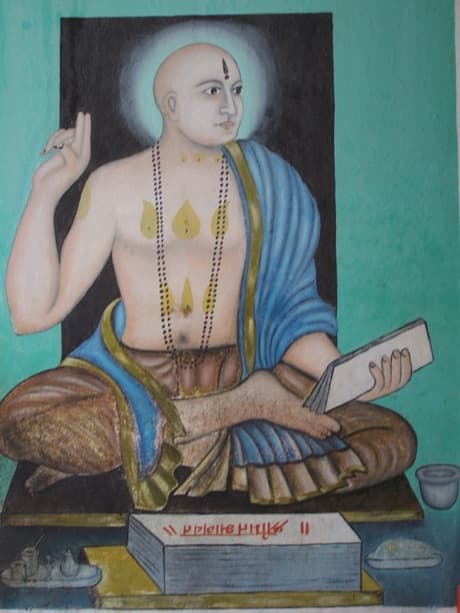
Madhvācārya · Dvaita
Madhva BhāṣyaSanskritEnglish“अव्यक्तेऽपि सूक्ष्मरूपेण सन्ति शरीरादौ च भूतानि इति अधश्वोर्ध्वं च प्रसूताः | गुणैः सत्त्वादिभिः | प्रतीतिमात्रसुखत्वात् प्रवाला विषयाः | मूलानि भगवद्व्यपादीनि | भगवान्पि कर्मानुवन्धेन हि फलं ददाति | तथाहि भाल्लवेयशाखायां - ब्रह्म वा अस्य पृथक्मूलं प्रकृतिः समूलं सत्त्वादयो अर्वाचीनमूलम् | भूतानि शाखाश्छन्दानि पत्राणि देवनृतिञ्चश्च शाखाः | पत्रेभ्यो हि फलं जायते | मात्राः शिफा मुक्तिः फलमुक्तिः फलम् मोक्षो रसोऽमोक्षो रसोऽव्यक्ते च शाखा व्यक्ते च शाखा अव्यक्ते च मूलं व्यक्ते च मूलं न होष कदाचनान्यथा जायते नान्यथा जायते || इति ||” - Since the self exists in subtle form in the bodies of the creatures, it is said to have spread upwards and downwards. Attributes are saatvic and the rest. Being pleasant during experience, they are referred as sprouts. The roots are the different forms of divine resplendence. The Resplendent Lord grants fruits according to the performance of the actions. “In this World-Tree, the Brahman has entered as the principal root thereof with Prakriti as the subsidiary roots. The attributes like satva are the consequent roots. Elements are the branches; hymns are the leaves. Gods and the Human beings are the smaller branches. From the leaves, verily, do the fruits come about, some becoming fibrous roots. In this (Ashwattha tree) there are fruits of liberation as well as of non-liberation; juices of liberation as well as of non-liberation, unmanifest branches as well as the manifest; unmanifest roots as well as the manifest. Of this Ashwattha the attributes are like the sprouting leaves, pleasant as well as unpleasant. This does not otherwise come to happen nor does it not happen at all”, thus in Bhallava Section..
Madhvācārya · Dvaita
Gītā Tātparya NirṇayaSanskritEnglish“कारणेषु स्थितं कार्यं व्याप्तं कार्येषु कारणम् | अन्योन्यसंयुताः शाखा मूलानि तु सदैव तु | विषया दर्शनीयत्वात् प्रवालसदृशा मताः ||” - In the cause is concealed the result and the result conceals the cause. In this manner roots and the branches are eternally interconnected. The sense-objects being alluring, are said to be like the sprouts.

Jñāneśvar · Vārkarī
English2 "Downwards as well as upwards are its branches extended, waxing strong by the Guṇas, with the sense-objects for their leafage. Downwards do the roots (and rootlets) successively spread—being tethered—on to the Karmans—into (this) world of humanity. (144)
This world-tree which has got branches extending downwards, has also got plenty of branches shooting straight upwards. The branches that have shot upwards have also got roots issuing from them and from their bottom also issue forth and spread out creepers and foliage. This we have already said before in the beginning and hear it over again explained in simple words. There is created from Nescience—the admitted root of this tree—(Māyā) the eight constituents such as intellect and others along with vast woods in the form of Vedic knowledge. First shoots out from the bottom (of the tree) a great polygon consisting of four orders 1) Swedaja (स्वदेज-born from sweat), 2) Jarāyuja (जरायुज-born from womb), 3) Udbhija (उद्भिज-a plant or tree bursting forth from soil), 4) Andaja (अंडज-produced from egg). From each of these springs forth 84 lakhs of sub-orders; each sub-order or species has infinite twigs in the form of individuals belonging to it. Some of the branches shoot up straight, and on these, there arise crosswise sub-branches and twigs of different worlds, and these constitute the grades of different classes and sub-classes of beings. The individual distinctions such as female, male, or neuter are then stamped (on these) according to their respective nature. The aggregate of beings with forms waxes strong during the stage of Nescience, in the way dark and new clouds crowd in the sky during the Monsoon season. Then the overgrown branches of the tree get bent down with their own weight, and also get entangled into each other with the result that the Gunas (Constituent-aspects) become excited and the winds in the form of their excitement begin to blow violently. With the stormy blowing of these winds in the form of the excitement of the Gunas, the world-tree with roots up-wending gets torn in three different places in the form of different worlds. With the breeze of the Rajas Guna dashing violently, the branch representing human order gets fat. That branch neither ascends up nor curves down, with the result that it gets crammed in the middle, and sub-branches in the form of four castes issue forth cross-wise from it. There then spring forth and sway backwards and forwards plump and fresh-looking twigs, adding beauty to the branch, in the form of Vedic dicta full of foliage in the form of mandatory and prohibitory injunctions (precepts). Riches and passion then spread out, and from these, keep on shooting out, ever new sprouts in the form of enjoyment of worldly pleasures of momentary duration. Prakriti then waxes strong and there issue forth countless sprouts of action—good and bad. No sooner the old and worn out bodies, rendered feeble, consequent on the enjoyment (of sense-objects) drop down, than new ones spring up and grow fast. Similarly, new and beautiful foliage in the form of sense-objects such as speech etc, glittering in their natural and attractive colours, keep on springing up. With the Rajas storming violently in this way, the tuft of the human (order) branch has extensive growth, and the mortal world gets properly set up. When the storm of Rajas subsides for a while, the Tamas waxes strong and begins to roar. With this, new foliage in the form of wicked desires begins to spring forth on the lower side of the human order-branch, while twigs of evil actions begin sprouting out. Rough and rugged shoots of evil actions sprout out straight and the twigs appear full of foliage in the form of errors. The three Vedas—the Rik., the Yajus, and the Sāma—which lay down positive precepts and prohibitory injunctions, should be taken as the leaves oscillating on the tips of the branches. The Atharva Veda (Āgamas) which propounds black magic—the cause of great harm to others—issues forth, on which thrive the creepers of desires. As this process continues, the bottoms (roots) of the plants of evil actions get strengthened, while the branches in the form of metempsychoses multiply fast. Then shoots up another big branch representing very heinous and wicked class of beings (चाण्डालादी), in the jumble of which are entangled those that fail to perform the prescribed actions owing to infatuation. Then arises and spreads out, a rank growth of innumerable and cross-wise branches in the form of animals, birds, swine, tigers, serpents, scorpions, etc. etc. All these branches, Oh Pāṇḍava, remain ever fresh and blooming and they get laden with bumper fruit in the form of (sufferings of) hell. The shoots in the form of evil actions, involving also violence, go on fast growing throughout life after life. In a similar way, spring up branches representing trees, grass, iron, earth, stone, etc. and they are also laden with fruit. In this way, Oh Arjuna, go on growing down-spreading branches representing (from) the human order down to the very immovables. Therefore the branches representing human order should be considered as the starting point of the lower portion from which the world-tree begins to expand downwards. Otherwise, Oh Pārtha, considered from the point of view of the original root at the top, the middle branches have to be taken as the lower ones. But the branches of Tamas and Sattva Gunas in the form of actions good and bad, have spread out upwards as also downwards in this tree. The foliage of this tree-the three Vedas-blossoming out, Oh Arjuna, can have no existence except for the human order. Therefore, the branch of the human bodies although arising out of the upwending root, is itself the root of the growth of activism. The state of things in regard to the tree in general is also similar. As the branches go on getting strength, the roots go deeper and get more strong and as these roots get strong, the tree spreads out more widely. So also this (human) body. There is the activism, so long as there is the continuity of human body, while transactions (actions) do take place and there is no stopping of them so long as there is the body. Therefore, the Lord of the Universe, says that the (human) body is the root of the world-expansion. With the subsidence of the Tamas form, the Sattva Guna begins to blow violently. At this, blossoms of righteous acts spring forth from the branch of the human race, and there is a rush of shoots of good actions. Then dawns knowledge and with it the intellect becomes stronger, with the result that there is created a tuft of new shoots (of intellect). The long and thick shoots (मोट) of intellect get strengthened and there issue forth sub-branches of inspiration, and the light of the dawn of the intellect spreads out with the support of the power of discrimination. There then issue forth straight and beautiful shoots of righteous disposition through the foliage of devotion dripping (wet) with the juice of (sacred) intellect. The sound of the Vedic Teachings resounds on the tips of rank shoots of good conduct. Then there issue forth innumerable leaves and foliage in the form of good manners, Veda-enjoined duties and sacrificial rituals, etc. Then issue forth twigs of austerity laden with sense-control and comprehensive self-governance, and these twigs give birth to tender but big branches of asceticism. Shoots of special penances issue forth from the sharp ends of the blossom of fortitude and wend upwards straight to a great height. They bear a thick foliage in the form of Vedas which makes a fluttering noise of learning when the winds of Sattva blow violently. Then begins to grow up the extensive branch of religion and from it sprout out straight branches of birth, having cross-branches yielding the fruit of (residence in) heaven and other worlds. There is another branch of salvation (through holy conduct) which is full of ruddy tender leaves in the form of absolute indifference to worldly pleasures. The side-shoots of the Sun, the Moon, and other stars, also the manes and sages and the learned sect (विद्याधर—a type of Demi-Gods) also begin to sprout out. High up over and above these, are the tufts of the branches of heavens covered up by bunches of fruit, and higher up still rise the big branches strengthened by austerities of sages Maricha, Kashyapa, etc. In this way spread out one over the other, upwending branches, slender at the bottom and heavy at the top, being laden with rich fruit-growth. Besides, from the tips of the fruit-growth that takes place on the upwending branches, issue forth sprouts, Oh Kiriti, of Gods Brahmadev, Shankara and others. The heavy load of fruit-growth, makes the branches double (fold over) and they rest on the roots. Similar is the state of the ordinary tree. When overloaded with fruit, the branches automatically bend low and rest on the base of the trunk. In the same way when the world-tree gets laden with increased knowledge, its growth, Oh Son of Pāṇḍu, bends down and finally rests on its root from which the tree has sprung up. Therefore, there is no scope for the growth of beings higher up than the regions of God Brahmadev and Shiva. Once these heights are reached, there is then only Supreme Brahman above (which the being attains). But this apart: even the Gods Brahmadev and others, with all their power, cannot come up to the level of the upwending roots. There are still higher branches well-known by the names Sanaka and others, but these are not encumbered by any fruit-growth and so instead of bending low, they grow straight higher up and enter into the region of the Supreme Brahman. In this way, on account of the foliage, all branches from the human order (in the middle) up to the branches of Gods, Brahmadev and others,—all get shot up very high. The topmost branches, Oh Pārtha, of God Brahmadev and others having all issued forth from the human order, the human order branch is called the lower root. In this way, we have described to you this unique world-tree—with branches at the top as well as at the base and the roots at the top. So also we discoursed clearly on the roots that lie at the base of the tree; and now I shall preach how the tree could be uprooted and do hear about it.
Swami Ramsukhdas · Modern
English'Tasya śākhā guṇapravṛddhāḥ'—Brahmā, is the main branch of the tree of creation. All beings such as the gods, men and other lower species, are born of Brahmā, the Creator. So, all the worlds from the abode of Brahmā, down to the nethermost-region and all the beings, such as the gods, persons and germs etc., living in them, are branches of that tree of creation. As branches of tree spread, when they are watered, so do the branches of creation spread, by attachment to the modes which are responsible for one's birth in good, medium and evil bodies (Gītā 13/21; 14/18). In the entire creation, there is no place, object or person, that is free from the three modes of nature (Gītā 18/40). It is because of attachment for the modes that the world, seems to exist. The modes can be experienced by inclination and objects, born of the modes. Therefore, the Lord by using the expression 'Guṇapravṛddhāḥ', wants to explain, that so long as, a man is attached to the modes, in
the least, the branches of tree of creation, will go on extending. So, in order to, cut off this tree, a striver, should not be at all attached, to the modes, otherwise he cannot renounce his attachment, to the world.
'Viṣayapravālāḥ'—The inclinations of the modes as well as all palpable objects are included in 'Viṣayapravālāḥ' (sense-objects as buds). As a stem grows from the root, branches from the stem and buds from the branches, and again, branches extend from, buds, so are sense-objects, buds of this tree of universe. A person, thinks of the sense-objects, because of the three modes. As water in the form of modes nourishes, and extends the branches of the tree of creation, so does it nourish and extend, the buds of sense-objects. As buds, are seen but water which pervades these is not seen, so, are the objects of the senses with their characteristics of sound etc., seen, but the modes are not seen, they are known by the sense-objects.
The expression 'Viṣayapravālāḥ' means that a man cannot renounce attachment for the world, so long as, he thinks of sense-objects (Gītā 2/62-63). "Thinking of, whatever being, a person, at the end gives up his body to that being does he attain" (Gītā 8/6). So if he thinks of sense-objects, the thought, will lead him to bondage. This birth is like sprouting of buds.
Like buds, sense-objects also appear beautiful, so a man is attracted to them. A striver, by applying his discrimination, can easily renounce those objects, by knowing these as transitory and sources of sorrow (Gītā 5/22). It is because of attachment to them, that they appear beautiful and attractive; in fact they are not so. Therefore, renouncement of attachment for them is real renouncement. As a person, has not to work hard, in destroying soft buds, so should a striver, not think it difficult to renounce, these sense-objects. They are just like poisonous sweet-dishes, which may appear sweet and attractive but are deadly.* So a
*Sense-objects are more poisonous than a cobra because poison kills a
striver, should totally renounce thinking of sense-objects, and enjoying them, in order to cut off this tree of creation.*
'Adhaścordhvam prasṛtā'—Here, the term 'Ca' (and), should mean the middle world i.e., mortal, human world (as described by the expression 'Manuṣyaloke karmānubandhīni' in this verse). The term 'Ūrdhvam', stands for the abode of Brahmā, where one can go by two paths—the northern path (the path of light known as Devayāna), and the southern path (the path of darkness known as Piṭyāna), described as light and dark paths, in twenty-fourth and the twenty-fifth verses of eighth chapter. The term 'Adhaḥ', stands for hells which are also of two kinds—by birth and by place.
This expression, explains that branches of the tree of creation, having its root in God above, extended in all directions, below, above and in the middle. Out of these the main branch is human life, in which a human being is authorized to perform new actions, while in other births, he has to reap the fruit of his past actions. In human life, he can either, rise above (to upper region) or go below (to the lower region—hell) or even attain God, the highest state, by cutting off the tree of creation. It depends upon him, whether he attains God, by attaching importance to discrimination, or paves the way to hell, by enjoying pleasure foolishly. Therefore, saint Tulasīdāsa in the Mānasa declares, "This human life is a ladder, either to hell or heaven or to attain salvation, and it endows us with knowledge, dispassion and devotion, which lead to benediction" (7/121/5).
'Adhaśca mūlānyanusantatāni karmānubandhīni manuṣyaloke'—All the other lives, except human life, are to reap the fruit of past actions in the form of pleasure and pain. A man, has to
man when it enters his body while sense-objects affect him when he merely sees them.
*If you want to attain salvation, you should renounce sense-objects from a distance regarding them as poisonous.
take birth in good and evil wombs, in order to reap the fruit of his virtues and evil actions. In human life, he can perform either virtuous or evil actions, or may attain salvation, by being free from virtues and evils.
Here the term 'Mūlāni', stands for the root in the form of ego, attachment and desire, rather than for God. A man, identifies the self with the body, is attached to body etc., and has desire for family, prosperity, name and fame etc. He wants his memorial, even after giving up this mortal body. Other species, also possess these desires to some or more extent, but they bind a being only in human life.* When a person performs actions, inspired by
*These three (1) The desire to have a vision of God (God-realization) or devotion to God (2) The desire for Self-realization and (3) The desire to render selfless-service to others, are not desires because the self and God are ever attained, and are one's own. As taking money from one's own pocket is not theft, so is the desire for Self-realization or God-realization not a desire. Similarly, the desire to use the worldly objects in rendering service to the world, is renunciation rather than, desire. The desire for attaining what is one's own and imperishable, is a necessity (hunger), while the desire to give those objects, which are others' and perishable to them, is renunciation. As desire for food, is a necessity for the body, rather than a desire, so is desire of God to satisfy the hunger of the self not a desire. There is a desire for the insentient (Matter), while there is necessity (hunger) for the sentient. A desire is never satisfied, it is rather enhanced and so it is to be renounced, while necessity is satisfied (fulfilled) by anyone of the three paths—of action, of knowledge and of devotion. A man become, a slave to the world, by regarding worldly persons and objects, as his. If he has the aim of using them in rendering service to others, by regarding them as theirs, he will be liberated from slavery (dependence)—This is path of action. The soul is a fragment of God, but it being attached to the perishable objects, has deviated from Him. If a person renounces his attachment to perishable persons and objects, he will realize the self—this is known as path of knowledge. By having inclination for the world, he has a disinclination for God. If he accepts the fact that he is only God's and only God is his, devotion to God will be aroused in him—This is path of devotion. It means, that a man being attached to the perishable world, has become a slave to the world, has deviated from the self and has a disinclination for God. If he does not accept the world as his (which is not really his), he will cease to be a slave to the world, will realize the self and will attain God-realization, or devotion to Him.
desires, impressions of these actions, accumulate in his mind and induce him to the cycle of birth and death. A man, has to reap the fruit of actions performed, during this life, here, as well as hereafter (Gītā 18/12). So a man, cannot be free from the bondage of actions, so long as he has identity with body and he is attached to the world and cherishes desires. A striver, has to cut off identity, attachment and desire, and has to depend on God, Who is the creator and base of the universe. The same, has been described in fourth verse of this chapter, by the expression 'I seek refuge in the Primal Person.' As a man, is bound in this human life, so can he be free in this life in the same way, as a knot can be untied, at a point at which it is tied.
The roots of the tree of creation in the form of ego, attachment and desire extend below and above, in all the worlds, among all beings. Birds and beasts, also have identity with their bodies, are attached to their offspring and have a desire, to eat delicious food when hungry. Similarly, the gods have identity with their divine bodies, are attached to heavenly pleasure and have a desire to acquire, more and more pleasure. Thus, all beings have identity, attachment and desire in one form or the other. But they do not bind other beings, except mankind. Though other beings, such as the gods etc., also possess discrimination, yet they do not use it, because overwhelmed by pleasures in abundance and their enjoyment. So they cannot realize that they (the self) are devoid of those evils while a man can realize that he (the self) is different from or devoid of all such defects as, ego, attachment and desire.
A man possesses the ability of realizing the bad consequences of the enjoyment of pleasure. The man who enjoys pleasures without thinking of their consequences is worse than a beast, because a beast paves the way to human life by reaping the fruit of its past actions, while a man is paving the way to birth in the womb of beasts, by enjoying forbidden pleasures.
*Link:—In the next verse, the Lord explains the purpose of the description of the tree of creation, mentioned in the preceding two verses.*
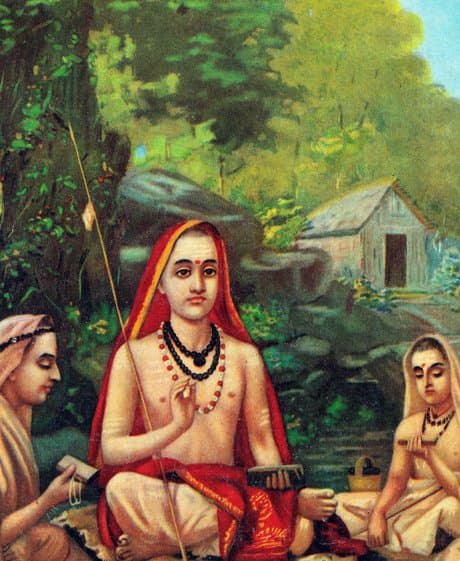
Ādi Śaṅkarācārya · Advaita
Sanskritअधः मनुष्यादिभ्यो यावत् स्थावरं ऊर्ध्वं च यावत् ब्रह्मणः विश्वसृजो धाम इत्येतदन्तं यथाकर्म यथाश्रुतं ज्ञानकर्मफलानि, तस्य वृक्षस्य शाखा इव शाखाः प्रसृताः प्रगताः, गुणप्रवृद्धाः गुणैः सत्त्वरजस्तमोभिः प्रवृद्धाः स्थूलीकृताः उपादानभूतैः, विषयप्रवालाः विषयाः शब्दादयः प्रवालाः इव देहादिकर्मफलेभ्यः शाखाभ्यः अङ्कुरीभवन्तीव, तेन विषयप्रवालाः शाखाः । संसारवृक्षस्य परममूलं उपादानकारणं पूर्वं उक्तम् । अथ इदानीं कर्मफलजनितरागद्वेषादिवासनाः मूलानीव धर्माधर्मप्रवृत्तिकारणानि अवान्तरभावीनि तानि अधश्च देवाद्यपेक्षया मूलानि अनुसन्ततानि अनुप्रविष्टानि कर्मानुबन्धीनि कर्म धर्माधर्मलक्षणं अनुबन्धः पश्चाद्भावि, येषां उद्भूतिं अनु उद्भवति, तानि कर्मानुबन्धीनि मनुष्यलोके विशेषतः । अत्र हि मनुष्याणां कर्माधिकारः प्रसिद्धः ॥ यस्तु अयं वर्णितः संसारवृक्षः --
Ādi Śaṅkarācārya · Advaita
Hindiजिसके आश्रयसे जीविका निर्वाह की जाय, उसे आजीव्य कहते हैं।
उसी संसारवृक्षके अन्य अङ्गोंकी कल्पना कही जाती है।
अपने उपादान-कारणरूप सत्त्व, रज और तम—इन तीनों गुणोंसे बड़ी हुई—स्थूलभावको प्राप्त हुई और विषयरूपी कोपलोंवाली, उस वृक्षकी बहुत-सी शाखाएँ, जो कि अपने-अपने कर्म और ज्ञानके अनुरूप—कर्म और ज्ञानकी फलस्वरूपा योनियाँ हैं, नीचेकी ओर मनुष्योंसे लेकर स्थावरपर्यन्त और ऊपरकी ओर धर्म यानी विश्वकर्ता ब्रह्मापर्यन्त वृक्षकी शाखाओंके समान फैली हुई हैं। कर्मफलरूप देहादि शाखाओंसे शब्दादि विषय कोपलोंके समान अङ्गुरित-से होते हैं, इसलिये वे शरीरादिरूप शाखाएँ विषयरूपी कोपलोंवाली हैं।
संसारवृक्षका परम मूल—उपादानकारण पहले बतलाया जा चुका है। अब कर्मफलजनित राग-द्वेष आदिकी वासनाएँ जो मूलके समान धर्माधर्मविषयक प्रवृत्तिका कारण और अवान्तरसे (आगे-पीछे) होनेवाली हैं (उनको कहते हैं)। वे मनुष्यलोकमें कर्मानुबन्धिनी वासनारूप मूलें देवादिकी अपेक्षा नीचे भी, अविच्छिन्नरूपसे फैली हुई हैं। पुण्य-पापरूप कर्म जिनका अनुबन्ध यानी पीछे-पीछे होनेवाला है, अर्थात् जिनकी उत्पत्तिका अनुवर्तन करनेवाला है, वे कर्मानुबन्धी कहलाती हैं। यहाँ मनुष्योंका ही विशेषरूपसे कर्ममें अधिकार प्रसिद्ध है (इसलिये वे मूलें मनुष्य- लोकमें कर्मानुबन्धिनी बतलायी गयी हैं)
Jñāneśvar · Vārkarī
Marathiमग ययाचि प्रपंचरूपा । अधोशाखिया पादपा । डाहाळिया जाती उमपा । ऊर्ध्वाही उजू ॥ १४४ ॥ आणि अधीं फांकली डाळें । तिये होती मूळें । तयाही तळीं पघळे । वेल पालवु ॥ १४५ ॥ ऐसें जें आम्हीं । म्हणितलें उपक्रमीं । तेंही परिसें सुगमीं । बोलीं सांगों ॥ १४६ ॥ तरी बद्धमूळ अज्ञानें । महदादिकीं सासिनें । वेदांचीं थोरवनें । घेऊनियां ॥ १४७ ॥ परी आधीं तंव स्वेदज । जारज उद्भिज अंडज । हे बुडौनि महाभुज । उठती चारी ॥ १४८ ॥ यया एकैकाचेनि आंगवटें । चौर्यांशीं लक्षधा फुटे । ते वेळीं जीवशाखीं फांटे । सैंधचि होती ॥ १४९ ॥ प्रसवती शाखा सरळिया । नानासृष्टि डाहाळिया । आड फुटती माळिया । जातिचिया ॥ १५० ॥ स्त्री पुरुष नपुंसकें । हे व्यक्तिभेदांचे टके । आंदोळती आंगिकें । विकारभारें ॥ १५१ ॥ जैसा वर्षाकाळु गगनीं । पाल्हेजे नवघनीं । तैसें आकारजात अज्ञानीं । वेलीं जाय ॥ १५२ ॥ मग शाखांचेनि आंगभारें । लवोनि गुंफिती परस्परें । गुणक्षोभाचे वारे । उदयजती ॥ १५३ ॥ तेथ तेणें अचाटें । गुणांचेनि झडझडाटें । तिहीं ठायीं हा फांटे । ऊर्ध्वमूळ ॥ १५४ ॥ ऐसा रजाचिया झुळुका । झडाडितां आगळिका । मनुष्यजाती शाखा । थोरावती ॥ १५५ ॥ तिया ऊर्ध्वीं ना अधीं । माझारींचि कोंदाकोंदी । आड फुटती खांदी । चतुर्वर्णांच्या ॥ १५६ ॥ तेथ विधिनिषेध सपल्लव । वेदवाक्यांचें अभिनव । पालव डोलती बरव । नीच नवे ॥ १५७ ॥ अर्थु कामु पसरे । अग्रवनें घेती थारे । तेथ क्षणिकें पदांतरें । इहभोगाचीं ॥ १५८ ॥ तेथ प्रवृत्तीचेनि वृद्धिलोभें । खांकरेजती शुभाशुभें । नानाकर्मांचे खांबे । नेणों किती ॥ १५९ ॥ तेवींचि भोगक्षीणें मागिलें । पडती देहांतींचीं बुडसळें । तंव पुढां वाढी पेले । नवेया देहांची ॥ १६० ॥ आणि शब्दादिक सुहावे । सहज रंगें हवावे । विषयपल्लव नवे । नीत्य होती ॥ १६१ ॥ ऐसे रजोवातें प्रचंडें । मनुष्यशाखांचे मांदोडे । वाढती तो एथ रुढे । मनुष्यलोकु ॥ १६२ ॥ तैसाचि तो रजाचा वारा । नावेक धरी वोसरा । मग वाजों लागे घोरा । तमाचा तो ॥ १६३ ॥ तेधवां याचिया मनुष्यशाखा । नीच वासना अधीं देखा । पल्हेजती डाहाळिका । कुकर्माचिया ॥ १६४ ॥ अप्रवृत्तींचे खणुवाळे । कोंभ निघती सरळे । घेत पान पालव डाळे । प्रमादाचीं ॥ १६५ ॥ बोलती निषेधनियमें । जिया ऋचा यजुःसामें । तो पाला तया घुमें । टकेयावरी ॥ १६६ ॥ प्रतिपादिती अभिचार । आगम जे परमार । तिहीं पानीं घेती प्रसर । वासना वेली ॥ १६७ ॥ तंव तंव होतीं थोराडें । अकर्मांचीं तळबुडें । आणि जन्मशाखा पुढें पुढें । घेती धांव ॥ १६८ ॥ तेथ चांडाळादि निकृष्टा । दोषजातीचा थोर फांटा । जाळ पडे कर्मभ्रष्टां । भुलोनियां ॥ १६९ ॥ पशु पक्षी सूकर । व्याघ्र वृश्चिक विखार । हे आडशाखा प्रकार । पैसु घेती ॥ १७० ॥ परी ऐशा शाखा पांडवा । सर्वांगींहि नित्य नवा । निरयभोग यावा । फळाचा तो ॥ १७१ ॥ आणि हिंसाविषयपुढारी । कुकर्मसंगें धुर धुरी । जन्मवरी आगारी । वाढतीचि असे ॥ १७२ ॥ ऐसे होती तरु तृण । लोह लोष्ट पाषाण । इया खांदिया तेवीं जाण । फळेंही हेंची ॥ १७३ ॥ अर्जुना गा अवधारीं । मनुष्यालागोनि इया परी । वृद्धि स्थावरांतवरी । अधोशाखांची ॥ १७४ ॥ म्हणौनि जीं मनुष्यडाळें । तियें जाणावीं अधींचि मूळें । जे एथूनि हा पघळे । संसारतरु ॥ १७५ ॥ एऱ्हवीं ऊर्ध्वींचें पार्था । मुद्दल मूळ पाहतां । अधींचिया मध्यस्था । शाखा इया ॥ १७६ ॥ परी तामसी सात्त्विकी । सुकृतदुष्कृतात्मकी । विरुढती या शाखीं । अधोर्ध्वींचिया ॥ १७७ ॥ आणि वेदत्रयाचिया पाना । नये अन्यत्र लागों अर्जुना । जे मनुष्यावांचूनि विधाना । विषय नाहीं ॥ १७८ ॥ म्हणौनि तनु मानुषा । इया ऊर्ध्वमूळौनि जरी शाखा । तरी कर्मवृद्धीसि देखा । इयेंचि मूळें ॥ १७९ ॥ आणि आनीं तरी झाडीं । शाखा वाढतां मुळें गाढीं । मूळ गाढें तंव वाढी । पैस आथी ॥ १८० ॥ तैसेंचि इया शरीरा । कर्म तंव देहा संसारा । आणि देह तंव व्यापारा । ना म्हणोंचि नये ॥ १८१ ॥ म्हणौनि देहें मानुषें । इयें मुळें होती न चुके । ऐसें जगज्जनकें । बोलिलें तेणें ॥ १८२ ॥ मग तमाचें तें दारुण । स्थिरावलेया वाउधाण । सत्त्वाची सुटे सत्राण । वाहुटळी ॥ १८३ ॥ तैं याचि मनुष्याकारा । मुळीं सुवासना निघती आरा । घेऊनि फुटती कोंबारा । सुकृतांकुरीं ॥ १८४ ॥ उकलतेनि उन्मेखें । प्रज्ञाकुशलतेंची तिखें । डिरिया निघती निमिखें । बाबळैजुनी ॥ १८५ ॥ मतीचे सोट वांवे । घालिती स्फूर्तींचेनि थांवें । बुद्धि प्रकाश घे धांवे । विवेकावरी ॥ १८६ ॥ तेथ मेधारसें सगर्भ । अस्थापत्रीं सबोंब । सरळ निघती कोंभ । सद्वृत्तीचे ॥ १८७ ॥ सदाचाराचिया सहसा । टका उठती बहुवसा । घुमघुमिति घोषा । वेदपद्याच्या ॥ १८८ ॥ शिष्टागमविधानें । विविधयागवितानें । इये पानावरी पानें । पालेजती ॥१८९ ॥ ऐशा यमदमीं घोंसाळिया । उठती तपाचिया डाहाळिया । देती वैराग्यशाखा कोंवळिया । वेल्हाळपणें ॥ १९० ॥ विशिष्टां व्रतांचे फोक । धीराच्या अणगटी तिख । जन्मवेगें ऊर्ध्वमुख । उंचावती ॥ १९१ ॥ माजीं वेदांचा पाला दाट । तो करी सुविद्येचा झडझडाट । जंव वाजे अचाट । सत्त्वानिळु तो ॥ १९२ ॥ तेथ धर्मडाळ बाहाळी । दिसती जन्मशाखा सरळी । तिया आड फुटती फळीं । स्वर्गादिकीं ॥ १९३ ॥ पुढां उपरति रागें लोहिवी । धर्ममोक्षाची शाखा पालवी । पाल्हाजत नित्य नवी । वाढतीचि असे ॥ १९४ ॥ पैं रविचंद्रादि ग्रहवर । पितृ ऋषी विद्याधर । हे आडशाखा प्रकार । पैसु घेती ॥ १९५ ॥ याहीपासून उंचवडें । गुढले फळाचेनि बुडें । इंद्रादिक ते मांदोडे । थोर शाखांचे ॥ १९६ ॥ मग तयांही उपरी डाहाळिया । तपोज्ञानीं उंचावलिया । मरीचि कश्यपादि इया । उपरी शाखा ॥ १९७ ॥ एवं माळोवाळी उत्तरोत्तरु । ऊर्ध्वशाखांचा पैसारु । बुडीं साना अग्रीं थोरु । फळाढ्यपणें ॥ १९८ ॥ वरी उपरिशाखाही पाठीं । येती फळभार जे किरीटी । ते ब्रह्मेशांत अणगटीं । कोंभ निघती ॥ १९९ ॥ फळाचेनि वोझेपणें । ऊर्ध्वीं वोवांडें दुणें । जंव माघौतें बैसणें । मूळींचि होय ॥ २०० ॥ प्राकृताही तरी रुखा । जें फळें दाटलीं होय शाखा । ते वोवांडली देखा । बुडासि ये ॥ २०१ ॥ तैसें जेथूनि हा आघवा । संसारतरूचा उठावा । तियें मूळीं टेंकती पांडवा । वाढतेनि ज्ञानें ॥ २०२ ॥ म्हणौनि ब्रह्मेशानापरौतें । वाढणें नाहीं जीवातें । तेथूनि मग वरौतें । ब्रह्मचि कीं ॥ २०३ ॥ परी हें असो ऐसें । ब्रह्मादिक ते आंगवसें । ऊर्ध्वमुळासरिसें । न तुकती गा ॥ २०४ ॥ आणीकही शाखा उपरता । जिया सनकादिक नामें विख्याता । तिया फळीं मूळीं नाडळता । भरलिया ब्रह्मीं ॥ २०५ ॥ ऐसी मनुष्यापासूनि जाणावी । ऊर्ध्वीं ब्रह्मादिशेष पालवी । शाखांची वाढी बरवी । उंचावे पैं ॥ २०६ ॥ पार्था ऊर्ध्वींचिया ब्रह्मादि । मनुष्यत्वचि होय आदि । म्हणौनि इयें अधीं । म्हणितलीं मूळें ॥ २०७ ॥ एवं तुज अलौकिकु । हा अधोर्ध्वशाखु । सांगितला भवरुखु । ऊर्ध्वमूळु ॥ २०८ ॥ आणि अधींचीं हीं मूळें । उपपत्ती परिसविली सविवळें । आतां परिस उन्मूळें । कैसेनि हा ॥ २०९ ॥
Jñāneśvar · Vārkarī
Hindi(15.144) इस प्रपंच-रूपी अधःशाखी वृक्ष की बहुतेरी शाखाएँ सीधी ऊपर की ओर फूटती हैं। (15.145-46) और जो हमने इस विषय के आरम्भ में कहा था कि जो शाखाएँ नीचे की ओर फैलती हैं वे मूल बनती हैं और उनके नीचे भी और बेलें और पल्लव फूटते हैं उसका भी हम सरल शब्दों से विवेचन करते हैं, सुनो।
(15.147) अज्ञान रूपी मूल दृढ़ होने से वेद-रूपी बड़े विशाल वनों-सहित महत्त्व आदि की बहार आती है।
(15.148) प्रथम उस जड़ में से स्वेदज, फिर जरायुज, फिर उद्विज, और अण्डज-रूपी चार विशाल शाखाएँ निकलती हैं।
(15.149) उन एक एक के शरीर से चौरासी लाख शाखाएँ फूटती हैं, और उनसे फिर अनेक जीव-रूपी शाखाएँ निकलती हैं।
(15.150) सरल शाखाओं से नाना प्रकार की सृष्टि-रूपी आड़ी शाखाएँ मालाकार उत्पन्न होती हैं।
(15.152) स्त्री, पुरुष और नपुंसक व्यक्ति-भेद-रूपी डालें स्वाभाविक विकार-रूपी बोझे से आन्दोलित होती हैं।
(15.152) वर्षाकाल में जैसे आकाश में नवीन मेघ छा जाते हैं वैसे ही अज्ञान के कारण सम्पूर्ण आकार विस्तार पाते हैं।
(15.153) फिर अपने शरीर के भार से शाखाएँ झुकती हैं और एक दूसरी में उलझती हैं, जिससे गुणक्षोभ-रूपी वायु उत्पन्न होती है। (15.154) और गुणों के उस अपरिमित क्षोभ से यह ऊर्ध्व-मूल वृक्ष तीन जगह से फट जाता है।
(15.155) इस प्रकार रजोगुण के झोंके से अत्यन्त आन्दोलित होने पर मनुष्य-जातिरूपी शाखा ऊँची उठती है।
(15.156) वह न ऊपर न नीचे बल्कि बीच में ही अड़ जाती है और उसमें से चार-वर्ण-रूपी आड़ी शाखाएँ फूटती हैं।
(15.157) उनमें विधि और निषेध वाक्यों से विस्तार पाये हुए वेदरूपी अपूर्व और उत्तम पल्लव अपनी अपनी शक्ति के अनुसार डोलते हैं।
(15.158) अर्थ और काम के विस्ताररूपी अग्र पल्लव जमते हैं।
(15.159) फिर प्रवृत्ति-मार्ग की वृद्धि की इच्छा से अनेक शुभ और अशुभ कर्मों की अगणित छोटी छोटी डालें निकलती हैं।
(15.160) वैसे ही पूर्व-भोग क्षीण होने पर ज्योंही शरीररूपी सूखी डालें गिरती हैं त्योंही नये शरीरों की वृद्धि के अंकुर उत्पन्न होते जाते हैं,
(15.161) और सुन्दर शब्द इत्यादि स्वाभाविक और मोहक रंगों से विचित्रित विषय-रूपी नूतन पल्लव नित्य उगते जाते हैं। (15.162) इस प्रकार रजोगुणरूपी प्रचण्ड वायु से मनुष्य-शाखाओं के झुण्ड की वृद्धि होती है। उसे ही संसार में मनुष्य-लोक कहते हैं।
(15.163) वैसे ही जब रजोगुण-रूपी वायु क्षणभर बन्द हो जाती है, और तमोगुण-रूपी भयंकर हवा चलती है
(15.164) तब इसी मनुष्य-शाखा की, नीचे की ओर, कुकर्मरूपी डाले निकलती है और उनमें नीच-वासनारूपी पल्लव फूटते हैं।
(15.165) और एकदम कुमार्गरूपी सीधे पर मजबूत अंकुर निकलते हैं जिनमें से प्रमाद-रूपी पत्ते, पल्लव और डालें उत्पन्न होती हैं।
(15.166) यजुर्वेद और सामवेद में जो निषेध-वचन कहे हैं वे उनके अग्रभाग में डोलते हुए पल्लव हैं।
(15.167) परपीड़ाकारक शास्त्र जो जारण, मारण इत्यादि प्रतिपादन करते हैं वे मानो पल्लव हैं
(15.168) जिनके साथ ज्यों ज्यों वासनारूपी बेलें विस्तृत होती जाती हैं त्यों त्यों अकर्मरूपी पीड़ें बढ़ती और जन्मरूपी शाखाएँ आगे आगे दौड़ती हैं।
(15.169) और कर्मभ्रष्टों की भूल के कारण चाण्डाल इत्यादि निकृष्ट जातियों की शाखाओं की जालियाँ बनती (15.170) तथा पशु, पक्षी, शूकर, बाघ, बिच्छू, साँप इत्यादि आड़ी-टेढ़ी शाखाओं के झुण्ड बनते जाते हैं।
(15.171) परन्तु हे पाण्डव! ऐसी शाखाओं में नित्य नूतन नरक-भोग-रूपी फल आता है।
(15.172) और, उनमें हिंसा-विषय की प्रवृत्ति करने में कुकर्म-संग के द्वारा श्रेष्ठता पानेवाले जन्म-रूपी अंकुर उगते हैं।
(15.173) इस प्रकार तरु, तृण, लोहा, मिट्टी, पत्थर इत्यादि रूपवाली शाखाएँ होती जाती हैं और वैसे ही उनके फल भी होते जाते हैं।
(15.174) हे अर्जुन! सुनो, मनुष्य से स्थावर तक इस प्रकार शाखाओं की वृद्धि होती है,
(15.175) इसलिए जो मनुष्य-रूप डालें हैं, उन्हीं को नीचे की शाखाओं का मूल समझना चाहिए क्योंकि उन्हीं से इस संसारतरु की विस्तार होता है।
(15.176) अन्यथा, हे पार्थ! ऊपर की ओर का मुख्य मूल देखो तो यह नीचे की शाखाएँ मध्यस्थ दिखाई देंगी।
(15.177) परन्तु तामसी और सात्विक अथवा बुरे-भले कर्म-रूपी अंकुर इन्हीं नीचे ऊपर की शाखाओं में फूटते हैं। (15.178) और हे अर्जुन! वेदत्रयरूपी पत्ते और कोई शाखाओं में नहीं लगते क्योंकि वेद की विधियाँ मनुष्य के सिवाय और किसी के विषय नहीं हैं।
(15.179) इसलिए ये मनुष्यतनुरूपी शाखाएँ यद्यपि ऊर्ध्व-मूल से उत्पन्न होती हैं तथापि कर्मवृद्धिशाखाओं की जड़ें यही हैं।
(15.180) और जैसे अन्य वृक्षों में भी शाखा-वृद्धि होने से जड़ें दृढ़ होती हैं, और ज्यों ज्यों जड़ें दृढ़ होती हैं त्यों त्यों उस वृक्ष का विस्तार होता जाता है,
(15.181) वैसे ही इस शरीर में जब तक कर्म होता है तब तक देह की बढ़ती होती है, और तब तक देह है तब तक व्यापार का न करना नहीं हो सकता।
(15.182) इस प्रकार जगज्जनक श्रीकृष्ण ने कहा कि यह बात मेटी नहीं जा सकती कि मनुष्य-शरीर ही अन्य-कर्मरूपी शाखाओं का मूल है।
(15.183) फिर जब तमो-गुण-रूपी दारुण आँधी शान्त हो जाती है और सत्त्वगुण-रूपी महा तूफान छूटता है,
(15.184) तब इसी मनुष्य-देहरूपी जड़ों से सुवासनारूपी अंकुर निकलते हैं और उनमें से सुकृत-रूपी पल्लव फूटते हैं। (15.185) ज्ञान की वृद्धि के साथ प्रज्ञाकौशल्य की तीक्ष्ण डालें निमिष भर में विस्तृत हो निकलती हैं।
(15.186) बुद्धि की लम्बी डालें स्फूर्ति के बल से दृढ़ होतीं और बुद्धितेज के सहाय से विवेक पर्यन्त लम्बी बढ़ती हैं।
(15.187) फिर उनमें से बुद्धिरस से भरे आस्थारूपी पत्तों से सुशोभित सीधे सद्वृत्तिरूपी अंकुर फूटते हैं।
(15.188) और एकदम सदाचाररूपी अनेक कोपलें फूटती हैं जो वेद-वाक्य ध्वनि से सनसनाती रहती हैं।
(15.189) तथा उनमें से शिष्टाचार और अनेक यज्ञादिकर्मविस्तार-रूपी पत्तियाँ निकलती रहती हैं
(15.190) इस प्रकार नियम-दमरूपी गुच्छों से युक्त तपरूपी शाखाएँ बढ़ती हैं और प्रेम से वैराग्यशाखाओं को छाती से लगाती हैं।
(15.191) विशिष्ट-व्रतरूपी टहनियाँ धैर्यरूपी तीक्ष्ण नोकों से युक्त हो जन्मरूपी वेग से ऊपर उठती हैं
(15.192) और बीच में जो वेदरूपी सघन कोपल रहती है उसकी सुविचाररूपी फड़फड़ाहट, जब तक सत्त्वरूपी वायु चलती है तब तक, होती रहती है। (15.193) धर्मशाखाएँ विस्तृत होती हैं और उनमें से जन्मशाखा सीधी निकलती हुई दिखाई देती है, और उसमें स्वर्गादिक फल लगते हैं
(15.194) तथा उपरति की रक्तता से लाल दीखती हुई धर्म-मोक्ष-शाखाओं की पत्तियाँ नित्य नूतन बढ़ती रहती हैं।
(15.195) रवि, चन्द्र, इत्यादि श्रेष्ठ ग्रह, पितर, ऋषि, विद्याधर इत्यादि आड़ी शाखाओं के भी भेद बढ़ते हैं
(15.196) और उनमें भी ऊँचे गुह्यफलरूपी पीड़ से इन्द्रादिक महाशाखाओं के झुण्ड उत्पन्न होते हैं
(15.197) तथा उनके भी ऊपर तपोधनी ऋषियों की शाखाएँ उठती हैं। मरीची, कश्यप इत्यादि ऊपरी शाखाएँ हैं
(15.198) एवं लगातार शाखाओं पर शाखाएँ लगी हैं। ऊर्ध्व शाखाओं का ऐसा विस्तार मूल में छोटा पर अग्रभाग की ओर बड़ा और श्रेष्ठ-फलदायक होता है।
(15.199) इन शाखाओं के भी और ऊपरवाली शाखाओं में जो फल लगते हैं, उनमें से ब्रह्मा और शिव पर्यन्त नोकदार अंकुर निकलते हैं (15.200) और फलों के भार से वे दुगुनी नीचे झुक जाती हैं, यहाँ तक कि वे फिर जड़ से ही जा लगती हैं।
(15.201) सामान्य वृक्ष की शाखा भी जो फलों से भर जाती है, वह झुक कर जड़ से लग जाती है।
(15.202) वैसे ही हे पाण्डव! ये ज्ञानवृद्धि की शाखाएँ, जहाँ से यह संसार-वृक्ष उत्पन्न होता है, उसी मूल से भिड़ जाती है।
(15.203) इसलिए ब्रह्मा या शिव के परे जीव की वृद्धि नहीं होती। उसके परे फिर ब्रह्म ही रह जाता है।
(15.204) परन्तु अस्तु! इस प्रकार ब्रह्मा इत्यादि अपने सामर्थ्य से ऊर्ध्वमूल ब्रह्म की बराबरी नहीं कर सकते।
(15.205) और भी जो ऊपरी शाखाएँ सनक इत्यादि नामों से प्रसिद्ध है वे फल और मूल का स्पर्श न कर ब्रह्म में ही भर गई हैं।
(15.206) इस प्रकार मनुष्य से लेकर ब्रह्मलोक पर्यन्त पल्लव-युक्त शाखाओं की उत्तम बढ़ती होती रहती है।
(15.207) हे पार्थ! ऊपर की ब्रह्मा इत्यादि शाखाओं की मूल-शाखाएँ मनुष्य ही हैं। इसलिए हमने इन्हें नीचे की ओर की जड़ें कहा है। (15.208) इस प्रकार हमने तुमसे इस ऊर्ध्वमूल और नीचे-ऊपर-शाखावाले अलौकिक संसार-वृक्ष का वर्णन किया।
(15.209) और यह जो विधान किया था कि इसकी नीचे की ओर भी जड़ें रहती हैं उसकी उपपत्ति भी विस्तारपूर्वक कह सुनाई। अब इस वृक्ष का उन्मूलन कैसे किया जाता है सो सुनो।

Sri Udiya Baba · Modern
Hindiभावार्थ— इस संसार-वृक्ष की शाखाएँ तीनों गुणों से वृद्धि को प्राप्त हुई हैं तथा वह विषयरूप कोपलों से युक्त हो अतल-वितल आदि नीचे के और भूर्भुवः आदि ऊपर के लोकों में फैली हुई हैं। इसकी कर्मानुबन्धिनी जड़ें मनुष्य लोक में नीचे तक फैली हुई हैं।
व्याख्या— पहले श्लोक में इस संसार-वृक्ष को ऊर्ध्वमूल कहा है और इसमें इसकी जड़ें मनुष्य लोक में नीचे तक फैली बतलायीं। इसका भाव है कि वास्तव में इसकी कोई जड़ नहीं है, इसकी शाखाएँ ही जड़ हैं। जड़ें सकाम कर्मरूप पत्तों से सुदृढ़ होती हैं, क्योंकि सकामकर्म ही जीव को बाँधते हैं। कर्म मनुष्य लोक में ही होते हैं, अन्यत्र नहीं। इसीलिये मनुष्य लोक में ही इन्हें फैली हुई कहा है।
Swami Ramsukhdas · Modern
Hindi‘तस्य शाखा गुणप्रवृद्धाः’—संसारवृक्षकी मुख्य शाखा ब्रह्मा है। ब्रह्मासे सम्पूर्ण देव, मनुष्य, तिर्यक् आदि योनियोंकी उत्पत्ति और विस्तार हुआ है। इसलिये ब्रह्मलोकसे पातालक जितने भी लोक तथा उनमें रहनेवाले देव, मनुष्य, कीट आदि प्राणी हैं, वे सभी संसारवृक्षकी शाखाएँ हैं। जिस प्रकार जल सींचनेसे वृक्षकी शाखाएँ बढ़ती हैं, उसी प्रकार गुणरूप जलके संगसे इस
संसारवृक्षकी शाखाएँ बढ़ती हैं। इसीलिये भगवान्ने जीवात्माके ऊँच, मध्य और नीच योनियोंमें जन्म लेनेका कारण गुणोंका संग ही बताया है (गीता—तेरहवें अध्यायका इक्कीसवाँ और चौदहवें अध्यायका अठारहवाँ श्लोक)। सम्पूर्ण सृष्टिमें ऐसा कोई देश, वस्तु, व्यक्ति नहीं, जो प्रकृतिसे उत्पन्न तीनों गुणोंसे रहित हो (गीता—अठारहवें अध्यायका चालीसवाँ श्लोक)।
इसलिये गुणोंके सम्बन्धसे ही संसारकी स्थिति है। गुणोंकी अनुभूति गुणोंसे उत्पन्न वृत्तियों तथा पदार्थोंके द्वारा होती है। अतः वृत्तियों तथा पदार्थोंसे माने हुए सम्बन्धका त्याग करानेके लिये ही 'गुणप्रवृद्धाः' पद देकर भगवान्ने यहाँ यह बताया है कि जबतक गुणोंसे किंचिन्मात्र भी सम्बन्ध है, तबतक संसारवृक्षकी शाखाएँ बढ़ती ही रहेंगी। अतः संसारवृक्षका छेदन करनेके लिये गुणोंका संग किंचिन्मात्र भी नहीं रखना चाहिये; क्योंकि गुणोंका संग रहते हुए संसारसे सम्बन्ध-विच्छेद नहीं हो सकता।
'विषयप्रवालाः'—जिस प्रकार शाखासे निकलने-वाली नयी कोमल पत्तीके डंठलसे लेकर पत्तीके अग्रभाग-तकको प्रवाल (कोपल) कहा जाता है, उसी प्रकार गुणोंकी वृत्तियोंसे लेकर दृश्य पदार्थमात्रको यहाँ 'विषयप्रवालाः' कहा गया है।
वृक्षके मूलसे तना (मुख्य शाखा), तनेसे शाखाएँ और शाखाओंसे कोपलें फूटती हैं और कोपलोंसे शाखाएँ आगे बढ़ती हैं। इस संसारवृक्षमें विषय-चिन्तन ही कोपलें हैं। विषय-चिन्तन तीनों गुणोंसे होता है। जिस प्रकार गुणरूप जलसे संसारवृक्षकी शाखाएँ बढ़ती हैं, उसी प्रकार गुणरूप जलसे विषयरूप कोपलें भी बढ़ती हैं। जैसे कोपलें दीखती हैं, उनमें व्याप्त जल नहीं दीखता, ऐसे ही शब्दादि विषय तो दीखते हैं, पर उनमें गुण नहीं दीखते। अतः विषयोंसे ही गुण जाने जाते हैं।
'विषयप्रवालाः' पदका भाव यह प्रतीत होता है कि विषय-चिन्तन करते हुए मनुष्यका संसारसे सम्बन्ध-विच्छेद नहीं हो सकता। (गीता—दूसरे अध्यायका बासठवाँ-तिरसठवाँ श्लोक)। अन्तकालमें मनुष्य जिस-जिस भावका चिन्तन करते हुए शरीरका त्याग करता है, उस-उस भावको ही प्राप्त होता है (गीता—आठवें अध्यायका छठा श्लोक)—यही विषयरूप कोपलोंका फूटना है।
कोपलोंकी तरह विषय भी देखनेमें बहुत सुन्दर प्रतीत होते हैं, जिससे मनुष्य उनमें आकर्षित हो जाता है। साधक
अपने विवेकसे परिणामपर विचार करते हुए इनको क्षणभंगुर, नाशवान् और दुःखरूप जानकर इन विषयोंका सुगमतापूर्वक त्याग कर सकता है (गीता—पाँचवें अध्यायका बाईसवाँ श्लोक)। विषयोंमें सौन्दर्य और आकर्षण अपने रागके कारण ही दीखता है, वास्तवमें वे सुन्दर और आकर्षक हैं नहीं। इसलिये विषयोंमें रागका त्याग ही वास्तविक त्याग है। जैसे कोमल कोपलोंको नष्ट करनेमें कोई परिश्रम नहीं करना पड़ता, ऐसे ही इन विषयोंके त्यागमें भी साधकको कठिनता नहीं माननी चाहिये। मनसे आदर देनेपर ही ये विषयरूप कोपलें सुन्दर और आकर्षक दीखती हैं, वास्तवमें तो ये विषयुक्त लड़के समान ही हैं। इसलिये इस संसारवृक्षका छेदन करनेके लिये भोगबुद्धि-पूर्वक विषय-चिन्तन एवं विषयसेवनका सर्वथा त्याग करना आवश्यक है।
'अधश्चोर्ध्वं प्रसृताः'—यहाँ 'च' पदको मध्यलोक अर्थात् मनुष्यलोक—(इसी श्लोकके 'मनुष्यलोक कर्मानुबन्धीनि' पदों—) का वाचक समझना चाहिये। 'ऊर्ध्वम्' पदका तात्पर्य ब्रह्मलोक आदिसे है, जिसमें जानेके दो मार्ग हैं—देवयान और पितृयान (जिसका वर्णन आठवें अध्यायके चौबीसवें-पचीसवें श्लोकोंमें शुक्ल और कृष्ण-मार्गके नामसे हुआ है)। 'अधः' पदका तात्पर्य नरकोंसे है, जिसके भी दो भेद हैं—योनिविशेष नरक और स्थानविशेष नरक।
इन पदोंसे यह कहा गया है कि ऊर्ध्वमूल परमात्मासे नीचे, संसारवृक्षकी शाखाएँ नीचे, मध्य और ऊपर सर्वत्र फैली हुई हैं। इसमें मनुष्ययोनिरूप शाखा ही मूल शाखा है; क्योंकि मनुष्ययोनिमें नवीन कर्मोंको करनेका अधिकार है। अन्य शाखाएँ भोगयोनियाँ हैं, जिनमें केवल पूर्वकृत कर्मोंका फल भोगनेका ही अधिकार है। इस मनुष्ययोनिरूप मूल शाखासे मनुष्य नीचे (अधोलोक) तथा ऊपर (ऊर्ध्व-लोक)—दोनों ओर जा सकता है; और संसारवृक्षका छेदन करके सबसे ऊर्ध्व (परमात्मा) तक भी जा सकता है।
१-सेवत विषय बिबर्ध जिमि नित नित नूतन मार॥ (मानस ६। १२)
२-दोषेण तीव्रो विषयः कृष्णसर्पविषादपि। विषं निहन्ति भोक्तारं द्रष्टारं चक्षुषाप्ययम्॥
(विवेकचूडामणि ७९)
'दोषमें विषय काले सर्पके विषसे भी अधिक तीव्र हैं; क्योंकि विष तो खानेवालेको ही मारता है, पर विषय आँखसे देखनेवालेको भी नहीं छोड़ते।'
३-मोक्षस्य काङ्क्षा यदि वै तवास्ति त्यजातिदूराद्विषयान् विषं यथा। (विवेक० ८४)
'यदि तुझे मोक्षकी इच्छा है तो विषयोंको विषके समान दूरहीसे त्याग दे।
मनुष्य-शरीरमें ऐसा विवेक है, जिसको महत्त्व देकर जीव परमधामतक पहुँच सकता है और अविवेकपूर्वक विषयोंका सेवन करके नरकोंमें भी जा सकता है। इसीलिये गोस्वामी तुलसीदासजीने कहा है—
नरक स्वर्ग अपवर्ग निसेनी। ग्यान विराग भगति सुभ देनी॥
(मानस ७। १२१। ५)
‘अधश्च मूलान्यनुसन्तानि कर्मानुबन्धीनि मनुष्य-लोके’—मनुष्यके अतिरिक्त दूसरी सब भोगयोनियाँ हैं। मनुष्ययोनिमें किये हुए पाप-पुण्योंका फल भोगनेके लिये ही मनुष्यको दूसरी योनियोंमें जाना पड़ता है। नये पाप-पुण्य करनेका अथवा पाप-पुण्यसे रहित होकर मुक्त होनेका अधिकार और अवसर मनुष्य-शरीरमें ही है।
यहाँ ‘मूलानि’ पदका तात्पर्य तादात्म्य, ममता और कामनारूप मूलसे है, वास्तविक ऊर्ध्वमूल परमात्मासे नहीं। ‘मैं शरीर हूँ’—ऐसा मानना ‘तादात्म्य’ है। शरीरादि पदार्थोंको अपना मानना ‘ममता’ है। पुत्रैषणा, वितैषणा और लोकैषणा—ये तीन प्रकारकी मुख्य कामनाएँ हैं। पुत्र-परिवारकी कामना ‘पुत्रैषणा’ और धन-सम्पत्तिकी कामना ‘वितैषणा’ है। ‘संसारमें मेरा मान-आदर हो जाय’, ‘मैं बना रहूँ’, ‘शरीर नीरोग रहे’, ‘मैं शास्त्रोंका पण्डित बन जाऊँ’ आदि अनेक कामनाएँ ‘लोकैषणा’ के अन्तर्गत
हैं। इतना ही नहीं कीर्तिकी कामना मरनेके बाद भी इस रूपमें रहती है कि लोग मेरी प्रशंसा करते रहें; मेरा स्मारक बन जाय; मेरी स्मृतिमें पुस्तकें बन जायें; लोग मुझे याद करें, आदि। यद्यपि कामनाएँ प्रायः सभी योनियोंमें न्यूनाधिकरूपसे रहती हैं, तथापि वे मनुष्ययोनिमें ही बाँधनेवाली होती हैं। जब कामनाओंसे प्रेरित होकर मनुष्य कर्म करता है, तब उन कर्मोंके संस्कार उसके अन्तःकरणमें संचित होकर भावी जन्म-मरणके कारण बन जाते हैं। मनुष्ययोनिमें किये हुए कर्मोंका फल इस जन्ममें तथा मरनेके बाद भी अवश्य भोगना पड़ता है (गीता—अठारहवें अध्यायका बारहवाँ श्लोक)। अतः तादात्म्य, ममता और कामनाके रहते हुए कर्मोंसे सम्बन्ध नहीं छूट सकता।
यह नियम है कि जहाँसे बन्धन होता है, वहाँसे छुटकारा होता है; जैसे—रस्सीकी गाँठ जहाँ लगी है, वहाँसे वह खुलती है। मनुष्ययोनिमें ही जीव शुभाशुभ कर्मोंसे बँधता है; अतः मनुष्ययोनिमें ही वह मुक्त हो सकता है।
पहले श्लोकमें आये ‘ऊर्ध्वमूलम्’ पदका तात्पर्य है—परमात्मा, जो संसारके रचयिता तथा उसके मूल आधार हैं; और यहाँ ‘मूलानि’ पदका तात्पर्य है—तादात्म्य, ममता और कामनारूप मूल, जो संसारमें मनुष्यको बाँधते हैं। साधकको इन (तादात्म्य, ममता और कामनारूप) मूलोंका तो छेदन करना है और ऊर्ध्वमूल परमात्माका आश्रय लेना
* ये तीन इच्छाएँ ( बाँधनेवाली न होनेके कारण ) ‘कामना’ नहीं कहलातीं—( १ ) भगवद्भजन या भगवत्प्रेमकी कामना, ( २ ) स्वरूपबोधकी कामना और ( ३ ) सेवा करनेकी कामना। स्वरूपबोध या परमात्मा ( भगवद्भजन या भगवत्प्रेम )—की इच्छा ‘कामना’ नहीं है; क्योंकि स्वरूप और परमात्मा दोनों ही ‘नित्यप्राप्त’ तथा ‘अपने’ हैं। जैसे अपनी जेबसे पैसे निकालना चोरी नहीं कहलाती, ऐसे ही स्वरूप या परमात्मा—( जो अपने तथा अपनेमें हैं— ) की इच्छा करना ‘कामना’ नहीं कहलाती। संसारकी वस्तुको संसारकी ही सेवामें लगा देनेकी इच्छा भी ‘कामना’ नहीं, प्रत्युत त्याग है; क्योंकि ‘कामना’ लेनेकी होती है, देनेकी नहीं। तात्पर्य है कि जो वस्तु अपनी तथा अविनाशी है, उसकी इच्छा करना ‘आवश्यकता’ ( भूख ) है; और जो वस्तु दूसरेकी तथा नाशवान् है, उसे दूसरेको देनेकी इच्छा करना ‘त्याग’ है। जैसे शरीरकी भूख मिटानेके लिये भोजनकी इच्छा करना एक प्रकारसे ‘कामना’ नहीं होती, ऐसे ही ‘स्वयं’ की भूख मिटानेके लिये परमात्मतत्त्वकी इच्छा करना ‘कामना’ नहीं होती। कामना नाशवान् जड़-वस्तुकी होती है, और आवश्यकता चिन्मय-तत्त्वकी होती है। कामनाकी पूर्ति नहीं होती, प्रत्युत वह बढ़ती ही रहती है, इसलिये उसका त्याग करना है; परन्तु आवश्यकताकी पूर्ति होती है। उस आवश्यकताकी पूर्तिके लिये तीन उपाय हैं—कर्मयोग, ज्ञानयोग और भक्तियोग। मनुष्यने सांसारिक नाशवान् चीजोंको अपनी माना है, जिससे वह संसारका गुलाम हुआ है। अतः वह सबके हितके उद्देश्यसे उन नाशवान् चीजोंको संसारकी समझकर संसारकी सेवा, हितमें लगा दे, तो उसकी गुलामी ( पराधीनता ) छूट जायगी और वह स्वतन्त्र हो जायगा—यह कर्मयोग है। परमात्मा तो अपना स्वरूप है। जीव उससे अलग नहीं है। केवल नाशवान् चीजोंसे अपना सम्बन्ध माननेसे वह अपने स्वरूपसे च्युत हुआ है। अतः नाशवानके सम्बन्धका त्याग कर दें, तो अपने स्वरूपका बोध हो जायगा—यह ज्ञानयोग है। भगवान् अंशी हैं और जीव अंश हैं, और इनका परस्पर नित्य-सम्बन्ध है। केवल नाशवान् चीजको अपनी माना है, जिससे वह भगवान्से विमुख हुआ है। नाशवानको अपना न मानकर एकमात्र भगवान्को ही अपना माननेसे वह स्वतः भगवान्के सम्मुख हो जायगा और उसे भगवत्प्रेम प्राप्त हो जायगा—यह भक्तियोग है। तात्पर्य यह है कि नाशवान् चीजको अपनी माननेसे ही यह जीव संसारका गुलाम, अपने स्वरूपसे च्युत और भगवान्से विमुख हुआ है। यदि वह नाशवान् चीजको अपनी न माने ( जो कि अपनी नहीं है ), तो संसारकी गुलामी छूट जायगी, अपने स्वरूपका बोध हो जायगा और भगवत्प्रेमकी प्राप्ति हो जायगी।
है, जिसका उल्लेख 'तमेव चाद्यं पुरुषं प्रपद्ये' पदसे इसी अध्यायके चौथे श्लोकमें हुआ है।
मनुष्यलोकमें कर्मानुसार बाँधनेवाले तादात्म्य, ममता और कामनारूप मूल नीचे और ऊपर सभी लोकों, योनियोंमें व्याप्त हो रहे हैं। पशु-पक्षियोंका भी अपने शरीरसे 'तादात्म्य' रहता है, अपनी सन्तानमें 'ममता' होती है और भूख लगनेपर खानेके लिये अच्छे पदार्थोंकी 'कामना' होती है। ऐसे ही देवताओंमें भी अपने दिव्य शरीरसे 'तादात्म्य', प्राप्त पदार्थोंमें 'ममता' और अप्राप्त भोगोंकी 'कामना' रहती है। इस प्रकार तादात्म्य, ममता और कामनारूप दोष किसी-न-किसी रूपमें ऊँच-नीच सभी योनियोंमें रहते हैं। परन्तु मनुष्ययोनिके सिवाय दूसरी योनियोंमें ये बाँधनेवाले नहीं होते। यद्यपि मनुष्ययोनिके सिवाय देवादि अन्य योनियोंमें भी
विवेक रहता है, पर भोगोंकी अधिकता होने तथा भोग भोगनेके लिये ही उन योनियोंमें जानेके कारण उनमें विवेकका उपयोग नहीं हो पाता। इसलिये उन योनियोंमें उपर्युक्त दोषोंसे 'स्वयं' को (विवेकके द्वारा) अलग देखना सम्भव नहीं है। मनुष्ययोनि ही ऐसी है, जिसमें (विवेकके कारण) मनुष्य ऐसा अनुभव कर सकता है कि मैं (स्वरूपसे) तादात्म्य, ममता और कामनारूप दोषोंसे सर्वथा रहित हूँ।
भोगोंके परिणामपर दृष्टि रखनेकी योग्यता भी मनुष्य-शरीरमें ही है। परिणामपर दृष्टि न रखकर भोग भोगनेवाले मनुष्यको पशु कहना भी मानो पशुयोनिकी निन्दा ही करना है; क्योंकि पशु तो अपने कर्मफल भोगकर मनुष्ययोनिकी तरफ आ रहा है, पर यह मनुष्य तो निषिद्ध भोग भोगकर पशुयोनिकी तरफ ही जा रहा है।
सम्बन्ध—पीछेके दो श्लोकोंमें संसारवृक्षका जो वर्णन किया गया है, उसका प्रयोजन क्या है—इसको भगवान् आगेके श्लोकमें बताते हैं।
The branches on this Aśvattha tree symbolise all the jīvas or embodied beings that arise due to karma or reactions to actions.
The downward branches symbolise humans, animals, plants, etc. and the upward branches symbolise the 300 million devas administering universal management.
All the branches are part of prakṛti the material substratum pervading physical existence and all are nourished by the three guṇas or three modes of material nature, which are sattva or goodness, Rājas or passion and tamas or ignorance.
The sprouts on the branches symbolises desires for objects of the senses.
This Aśvattha tree has its roots in Brahma-loka the highest material planet and its branches end in the worlds of humans,
but there the humans are constantly creating new rootlets which are the karmas acquired from performing actions which are enjoined and prohibited in the Vedic scriptures.
The activities performed as jīvas while in bodies of humans exclusively results in higher level or lower level births:
By ignoring the injunctions and prohibitions of the Vedic scriptures the results are lower level births such as animals, reptiles, insects, plants.
The adherence to the injunctions and prohibitions of the Vedic scriptures results in higher level births such as the devas and also human births which still affords a jīva the golden opportunity to spiritually evolve and grow; sometimes even achieving mokṣa or liberation from material existence in their very next lifetime.