

Bhagavad Gītā · Chapter 1 · Arjuna Viṣāda Yoga
गाण्डीवं स्रंसते हस्तात्त्वक्चैव परिदह्यते
न च शक्नोम्यवस्थातुं भ्रमतीव च मे मनः
gāṇḍīvaṃ sraṃsate hastāttvakcaiva paridahyate|
na ca śaknomyavasthātuṃ bhramatīva ca me manaḥ||
Word meanings
for verses 1.28–1.30
कृष्ण = O Kṛṣṇa
युयुत्सुम् = eager to fight
इमम् = this
स्वजनम् = kinsmen
समुपस्थितम् = present/arrayed
दृष्ट्वा = having seen
मम = my
गात्राणि = limbs
सीदन्ति = are sinking/giving way
च = and
मुखम् = mouth
परिशुष्यति = is drying up
च = and
मे = my
शरीरे = in the body
वेपथुः = trembling
च = and
रोमहर्षः = hair standing on end
जायते = arises
हस्तात् = from the hand
गाण्डीवम् = the Gāṇḍīva (bow)
स्वंसते = is slipping
च = and
त्वक् = skin
एव = indeed
परिदह्यते = is burning
मे = my
मनः = mind
भ्रमति, इव = is reeling, as it were
च = and
अवस्थातुम् = to stand
च = even
न, शक्नोमि = I am not able
Translation
The bow, Gandiva, slips from my hand and my skin too burns all over; my brain is whirling, as it were, and I can stand no longer.
Commentary
The commentators seated around this verse
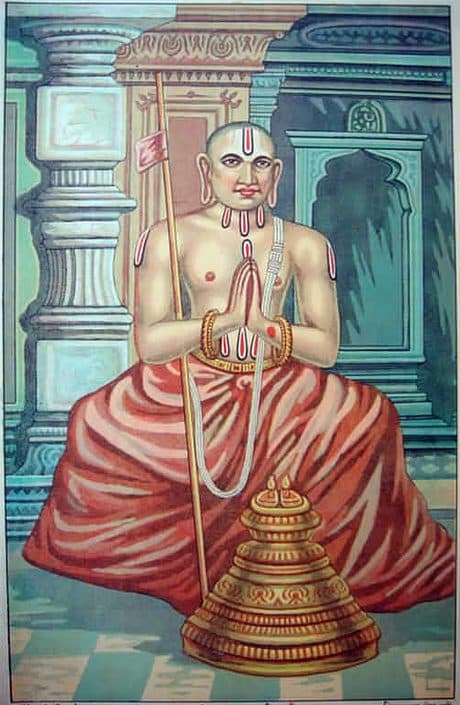
Rāmānuja · Viśiṣṭādvaita
EnglishOn verses 1.26–47
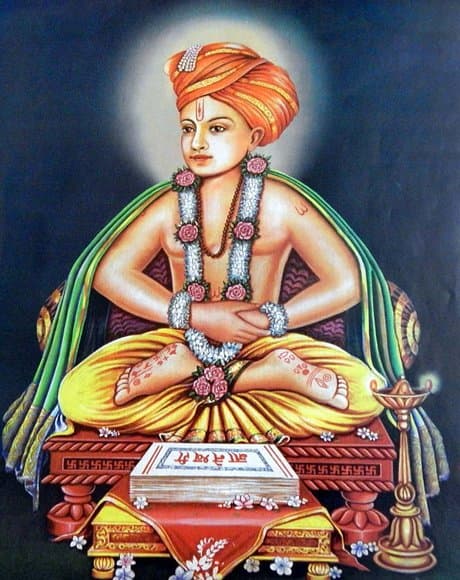
Jñāneśvar · Vārkarī
EnglishOn verses 1.28–1.30
28 "Assailed by extreme compassion, spake thus in colour: "Seeing, O Kṛṣṇa, (my own) kith and kin here stationed in eagerness for combat, 29 "My limbs droop down; my mouth is parched up; and there comes over my body tremor and horripilation. 30 "My Gāṇḍīva (bow) drops down from my hand, and my skin burns all over; I am unable to keep standing, and my mind seems as though in a whirl." (193)
"O Lord Krishna! hear me. I saw all these men but they all appear to me to be members of the common lineage. All these Gotra-members are prepared for war; but how would it be proper for us to fight with them, I cannot think of anything, I have lost entirely memory of my very person and my mind is also not in its normal mood at the very mention of war. The body has become shaky, the mouth parched, and the limbs crippled. There has come over my entire body tremor and horripilation, and there has arisen a feeling of excessive inflammation, my hand has become powerless even to hold the bow. I did not come to know when it dropped down from my hands; so much has my heart become full of delusion. I wonder that this feeling of perplexity should become stronger than my mind which is normally harder than a stone—so strong and very ruthless." It is wonderful that Pārtha who once conquered God Shiva on the battle-field and chastised even Yama should be overpowered by perplexity in a moment. A black bee can pierce through any wood however dry, but it cannot pierce through a delicate bud but gets caught into it when it closes in. It cannot cut any part of a lotus even though its life is lost; such is the soft love and tender pity difficult to destroy. Samjaya says to the King Dhritārashtra. "The natural feeling of tender emotion, which was a power working as the Power of the Creator and which cannot be kept in bounds even by Himself, overpowered Dhananjaya. Hear then that Arjuna seeing all his kith and kin, forgot his own self-respect which is essential in war. It is not understood how this feeling of compassion rose up in the mind of Pārtha." Arjuna then said, “O Krishna, I do not feel like staying here. My mind has become extremely enfeebled and my tongue has begun to blurt seeing that all these are to be killed.
Swami Ramsukhdas · Modern
EnglishOn verses 1.28–1.30
'Dṛṣṭvemaṁ svajanaṁ kṛṣṇa yuyutsuṁ samupasthitam'—Arjuna loved the name Kṛṣṇa, very much. So he has been addressed by this name in the Gītā nine time, more than any other name. Lord Kṛṣṇa, similarly loved Arjuna's name 'Pārtha' (the son of Pṛthā, Kuntī). Therefore, while talking together, both of them addressed each other by these names and this fact was well-known to other people also. Therefore, Sañjaya at the end of the Gītā in 18/78 mentions 'Kṛṣṇa', and 'Pārtha'—'Yatra yogeśvaraḥ kṛṣṇo yatra pārtho dhanurdharaḥ (viz., wherever is Kṛṣṇa, the Lord of Yoga and wherever is Pārtha (Arjuna), the wielder of the bow).
Dhṛtarāṣṭra, in the first verse of this chapter, uses the phrase 'Samavetā Yuyutsavaḥ' (gathered together desirous to fight) and Arjuna here has said, 'Yuyutsuṁ Samupasthitam' (arrayed eager to fight). But there is a vast difference, in the views of the two. Dhṛtarāṣṭra is partial to his sons. So, he uses the words 'Māmakāḥ' (Mine), and 'Pāṇḍavāḥ' (Pāṇḍu's). But Arjuna is impartial. So he uses the term 'Svajanam' (Kinsmen), which includes, persons of both sides. It means, that Dhṛtarāṣṭra is worried about the death of his sons in the warfare, while Arjuna is worried about the death of warriors, in both armies, because he thinks that both the warring groups, are his own kith and kin.
Till now the word 'Dṛṣṭvā' (having seen), has been used three
times—'Dṛṣṭvā tu pāṇḍavānikam' (Having seen the army of the Pāṇḍavas) (1/2), 'Vyavasthitān dṛṣṭvā dhārtarāṣṭrān' (Having seen Dhṛtarāṣṭra's party arrayed) (1/20), and here 'Dṛṣṭvemam svajanam' (Having seen these kinsmen). It means, that there is no change in the attitude of Duryodhana, as far as war is concerned. But, there is a lot of change in Arjuna's attitude. First, after seeing the sons of Dhṛtarāṣṭra, Arjuna like a hero, gets ready for war. But after seeing his relatives present there, he is overwhelmed with extreme compassion, his bow slips from his hand, and he is not inclined to fight.
'Sidanti mama gātrāṇi...bhramatīva ca me manaḥ'—Thinking of the consequences of the war, Arjuna is worried and sad. So his limbs are giving way, his mouth is getting parched, his body shakes, and his hair is standing on an end. The same Gāṇḍīva bow, the sound of whose string, terrified enemies, is dropping from his hand and his skin is burning all over.* His mind is reeling, he is in a dilemma, and he is unable even to stand at the war-front. He feels, as if he will fall unconscious, and thinks it is a sin to wage war.
Link:—After describing the eight signs of his sadness in the previous verses, now Arjuna mentions the inappropriateness of war with inauspicious omens, he sees.
Jñāneśvar · Vārkarī
MarathiOn verses 1.29–1.30
तो म्हणे अवधारी देवा । म्यां पाहिला हा मेळावा । तंव गोत्रवर्गु आघवा । देखिला एथ ॥ १९३॥
हे संग्रामीं अति उद्यत । जाहाले असती कीर समस्त । पण आपणपेयां उचित । केवीं होय ॥ १९४॥
येणें नांवेंचिं नेणों कायी । मज आपणपें सर्वथा नाहीं । मन बुद्धी ठायीं । स्थिर नोहे ॥ १९५ ॥
देखें देह कांपत । तोंड असे कोरडें होत । विकळता उपजत । गात्रांसी ॥ १९६ ॥
सर्वांगा कांटाळा आला । अति संतापु उपनला । तेथ बेंबळे हातु गेला । गांडीवाचा ॥ १९७ ॥
तें न धरताचि निष्टलें । परि नेणेंचि हातोनि पडिले । ऐसे हृदय असे व्यापिलें । मोहें येणें ॥ १९८ ॥
जें वज्रापासोनि कठिण । दुर्धर अतिदारुण । तयाहून असाधारण । हें स्नेह नवल ॥ १९९ ॥
जेणे संग्रामी हरू जिंतिला । निवातकवचांचा ठावो फेडिला । तो अर्जुन मोहें कवळिला । क्षणामाजि ॥ २०० ॥
जैसा भ्रमर भेदी कोडें । भलतैसें काष्ठ कोरडें । परि कळिकेमाजीं सापडें । कोवळियें ॥ २०१ ॥
तेथ उत्तीर्ण होईल प्राणें । परीं ते कमळदळु चिरूं नेणे । तैसे कठीण कोवळेंपणे । स्नेह देखा ॥ २०२ ॥
हे आदिपुरुषाची माया । ब्रह्मेयाहि नयेचि आया । म्हणऊनी भुलविला ऐकें राया । संजयो म्हणे ॥ २०३ ॥
अवधारीं मग तो अर्जुनु ।देखोनि सकळ स्वजनु । विसरला अभिमानु । संग्रामींचा ॥ २०४ ॥
कैसी नेणों सदयता । उपनली येथे चित्ता । मग म्हणे कृष्णा आता । नसिजे एथ ॥ २०५ ॥
माझें अतिशय मन व्याकुळ । होतसे वाचा बरळ । जे वधावे हे सकळ । येणें नांवे ॥ २०६ ॥
Jñāneśvar · Vārkarī
HindiOn verses 1.28–1.30
(1.185) तब उसके अन्तःकरण में गड़बड़ मच गई और आप ही आप कृपा उत्पन्न हुई। इस अपमान के कारण वीरवृत्ति उसे छोड़कर चली गई।
(1.186) जो स्त्रियाँ उत्तम कुल की होती हैं और सद्गुणी और सौन्दर्य-सम्पन्न होती हैं, वे अपने तेज के कारण अपने पति के साथ अन्य स्त्री का सहवास नहीं सह सकती। (1.187) नूतन स्त्री की इच्छा से कामीजन जैसे अपनी स्त्री को भूल जाता है और वह नूतन स्त्री के योग्य न हो तो भी भ्रम से उसका अनुसरण करता है,
(1.188) अथवा तप के बल से संपत्ति प्राप्त होते ही जैसे बुद्धि का भ्रंश हो जाता है और फिर उस तप करनेहारे को वैराग्य की सिद्धि प्राप्त नहीं होती,
(1.189) वैसे ही उस समय अर्जुन का हाल हुआ। अन्तःकरण में दया को स्थान देने से, वहाँ जो पुरुष-वृत्ति बसती थी वह चली गई।
(1.190) देखिए, मंत्रज्ञ मंत्रोच्चार में भूल करे तो जैसे उसे भूत-संचार हो जाता है वैसे ही अर्जुन को उस समय महामोह ने गाँठ लिया।
(1.191) इस कारण उसका धैर्य चला गया तथा हृदय में करुणा उत्पन्न हुई; मानों सोमकान्त मणि को चन्द्र-किरणों का स्पर्श हुआ हो।
(1.192) इस प्रकार अर्जुन अत्यन्त दया से मोहित और दुःखयुक्त होकर श्रीकृष्ण से कहने लगा (1.193) कि हे देव! सुनिए, मैं इस समुदाय की ओर देखता हूँ तो यहाँ सब अपना गोत्रवर्ग ही पाता हूँ।
(1.194) यह सही है कि ये सब संग्राम के लिए उद्यत हैं, परन्तु हमें यह संग्राम करना कैसे उचित है।
(1.195) इनसे युद्ध का नाम लेते ही न जाने क्यों मैं अपनी ही सुध भूल गया हूँ। मेरा मन और बुद्धि स्थिर नहीं है।
(1.196) देखिए, शरीर काँपता है, जीभ सूखती है और सब अवयवों में विफलता उपज रही है।
(1.197) सब शरीर में रोमांच खड़े हुए हैं और अत्यन्त सन्ताप उत्पन्न हुआ है। यह कहते हुए उसके जिस हाथ में गाण्डीव धनुष था वह ढीला पड़ गया।
(1.198) और पकड़ छूट जाने के कारण बिना जाने धनुष उसके हाथ से गिर पड़ा। इस प्रकार मोह ने उसके हृदय को व्याप लिया।
(1.199) आश्चर्य है कि जो हृदय वज्र से भी कठिन, दुर्धर और अत्यन्त भयकारक था उसमें भी यह स्नेह बलवान् हो गया! (1.200) जिसने युद्ध में शंकर का पराजय किया, निवात और कवच का नाम-निशान मिटा दिया, उस अर्जुन को मोह ने क्षण भर में ग्रस लिया।
(1.201) जैसे भ्रमर चाहे जिस काठ को मनमाना छेद डालता है परन्तु एक कोमल सी कली के बीच पकड़ा जाता है,
(1.202) और वहाँ चाहे प्राण छोड़ दे पर उस कमलदल को चीरने की बात कभी उसके चित्त में नहीं आती, वैसे ही कोमलता के वश होते हुए स्नेह भी तोड़ना कठिन है।
(1.203) संजय बोले — हे राजा! सुनिए, यह आदिपुरुष की माया ब्रह्मदेव के भी वश में नहीं आती। अतएव क्या आश्चर्य कि अर्जुन को भी भ्रम हो गया!
(1.204) सुनिए, तदनन्तर अर्जुन अपने स्वजनों को देखकर युद्ध का अभिमान भूल गया।
(1.205) उसके चित्त में न जाने कैसे सदयता उत्पन्न हुई और वह कहने लगा - हे कृष्ण! अब यहाँ ठहरना भी न चाहिए।
(1.206) इन सबके वध करने का विचार मन में आते ही मेरा मन अत्यन्त व्याकुल होता है और मुँह से शब्द नहीं निकलता।
Sri Udiya Baba · Modern
Hindiहाथ से गाण्डीव छूटा जा रहा है, त्वचा में दाह होता है तथा मेरा मन भ्रमित-सा हो रहा है, मैं यहाँ ठहर नहीं सकता।
Swami Ramsukhdas · Modern
HindiOn verses 1.28–1.30
‘दृष्ट्वेमं स्वजनं कृष्ण युयुत्सुं समुपस्थितम्’—अर्जुनको ‘कृष्ण’ नाम बहुत प्रिय था। यह सम्बोधन गीतामें नौ बार आया है। भगवान् श्रीकृष्णके लिये दूसरा कोई सम्बोधन इतनी बार नहीं आया है। ऐसे ही भगवान्को अर्जुनका ‘पार्थ’ नाम बहुत प्यारा था। इसलिये भगवान् और अर्जुन आपसकी बोलचालमें ये नाम लिया करते थे और यह बात लोगोंमें भी प्रसिद्ध थी। इसी दृष्टिसे संजयन गीताके अन्तमें ‘कृष्ण’ और ‘पार्थ’ नामका उल्लेख किया है—‘यत्र योगेश्वरः कृष्णो यत्र पार्थो धनुर्धरः’ (१८। ७८)।
धृतराष्ट्रने पहले ‘समवेत्ता युयुत्सवः’ कहा था और यहाँ अर्जुनने भी ‘युयुत्सुं समुपस्थितम्’ कहा है; परन्तु दोनोंकी दृष्टियोंमें बड़ा अन्तर है। धृतराष्ट्रकी दृष्टिमें तो दुर्योधन आदि मेरे पुत्र हैं और युधिष्ठिर आदि पाण्डुके पुत्र हैं—ऐसा भेद है; अतः धृतराष्ट्रने वहाँ ‘मामकाः’ और ‘पाण्डवाः’ कहा है। परन्तु अर्जुनकी दृष्टिमें यह भेद नहीं है; अतः अर्जुनने यहाँ ‘स्वजनम्’ कहा है, जिसमें दोनों पक्षके लोग आ जाते हैं। तात्पर्य है कि धृतराष्ट्रको तो युद्धमें अपने पुत्रोंके मरनेकी आशंकासे भय है, शोक है; परन्तु अर्जुनको दोनों ओरके कुटुम्बियोंके मरनेकी आशंकासे शोक हो रहा है कि किसी भी तरफका कोई भी मरे, पर वह है तो हमारा ही कुटुम्बी।
अबतक ‘दृष्ट्वा’ पद तीन बार आया है—‘दृष्ट्वा तु पाण्डवानीकम्’ (१। २), ‘व्यवस्थितान्दृष्ट्वा धार्तराष्ट्रान्’ (१। २०) और यहाँ ‘दृष्ट्वेमं स्वजनम्’
(१। २८)। इन तीनोंका तात्पर्य है कि दुर्योधनका देखना तो एक तरहका ही रहा अर्थात् दुर्योधनका तो युद्धका ही एक भाव रहा; परन्तु अर्जुनका देखना दो तरहका हुआ। पहले तो अर्जुन धृतराष्ट्रके पुत्रोंको देखकर वीरतामें आकर युद्धके लिये धनुष उठाकर खड़े हो जाते हैं और अब स्वजनोंको देखकर कायरतासे आविष्ट हो रहे हैं, युद्धसे उपरत हो रहे हैं और उनके हाथसे धनुष गिर रहा है।
‘सीदन्ति मम गात्राणि... भ्रमतीव च मे मनः’—अर्जुनके मनमें युद्धके भावी परिणामको लेकर चिन्ता हो रही है, दुःख हो रहा है। उस चिन्ता, दुःखका असर अर्जुनके सारे शरीरपर पड़ रहा है। उसी असरको अर्जुन स्पष्ट शब्दोंमें कह रहे हैं कि मेरे शरीरका हाथ, पैर, मुख आदि एक-एक अंग (अवयव) शिथिल हो रहा है! मुख सूखता जा रहा है, जिससे बोलना भी कठिन हो रहा है! सारा शरीर थर-थर काँप रहा है! शरीरके सभी रोंगटे खड़े हो रहे हैं अर्थात् सारा शरीर रोमांचित हो रहा है! जिस गाण्डीव धनुषकी प्रत्यंचाकी टंकारसे शत्रु भयभीत हो जाते हैं, वही गाण्डीव धनुष आज मेरे हाथसे गिर रहा है! त्वचामें—सारे शरीरमें जलन हो रही है। मेरा मन भ्रमित हो रहा है अर्थात् मेरेको क्या करना चाहिये—यह भी नहीं सूझ रहा है! यहाँ युद्धभूमिमें रथपर खड़े रहनेमें भी मैं असमर्थ हो रहा हूँ! ऐसा लगता है कि मैं मूर्च्छित होकर गिर पड़ूँगा! ऐसे अनर्थकारक युद्धमें खड़ा रहना भी एक पाप मालूम दे रहा है।
सम्बन्ध—पूर्वश्लोकमें अपने शरीरके शोकजनित आठ चिह्नोंका वर्णन करके अब अर्जुन भावी परिणामके सूचक शकुनोंकी दृष्टिसे युद्ध करनेका अनौचित्य बताते हैं।
Sanjaya frankly speaks to Dhritarāṣṭra at this time saying that Arjuna, who is the most noble minded, the most compassionate, the eternal well-wisher and the most virtuous;
although frequently fraught with difficulties along with his four brothers, instigated by thee and thy son, including horrid acts of treachery against them with intent to kill,
such as attempting to burn them all alive in a specially made house of combustible lac, administering poison and other unworthy deeds as well.
It is surely known to you that by Arjuna the destruction of all your clan is certain due to the fact that he has the support of the Parama Puruṣa, Krishna Himself, by his side.
He felt weak, overcome by his love and extreme compassion for his relatives. He was also filled with fear, not knowing what was Dharma(righteous) and what was Adharma (unrighteous). His mind was distracted by grief at the thought of losing his relatives.
So he cast aside his bow and arrow and sat down on the floor of the chariot as if to fast to the death.