

Bhagavad Gītā · Chapter 12 · Bhakti Yoga
अथ चित्तं समाधातुं न शक्नोषि मयि स्थिरम्
अभ्यासयोगेन ततो मामिच्छाप्तुं धनञ्जय
atha cittaṃ samādhātuṃ na śaknoṣi mayi sthiram|abhyāsayogena tato māmicchāptuṃ dhanañjaya||
Word meanings
अथ = now, if
चित्तम् = the mind
मयि = in Me
स्थिरम् = steady
समाधातुम् = to fix
अभ्यासयोगेन = through the yoga of practice
न, शक्नोषि = you are unable
माम् = me
ततः = then
आप्तुम् = to attain
धनञ्जय = O Dhanañjaya
इच्छ = seek
Translation
If you cannot steadily fix the mind on Me, Arjuna, then seek to attain Me through the Yoga of repeated practice.
Commentary
The commentators seated around this verse
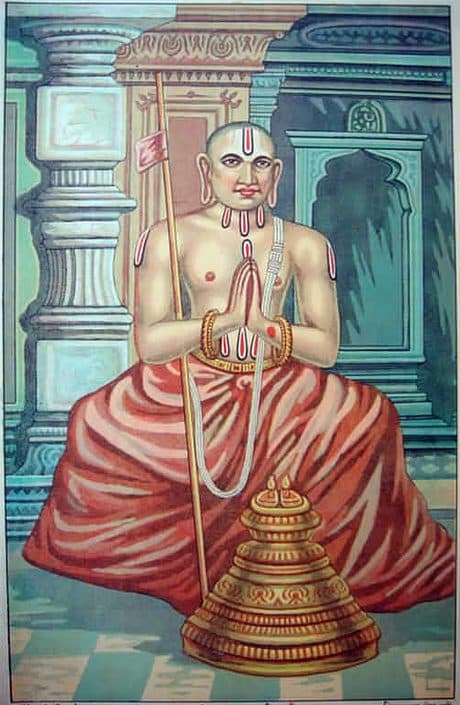
Rāmānuja · Viśiṣṭādvaita
English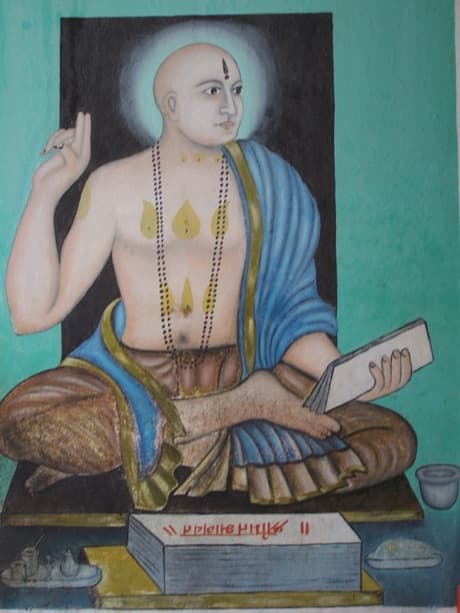
Madhvācārya · Dvaita
SanskritEnglishOn verses 12.8–12.11
“मदुपासकानां न कश्चित् क्लेश । इति दर्शयति ये तु इत्यादिना ॥ उक्तं च सौकरायणश्रुती - उपास्ते स पुरुषं वासुदेवमव्यक्तादेरिष्वितं किं तु तेषाम् ॥ इति । तेषामेकान्तिनः श्रेष्ठास्ते चैवानन्यदेवताः । अहमेव गतिस्तेषां निराशीः कर्मकारिणाम् ॥ इति मोक्षधर्मे ॥” - Sri Krishna declares by showing alternatives that for his devotees there are no impediments at all. “What could worship of the unmanifest, verily, bring for those who propitiate Sri Vasudeva ?”, thus in Saukarayan scripture. “Rejecting other deities, those devoted ones who singularly worship Me alone are indeed superior. Because performing their actions without any expectation of fruits, I become their ultimate goal”, thus in Moksha Dharma reiterated.
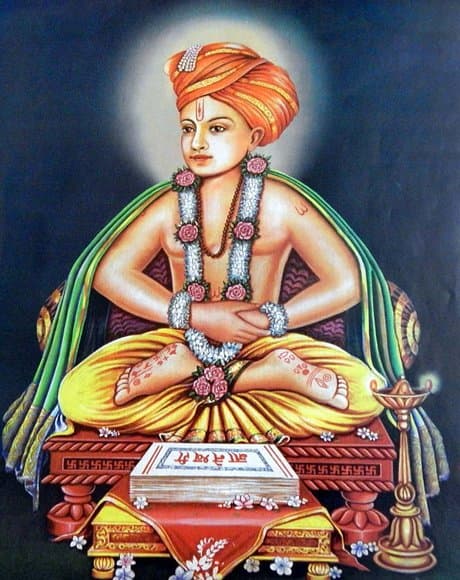
Jñāneśvar · Vārkarī
English9 "In case thou art not able to steadily fix thy mind in Me, then, seek to attain Me, O Dhanamjaya, by the Yoga of Steady-practice. (104)
Or should you not be able to deliver up in my Charge, in its entirety, your heart along with your mind and intellect, then do this viz., dedicate them to me at least for one moment out of the eight Prahars (periods of three hours) of the day. You will then feel an aversion for the sense-objects, during at least those moments when you are fully immersed in the trance of devotion. (And then) just as at the approach of the winter, the water level in rivers begins to get low, in the same way, your mind will liberate itself speedily from the bonds of mundane existence, and then just as the disc of the Moon loses her phases day by day, from the Full Moon day, and totally disappears on the Amāvasyā day (last day of the lunar month), in that way your heart, as it gradually sets itself loose from the sense-objects, will get into me and be one with me ultimately, Oh Son of Pāṇḍu. What is called the Yoga of steady-practice is only this very thing, and there is nothing (in the world) that cannot be attained, once it is realised. (It is) on the strength of this study that some walk in the air, while some tame tigers and serpents; some digest poison, while some wade through the sea. (There are) some who on the strength of this study make the Vedās their own. Therefore, there is nothing entirely difficult to secure by study, and therefore, you do attain unto me by the (Yoga of) study.
Swami Ramsukhdas · Modern
English'Atha cittaṁ samādhātuṁ na śaknoṣi mayi sthiram abhyāsayogena tato māmicchāptuṁ dhanañjaya'—Though the term 'Mana' stands, only for the mind, yet being related to spiritual discipline mentioned in the preceding verse here, it is proper to take it both for the mind and the intellect.
The Lord, says to Arjuna, if he is unable to fix his mind on Him, he should seek to reach Him by constant practice of Yoga.
'Abhyāsayoga' is a compound word in which 'Abhyāsa', means fixation of the mind on something repeatedly, while 'Yoga' stands for equanimity. Thus, repeated (constant) practice by having equanimity is 'Abhyāsayoga'. Adoration and chanting of the Lord's name etc., performed with the aim of God-realization, is also 'Abhyāsayoga'.
Only constant practice without 'Yoga' (union with God or equanimity) will induce, a striver, to have several mundane desires about wife, sons, riches, honour, praise, health and other favourable circumstances etc., because many diverse and endless, are the thoughts of the irresolute (Gītā 2/41). Therefore, actions of such a person, will not lead to 'Yoga'. 'Yoga' is only possible, when the aim of every action, is only God.
When a striver, having the aim of God-realization, practises chanting of His name, etc., different thoughts come to his mind. Therefore, a striver, having a firm resolve that he has only to realize God, should become, indifferent to all other thoughts.
Here, by the expression 'Māmicchāptuṁ', the Lord declares that he should seek to reach Him, by constant practice, while in
the preceding verse, He exhorted Arjuna to surrender his mind and intellect to Him. So a striver, may think that mind and intellect can be surrendered to Him (fixed on Him), through practice of concentration and then God, will be realized. But the Lord does not mean it so. He means to explain, that a striver can realize God through practice, if he has a firm resolve, only to realize Him.
When a striver, practises repeatedly chanting His name, adoration and learning the scripture etc., his mind is purified, and the desire for God-realization, is aroused. When he remains equanimous, in success and failure, desire becomes keen. This keen desire, makes him restless. This restlessness for God-realization, destroys the mundane attachment, as well as, sins of infinite births. Then he develops an exclusive devotion to Him, and so separation from God becomes unbearable for him. If he cannot live, without Him, He also cannot live without him, and so he attains Him.
A striver, does not attain Him, immediately, because he bears his separation, from Him. As soon as, this separation from Him, becomes unbearable, God is attained because He pervades, everywhere. The only weakness of a striver is, that he has not a burning desire and so he cannot attain Him, immediately. It is because of his sensual desire, that he thinks that he will be able to realize Him, only in future. As soon as, there is restlessness and a burning desire for God-realization, the desire for sensual pleasures, will come to an end and God will then be realized, without any delay.
If a striver, in the beginning resolves, that he has to realize only God, whatsoever may happen in the worldly sphere, he can very quickly realize God, by anyone of the paths of action, of knowledge or of devotion.
**Appendix**—In the twenty-sixth verse of the sixth chapter, there was mention of ‘abhyāsa’ (practice), but here is mention of
'abhyāsayoga' which leads to salvation. If there is only practice, but there is no Yoga, a state will be formed which will not lead to salvation.
To control the mind or to concentrate it on God again and again is 'abhyāsa'. In 'abhyāsayoga', the mind is not controlled, but the mind is detached from the Self—'samatvam yoga ucyate' (Gītā 2/48).
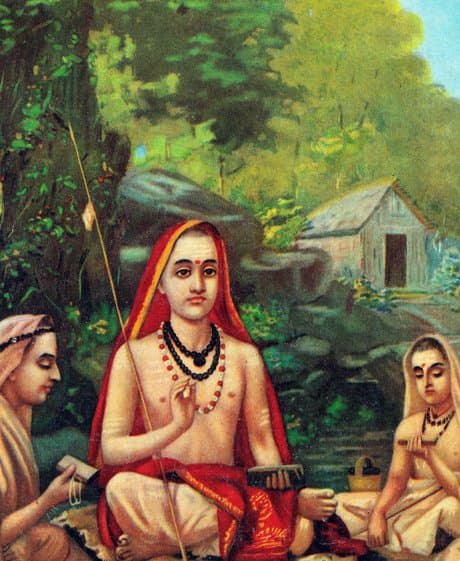
Ādi Śaṅkarācārya · Advaita
Sanskritअथ एवं यथा अवोचं तथा मयि चित्तं समाधातुं स्थापयितुं स्थिरम् अचलं न शक्नोषि चेत्, ततः पश्चात् अभ्यास-योगेन, चित्तस्य एकस्मिन् आलम्बने सर्वतः समाहृत्य पुनः पुनः स्थापनं अभ्यासः, तत्-पूर्वकः योगः समाधान-लक्षणः तेन अभ्यास-योगेन मां विश्व-रूपं इच्छ प्रार्थयस्व आप्तुं प्राप्तुं हे धनञ्जय ॥
Ādi Śaṅkarācārya · Advaita
Hindiयदि इस प्रकार यानी जैसे मैंने बतलाया है उस प्रकार तू मुझमें चित्तको अचल स्थापित नहीं कर सकता, तो फिर हे धनंजय! तू अभ्यासयोगके द्वारा—चित्तको सब ओरसे खींचकर बारंबार एक अवलम्बनमें लगानेका नाम अभ्यास है उससे युक्त जो समाधानरूप योग है, ऐसे अभ्यासयोगके द्वारा—मुझ—विश्वरूप परमेश्वरको प्राप्त करनेकी इच्छा कर
Jñāneśvar · Vārkarī
Marathiअथवा हें चित्त । मनबुद्धिसहित । माझ्यां हातीं अचुंबित । न शकसी देवों ॥ १०४ ॥ तरी गा ऐसें करीं । यया आठां पाहारांमाझारीं । मोटकें निमिषभरी । देतु जाय ॥ १०५ ॥ मग जें जें कां निमिख । देखेल माझें सुख । तेतुलें अरोचक । विषयीं घेईल ॥ १०६ ॥ जैसा शरत्कालु रिगे । आणि सरिता वोहटूं लागे । तैसें चित्त काढेल वेगें । प्रपंचौनि ॥ १०७ ॥ मग पुनवेहूनि जैसें । शशिबिंब दिसेंदिसें । हारपत अंवसे । नाहींचि होय ॥ १०८ ॥ तैसें भोगाआंतूनि निगतां । चित्त मजमाजीं रिगतां । हळूहळू पंडुसुता । मीचि होईल ॥ १०९ ॥ अगा अभ्यासयोगु म्हणिजे । तो हा एकु जाणिजे । येणें कांहीं न निपजे । ऐसें नाहीं ॥ ११० ॥ पैं अभ्यासाचेनि बळें । एकां गति अंतराळे । व्याघ्र सर्प प्रांजळे । केले एकीं ॥ १११ ॥ विष कीं आहारीं पडे । समुद्रीं पायवाट जोडे । एकीं वाग्ब्रह्म थोकडें । अभ्यासें केलें ॥ ११२ ॥ म्हणौनि अभ्यासासी कांहीं । सर्वथा दुष्कर नाहीं । यालागी माझ्या ठायीं । अभ्यासें मीळ ॥ ११३ ॥
Jñāneśvar · Vārkarī
Hindi(12.104) अथवा यदि तुम मन और बुद्धि-सहित अपना सम्पूर्ण चित्त मेरे हाथ नहीं दे सकते,
(12.105) तो ऐसा करो कि आठ पहरों में से कभी क्षण भर तो (चित्त) दो।
(12.106) इससे जिस जिस में मेरे सुख का अनुभव होगा वह क्षण विषयों में अरुचि पावेगा।
(12.107) जैसे शरत्काल निकल जाने पर नदियाँ सूखने लगती हैं वैसे ही वह सुख शीघ्र ही चित्त को प्रपंच से निकाल लेगा। (12.108) तब, पौर्णमासी के पश्चात् जैसे चन्द्रबिम्ब दिन दिन क्षीण होते होते अमावस्या के दिन विलीन हो जाता है,
(12.109) वैसे ही भोगों में से निकल कर चित्त मुझमें प्रवेश करे तो हे पाण्डुसुत! धीरे धीरे तुम मद्रूप हो जाओगे।
(12.110) अजी, जिसे अभ्यासयोग कहते हैं वह यही है। ऐसी कोई भी वस्तु नहीं जो इस से प्राप्त न हो सकती हो।
(12.111) कोई अभ्यास के बल से आकाश में गति प्राप्त कर लेते हैं, कोई व्याघ्र और सर्पों को अधीन कर लेते हैं,
(12.112) कोई विष का आहार बना लेते हैं, कोई समुद्र में से रास्ता निकाल लेते हैं तथा कोई अभ्यास से शब्दब्रह्म को मात कर देते हैं।
(12.113) अतः अभ्यास से कुछ भी सर्वथा दुष्प्राप्य नहीं है। इसलिए तुम अभ्यास के द्वारा मुझमें आ मिलो।
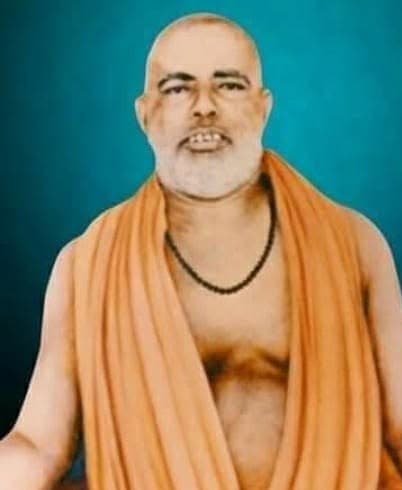
Sri Udiya Baba · Modern
Hindiसंगति— अब अगले श्लोक में जो ध्यान करने में असमर्थ हैं उस मध्यम अधिकारी के लिये भगवान् अपनी प्राप्ति का उपाय बतलाते हैं—
भावार्थ— हे धनञ्जय! यदि तुम मुझमें मन को स्थिर न लगा सको तो अभ्यासयोग के द्वारा मुझे प्राप्त करने की इच्छा करो।
व्याख्या— भगवान् की ब्राह्म सेवा ही अभ्यास-योग है। अर्थात् मेरी सेवा-पूजा, पाठ, स्वाध्याय, सत्संग और धाम-सेवानादि के द्वारा मुझे पाने का प्रयत्न करो।
१. न द्वेष्टि सम्प्रवृत्तानि न निवृत्तानि काङ्क्षति।
२. दुःखश्वनुद्विग्नमनाः सुखेषु विगतस्पृहः।
Swami Ramsukhdas · Modern
Hindi‘अथ चित्तं समाधातुं ... मामिच्छाप्नुं’ श्लोकका पीछेके श्लोकमें वर्णित साधनसे सम्बन्ध है, धनंजय—यहाँ ‘चित्तम्’ पदका अर्थ ‘मन’ है। परन्तु इस इसलिये ‘चित्तम्’ पदसे यहाँ मन और बुद्धि दोनों ही लेना
युक्तिसंगत है।
भगवान् अर्जुनसे कहते हैं कि अगर तू मन-बुद्धिको मेरोमें अचलभावसे स्थापित करनेमें अर्थात् मेरे अर्पण करनेमें अपनेको असमर्थ मानता है, तो अभ्यासयोगके द्वारा मेरोको प्राप्त करनेकी इच्छा कर।
‘अभ्यास’ और ‘अभ्यासयोग’ पृथक्-पृथक् हैं। किसी लक्ष्यपर चित्तको बार-बार लगानेका नाम ‘अभ्यास’ है और समताका नाम ‘योग’ है। समता रखते हुए अभ्यास करना ही ‘अभ्यासयोग’ कहलाता है। केवल भगवत्प्राप्तिके उद्देश्यसे किया गया भजन, नाम-जप आदि ‘अभ्यासयोग’ है।
अभ्यासके साथ योगका संयोग न होनेसे साधकका उद्देश्य संसार ही रहेगा। संसारका उद्देश्य होनेपर स्त्री-पुत्र, धन-सम्पत्ति, मान-बड़ाई, नीरोगता, अनुकूलता आदिकी अनेक कामनाएँ उत्पन्न होंगी। कामनावाले पुरुषकी क्रियाओंके उद्देश्य भी (कभी पुत्र, कभी धन, कभी मान-बड़ाई आदि) भिन्न-भिन्न रहेंगे (गीता—दूसरे अध्यायका इकतालीसवाँ श्लोक)। इसलिये ऐसे पुरुषकी क्रियामें योग नहीं होगा। योग तभी होगा, जब क्रियामात्रका उद्देश्य (ध्येय) केवल परमात्मा ही हो।
साधक जब भगवत्प्राप्तिका उद्देश्य रखकर बार-बार नाम-जप आदि करनेकी चेष्टा करता है, तब उसके मनमें दूसरे अनेक संकल्प भी पैदा होते रहते हैं, अतः साधकको ‘मेरा ध्येय भगवत्प्राप्ति ही है’—इस प्रकारकी दृढ़ धारणा करके अन्य सब संकल्पोंसे उपराम हो जाना चाहिये।
‘मामिच्छाप्नुम्’ पदोंसे भगवान् ‘अभ्यासयोग’ को अपनी प्राप्तिका स्वतन्त्र साधन बताते हैं।
पीछेके श्लोकमें भगवान्ने अपनेमें मन-बुद्धि अर्पण करनेके लिये कहा। अब इस श्लोकमें अभ्यासयोगके लिये कहते हैं। इससे यह धारणा हो सकती है कि अभ्यासयोग भगवान्में मन-बुद्धि अर्पण करनेका साधन है; अतः पहले अभ्यासके द्वारा मन-बुद्धि भगवान्के अर्पण होंगे, फिर भगवान्की प्राप्ति होगी। परन्तु मन-बुद्धिको अर्पण करनेसे ही भगवत्प्राप्ति होती हो, ऐसा नियम नहीं है। भगवान्के
**परिशिष्ट भाव**—छठे अध्यायके छब्बीसवें श्लोकमें तो केवल ‘अभ्यास’ की बात आयी थी; परन्तु यहाँ ‘अभ्यासयोग’ की बात आयी है, जिससे कल्याण हो जाता है। केवल अभ्यास हो, योग न हो तो एक स्थिति (अवस्था) बनेगी, पर कल्याण नहीं होगा।
मनका निरोध करना अथवा मनको बार-बार भगवान्में लगाना अभ्यास है। अभ्यासयोगमें मनका निरोध नहीं है, प्रत्युत मनसे सम्बन्ध-विच्छेद है—‘समत्वं योग उच्यते’ (गीता २।४८)।
कथनका तात्पर्य यह है कि यदि उद्देश्य भगवत्प्राप्ति ही हो अर्थात् उद्देश्यके साथ साधककी पूर्ण एकता हो तो केवल ‘अभ्यास’ से ही उसे भगवत्प्राप्ति हो जायगी।
जब साधक भगवत्प्राप्तिके उद्देश्यसे बार-बार नाम-जप, भजन-कीर्तन, श्रवण आदिका अभ्यास करता है, तब उसका अन्तःकरण शुद्ध होने लगता है और भगवत्प्राप्तिकी इच्छा जाग्रत हो जाती है। सांसारिक सिद्धि-असिद्धिमें सम होनेपर भगवत्प्राप्तिकी इच्छा तीव्र हो जाती है। भगवत्प्राप्तिकी तीव्र इच्छा होनेपर भगवान्से मिलनेके लिये व्याकुलता पैदा हो जाती है। यह व्याकुलता उसकी अवशिष्ट सांसारिक आसक्ति एवं अनन्त जन्मोंके पापोंको जला डालती है। सांसारिक आसक्ति तथा पापोंका नाश होनेपर उसका एकमात्र भगवान्में ही अनन्य प्रेम हो जाता है और वह भगवान्के वियोगको सहन नहीं कर पाता। जब भक्त भगवान्के बिना नहीं रह सकता, तब भगवान् भी उस भक्तके बिना नहीं रह सकते अर्थात् भगवान् भी उसके वियोगको नहीं सह सकते और उस भक्तको मिल जाते हैं।
साधकको भगवत्प्राप्तिमें देरी होनेका कारण यही है कि वह भगवान्के वियोगको सहन कर रहा है। यदि उसको भगवान्का वियोग असह्य हो जाय, तो भगवान्के मिलनेमें देरी नहीं होगी। भगवान्की देश, काल, वस्तु, व्यक्ति आदिसे दूरी है ही नहीं। जहाँ साधक है, वहाँ भगवान् हैं ही। भक्तमें उत्कण्ठाकी कमीके कारण ही भगवत्प्राप्तिमें देरी होती है। सांसारिक सुखभोगकी इच्छाके कारण ही ऐसी आशा कर ली जाती है कि भगवत्प्राप्ति भविष्यमें होगी। जब भगवत्प्राप्तिके लिये व्याकुलता और तीव्र उत्कण्ठा होगी, तब सुख-भोगकी इच्छाका स्वतः नाश हो जायगा और वर्तमानमें ही भगवत्प्राप्ति हो जायगी।
साधकका यदि आरम्भसे ही यह दृढ़ निश्चय हो कि मेरोको तो केवल भगवत्प्राप्ति ही करनी है (चाहे लौकिक दृष्टिसे कुछ भी बने या बिगड़े) तो कर्मयोग, ज्ञानयोग या भक्तियोग—किसी भी मार्गसे उसे बहुत जल्दी भगवत्प्राप्ति हो सकती है।
If one is unable to focus their mind steadily on the Supreme Lord Krishna without distraction and interruption
then one should continuously endeavour to perform abhyāsa yoga which is repeatedly fixing the mind on the Supreme Lord while simultaneously restraining oneself from all worldly affairs.
Reflecting on Lord Krishna being the quintessence of all wonderful qualities and exalted attributes such as love, beauty, compassion, sweetness, wisdom, majesty, courage, valour, etc.
while realising that He alone is the Supreme Lord of the spiritual kingdom and the material worlds being the ultimate source and the ultimate goal of all things at the same time being the antithesis and antidote of all that is demoniac and unrighteous.
True endeavour for the Supreme Lord is bhakti or exclusive loving devotion to Lord Krishna.
By remembering and meditating constantly on Him in this way, steadiness and equanimity of mind is achieved and one will directly realise themselves how to attain Him.