

Bhagavad Gītā · Chapter 12 · Bhakti Yoga
अद्वेष्टा सर्वभूतानां मैत्रः करुण एव च
निर्ममो निरहङ्कारः समदुःखसुखः क्षमी
adveṣṭā sarvabhūtānāṃ maitraḥ karuṇa eva ca|nirmamo nirahaṅkāraḥ samaduḥkhasukhaḥ kṣamī||
Word meanings
for verses 12.13–12.14
सर्वभूतानाम् = toward all beings
अद्वेष्टा = free from hatred
च = and
मैत्रः = friendly
करुणः = compassionate
एव = indeed
निर्ममः = free from possessiveness
निरहङ्कारः = free from egotism
समदुःखसुखः = equal in pleasure and pain
क्षमी = forgiving
सततम् = constantly
सन्तुष्टः = content
योगी = a yogi
यतात्मा = self-controlled
दृढनिश्चयः = firm in resolve
मयि = in me
मनोबुद्धिः = mind and intellect surrendered
यः = who
मद्भक्तः = my devotee
सः = that
मे = for me
प्रियः = dear
Translation
He who is free from malice towards all beings, friendly and compassionate, rid of 'I' and 'mine', balanced in joy and sorrow, forgiving by nature, ever-contented and mentally united with Me, nay, who has subdued his mind, senses and body, has a firm resolve, and has surrendered his mind and reason to Me, that devotee of Mine is dear to Me.
verses 13–14
Commentary
The commentators seated around this verse
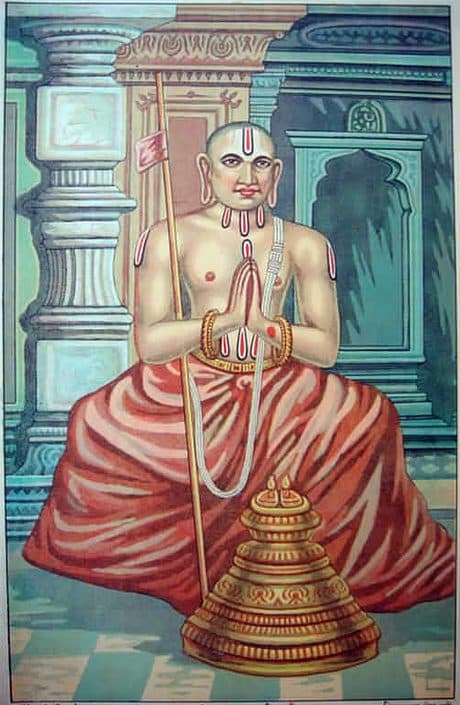
Rāmānuja · Viśiṣṭādvaita
EnglishOn verses 12.13–14
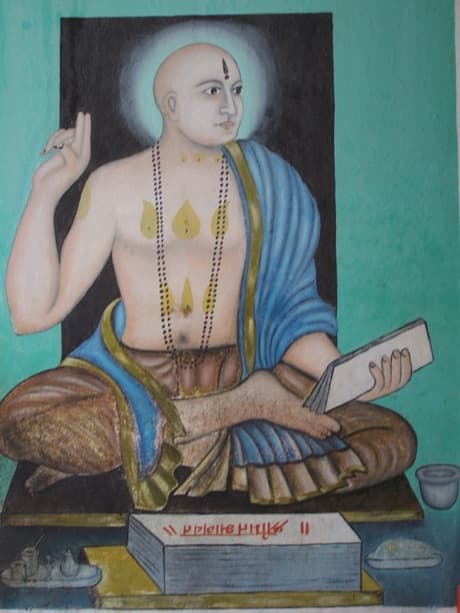
Madhvācārya · Dvaita
Madhva BhāṣyaSanskritEnglishOn verses 12.13–12.16
“सर्वारम्भपातितयागी, शुभशुभपरित्यागी इत्यादेः | सामान्यविशेषव्याख्यानव्याख्येयभावेनापुनरुक्तिः | हर्षा दिमिर्मुक्त इत्युक्ते कादाचित्क्रमपि भवति, इति यो न हृष्यति इत्यादि | उपचारपरिहारार्थं पूवम् | आधिक्यज्ञापनार्थं भक्त्यभ्यासः | येतु सर्वाणि कर्माणि इत्यादिः प्रपञ्च एष |” - सर्वारम्भपरित्यागी - one who has renounced the performance of all actions, as the attribute common to all and शुभशुभपरित्यागी - one who has renounced both the merits and the demerits as the special attribute has been spoken again. Similarly speaking about one being liberated from the pairs of pleasure and pain etc., there appears repetition in the statement he who neither rejoices etc. in the present tense. When a thing is repeatedly spoken it is to emphasize importance of the statements. Therefore to remind the importance, additional practice of devotion is recommended. His entire performance of action becomes entirety of his purpose in life.
Madhvācārya · Dvaita
Gītā Tātparya NirṇayaSanskritEnglishOn verses 12.13–12.16
“अवैष्णवसर्वारम्भपरित्यागी | सर्वारम्भभिमानत्यागेन फलत्यागेन भवत्समर्पणरूपेण च त्यागी | सर्वकर्म फलत्यागं प्राहुस्त्यागं विचक्षणं | मयि सर्वाणि कर्माणि सन्न्यस्याध्यात्मचेतसा || इत्यादेः |” - One who renounces performance of all actions which do not please Sri Vishnu is the renouncer who renounces pride that he performs all the actions or who renounces the fruits of action to the Lord. The wise speak of the renunciation of the fruits of all the actions. Renouncing all the actions to Me with mind and intellect etc.
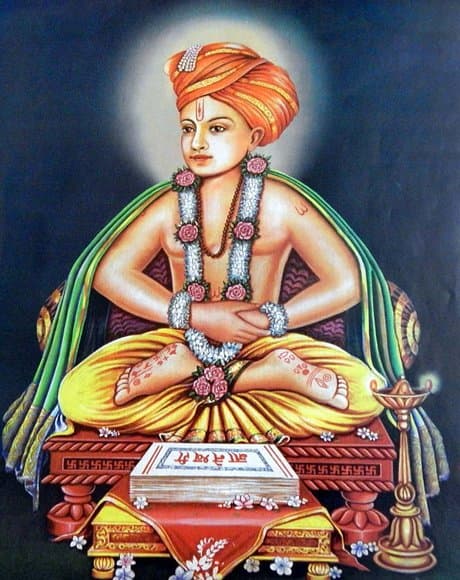
Jñāneśvar · Vārkarī
EnglishOn verses 12.13–12.14
13 "Not conceiving hatred towards any being, with a friendly disposition, and ever compassionate; rid of all "My"-ness and rid of all "I"-ness, even-poised in weal and woe, full of forbearance:
14 "Ever content, the Yogin possessing self-control and a firm resolve: having dedicated unto Me all mind and intellect—he that is (thus) devoted to Me, is dear unto Me; (144)
One (who) never bears any hatred towards any living being, and one who never harbours differential feelings in his mind between his possessions and those of others, like the all-pervading sentience: just as the earth never knows to sustain only the superior, and to reject the inferior, or just as the life-wind does not know to abide only in the king's body to the exclusion of the plebeian ones, or just as the water never thinks of quenching the thirst of the kine only, turning itself into poison to kill tigers—in that way one who befriends the entire class of living beings, and is kind evenly to all: one to whom the thought of myself and mine is ever foreign or who is never affected by happiness or sorrow: or one who, in point of forgiveness, is like the earth which has made itself the abode of happiness for all: one who is thoroughly saturated with contentment without any device (उपाय), just as the ocean is ever full of water even in the absence of rains: one who controls his heart, taking a vow to do so, and whose firmness lasts uninterruptedly: one in whose heart dwell in perfect unison both the individual and the supreme soul, occupying the common seat, and getting steadied in Yoga, he who dedicates devoutly to me his mind and intellect, and being in this way full of Yoga internally and externally, remains ever pleased in my affectionate devotion. Oh Arjuna, such a devotee alone is a real Yogin—an emancipated one, and I become so fond of him, as if he were the wife and I the husband. But nay I am not content with the simile that “he is dearer to me than my own wife.” It falls short of the sense (it does not accurately represent the real state). But this account of affection is a sort of magical infatuation and should not have been uttered in words (because words fail here). Whatever short description of it is, however, given, is solely on the strength of the strong faith. This simile (of husband and wife) came out from my lips only in exuberance. Otherwise can it be suitably described in words? Let this alone now. My affection (for my devotees) is doubly increased whenever the subject of such dear ones is broached. And if a loving hearer happens by chance to be near, where could be found a pair of scales to weigh the mellifluent eloquence that flows? Therefore, O Son of Pându, you are the loving one as also the hearer, and there besides having arisen an occasion for describing a loving devotion, I naturally got, in the course of our talk, immersed in the happiness (I felt) in giving the description. With these words, the God began happily to sway backwards and forwards, and said, “Know now the indications of that devotee, to whom I offer a seat in my heart.”
Swami Ramsukhdas · Modern
EnglishOn verses 12.13–12.14
'Adveṣṭā sarvabhūtānām'—A person, can bear ill-will to another person, in two ways— (1) By creating, an obstacle, to the acquirement of something desirable, such as wealth, honour, praise etc. (2) By creating, undesirable objects, actions, persons and incidents etc. A devotee, bears no ill-will, in the least, to anyone, even though, they may act against his principles, become an obstacle to his progress and may harm him physically, economically or mentally as he beholds his own favourite Deity, abiding in them (Mānasa 7/112 b).
Not only this, but he beholds and feels the gracious sweet will of God, in the actions of those, who bear ill-will to him.
Every being (soul), is a fragment of God. So if a striver, bears ill-will to any being, it means that he bears, ill-will to God. Such a person bearing ill-will, to anyone can neither be identified with God, nor can he have exclusive devotion to Him. When a devotee becomes totally free, from ill-will, he can be fully devoted, to God. Therefore, a devotee is free from malice, for each and every being.
'Maitrah karuṇa eva ca'*—A devotee, is not only free from malice, for every being but he is also friendly and compassionate, to all beings, because he beholds that all beings are His manifestations. 'The Lord, is a disinterested friend of all beings' (Gītā 5/29), (Śrīmadbhāgavata 3/25/21). The Lord's
* The marks of a devotee described here are greater in number and also more singular than the marks of the liberated soul who has attained perfection by transcending the modes of nature (Gītā 14/22—25), 'Maitrah' (friendly) and 'Karuṇaḥ' (compassionate) these words have been used only here, not there.
nature, descends on His devotees and therefore, he is friendly and compassionate to all beings, without any selfish motive (Mānasa 7/47/3).
He is friendly, even to those who harm him, because he holds, that whatever is done, is meant for his welfare, by the sweet will of God. Moreover, he thinks that those who are harming him, deserve special respect, because they are destroying his past sin, by becoming an instrument.
Every striver, thinks and he should also think, that those who are doing wrong or those who harm him, are purifying him of the sins of the past. When even a common striver, is friendly and compassionate, to those who bear ill-will to him, a devotee who has attained perfection must be very much more friendly and compassionate, to them.
In the 'Pātanjalayogadarśana', four factors have been mentioned, to purify the mind.
'Friendship, to those who are happy, compassion to those, who are sad, a feeling of pleasure to those, who are virtuous, and indifference to those, who are sinners' (1/33).
But here Lord Kṛṣṇa, has included the four factors in two—friendship and compassion. It means, that a perfect devotee is friendly to the happy and the virtuous, and compassionate, to the sad and the sinful.
A striver, instead of being indifferent to a sinner should be compassionate to him, because the striver, who is suffering is being purified of his old sins by reaping fruit of his sinful actions of the past, while the sinner, who is inflicting pain on a striver, is committing a new sin. So, he specially deserves, compassion.
'Nirmamah'—Though a devotee is naturally friendly and compassionate to all beings, yet he has no sense of mine, with anyone. It is mineness with beings, and objects, which binds him. He is totally free from a sense of mine, even with his
so-called body, senses, mind, and intellect. A striver, commits an error that he tries to be free from mineness with beings and objects, but he does not pay proper attention to the point, that he has to be free from mineness, with his body, mind, intellect and senses, also.
'Nirahaṅkāraḥ'—A person, has egoistic feelings by identifying, the self with the body and senses etc. If a devotee, has no egoism, but he realizes his true affinity for God, noble, divine and unique traits, are revealed in him. But he, knowing those traits (virtues) as divine, regards them as of God, not of his own. So, he becomes free from egoism.
'Samaduḥkhasukhaḥ'—A devotee, remains even-minded in pleasure and pain, favourable and unfavourable circumstances, without having attachment and aversion, for them.
Favourable and unfavourable circumstances, by making a man happy and sad, bind him. A devotee, knows of favourable and the unfavourable circumstances, but he remains even-minded, he feels neither happy nor sad.
'Kṣamī'—The Lord, in the thirteenth verse of this chapter, by the term 'Adveṣṭā', declared that His devotee does not bear any malice, towards those people who bear animosity, with him. Here, by the term 'Kṣamī', the Lord says that he is forgiving even to those, who do wrong to him without having the least desire, to punish them. He wants them not to be punished by God or anyone else, for the wrong done to him. This is an excellence of a devotee.
'Santuṣṭaḥ satatam'*—Generally, a being, is content in favourable circumstances, but he loses his calm, in undesirable circumstances. This contentment is not eternal, because he wants to derive satisfaction out of perishable persons and objects etc. He
* In the Bhāgavata there is description of such a man who is ever content. As a person wearing shoes has no fear of pebbles and thorns, so is a man, who is content ever and everywhere, happy without any trace of sadness.
(the self), being eternal can attain real and permanent contentment, only by realizing God, Who is eternal.
Having realized God, a devotee ever remains content, because he has neither disunion from Him, nor does he need the perishable world. Therefore, there is no reason for his discontent. It is because of contentment, that he does not attach importance, to any mundane being or object, in the least.*
The term 'Satatam', with the term 'Santusṭaḥ' shows, that a devotee ever remains content and that contentment never undergoes any change, nor is there any possibility, of any change in it. A perfect soul, always remains content, whether he has attained perfection through the paths of action, or knowledge or devotion.
'Yogī'—Here the term 'Yogī', stands for a devotee, who has realized God (who ever remains united with Him), through the path of devotion.
In fact, no person can ever be disunited from God. He, who has realized this fact, is a Yogī.
'Yatātmā'—He, who has fully controlled his body, including the mind, intellect and senses, is 'Yatātmā'. A God-realized devotee has not to control his mind, and intellect etc. These are naturally, under his control. So, in him there is no possibility of any evil, born of contact of senses, with sense-objects. In fact, the mind, intellect and senses should follow a right path. But, these deviate from the right path, because a person is attached, to the world. A devotee's mind, intellect and senses, remain under his control, because he is not in the least, attached to the world, and so his actions are exemplary.
The senses of virtuous and righteous persons, never deviate
* Saint Kabīra declares:—
All the riches in the form of cows, elephants, horses and jewels stand nowhere before the wealth of contentment.
from the right path. King Duṣyanta got attached towards Śakuntalā; so he had full confidence that she must belong to a Kṣatriya family, rather than a Brāhmaṇa. According to the poet Kālidāsa, in case of doubt, the inclination of a virtuous person, is testimony of the right path (Abhijñāna Śakuntalam 1/21).
How can, the mind, intellect and senses of a perfect devotee, deviate from the right path, when the senses of even, a righteous person do not deviate?
**'Dṛḍhanīścayāḥ'**—An enlightened soul, has a firm determination that the world has no independent existence, while God never ceases to be, and his affinity for Him is eternal. An ignorant person, considers the world as real, and attaches importance to it, while a perfect devotee, does not believe in the existence of the world, for him only, God exists.
In that firm determination, only existence of God, remains. Actually this determination is not of the intellect, it is of the self. But it is reflected, in the intellect.
Conceding the independent existence of the world and assuming affinity with it, doubt and contrary feeling arise in the intellect. Such intellect never becomes steady. The intellect, of a perfect soul remains without any doubt, while that of the ignorant remains, doubtful. The intellect of the ignorant, attaches value to the world and accepts its existence. But the intellect of a perfect soul does not accept existence of anything else, except God. His intellect is totally free from doubt and contrary feeling, and is steadfast, in God only.
**'Mayyarpitamanobuddhiḥ'**—When a striver resolves, that he has to realize God only, and he becomes God's (which he really is), his mind and intellect, are naturally dedicated to Him. Then, why should the mind and intellect of a perfect devotee, not remain dedicated to Him?
Naturally, a person's mind, is fixed on the object or person he loves, and his intellect is fixed, in the object or person he
considers, the best. For a devotee none is more loving and better, than God. So his mind and intellect are naturally, dedicated to Him.
'Yaḥ madbhaktaḥ sa me priyaḥ'*—God loves all, but a devotee loves only God. So according to His promise, 'As men approach Me, so do I accept them' (Gītā 4/11), He loves devotees.
**Appendix**—In the Gītā the marks of a Karmayogī have been stated (2/55—72, 6/7—9), the marks of a Jñānayogī have been stated (14/22—25) and the marks of a devotee have been stated (12/13—19). But while stating the marks of a devotee, the Lord has declared—'adveṣṭā sarvabhūtānām maitraḥ karuṇa eva ca'. The marks 'friendly' and 'compassionate' have been mentioned only in a devotee, not in a Karmayogī nor in a Jñānayogī. A Karmayogī and a Jñānayogī are equanimous but are not friendly and compassionate. But a devotee possesses the feelings of friendship and compassion from the beginning.
A devotee holds that all beings, being the fragments of entire-God, are none but God, then who should be at enmity, with whom should he be at enmity and why should he be at enmity?—'nija prabhumaya dekhahim jagata kehi sana karahim birodha' (Mānasa, Uttara. 112 b). For example a devotee loves Rāma, another Kṛṣṇa and the third one Śiva. In spite of their deities being different they can have oneness among themselves but all Jñānayogīs can never be so. If a devotee and a Jñānayogī happen to meet each other, the devotee will pay more respect to the Jñānayogī than the Jñānayogī will pay to the devotee. Therefore the mark of devotees has been mentioned—'sabahi mānaprada āpu amānī' (Mānasa, Uttara. 38/2).
* Lord Rāma declares that the entire universe is equally loved by Him because it has been created by Him. But those who having renounced their egoism and hypocrisy adore Him with mind, speech and action, they may be men, women or impotent persons are most loving to Him (Mānasa, Uttara. 87/4, 87 A).
At the beginning of the Rāmacaritamānasa, Goswāmī Tulasīdāsajī Mahārāja does obeisance to the wicked persons besides the gentle ones and does it with sincere feelings—‘bahuri bandi khala gana satibhāen’ (Mānasa, Bāla. 4/1). Only a devotee can do so, a Jñānayogī can’t. Though a Jñānayogī does not bear malice to anyone in the least, yet naturally he remains indifferent and neutral. In the path of discrimination (knowledge), there is predominance of detachment (Vairāgya) and ‘Vairāgya’ (renunciation) is dry. Therefore though a Jñānayogī is not hard hearted, yet he seems hard hearted outwardly because of his dispassionate and indifferent nature.
He who takes joy from others is hard at heart and he who gives joy to others, is soft at heart. A Jñānayogī rejoices having attained salvation, so he remains hard at heart. But a devotee has the notion to give joy to others from the beginning, so he is soft at heart. A devotee bears no malice even to the enemy. A Jñānayogī is like father and a devotee is like mother, therefore a devotee is more compassionate than a Jñānayogī.
‘Eva’—This term means that a devotee is devoid of malice—not only this but he is friendly and compassionate also to others.
‘Nirmamo nirahaṅkāraḥ’—It is inevitable for every striver to be free from the sense of mine and egoism; therefore in the Gītā the Lord, in Karmayoga, Jñānayoga and Bhaktiyoga—all the three, has mentioned the strivers to be free from them—in Karmayoga ‘nirmamo nirahaṅkāraḥ sa sāntimadhigacchati’ (2/71), in Jñānayoga ‘ahaṅkāraḥ………vimucya nirmamaḥ sānto brahmābhūyāya kalpate’ (18/53) and in Bhaktiyoga ‘nirmamo nirahaṅkāraḥ sama duḥkha sukhaḥ kṣamī’ (12/13). In this connection, a point needs special attention that in fact the self is free from the sense of mine and egoism. Egoism (I’ness) and sense of possession (mineness)—both are assumed in the Self, they are not real. Had they been real, we could have never been
free from the sense of mine and egoism and the Lord would have also not ordered Arjuna to be free from the sense of mine and egoism. But we can be free from the sense of mine and egoism, therefore the Lord states so.
In Karmayoga, first 'desire' is renounced, then a Karmayogi naturally becomes free from the 'sense of mine' and 'egoism' (Gītā 2/71). In Jñānayoga, first 'egoism' is renounced, then a Jñānayogi naturally becomes free from the 'sense of mine' (Gītā 18/53). In Bhaktiyoga, a devotee dedicates himself to God, then by God's grace, he naturally is freed from the 'sense of mine' and 'egoism'.
'Mayyarpitamano buddhiryo madbhaktaḥ sa me priyaḥ'—Here the expression 'mayyarpitamano buddhiḥ' stands for the person who has dedicated himself to God. When the self is dedicated, then mind and intellect are naturally dedicated. When the self is dedicated, then mind and intellect are naturally dedicated. When the self is dedicated, then nothing remains at all. The reason is that the self is primary (viz., of the first importance) while the body, mind and intellect etc., are of secondary importance. A devotee is a devotee first while as a human being he is second. When a devotee dedicates himself to God, his mind and intellect are also dedicated and then mind and intellect lose their independent existence but only God remains.
God is equally related with both prakṛtis—'parā' and 'aparā' but the self (parā) is not related with 'aparā'. The reason is that the self is superior to 'aparā prakṛti' and is a fragment of God. Therefore the self has affinity with God. The expression 'mayyarpitamanobuddhiḥ' means that the self should not assume the 'aparā prakṛti' (minds-intellect) as its own but should assume God as its own.*
God is knowledge-personified and is ever perfect in itself.
* Here within 'mana' (mind), 'citta' and within 'buddhi' (intellect), 'aham' (ego) should be included.
Therefore He has no hunger (inquisitiveness) for knowledge, but He has certainly a hunger for love. Therefore the Lord declares that the devotee, who has dedicated his mind and intellect to Him, is loving to Him. No one else at all can be loving to God besides such a devotee.
Suppose a Prince being the son of the King begs alms from others, it incurs displeasure of the king, similarly if the self, being a fragment of God and an embodiment of truth-knowledge-bliss solidified, cherishes desire of receiving something from the unreal, inert world, the abode of sorrows, it displeases God, it is unpleasant to God because it is much harmful for that being. Only the devotee, who entertains no such hope from anyone else besides Him and which involves his great welfare, is loving to Him—
eka bāni karunānidhana kī, so priya jākeṁ gati na ānakī.
(Mānasa, Aranya. 10/4)
*Link—In the second group, consisting of the next verse, the Lord describes six marks of perfect (enlightened) devotees.*
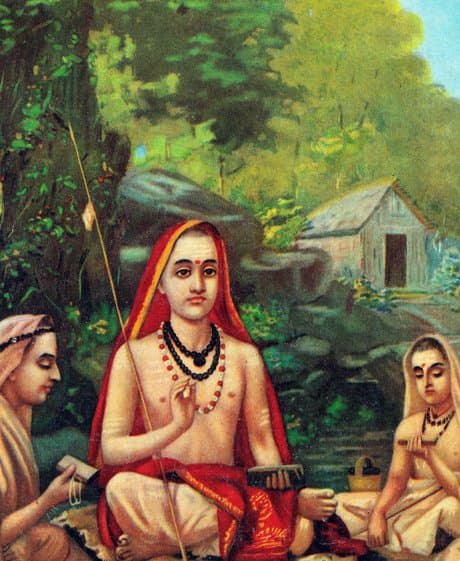
Ādi Śaṅkarācārya · Advaita
Sanskritअद्वेष्टा सर्वभूतानां न द्वेष्टा, आत्मनः दुःख-हेतुं अपि न किञ्चित् द्वेष्टि, सर्वाणि भूतानि आत्मत्वेन हि पश्यति । मैत्रः मित्र-भावः मैत्री मित्रतया वर्तते इति मैत्रः । करुणः एव च, करुणा कृपा दुःखितेषु दया, तद्वान् करुणः, सर्व-भूत-अभय-प्रदः, सन्न्यासी इति अर्थः । निर्ममः मम-प्रत्यय-वर्जितः । निरहङ्कारः निर्गत-अहं-प्रत्ययः । सम-दुःख-सुखः समे दुःख-सुखे द्वेष-रागयोः अप्रवर्तके यस्य सः सम-दुःख-सुखः । क्षमी क्षमावान्, आक्रुष्टः अभिहतः वा अविक्रियः एव आस्ते ॥
Ādi Śaṅkarācārya · Advaita
Hindiयहाँ आत्मा और ईश्वरके भेदको स्वीकार करके विश्वरूप ईश्वरमें चित्तका समाधान करनारूप योग कहा है और ईश्वरके लिये कर्म करने आदिका भी उपदेश किया है।
परंतु ‘अथैतदप्यशक्तोऽसि’ इस कथनके द्वारा (कर्मयोगको) अज्ञानका कार्य सूचित करते हुए भगवान् यह दिखलाते हैं कि जो अव्यक्त अक्षरकी उपासना करनेवाले अभेददर्शी हैं उनके लिये कर्मयोग सम्भव नहीं है। साथ ही कर्मयोगियोंके लिये अक्षरकी उपासना असम्भव दिखलाते हैं।
इसके सिवाय (उन्होंने) ‘ते प्राप्नुवन्ति मामेव’ इस कथनसे अक्षरकी उपासना करनेवालोंके लिये मोक्षप्राप्तिमें स्वतन्त्रता बतलाकर ‘तेषामहं समुद्भर्ता’ इस कथनसे दूसरोंके लिये परतन्त्रता अर्थात् ईश्वराधीनता दिखलायी है।
क्योंकि यदि वे (कमयोगी भी) ईश्वरके स्वरूप ही माने गये हैं तब तो अभेददर्शी होनेके कारण वे अक्षरस्वरूप ही हुए, फिर उनके लिये उद्धार करनेका कथन असंगत होगा।
भगवान् अर्जुनके अत्यन्त ही हितैषी हैं, इसलिये उसको सम्यक्ज्ञानसे जो मिश्रित नहीं है, ऐसे भेददृष्टियुक्त केवल कर्मयोगका ही उपदेश करते हैं। (ज्ञानकर्मके समुच्चयका नहीं)।
तथा (यह भी युक्तिसिद्ध है कि) ईश्वरभाव और सेवकभाव परस्परविरुद्ध है इस कारण प्रमाणद्वारा आत्माको साक्षात् ईश्वररूप जान लेनेके बाद, कोई भी, किसीका सेवक बनना नहीं चाहता।
इसलिये जिन्होंने समस्त इच्छाओंका त्याग कर दिया है, ऐसे अक्षरोपासक यथार्थ ज्ञाननिष्ठ संन्यासियोंका जो साक्षात् मोक्षका कारणरूप 'अद्वेष्टा सर्वभूतानाम्' इत्यादि धर्मसमूह है उसका वर्णन करूँगा, इस उद्देश्यसे भगवान् कहना आरम्भ करते हैं—
जो सब भूतोंमें द्वेषभावसे रहित है अर्थात् अपने लिये दुःख देनेवाले भी किसी प्राणीसे द्वेष नहीं करता, समस्त भूतोंको आत्मारूपसे ही देखता है।
तथा जो मित्रतासे युक्त है अर्थात् सबके साथ मित्रभावसे वर्तता है और करुणामय है—दीन-दुःखियोंपर दया करना करुणा है, उससे युक्त है, अभिप्राय यह कि जो सब भूतोंको अभय देनेवाला संन्यासी है।
तथा जो ममतासे रहित और अहंकारसे रहित है, एवं सुख-दुःखमें सम है अर्थात् सुख और दुःख जिसके अन्तःकरणमें राग-द्वेष उत्पन्न नहीं कर सकते।
जो क्षमावान् है अर्थात् किसीके द्वारा गाली दी जानेपर या पीटे जानेपर भी जो विकाररहित ही रहता है
Jñāneśvar · Vārkarī
Marathiजो सर्व भूतांच्या ठायीं । द्वेषांतें नेणेंचि कहीं । आपपरु नाहीं । चैतन्या जैसा ॥ १४४ ॥ उत्तमातें धरिजे । अधमातें अव्हेरिजे । हें काहींचि नेणिजे । वसुधा जेवीं ॥ १४५ ॥ कां रायाचें देह चाळूं । रंकातें परौतें गाळूं । हें न म्ह्णेचि कृपाळू । प्राणु पैं गा ॥ १४६ ॥ गाईची तृषा हरूं । कां व्याघ्रा विष होऊनि मारूं । ऐसें नेणेंचि गा करूं । तोय जैसें ॥ १४७ ॥ तैसी आघवियांचि भूतमात्रीं । एकपणें जया मैत्री । कृपेशीं धात्री । आपणचि जो ॥ १४८ ॥ आणि मी हे भाष नेणें । माझें काहींचि न म्हणे । सुख दुःख जाणणें । नाहीं जया ॥ १४९ ॥ तेवींचि क्षमेलागीं । पृथ्वीसि पवाडु आंगीं । संतोषा उत्संगीं । दिधलें घर ॥ १५० ॥
Jñāneśvar · Vārkarī
Hindi(12.144) – उसे चैतन्य की तरह प्राणिमात्र के विषय में कभी राग-द्वेष नहीं होता, तथा जैसा कि चैतन्य अपना और पराया भेदभाव नहीं रखता, वैसा ही वह भी नहीं रखता।
(12.145) जैसे पृथ्वी इसी तरह की बातें नहीं सोचती कि उत्तम की संगति करती चाहिए, अथवा अधम का त्याग करना चाहिए, वैसे ही ये बातें वह भी नहीं सोचता।
(12.146-47) अथवा कृपालु प्राण जैसे यह कभी नहीं सोचता कि राजा के शरीर में रह कर राज-काज करूँ और रंक की अवगणना करूँ; अथवा जल जैसे ऐसा करना नहीं जानता कि गाय की तृषा बुझा दे और विष बन कर व्याघ्र का नाश कर दे,
(12.148) वैसे ही जिसकी प्राणिमात्र से समान ही मैत्री है, जो स्वयं कृपा का आधारभूत है,
(12.149) और जो अहंकार की वार्ता भी नहीं जानता, जो अपने निज का कुछ नहीं समझता, जो सुख-दुःख-भाव नहीं रखता,
(12.150) तथा क्षमा के विषय में जिसे पृथ्वी की योग्यता प्राप्त है, जिसने सन्तोष को अपनी गोद में आश्रय दिया है,
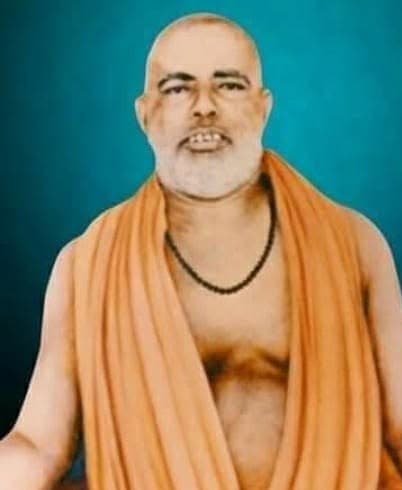
Sri Udiya Baba · Modern
Hindiसंगति— अगले सात श्लोकों में भक्त के लक्षण बतलाये गये हैं—
भावार्थ— सम्पूर्ण प्राणियों के प्रति द्वेष न रखने वाला, मित्र भाव से युक्त, करुणामय, ममताशून्य, अहंकाररहित, दुःख-सुख में समान और क्षमाशील।
व्याख्या— भगवान् मनु कहते हैं—
कुध्यन्तं प्रति न कुध्येदाकुष्टः कुशलं वदेत्। अतिवादास्तितिक्षेत नावमन्येत किंचन॥
अर्थात् जो अपने प्रति क्रोध करने वाले पर क्रोध न करे वह अद्वेष्टा है। परन्तु यह भी उत्तम पक्ष नहीं है। उत्तम तो वह है कि उल्टे उसका उपकार करे। महाभारत में कहा है—
अद्वेष्टः सर्वभूतेषु कर्मणा मनसा गिरा। अनुग्रहं च दानं च शीलमेतत्प्रचक्षते॥
योगदर्शन में कहा है—“मैत्रीकरुणामुदितोपेक्षाणां सुखदुःख- पुण्यापुण्यविषयाणां भावनातश्चित्तप्रसादनम्” अर्थात् जो सुखी है उनके प्रति मित्रता की भावना करने से, जो दुःखी हैं उन पर करुणा करने से, पुण्यवानों को देखकर प्रसन्न होने से और पापियों की उपेक्षा करने से चित्त शुद्ध होता है। ये ही भक्तों के लक्षण हैं। भक्त में अहन्ता-ममता रहती है, परन्तु उसकी अहन्ता अपने चिन्मय भाव-शरीर में होती है और ममता अपने इष्ट में होती है। भजन करते-करते भक्त का शरीर चिन्मय हो जाता है, स्थूल नहीं रहता। जैसे बीज को नष्ट करके ही नवीन अंकुर निकलता है। जिसमें ‘अद्वेष्टा सर्वभूतानाम्’ यह लक्षण घटे वही भक्त है और वही ज्ञानी है। ज्ञानी इसलिये अद्वेष्टा होता है क्योंकि दृश्य के साथ उसका कोई सम्बन्ध नहीं है। इसी से उसमें करुणा और मैत्री—ये दो गुण नहीं पाये जाते, क्योंकि उसे आत्मतत्व के सिवा और किसी की सत्ता ही नहीं भासती। भक्त में इसलिये राग-द्वेष नहीं होते, क्योंकि उसकी भगवान् में प्रीति होती है। ‘सिया-राम मय सब जग जानी’ अर्थात् वह सम्पूर्ण संसार को सिया-राम मय देखता है। इसलिये उसे संसार से अभय प्राप्त हो जाता है और अन्य
अपने प्रति जो क्रोध करे उस पर क्रोध न करे, कोई गाली दे तो उससे मीठा बोले, अपनी निन्दा को सहन करे और किसी का अपमान न करे।
मन वचन और कर्म से सभी प्राणियों से द्वेष न करना तथा दूसरों के प्रति दया और दानशीलता है—यही शील कहा जाता है।
सबको भी वह अभय-दान देता है। सम्पत्ति-विपत्ति दोनों ही अवस्थाओं में उसका मन भगवान् के चरण-कमलों को छोड़कर कहीं नहीं जाता। दुःख के समय भक्त समझता है कि भगवान् मेरी परीक्षा कर रहे हैं कि यह अपनी निष्ठा से विचलित तो नहीं होता इसके विश्वास में कोई कमी तो नहीं आती। तथा सुख के समय वह भगवान् का अनुग्रह देखता है। उसे निरन्तर ऐसी दशा प्राप्त होती रहती है कि उसके हृदय में भगवान् का ध्यान, शरीर में रोमाञ्च, जिह्वा में भगवन्नाम और नेत्रों से जल-प्रवाह होते रहते हैं। इसे भी वह भगवान् की कृपा का ही प्रसाद मानता है।
Swami Ramsukhdas · Modern
HindiOn verses 12.13–12.14
‘अद्वेष्टा सर्वभूतानाम्’—अनिष्ट करने-वालोंके दो भेद हैं—(१) इष्टकी प्राप्तिमें अर्थात् धन, मान-बड़ाई, आदर-सत्कार आदिकी प्राप्तिमें बाधा पैदा करनेवाले और (२) अनिष्ट पदार्थ, क्रिया, व्यक्ति, घटना आदिसे संयोग करानेवाले। भक्तके शरीर, मन, बुद्धि, इन्द्रियाँ और सिद्धान्तके प्रतिकूल चाहे कोई कितना ही, किसी प्रकारका व्यवहार करे—इष्टकी प्राप्तिमें बाधा डाले, किसी प्रकारकी आर्थिक और शारीरिक हानि पहुँचाये, पर भक्तके हृदयमें उसके प्रति कभी किंचिन्मात्र भी द्वेष नहीं होता। कारण कि वह प्राणिमात्रमें अपने प्रभुको ही व्याप्त देखता है, ऐसी स्थितिमें वह विरोध करे तो किससे करे—निज प्रभुमय देखहिं जगत केहि सन करहिं विरोध॥
(मानस ७। ११२ ख)
इतना ही नहीं; वह तो अनिष्ट करनेवालोंकी सब क्रियाओंको भी भगवान्का कृपापूर्ण मंगलमय विधान ही मानता है!
प्राणिमात्र स्वरूपसे भगवान्का ही अंश है। अतः किसी भी प्राणीके प्रति थोड़ा भी द्वेषभाव रहना भगवान्के प्रति ही द्वेष है। इसलिये किसी प्राणीके प्रति द्वेष रहते हुए भगवान्से अभिन्नता तथा अनन्यप्रेम नहीं हो सकता। प्राणिमात्रके प्रति द्वेषभावसे रहित होनेपर ही भगवान्में पूर्ण प्रेम हो सकता है। इसलिये भक्तमें प्राणिमात्रके प्रति द्वेषका सर्वथा अभाव होता है।
‘मैत्रः करुण एव च’*—भक्तके अन्तःकरणमें प्राणिमात्रके प्रति केवल द्वेषका अत्यन्त अभाव ही नहीं होता, प्रत्युत सम्पूर्ण प्राणियोंमें भगवद्भाव होनेके नाते उसका सबसे मैत्री और दयाका व्यवहार भी होता है।
भगवान् प्राणिमात्रके सुहृद हैं—‘सुहृदं सर्वभूतानाम्’ (गीता ५। २९)। भगवान्का स्वभाव भक्तमें अवतरित होनेके कारण भक्त भी सम्पूर्ण प्राणियोंका सुहृद होता है—‘सुहृदः सर्वदेहिनाम्’ (श्रीमद्भागवत ३। २५। २१)। इसलिये भक्तका भी सभी प्राणियोंके प्रति बिना किसी स्वार्थके स्वाभाविक ही मैत्री और दयाका भाव रहता है—
हेतु रहित जग जुग उपकारी। तुम्ह तुम्हार सेवक असुरारी॥
(मानस ७। ४७। ३)
अपना अनिष्ट करनेवालोंके प्रति भी भक्तके द्वारा मित्रताका व्यवहार होता है; क्योंकि उसका भाव यह रहता है कि अनिष्ट करनेवालेने अनिष्टरूपमें भगवान्का विधान ही प्रस्तुत किया है। अतः उसने जो कुछ किया है, मेरे लिये ठीक ही किया है। कारण कि भगवान्का विधान सदैव मंगलमय होता है। इतना ही नहीं, भक्त यह मानता है कि मेरा अनिष्ट करनेवाला (अनिष्टमें निमित्त बनकर) मेरे पूर्वकृत पापकर्मोंका नाश कर रहा है; अतः वह विशेषरूपसे आदरका पात्र है।
साधकमात्रके मनमें यह भाव रहता है और रहना ही चाहिये कि उसका अनिष्ट करनेवाला उसके पिछले पापोंका फल भुगताकर उसे शुद्ध कर रहा है। जब सामान्य साधकमें भी अनिष्ट करनेवालेके प्रति मैत्री और करुणाका भाव रहता है, फिर सिद्ध भक्तका तो कहना ही क्या है? सिद्ध भक्तका तो उसके प्रति ही क्या, प्राणिमात्रके प्रति मैत्री और दयाका विलक्षण भाव रहता है।
पातंजलयोगदर्शनमें चित्त-शुद्धिके चार हेतु बताये गये हैं—
* यहाँ भक्तके जो लक्षण बताये गये हैं, वे ज्ञानी (गुणातीत) पुरुषोंके (गीता—चौदहवें अध्यायके बाईसवेंसे पचीसवें श्लोकतक वर्णित) लक्षणोंकी अपेक्षा भी अधिक एवं विलक्षण हैं। ‘मैत्रः’ और ‘करुणः’ पद भी यहीं—भक्तके लक्षणोंमें ही आये हैं।
‘मैत्रीकरणामुदितोपेक्षाणां सुखदुःखपुण्यापुण्य- विषयाणां भावनातश्चित्तप्रसादनम्।’ (१। ३३)
‘सुखियोंके प्रति मैत्री, दुःखियोंके प्रति करुणा, पुण्यात्माओंके प्रति मुदिता (प्रसन्नता) और पापात्माओंके प्रति उपेक्षाके भावसे चित्तमें निर्मलता आती है।’
परन्तु भगवान्ने इन चारों हेतुओंको दोमें विभक्त कर दिया है—‘मैत्रः च करुणः।’ तात्पर्य यह है कि सिद्ध भक्तका सुखियों और पुण्यात्माओंके प्रति ‘मैत्री’ का भाव तथा दुःखियों और पापात्माओंके प्रति ‘करुणा’ का भाव रहता है।
दुःख पानेवालेकी अपेक्षा दुःख देनेवालेपर (उपेक्षाका भाव न होकर) दया होनी चाहिये; क्योंकि दुःख पानेवाला तो (पुराने पापोंका फल भोगकर) पापोंसे छूट रहा है, पर दुःख देनेवाला नया पाप कर रहा है। अतः दुःख देनेवाला दयाका विशेष पात्र है।
‘निर्ममः’—यद्यपि भक्तका प्राणिमात्रके प्रति स्वाभाविक ही मैत्री और करुणाका भाव रहता है, तथापि उसकी किसीके प्रति किंचिन्मात्र भी ममता नहीं होती। प्राणियों और पदार्थोंमें ममता (मेरेपनका भाव) ही मनुष्यको संसारमें बाँधनेवाली होती है। भक्त इस ममतासे सर्वथा रहित होता है। उसकी अपने कहलानेवाले शरीर, इन्द्रियाँ, मन और बुद्धिमें भी बिलकुल ममता नहीं होती। साधकसे भूल यह होती है कि वह प्राणियों और पदार्थोंसे तो ममताको हटानेकी चेष्टा करता है, पर अपने शरीर, मन, बुद्धि और इन्द्रियोंसे ममता हटानेकी ओर विशेष ध्यान नहीं देता। इसीलिये वह सर्वथा निर्मम नहीं हो पाता।
‘निरहंकारः’—शरीर, इन्द्रियाँ आदि जड़-पदार्थोंको अपना स्वरूप माननेसे अहंकार उत्पन्न होता है।
भक्तकी अपने शरीरादिके प्रति किंचिन्मात्र भी अहंबुद्धि न होनेके कारण तथा केवल भगवान्से अपने नित्य सम्बन्धका अनुभव हो जानेके कारण उसके अन्तःकरणमें स्वतः श्रेष्ठ, दिव्य, अलौकिक गुण प्रकट होने लगते हैं। इन गुणोंको भी वह अपने गुण नहीं मानता, प्रत्युत (दैवी सम्पत्ति होनेसे) भगवान्के ही मानता है। ‘सत्’— (परमात्मा-)के होनेके कारण ही ये गुण ‘सद्गुण’
कहलाते हैं। ऐसी दशामें भक्त उनको अपना मान ही कैसे सकता है! इसलिये वह अहंकारसे सर्वथा रहित होता है।
‘समदुःखसुखः’—भक्त सुख-दुःखोंकी प्राप्तिमें सम रहता है अर्थात् अनुकूलता-प्रतिकूलता उसके हृदयमें राग- द्वेष, हर्ष-शोक आदि विकार पैदा नहीं कर सकते।
गीतामें ‘सुख-दुःख’ पद अनुकूलता-प्रतिकूलताकी परिस्थिति-(जो सुख-दुःख उत्पन्न करनेमें हेतु है) के लिये तथा अन्तःकरणमें होनेवाले हर्ष-शोकादि विकारोंके लिये भी आया है।
अनुकूल और प्रतिकूल परिस्थिति मनुष्यको सुखी- दुःखी बनाकर ही उसे बाँधती है। इसलिये सुख-दुःखमें सम होनेका अर्थ है—अनुकूल या प्रतिकूल परिस्थिति आनेपर अपनेमें हर्ष-शोकादि विकारोंका न होना।
भक्तके शरीर, इन्द्रियाँ, मन, सिद्धान्त आदिके अनुकूल या प्रतिकूल प्राणी, पदार्थ, परिस्थिति, घटना आदिका संयोग या वियोग होनेपर उसे अनुकूलता और प्रतिकूलताका ‘ज्ञान’ तो होता है, पर उसके अन्तःकरणमें हर्ष-शोकादि कोई ‘विकार’ उत्पन्न नहीं होता। यहाँ यह बात समझ लेनी चाहिये कि किसी परिस्थितिका ज्ञान होना अपने-आपमें कोई दोष नहीं है, प्रत्युत उससे अन्तःकरणमें विकार उत्पन्न होना ही दोष है। भक्त राग-द्वेष, हर्ष-शोक आदि विकारोंसे सर्वथा रहित होता है। जैसे, प्रारब्धानुसार भक्तके शरीरमें कोई रोग होनेपर उसे शारीरिक पीड़ाका ज्ञान (अनुभव) तो होगा; किन्तु उसके अन्तःकरणमें किसी प्रकारका विकार नहीं होगा।
‘क्षमी’—अपना किसी तरहका भी अपराध करने- वालेको किसी भी प्रकारका दण्ड देनेकी इच्छा न रखकर उसे क्षमा कर देनेवालेको ‘क्षमी’ कहते हैं।
भक्तके लक्षणोंमें पहले ‘अद्वेष्टा’ पद देकर भगवान्ने भक्तमें अपना अपराध करनेवालेके प्रति द्वेषका अभाव बताया, अब यहाँ ‘क्षमी’ पदसे यह बताते हैं कि भक्तमें अपना अपराध करनेवालेके प्रति ऐसा भाव रहता है कि उसको भगवान् अथवा अन्य किसीके द्वारा भी दण्ड न मिले। ऐसा क्षमाभाव भक्तकी एक विशेषता है।
‘सन्तुष्टः सततम्’*—जीवको मनके अनुकूल प्राणी,
* ऐसे संतोषीके लिये भागवतकार कहते हैं—
सदा सन्तुष्टमनसः सर्वाः सुखमया दिशः। शर्कराकण्टकादिभ्यो यथोपानत्पदः शिवम्॥
( श्रीमद्भगवद्गीता ७। १५। १७ )
‘जैसे पैरोंमें जूते पहनकर चलनेवालेको कंकड़ और काँटोंसे कोई भय नहीं होता, ऐसे ही जिसके मनमें संतोष है, उसके लिये सर्वदा सब जगह सुख-ही-सुख है, दुःख है ही नहीं।’
पदार्थ, घटना, परिस्थिति आदिके संयोगमें और मनके प्रतिकूल प्राणी, पदार्थ, घटना, परिस्थिति आदिके वियोगमें एक संतोष होता है। विजातीय और अनित्य पदार्थोंसे होनेके कारण यह संतोष स्थायी नहीं रह पाता। स्वयं नित्य होनेके कारण जीवको नित्य परमात्माकी अनुभूतिसे ही वास्तविक और स्थायी संतोष होता है।
भगवान्को प्राप्त होनेपर भक्त नित्य-निरन्तर संतुष्ट रहता है; क्योंकि न तो उसका भगवान्से कभी वियोग होता है और न उसको नाशवान् संसारकी कोई आवश्यकता ही रहती है। अतः उसके असंतोषका कोई कारण ही नहीं रहता। इस संतुष्टिके कारण वह संसारके किसी भी प्राणी-पदार्थके प्रति किंचिन्मात्र भी महत्त्वबुद्धि नहीं रखता।
‘सन्तुष्टः’ के साथ ‘सततम्’ पद देकर भगवान्ने भक्तके उस नित्य-निरन्तर रहनेवाले संतोषकी ओर ही लक्ष्य कराया है, जिसमें न तो कभी कोई अन्तर पड़ता है और न कभी अन्तर पड़नेकी सम्भावना ही रहती है। कर्मयोग, ज्ञानयोग या भक्तियोग—किसी भी योगमार्गसे सिद्धि प्राप्त करनेवाले महापुरुषमें ऐसी संतुष्टि (जो वास्तवमें है) निरन्तर रहती है।
‘योगी’—भक्तियोगके द्वारा परमात्माको प्राप्त (नित्य-निरन्तर परमात्मासे संयुक्त) पुरुषका नाम यहाँ ‘योगी’ है। वास्तवमें किसी भी मनुष्यका परमात्मासे कभी वियोग हुआ नहीं, है नहीं, हो सकता नहीं और सम्भव ही नहीं। इस वास्तविकताका जिसने अनुभव कर लिया है, वही ‘योगी’ है।
‘यतात्मा’—जिसका मन-बुद्धि-इन्द्रियोंसहित शरीरपर पूर्ण अधिकार है, वह ‘यतात्मा’ है। सिद्ध भक्तको मन-बुद्धि आदि वशमें करने नहीं पड़ते, प्रत्युत ये स्वाभाविक ही उसके वशमें रहते हैं। इसलिये उसमें किसी प्रकारके इन्द्रियजन्य दुर्गुण-दुराचारके आनेकी सम्भावना ही नहीं रहती।
वास्तवमें मन-बुद्धि-इन्द्रियाँ स्वाभाविकरूपसे सन्मार्गपर चलनेके लिये ही हैं; किन्तु संसारसे रागयुक्त सम्बन्ध रहनेसे ये मार्गच्युत हो जाती हैं। भक्तका संसारसे किंचिन्मात्र भी रागयुक्त सम्बन्ध नहीं होता, इसलिये उसकी मन-बुद्धि-इन्द्रियाँ सर्वथा उसके वशमें होती हैं। अतः उसकी प्रत्येक क्रिया दूसरोंके लिये आदर्श होती है।
ऐसा देखा जाता है कि न्याय-पथपर चलनेवाले सत्पुरुषोंकी इन्द्रियाँ भी कभी कुमार्गगामी नहीं होतीं। जैसे, राजा दुष्यन्तकी वृत्ति शकुन्तलाकी ओर जानेपर उन्हें दृढ़ विश्वास हो जाता है कि यह क्षत्रिय-कन्या ही है, ब्राह्मण-कन्या नहीं। कवि कालिदासके कथनानुसार जहाँ सन्देह हो, वहाँ सत्पुरुषके अन्तःकरणकी प्रवृत्ति ही प्रमाण होती है—
सतां हि संदेहपदेषु वस्तुषु प्रमाणमन्तःकरणप्रवृत्तयः ॥
(अभिज्ञानशाकुन्तलम् १। २१)
जब न्यायशील सत्पुरुषकी इन्द्रियोंकी प्रवृत्ति भी स्वतः कुमार्गकी ओर नहीं होती, तब सिद्ध भक्त (जो न्यायधर्मसे कभी किसी अवस्थामें च्युत नहीं होता-) की मन-बुद्धि-इन्द्रियाँ कुमार्गकी ओर जा ही कैसे सकती हैं!
‘दृढनिश्चयः’—सिद्ध महापुरुषकी दृष्टिमें संसारकी स्वतन्त्र सत्ताका सर्वथा अभाव रहता है। उसकी बुद्धिमें एक परमात्माकी ही अटल सत्ता रहती है। अतः उसकी बुद्धिमें विपर्यय-दोष (प्रतिक्षण बदलनेवाले संसारका स्थायी दीखना) नहीं रहता। उसको एक भगवान्के साथ ही अपने नित्यसिद्ध सम्बन्धका अनुभव होता रहता है। अतः उसका भगवान्में ही दृढ़ निश्चय होता है। उसका यह निश्चय बुद्धिमें नहीं, प्रत्युत ‘स्वयं’ में होता है, जिसका आभास बुद्धिमें प्रतीत होता है।
संसारकी स्वतन्त्र सत्ता माननेसे अथवा संसारसे अपना सम्बन्ध माननेसे ही बुद्धिमें विपर्यय और संशयरूप दोष उत्पन्न होते हैं। विपर्यय और संशययुक्त बुद्धि कभी स्थिर नहीं होती। ज्ञानी और अज्ञानी पुरुषकी बुद्धिके निश्चयमें ही अन्तर होता है; स्वरूपसे तो दोनों समान ही होते हैं। अज्ञानीकी बुद्धिमें संसारकी सत्ता और उसका महत्त्व रहता है; परन्तु सिद्ध भक्तकी बुद्धिमें एक भगवान्के सिवाय न तो संसारकी किसी वस्तुकी स्वतन्त्र सत्ता रहती है और न उसका कोई महत्त्व ही रहता है। अतः उसकी बुद्धि विपर्यय और संशयदोषसे सर्वथा रहित होती है और उसका केवल परमात्मामें ही दृढ़ निश्चय होता है।
‘मय्यपितमनोबुद्धिः’—जब साधक एकमात्र भगवत्प्राप्तिको ही अपना उद्देश्य बना लेता है और स्वयं भगवान्का ही हो जाता है (जो कि वास्तवमें है) तब उसके मन-बुद्धि भी अपने-आप भगवान्में लग जाते हैं। फिर
* संत कबीरदासजी कहते हैं—
गोधन गजधन बाजिधन, और रतन धन खान। जब आवै संतोष धन, सब धन धूरि समान॥
सिद्ध भक्तके मन-बुद्धि भगवान्के अर्पित रहें—इसमें तो कहना ही क्या है!
जहाँ प्रेम होता है, वहाँ स्वाभाविक ही मनुष्यका मन लगता है और जिसे मनुष्य सिद्धान्तसे श्रेष्ठ समझता है, उसमें स्वाभाविक ही उसकी बुद्धि लगती है। भक्तके लिये भगवान्से बढ़कर कोई प्रिय और श्रेष्ठ होता ही नहीं। भक्त तो मन-बुद्धिपर अपना अधिकार ही नहीं मानता। वह तो
**परिशिष्ट भाव**—गीतामें कर्मयोगीके लक्षण भी आये हैं (दूसरे अध्यायके पचपनवेंसे बहत्तरवें श्लोकतक और छठे अध्यायके सातवेंसे नवें श्लोकतक), ज्ञानयोगीके लक्षण भी आये हैं (चौदहवें अध्यायके बाईसवेंसे पचीसवें श्लोकतक) और भक्तके लक्षण भी आये हैं (बारहवें अध्यायके तेरहवेंसे उन्नीसवें श्लोकतक)। परन्तु केवल भक्तके लक्षणोंमें ही भगवान्ने कहा है—‘**अद्वेष्टा सर्वभूतानां मैत्रः करुण एव च**’। यह लक्षण (मित्रता और करुणा) न कर्मयोगीके लक्षणोंमें आया है, न ज्ञानयोगीके लक्षणोंमें, प्रत्युत केवल भक्तके लक्षणोंमें आया है। कर्मयोगी और ज्ञानयोगीमें समता तो होती है, पर मित्रता और करुणा नहीं होती। परन्तु भक्तमें आरम्भसे ही मित्रता और करुणा होती है।
भक्तकी दृष्टिमें सम्पूर्ण प्राणी समग्र भगवान्का अंग होनेसे अपने प्रभु ही हैं, फिर कौन वैर करे, किससे करे और क्यों करे?—‘**निज प्रभुमय देखहिं जगत केहि सन करहिं विरोध**’ (मानस, उत्तर० ११२ ख)। उदाहरणके लिये, किसीको राम प्रिय हैं, किसीको कृष्ण प्रिय हैं, किसीको शंकर प्रिय हैं तो इष्ट अलग-अलग होनेपर भी वे सब भक्त परस्पर एक हो सकते हैं, पर सब ज्ञानयोगी परस्पर एक नहीं हो सकते। अगर भक्त और ज्ञानयोगी परस्पर मिलें तो भक्त ज्ञानयोगीका जितना आदर करेगा, उतना ज्ञानयोगी भक्तका नहीं कर सकेगा। इसलिये भक्तोंका लक्षण बताया है—‘**सबहि मानप्रद आपु अमानी**’ (मानस, उत्तर० ३८। २)।
श्रीरामचरितमानसके आरम्भमें गोस्वामी तुलसीदासजी महाराज सज्जनोंके साथ-साथ दुष्टोंकी भी वन्दना करते हैं और सच्चे भावसे करते हैं—‘**बहुरि बंदि खल गन सतिभार्य**’ (मानस, बाल० ४। १)। ऐसा भक्त ही कर सकता है, ज्ञानयोगी नहीं! यद्यपि ज्ञानयोगीका किसीसे कभी किंचिन्मात्र भी वैर नहीं होता, तथापि उसमें स्वाभाविक उदासीनता, तटस्थता रहती है। विवेकमार्ग-(ज्ञान-)में वैराग्यकी मुख्यता रहती है और वैराग्य रूखा होता है। इसलिये ज्ञानयोगीमें भीतरसे कठोरता न होनेपर भी वैराग्य, उदासीनताके कारण बाहरसे कठोरता प्रतीत होती है।
सुख लेनेमें कठोरता रहती है और सुख देनेमें कोमलता रहती है। ज्ञानयोगी मोक्षका भी सुख लेता है, तो उसमें कठोरता रहती है। परन्तु दूसरेको सुख देनेका भाव होनेसे भक्तमें आरम्भसे ही कोमलता रहती है। भक्तके मनमें वैरीसे भी द्वेष नहीं होता। ज्ञानयोगी पिताकी तरह होता है और भक्त माँकी तरह, इसलिये भक्तमें करुणा ज्यादा होती है।
‘**एव**’ पद देनेका तात्पर्य है कि भक्त द्वेषभावसे रहित होता है—इतनी ही बात नहीं है, वह मित्रभाववाला और दयालु भी होता है।
‘**निर्ममो निरहंकारः**’—प्रत्येक साधकके लिये निर्मम और निरहंकार होना बहुत आवश्यक है, इसलिये गीतामें भगवान्ने कर्मयोग, ज्ञानयोग और भक्तियोग—तीनों ही योगमार्गोंमें निर्मम और निरहंकार होनेकी बात कही है—कर्मयोगमें ‘**निर्ममो निरहंकारः स शान्तिमधिगच्छति**’ (२। ७१), ज्ञानयोगमें ‘**अहंकारं**’... ‘**विमुच्य निर्ममः**’
* भगवान् श्रीराम कहते हैं—
अखिल बिस्व यह मोर उपाया। सब पर मोहि बराबरि दया॥
तिन्ह महँ जो परिहरि मद माया। भजै मोहि मन बच अरु काया॥
पुरुष नपुंसक नारि वा जीव चराचर कोइ।
सर्व भाव भज कपट तजि मोहि परम प्रिय सोइ॥
(मानस, उत्तर० ८७। ४, ८७ क)
शान्तो ब्रह्मभूयाय कल्पते' (१८।५३) और भक्तियोगमें 'निर्ममो निरहंकारः समदुःखसुखः क्षमी' (१२।१३)। इस विषयमें एक विशेष ध्यान देनेकी बात है कि वास्तवमें हमारा स्वरूप अहंता-ममतासे रहित है। अहंता (मैंपन) और ममता (मेरापन)—दोनों अपने स्वरूपमें मानी हुई हैं, वास्तविक नहीं हैं। अगर ये वास्तविक होतीं तो हम कभी निर्मम और निरहंकार नहीं हो सकते और भगवान् भी सबके लिये निर्मम और निरहंकार होनेकी बात नहीं कहते। परन्तु हम निर्मम और निरहंकार हो सकते हैं, तभी भगवान् ऐसा कहते हैं।
कर्मयोगमें पहले 'कामना'का त्याग होता है, फिर कर्मयोगी स्वतः निर्मम-निरहंकार हो जाता है (गीता—दूसरे अध्यायका इकहत्तरवाँ श्लोक)। ज्ञानयोगमें पहले 'अहंकार'का त्याग होता है, फिर ज्ञानयोगी स्वतः निर्मम हो जाता है (गीता—अठारहवें अध्यायका तिरपनवाँ श्लोक)। भक्तियोगमें भक्त अपने-आपको भगवान्के अर्पित कर देता है तो भगवत्कृपासे वह स्वतः निर्मम-निरहंकार हो जाता है।
'मय्यर्पितमनोबुद्धिर्यो मद्भक्तः स मे प्रियः'—यहाँ 'मय्यर्पितमनोबुद्धिः' पद उस मनुष्यका वाचक है, जिसने स्वयंको (अपने-आपको) भगवान्के अर्पित कर दिया है। स्वयं अर्पित होनेसे मन-बुद्धि भी स्वतः भगवान्के अर्पित हो जाते हैं। स्वयं अर्पित होनेसे फिर कुछ बाकी रहता ही नहीं। कारण कि स्वयं पहले है, शरीर-मन-बुद्धि आदि पीछे हैं। भक्त पहले है, मनुष्य पीछे है। भगवान्में अर्पित होनेसे मन-बुद्धिकी स्वतन्त्र सत्ता नहीं रहती, प्रत्युत केवल भगवान् ही रहते हैं।
भगवान्का परा और अपरा दोनों प्रकृतियोंके साथ समान सम्बन्ध है, पर जीव-(परा-) का सम्बन्ध अपराके साथ नहीं है। कारण कि जीव अपरा प्रकृतिसे उत्कृष्ट है और भगवान्का अंश है। इसलिये जीवका सम्बन्ध भगवान्के साथ है। 'मय्यर्पितमनोबुद्धिः' का तात्पर्य है कि जीव अपरा प्रकृति-(मन-बुद्धि-) को अपना न माने, प्रत्युत भगवान्को ही अपना माने*।
भगवान् ज्ञानस्वरूप और नित्य परिपूर्ण हैं। अतः उनमें ज्ञानकी भूख (जिज्ञासा) तो नहीं है, पर प्रेमकी भूख (प्रेम-पिपासा) अवश्य है। इसलिये भगवान् कहते हैं कि मेरेमें अर्पित मन-बुद्धिवाला जो मेरा भक्त है, वह मेरेको प्रिय है। ऐसे भक्तके सिवाय भगवान्को प्यारा और कोई हो ही नहीं सकता।
जैसे किसी राजाका बेटा दूसरोंसे भीख माँगने लगे तो वह राजाको नहीं सुहाता, ऐसे ही सत्-चित्-आनन्दरूप भगवान्का अंश जीव जब असत्-जड़-दुःखरूप संसारसे कुछ आशा रखता है, तब वह भगवान्को नहीं सुहाता, प्यारा नहीं लगता; क्योंकि इसमें जीवका महान् अहित है। भगवान्को वही प्यारा लगता है, जो अन्यसे आशा नहीं रखता तथा जिसमें जीवका परम हित होता है—
एक बानि करुनानिधान की। सो प्रिय जाके गति न आन की॥ (मानस, अरण्य० १०।४)
सम्बन्ध—सिद्ध भक्तके लक्षणोंका दूसरा प्रकरण, जिसमें छः लक्षणोंका वर्णन है, आगेके श्लोकमें आया है।
यस्मान्नोद्विजते लोको लोकान्नोद्विजते च यः ।
The Supreme Lord Krishna confirms that the qualities He is describing are applicable to yo mad-bhaktaḥ which means His exclusive devotee.
The word adveṣṭā means free from hatred for any being at any time.
Maitraḥ means benign and showing good will to all, both well-wishers and ill-wishers by the understanding that they are merely following the tendencies of the impulse imparted to them by the Supreme Lord in relation to one's own good and bad actions.
Karuṇā means compassionate, to be sympathetic towards the sufferings of others, friend and foe alike.
Nir-mamaḥ means devoid of sentiments of possessiveness and ego related conceptions mine-ness regarding the physical body, family and associated relationships and objects.
nir-ahaṅkāraḥ means free from the false conception of thinking one's self to be the physical body and consequently unaffected by the dualities of material existence such as pain and pleasure, praise and ridicule, joy and grief, etc. all based upon the mentality of the mind.
Kṣamī means tolerant, to be unaffected by external incidents such as physical accidents or catastrophes.
Santuṣṭaḥ means always content with whatever comes along by its own accord for the purpose of bodily sustenance.
Satatam yogi is one who always engages themselves to the science of the individual consciousness attaining communion with the ultimate consciousness in loving devotion to the Supreme Lord.
Satatam means always and has two meanings: one is to be continuously and perpetually engaged in bhakti or exclusive loving devotion to Lord Krishna at every moment and second is to engage in this bhakti to Lord Krishna in all ways meaning in every possibility and facet of one's life.
Yatātmā means the ability to govern and control the workings of the mind.
Dṛḍha-niścayaḥ means firmly resolved in the knowledge of the Vedic scriptures regarding the immortality of the ātma or eternal soul and the Supreme Lord and irrevocably established in bhakti to the Lord Krishna.
Arpita mano buddhiḥ means who dedicates their intelligence and consciousness to the Supreme Lord by performing activities dedicated to Him without desire for recompense.
Then when the Supreme Lord Krishna is worshipped in this way He would Himself guide one internally to achieve ātma tattva or realisation of the soul and attain communion with Him.
One who possesses all these qualities is very dear to Supreme Lord Krishna and is me priyaḥ or His beloved.