

Bhagavad Gītā · Chapter 12 · Bhakti Yoga
अथैतदप्यशक्तोऽसि कर्तुं मद्योगमाश्रितः
सर्वकर्मफलत्यागं ततः कुरु यतात्मवान्
athaitadapyaśakto'si kartuṃ madyogamāśritaḥ|sarvakarmaphalatyāgaṃ tataḥ kuru yatātmavān||
Word meanings
अथ = if
मद्योगम् = union with me
आश्रितः = resorting to
एतत् = this
अपि = even
कर्तुम् = to do
अशक्तः = unable
असि = you are
ततः = then
यतात्मवान् = with mind and senses controlled
सर्वकर्मफलत्यागम् = renunciation of the fruit of all actions
कुरु = do / perform
Translation
If, taking recourse to the Yoga of My realization, you are unable even to do this, then, subduing your mind and intellect etc., relinquish the fruit of all actions.
Commentary
The commentators seated around this verse
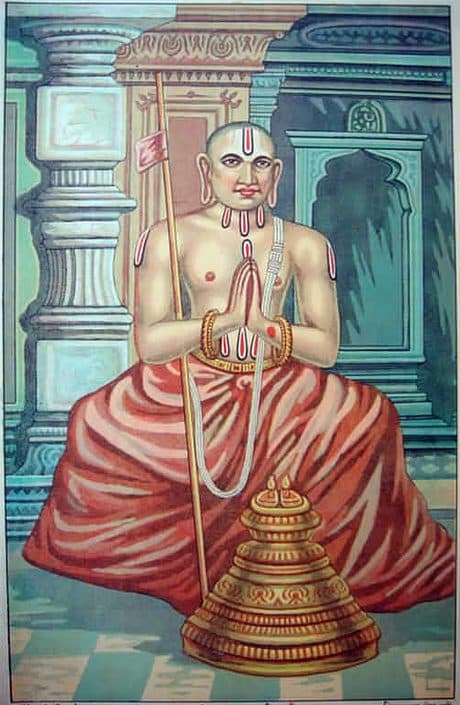
Rāmānuja · Viśiṣṭādvaita
English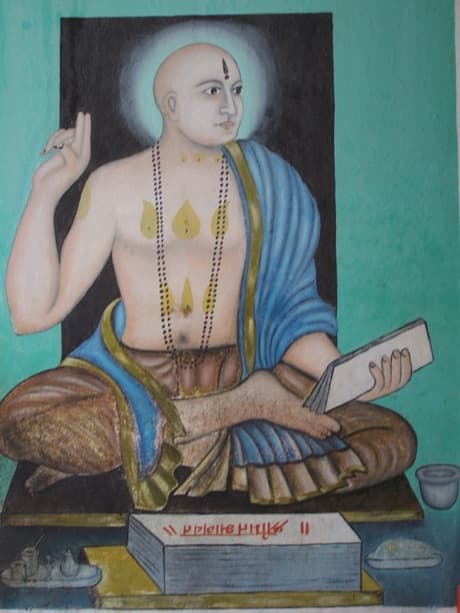
Madhvācārya · Dvaita
SanskritEnglishOn verses 12.8–12.11
“मदुपासकानां न कश्चित् क्लेश । इति दर्शयति ये तु इत्यादिना ॥ उक्तं च सौकरायणश्रुती - उपास्ते स पुरुषं वासुदेवमव्यक्तादेरिष्वितं किं तु तेषाम् ॥ इति । तेषामेकान्तिनः श्रेष्ठास्ते चैवानन्यदेवताः । अहमेव गतिस्तेषां निराशीः कर्मकारिणाम् ॥ इति मोक्षधर्मे ॥” - Sri Krishna declares by showing alternatives that for his devotees there are no impediments at all. “What could worship of the unmanifest, verily, bring for those who propitiate Sri Vasudeva ?”, thus in Saukarayan scripture. “Rejecting other deities, those devoted ones who singularly worship Me alone are indeed superior. Because performing their actions without any expectation of fruits, I become their ultimate goal”, thus in Moksha Dharma reiterated.
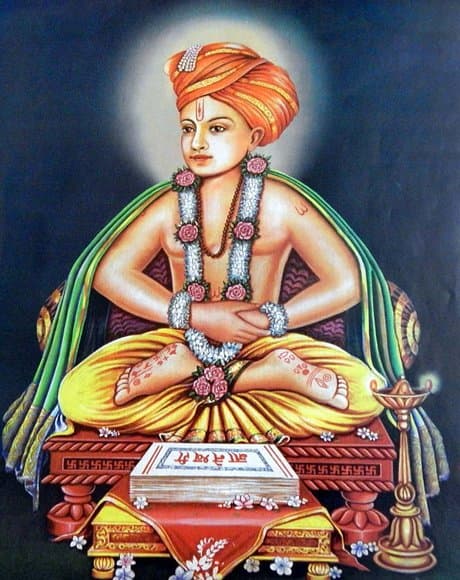
Jñāneśvar · Vārkarī
English11 'And in case thou art not able to accomplish even this by cultivating the singleness of attention towards Me (that it demands), then (at least) renounce the fruit of every action with a resolute mind. (125)
Oh Son of Pandu, should you not be able even to do this, viz. dedicate all your actions to me, then (at least) you do worship me. If you find it difficult, O Kiriti, even to remember me, with full intellect at the beginning and at the end of the actions, leave it alone too. At least let your intellect be alive in regard to putting restraint on your senses, never mind if you leave aside my remembrance. And then whenever and whatever actions might be done by you, abandon all thought about their fruit. Just as the trees or creepers drop down all their fruit they yield, in that way, you renounce all the fruit of action that may be successfully performed. Not only that: let there even be no notion that I should be remembered, or that the actions have to be done on my own account. Let them all be extinguished into the great Void, together with their fruit. Consider all your actions as fruitless, as an empty dream, (or) like rainfall on a rock or like the sowing of seeds in burning fire. A father never entertains any (sexual) craving in regard to his daughter; in that way you must always be motive-free in regard to all your actions. Let all your actions get absorbed in the great Void, just as the flames of the fire all get extinguished in the sky. Oh Arjuna, even though the renunciation of fruit might appear a simple thing, yet it is the greatest among all the Yogas. The actions that once are dropped down through renunciation of fruit never grow up (again). A cluster of bamboo trees gets barren once it gives a yield, so with the dropping down of the existing body, consequent on renunciation of fruit, there is no coming into body-form again—nay the cycle of births and deaths comes to an end altogether. Oh Kiriti, one can reach the knowledge after ascending the steps in the form of the Yoga of Steady-practice, and one can attain meditation through knowledge. When the diverse mental states get extinguished in meditation, then the aggregate of all actions goes and stands aloof, and when the actions stand aloof, renunciation of fruit automatically comes in and thereby one secures the eternal peace and tranquillity of mind. Therefore, Oh husband of Subhadrā, this is the only course (open) for securing tranquillity of mind, and therefore, it is now the fitting thing to take recourse to Steady-practice (Study).
Swami Ramsukhdas · Modern
English'Athaitadapyaśakto'si kartuṁ madyogamāśritaḥ'—In the preceding verse, the Lord declared, "Thou shalt attain Me by performing actions, for My sake" while, here He declares, "Thou shalt attain Me, by renouncing the fruit of all actions." The former, can be called the path of devotion, while the latter, the path of action. Both of these are independent means, of God-realization.
In this verse, it seems proper that the expression 'Madyogamāśritaḥ' (resorting to union with Me), is related with
'Athaitadapyaśakto'si' (if you are unable), because if it is taken to be related with 'Sarvakarmaphalatyāgam kuru' (do renouncing the fruits of all actions), because of prominence of dependence on God, it will become, the path of devotion. Thus, it will not be different from the path of devotion described, in the tenth verse, while the Lord wants to explain the path of devotion in the tenth verse, and the path of action, in the eleventh verse.
Also in this verse, the Lord has used the expression 'Yatātmavān' (subduing mind, senses and intellect), which is more important in the path of action, because without it, renouncement, of the fruit of actions, is impossible.
If a striver, does not believe in God so much but he does social service, and he cannot surrender all actions to Him, but renounces the fruit of action, which is beyond his power (Gītā 2/47), his affinity, for the world, is renounced.
'Sarvakarmaphalatyāgam tatah kuru yatātmavān'—For a person, who wishes to attain to Yoga, action (without attachment) is said to be the means (Gītā 6/3). It is attachment, to the fruit of action, which binds a man. So if a striver, subdues his senses, mind and intellect, he can easily renounce, the fruit of action. If a striver does not control his mind, intellect and senses etc., he will naturally think of sense-objects and then he will be attached to them, and thus he may perish (Gītā 2/62-63). If a striver's aim, is to renounce the fruit of action, he can easily control his mind and senses.
Here the expression 'Sarvakarma', stands for religious sacrifice, charity, penance, service, and means of livelihood, according to one's caste and order of life, as well as, all other prescribed actions. 'Renouncement of the fruit of actions', does not mean, physical renouncement but the renouncement of the sense of mine, attachment and desire etc., for the fruit, of actions.
A striver, following the path of action, should not remain inactive, by thinking that there is no need for the performance
of action, when he does not want to reap its fruit. Therefore, the Lord warns the strivers, 'Let thy attachment not be to, inaction' (Gītā 2/47).
In the ninth verse of the eighteenth chapter, also the Lord while describing the marks of the 'Sāttvika tyāga', explained renouncement of the attachment to the fruit of actions as the 'Sāttvika tyāga'.
When actions are performed, having renounced attachment, to the fruit of actions, the impetus to act, calms down and old attachment perishes. Without the desire for fruit of actions, affinity for actions, is totally renounced and new attachment does not arise. Then, nothing remains to be done for a striver, because it is attachment, desire, a sense of mine for action, and desire for fruit, which force, him to act. He may, physically restrain himself, from performing actions, for a short time. But so long as, he has attachment and aversion, his nature forces him, to act. The impetus to act, calms down only when actions are performed, without any selfish motive, having renounced attachment and aversion etc.
This means (of the renouncement of the fruit of action), is very useful for those strivers, who have no natural reverence or devotion to words of God, with attributes and form, but have a natural inclination to do good, to others.
Where the Lord, advises to renounce desire for the fruit of action, He emphasizes, that it also implies renunciation of attachment, because with total renunciation of both, desire and attachment, we are liberated from the bondage of action (Gītā 18/6).
Renouncement of fruit (desire for fruit), of actions, is an independent means of God-realization. When, desire for the fruit of actions is renounced, attachment for the sense-objects, perishes and one attains peace (happiness, of the mode of goodness). If he does not enjoy that peace, he attains perfection or God-realization
i.e., he becomes one, with Him.
In the fifty-fifth verse of the eleventh chapter, the Lord mentioned, 'freedom from attachment' as one mark, out of five, of a striver-devotee. In this verse, He mentions the renunciation of the fruit of actions, which is possible only, when there is renunciation of attachment, to the world. The renunciation of fruit of action, as described in the twelfth verse of the chapter, immediately leads to the attainment of Supreme Peace or God-realization. It means that total renunciation of attachment, immediately leads to Supreme Peace.
**Appendix**—If a striver is unable to perform actions for God's sake, he should perform actions by renouncing the desire for fruit, because it is the desire for fruit which paves the way to bondage—'phale sakto nibadhyate' (Gītā 5/12).
*Link:—The Lord, from the eighth verse to the eleventh verse, recommended four methods, one after another, in the event of Arjuna's failure to adopt anyone. So a doubt may arise, whether the fourth, means 'renunciation of the fruit of action', is an inferior means to the other three, as the Lord described it as the last one, and moreover He did not mention its fruit. In order to, remove this doubt the Lord glorifies renunciation and also mentions about its fruit.*
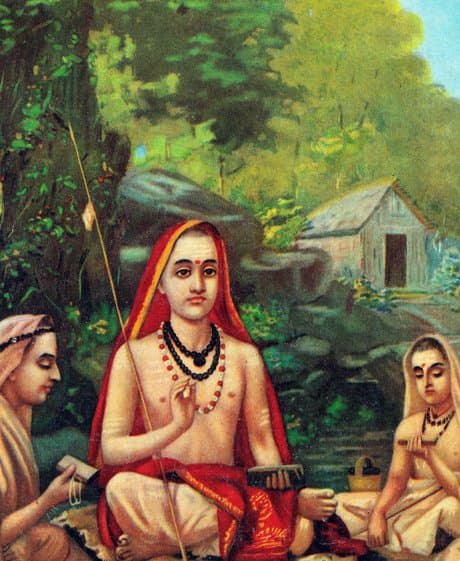
Ādi Śaṅkarācārya · Advaita
Sanskritअथ पुनः एतत् अपि यत् उक्तं मत्-कर्म-परमत्वम्, तत् कर्तुं अशक्तः असि, मत्-योगं आश्रितः मयि क्रियमाणानि कर्माणि सन्न्यस्य यत् करणं तेषाम् अनुष्ठानं सः मत्-योगः, तं आश्रितः सन्, सर्व-कर्म-फल-त्यागं सर्वेषां कर्मणां फल-सन्न्यासं सर्व-कर्म-फल-त्यागं ततः अनन्तरं कुरु यत-आत्मवान् संयत-चित्तः सन् इति अर्थः ॥ इदानीं सर्व-कर्म-फल-त्यागं स्तौति --
Ādi Śaṅkarācārya · Advaita
Hindiपरंतु यदि तू ऐसा करनेमें भी अर्थात् जैसा ऊपर कहा है, उस प्रकार मेरे लिये कर्म करनेके परायण होनेमें भी असमर्थ है तो फिर मद्योगके आश्रित होकर—किये जानेवाले समस्त कर्मोंको मुझमें समर्पण करके उनका अनुष्ठान करना मद्योग है। उसके आश्रित होकर—और संयतात्मा होकर अर्थात् वशीभूत मनवाला होकर समस्त कर्मोंके फलका त्याग कर
Jñāneśvar · Vārkarī
Marathiना तरी हेंही तूज । नेदवे कर्म मज । तरी तूं गा बुझ । पंडुकुमरा ॥ १२५ ॥ बुद्धीचिये पाठीं पोटीं । कर्माआदि कां शेवटीं । मातें बांधणें किरीटी । दुवाड जरी ॥ १२६ ॥ तरी हेंही असो । सांडीं माझा अतिसो । परि संयतिसीं वसो । बुद्धि तुझी ॥ १२७ ॥ आणि जेणें जेणें वेळें । घडती कर्में सकळें । तयांचीं तियें फळें । त्यजितु जाय ॥ १२८ ॥ वृक्ष कां वेली । लोटती फळें आलीं । तैसीं सांडीं निपजलीं । कर्में सिद्धें ॥ १२९ ॥
परि मातें मनीं धरावें । कां मजौद्देशें करावें । हें कांहीं नको आघवें । जाऊं दे शून्यीं ॥ १३० ॥ खडकीं जैसें वर्षलें । कां आगीमाजीं पेरिलें । कर्म मानी देखिलें । स्वप्न जैसें ॥ १३१ ॥ अगा आत्मजेच्या विषीं । जीवु जैसा निरभिलाषी । तैसा कर्मीं अशेषीं । निष्कामु होईं ॥ १३२ ॥ वन्हीची ज्वाळा जैसी । वायां जाय आकाशीं । क्रिया जिरों दे तैसी । शून्यामाजी ॥ १३३ ॥ अर्जुना हा फलत्यागु । आवडे कीर असलगु । परी योगामाजीं योगु । धुरेचा हा ॥ १३४ ॥ येणें फलत्यागें सांडे । तें तें कर्म न विरूढे । एकचि वेळे वेळुझाडें । वांझें जैसीं ॥ १३५ ॥ तैसें येणेंचि शरीरें । शरीरा येणें सरे । किंबहुना येरझारे । चिरा पडे ॥ १३६ ॥ पैं अभ्यासाचिया पाउटीं । ठाकिजे ज्ञान किरीटी । ज्ञानें येइजे भेटी । ध्यानाचिये ॥ १३७ ॥ मग ध्यानासि खेंव । देती आघवेचि भाव । तेव्हां कर्मजात सर्व । दूरी ठाके ॥ १३८ ॥ कर्म जेथ दुरावे । तेथ फलत्यागु संभवे । त्यागास्तव आंगवे । शांति सगळी ॥ १३९ ॥ म्हणौनि यावया शांति । हाचि अनुक्रमु सुभद्रापती । म्हणौनि अभ्यासुचि प्रस्तुतीं । करणें एथ ॥ १४० ॥
Jñāneśvar · Vārkarī
Hindi(12.125) अथवा यदि तुमसे कर्म भी मुझे समर्पित नहीं किया जाता तो हे पाण्डुकुँवर! तुम कर्मों का सेवन कर सकते हो;
(12.126) यदि बुद्धि के आगे-पीछे तथा कर्म के आदि या अन्त में, मेरा सम्बन्ध जोड़ना तुम्हें कठिन मालूम होता हो,
(12.127) तो वह भी रहने दो। मेरा महत्व जाने दे। परन्तु बुद्धि को इन्द्रियनिग्रह में लगा दे,
(12.128) तथा जिस समय जो जो कर्म किये जायें उनके फलों का त्याग कर दो।
(12.129) फल हाथ आते ही लोग जैसे वृक्ष या बेल को छोड़ जाते हैं वैसे ही कर्म सिद्ध होते ही उनका त्याग कर दो, (12.129) तथा कर्म करते समय मेरा स्मरण रखने की अथवा उसे मेरे प्रीत्यर्थ करने की भी कुछ आवश्यकता नहीं है। सब शून्य में समर्पित होने दो।
(12.131) जैसा पत्थर पर बरसा हुआ जल, अथवा अग्नि में बोया हुआ बीज होता है, वैसा ही हर एक कर्म समझो; मानो जैसे कोई स्वप्न देखा हो!
(12.132) अजी, कन्या के विषय में पिता जैसा निष्काम होता है वैसे ही सम्पूर्ण कर्मों के विषय में निरभिलाष हो जाओ।
(12.133) अग्नि की ज्वाला जैसी आकाश में वृथा जाती है वैसे ही अपनी सब क्रियाएँ शून्य में विलीन होने दो।
(12.134) हे अर्जुन! यह फलत्याग मालूम तो सुलभ होता है, परन्तु है यह योग सब योगों में श्रेष्ठ।
(12.135) बाँस के झाड़ जैसे एक ही बार फल कर बन्ध्या हो जाते हैं, वैसे ही इस फल-त्याग के द्वारा जिस जिस कर्म का त्याग किया जाता है उससे फिर कर्म उत्पन्न नहीं होता;
(12.136) तथा इसी शरीर के बाद फिर शरीर लेना भी बन्द हो जाता है। किंबहुना, जन्म और मृत्यु का रास्ता ही बन्द हो जाता है। (12.137) इस प्रकार हे किरीटी! अभ्यास के मार्ग से ज्ञान प्राप्त करना चाहिए, तथा ज्ञान से ध्यान की भेंट लेनी चाहिए।
(12.138) फिर जब ध्यान का सब भाव आलिंगन देते हैं तब सम्पूर्ण कर्म दूर हो जाते हैं।
(12.139) जहाँ कर्म दूर हुआ तहाँ फल-त्याग भी हो जाता है और त्याग के कारण सम्पूर्ण शान्ति अधीन हो जाती है।
(12.140) इसलिए हे सुभद्रापति! शान्ति प्राप्त करने के लिए यही क्रम है। इसलिए साम्प्रत में अभ्यास ही करना चाहिए।
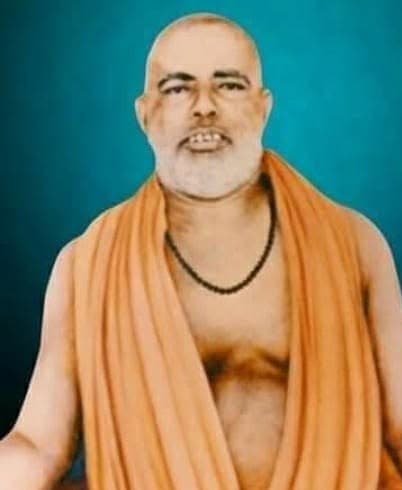
Sri Udiya Baba · Modern
Hindiभावार्थ— यदि तुम ऐसा करने में भी असमर्थ हो तो मेरे योग का आश्रय लेकर एकाग्रचित्त से सब कर्मों का फल त्याग दो।
व्याख्या— यहाँ 'मद्योगमाश्रितः' (मेरे योग का आश्रय लेकर) कहा है। इसका तात्पर्य यह है कि मेरा स्मरण करते हुए कर्म करो। कर्म तीन प्रकार के हो सकते हैं— (१) भगवत्प्रीत्यर्थ कर्म, (२) धर्मार्थ कर्म और (३) पापक्षय अथवा विषयासक्ति की निवृत्ति के लिये किये जाने वाले कर्म। इनमें से जो भी कर्म उसे भगवान् का स्मरण करते हुए करो और उसके फल की कामना त्याग दो।
'यतात्मवान्' (संयतचित्त होकर) विशेषण का सम्बन्ध तो उपर्युक्त चारों प्रकार के साधकों के साथ समझना चाहिए।
Swami Ramsukhdas · Modern
Hindi‘अथैतदप्यशक्तोऽसि कर्तुं मद्योग-माश्रितः’—पूर्वश्लोकमें भगवान्ने अपने लिये ही सम्पूर्ण कर्म करनेसे अपनी प्राप्ति बतायी और अब इस श्लोकमें वे सम्पूर्ण कर्मोंके फलत्यागरूप साधनकी बात बता रहे हैं। वहाँ भगवान्के लिये समस्त कर्म करनेमें भक्तिकी प्रधानता होनेसे उसे ‘भक्तियोग’ कहेंगे और यहाँ सर्वकर्मफलत्यागमें केवल फलत्यागकी मुख्यता होनेसे इसे ‘कर्मयोग’ कहेंगे। इस प्रकार भगवत्प्राप्तिके ये दोनों ही स्वतन्त्र (पृथक्-पृथक्) साधन हैं।
इस श्लोकमें ‘मद्योगमाश्रितः’ पदका सम्बन्ध ‘अथैतदप्यशक्तोऽसि’ के साथ मानना ही ठीक मालूम देता है; क्योंकि यदि इसका सम्बन्ध ‘सर्वकर्मफलत्यागं कुरु’ के साथ माना जाय, तो भगवान्के आश्रयकी मुख्यता हो जानेसे यहाँ ‘भक्तियोग’ ही हो जायगा। ऐसी दशामें दसवें श्लोकमें कहे हुए भक्तियोगके साधनसे इसकी भिन्नता नहीं रहेगी, जबकि भगवान् दसवें और ग्यारहवें श्लोकमें क्रमशः ‘भक्तियोग’ और ‘कर्मयोग’—दो भिन्न-भिन्न साधन बताना चाहते हैं।
दूसरी बात, भगवान्ने इस श्लोकमें ‘यतात्मवान्’ (मन-बुद्धि-इन्द्रियोंके सहित शरीरपर विजय प्राप्त करने-वाला) पद भी दिया है। आत्मसंयमकी विशेष आवश्यकता कर्मयोगमें ही है; क्योंकि आत्मसंयमके बिना सर्वकर्मफलत्याग होना असम्भव है। इसलिये भी ‘मद्योगमाश्रितः’
पदका सम्बन्ध ‘अथैतदप्यशक्तोऽसि’ के साथ मानना चाहिये, न कि सर्वकर्मफलत्याग करनेकी आज्ञाके साथ।
जिसका भगवान्पर तो उतना विश्वास नहीं है, पर भगवान्के विधानमें अर्थात् देश-समाजकी सेवा आदि करनेमें अधिक विश्वास है, उसके लिये भगवान् इस श्लोकमें सर्वकर्मफलत्याग-रूप साधन बताते हैं। तात्पर्य है कि अगर वह सम्पूर्ण कर्मोंको मेरे अर्पण न कर सके, तो जिस फलको प्राप्त करना उसके हाथकी बात नहीं है, उस फलकी इच्छाका त्याग कर दे—‘कर्मण्येवाधिकारस्ते मा फलेषु कदाचन’ (गीता २।४७)। फलकी इच्छाका त्याग करके कर्तव्य कर्म करनेसे उसका संसारसे सम्बन्ध-विच्छेद हो जायगा।
‘सर्वकर्मफलत्यागं ततः कुरु यतात्मवान्’—कर्मयोगके साधनमें स्वाभाविक ही कर्मोंका विस्तार होता है; क्योंकि योगकी प्राप्तिमें अनासक्त भावसे कर्म करना ही हेतु कहा गया है (गीता—छठे अध्यायका तीसरा श्लोक)। इससे कर्मोंमें फलासक्ति होनेके कारण बँधनेका भय रहता है। अतः ‘यतात्मवान्’ पदसे भगवान् कर्मफलत्यागके साधनमें मन-इन्द्रियों आदिके संयमकी आवश्यकता बताते हैं। यह ध्यान देनेकी बात है कि मन-इन्द्रियोंका संयम होनेपर कर्मफलत्यागमें भी सुगमता होती है। अगर साधक मन-बुद्धि-इन्द्रियों आदिका संयम नहीं करता, तो स्वाभाविक ही उसके मनद्वारा विषयोंका चिन्तन होगा और उसकी उन विषयोंमें आसक्ति हो जायगी। इससे उसका
पतन होनेकी बहुत सम्भावना रहेगी (गीता—दूसरे अध्यायका बासठवाँ-तिरसठवाँ श्लोक)। त्यागका उद्देश्य होनेसे साधक मन-इन्द्रियोंका संयम सुगमतासे कर सकता है।
यहाँ 'सर्वकर्म' पद यज्ञ, दान, तप, सेवा और वर्णाश्रमके अनुसार जीविका तथा शरीर-निर्वाहके लिये किये जानेवाले शास्त्रविहित सम्पूर्ण कर्मोंका वाचक है। सर्वकर्मफलत्यागका अभिप्राय स्वरूपसे कर्मफलका त्याग न होकर कर्मफलमें ममता, आसक्ति, कामना, वासना आदिका त्याग ही है।
कर्मफलत्यागके साधनमें कर्मोंका स्वरूपसे त्याग करनेकी बात नहीं कही गयी; क्योंकि कर्म करना तो जरूरी है (गीता—छठे अध्यायका तीसरा श्लोक)। जैसा कि पहले कह चुके हैं, आवश्यकता केवल कर्मों और उनके फलोंमें ममता, आसक्ति, कामना आदिके त्यागकी ही है।
कर्मयोगके साधकको अकर्मण्य नहीं होना चाहिये; क्योंकि कर्मफल-त्यागकी बात सुनकर प्रायः साधक सोचता है कि जब कुछ लेना ही नहीं है, तो फिर कर्मोंको करनेकी क्या जरूरत! इसलिये भगवान्ने दूसरे अध्यायके सैंतालीसवें श्लोकमें कर्मयोगकी बात कहते हुए 'मा ते संगोऽस्त्वकर्मणि' 'तेरी कर्म न करनेमें आसक्ति न हो'—यह कहकर साधकके लिये अकर्मण्यता-(कर्मके त्याग-) का निषेध किया है।
अठारहवें अध्यायके नवें श्लोकमें भगवान्ने सात्त्विक त्यागके लक्षण बताते हुए कर्मोंमें फलासक्तिके त्यागको ही 'सात्त्विक त्याग' कहा है, न कि स्वरूपसे कर्मोंके त्यागको।
फलासक्तिका त्याग करके क्रियाओंको करते रहनेसे क्रियाओंको करनेका वेग शान्त हो जाता है और पुरानी आसक्ति मिट जाती है। फलकी इच्छा न रहनेसे कर्मोंसे सर्वथा सम्बन्ध-विच्छेद हो जाता है और नयी आसक्ति पैदा नहीं होती। फिर साधक कृतकृत्य हो जाता है। पदार्थोंमें राग, आसक्ति, कामना, ममता, फलेच्छा आदि ही
क्रियाओंका वेग पैदा करनेवाली है। इनके रहते हुए हठपूर्वक क्रियाओंका त्याग करनेपर भी क्रियाओंका वेग शान्त नहीं होता। राग-द्वेष रहनेके कारण साधककी प्रकृति पुनः उसे कर्मोंमें लगा देती है। अतः राग-द्वेषादिका त्याग करके निष्कामभावपूर्वक कर्तव्य-कर्म करनेसे ही क्रियाओंका वेग शान्त होता है।
जिन साधकोंकी सगुण-साकार भगवान्में स्वाभाविक श्रद्धा और भक्ति नहीं है, प्रत्युत व्यावहारिक और लोकहितके कार्य करनेमें ही अधिक श्रद्धा और रुचि है, ऐसे साधकोंके लिये यह (सर्वकर्मफलत्यागरूप) साधन बहुत उपयोगी है।
भगवान्ने जहाँ भी कर्मफलत्यागकी बात कही है, वहाँ आसक्ति और फलेच्छाके त्यागका अध्याहार कर लेना चाहिये; क्योंकि भगवान्के मतमें आसक्ति और फलेच्छाका पूरी तरह त्याग होनेसे ही कर्मोंसे सर्वथा सम्बन्ध-विच्छेद होता है (गीता—अठारहवें अध्यायका छठा श्लोक)।
सम्पूर्ण कर्मोंके फल-(फलेच्छा-) का त्याग भगवत्-प्राप्तिका स्वतन्त्र साधन है। कर्मफलत्यागसे विषयासक्तिका नाश होकर शान्ति-(सात्त्विक सुख-) की प्राप्ति हो जाती है। उस शान्तिका उपभोग न करनेसे (उसमें सुख-बुद्धि करके उसमें न अटकनेसे) वह शान्ति परमतत्त्वका बोध कराकर उससे अभिन्न करा देती है।
ग्यारहवें अध्यायके पचपनवें श्लोकमें भगवान्ने साधक भक्तके पाँच लक्षणोंमें एक लक्षण 'संगवर्जितः' (आसक्तिसे रहित) बताया था। इस श्लोकमें भगवान् सम्पूर्ण कर्मोंके फलत्यागकी बात कहते हैं, जो संसारकी आसक्तिके सर्वथा त्यागसे ही सम्भव है। इस-(सर्वकर्मफलत्याग-)का फल भगवान्ने इसी अध्यायके बारहवें श्लोकमें तत्काल परमशान्तिकी प्राप्ति होना बताया है। अतः यह समझना चाहिये कि केवल आसक्तिका सर्वथा त्याग करनेसे भी परमशान्ति अथवा भगवान्की प्राप्ति हो जाती है।
**परिशिष्ट भाव**—अगर साधक सर्वथा भगवान्के लिये कर्म न कर सके तो उसको फलेच्छाका त्याग करके कर्म करना चाहिये; क्योंकि फलेच्छा ही बाँधनेवाली है—'फले सक्तो निबध्यते' (गीता ५। १२)।
सम्बन्ध—भगवान्ने आठवें श्लोकसे ग्यारहवें श्लोकतक एक साधनमें असमर्थ होनेपर दूसरा, दूसरे साधनमें असमर्थ होनेपर तीसरा और तीसरे साधनमें असमर्थ होनेपर चौथा साधन बताया। इससे यह शंका हो सकती है कि क्या अन्तमें बताया गया 'सर्वकर्मफलत्याग' साधन सबसे निम्न श्रेणीका है? क्योंकि उसको सबसे अन्तमें कहा गया है तथा भगवान्ने उस-(सर्वकर्मफलत्याग-)का कोई फल भी नहीं बताया। इस शंकाका निवारण करते हुए भगवान् सर्वकर्मफलत्यागरूप साधनकी श्रेष्ठता तथा उसका फल बताते हैं।
With a view of attaining communion with the Supreme Lord Krishna, His devotees enthusiastically perform bhakti or exclusive loving devotion to Him.
When the followers of this path who are always reflecting and reminiscing about His nāma, rūpa, guṇa, līlā, dhāma find themselves due to adverse circumstances unable to perform all their activities for Him alone by which association with Him in loving communion would surely manifest;
then let them launch on the path of akṣaram or the imperishable and eruditely contemplate the nature of the ātma or eternal soul as delineated in chapter two
which would gradually fructify into bhakti eventually if the prerequisite condition to renounce the desire for the rewards of all one's actions was accomplished, then ātma tattva or soul realisation is insured.
The word yatātmanaḥ means of “controlled mind” which denotes a mind that has been trained to perform activities without desiring for rewards in the intangible form of prestige and recognition or the tangible form of gain and position.
It is only to such a one entirely free from all thoughts and desires of compensation and calculation, cleansed of all sins will the Supreme Lord Krishna be their total object of affection and love.
Such a person will focus the fullness of all of their love on Lord Krishna as their sole ultimate goal. All their actions are actually forms of Lord Krishna's worship as they are performed for His satisfaction or as a matter of duty without craving for any rewards.
Meditation on the ātma results in the obliteration of all obstacles and impediments and the eradication of avidya or ignorance and confers realisation of the ātma as being eternal and purely spiritual in totality and essentially a part of Lord Krishna's internal nature.
When this communion has been experienced then love of God erupts in the heart and becomes a natural occurrence. This topic will be further delineated in chapter 18, verses 53 and 54.