Bhagavad Gītā 18.66Open verse
the carama-śloka — the final refuge
सर्वधर्मान्परित्यज्य
मामेकं शरणं व्रज
Resigning all your duties to Me, the all-powerful and all-supporting Lord, take refuge in Me alone. I shall absolve you of all sins, worry not.


Concepts
शरणागतिः
śaraṇāgatiḥ
śaraṇa 'refuge, shelter' + āgati 'coming to' — the movement of taking refuge. The Gītā's final instruction (18.66) is its charter: sarva-dharmān parityajya, mām ekaṁ śaraṇaṁ vraja.
The Gītā's last teaching before Arjuna says 'my delusion is destroyed' — and its most contested line. Does 'abandon all dharmas' cancel every duty the previous seventeen chapters taught? The commentators below divide over exactly this, and the divide runs along the deepest fault line between their schools: what is finally let go — action itself, the sense of being its owner, or only the fruit.
the carama-śloka — the final refuge
सर्वधर्मान्परित्यज्य
मामेकं शरणं व्रज
Resigning all your duties to Me, the all-powerful and all-supporting Lord, take refuge in Me alone. I shall absolve you of all sins, worry not.
take refuge in Him with all your being
तमेव शरणं गच्छ
सर्वभावेन भारत
Take shelter in Him alone, with all your being, Arjuna. By His mere grace you shall attain supreme peace and the eternal state.
through devotion he knows Me, and enters
भक्त्या मामभिजानाति
यावान्यश्चास्मि तत्त्वतः
Through that supreme devotion he comes to know Me in reality, what and how great I am; and thereby knowing Me in essence he forthwith enters into My being.
It doesn't mean dropping your duties — Krishna orders the battle in the same breath. It means dropping a deeper load: the belief that you are the one holding everything up. Śaṅkara hears the verse asking you to leave all action for abidance in the Self; Rāmānuja, to leave the sense of being the agent; Madhva, to leave the claim on the fruit; Jñāneśvar, to leave ignorance itself. Four depths of the same movement: hand it over. And it is the Gītā's own final word — after this verse, Krishna teaches nothing more.
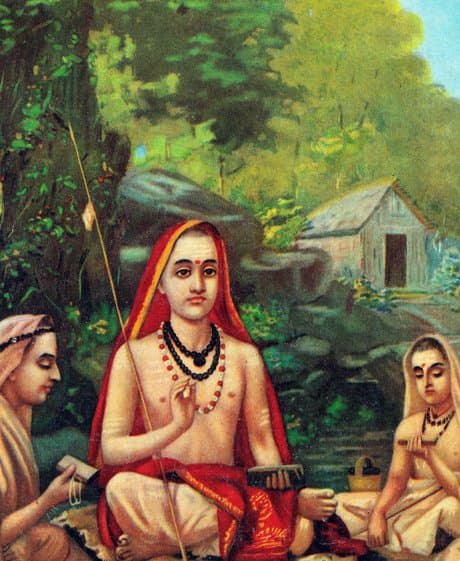
Ādi Śaṅkarācārya · Advaita
For Śaṅkara the carama-śloka is the charter of total renunciation: what is abandoned is all karma — dharma and adharma alike — for abidance as the Self.
धर्मशब्देन अत्र अधर्मोऽपि गृह्यते, नैष्कर्म्यस्य विवक्षितत्वात् — by the word 'dharma' here even adharma is included, for what is intended is actionlessness.
Śaṅkara Bhāṣya on 18.66 (Sanskrit, GitaDeep corpus; working rendering under review)

Śrī Rāmānuja · Viśiṣṭādvaita
Rāmānuja refuses the literal reading: nothing prescribed is dropped — only the notion that you were ever the agent and owner of it.
'Relinquishing all Dharmas' —means the complete abandonment of the notion of agency, proprietorship, results etc., in the practice of Karma, Jñāna and Bhakti Yogas which are the means (dharmas) for attaining the highest good when done as Divine Service.
Gītā-bhāṣya on 18.66 — English translation (GitaDeep corpus)
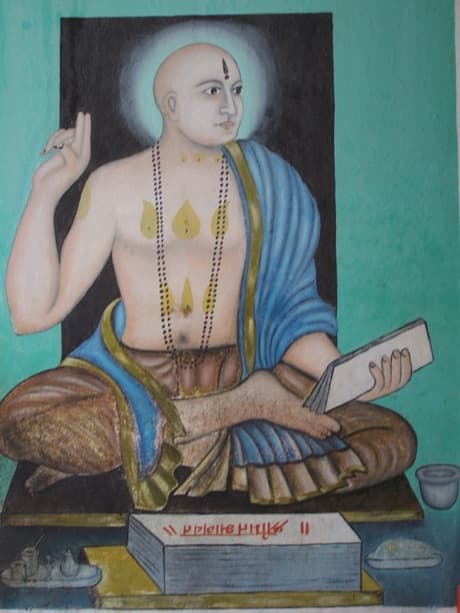
Śrī Madhvācārya · Dvaita
Madhva's test is the scene itself — Krishna commands battle in the same breath, so what is renounced can only be the fruit.
धर्मत्याग means renunciation of the fruits. Otherwise how can one speak of the methods in battle?
Madhva Bhāṣya on 18.66 — English translation (GitaDeep corpus)

Śrī Jñāneśvar · Vārkarī
The Jñāneśvarī hears the verse at the level of ignorance itself: what is abandoned is the whole dream in which merit and demerit bind.
Hope gives birth to pain, or slander to sin, or misfortune to poverty; in that way ignorance (Nescience) creates religion and non-religion leading to Heaven and Hell, and therefore abandon it all (ignorance) completely through knowledge.
Jñāneśvarī on 18.66, tr. R. K. Bhagwat (GitaDeep corpus)
Swami Ramsukhdas · Sādhak Sañjīvanī
The practice reading: refuge is not one teaching among many but the point of them all.
Refuge in the Lord, is the quintessence, of the gospel of the Lord.
Sādhak Sañjīvanī on 18.66 — English translation (GitaDeep corpus)
Where the traditions differ, we show the difference.