Bhagavad Gītā 2.47Open verse
the verse itself
कर्मण्येवाधिकारस्ते
मा फलेषु कदाचन
Your right is to work only, but never to the fruit thereof. Be not instrumental in making your actions bear fruit, nor let your attachment be to inaction.


Concepts
निष्कामकर्म
niṣkāma-karma
niṣ 'without' + kāma 'desire', joined to karma 'action' — action performed without craving for its fruit. The Gītā's own words at 2.47: mā phaleṣu kadācana, 'never in the fruits.'
No verse of the Gītā is quoted more — or made to carry more it never said: that results don't matter, that planning is unspiritual, that asking fair return is attachment. The commentators below read it differently, and read it together: full effort with released ownership — and, in the verse's own last line, no escape into not working at all.
the verse itself
कर्मण्येवाधिकारस्ते
मा फलेषु कदाचन
Your right is to work only, but never to the fruit thereof. Be not instrumental in making your actions bear fruit, nor let your attachment be to inaction.
the same teaching named: evenness is yoga
योगस्थः कुरु कर्माणि
सङ्गं त्यक्त्वा धनञ्जय
Arjuna, perform your duties established in Yoga, renouncing attachment, and even-tempered in success and failure; envenness of temper is called Yoga.
unattached action reaches the Supreme
तस्मादसक्तः सततं
कार्यं कर्म समाचर
Therefore, go on efficiently doing your duty without attachment. Doing work without attachment man attains the Supreme.
It means the effort is yours and the outcome never was. Do the work fully — plan, aim, care — and drop the claim that the result must certify you. That is not indifference; the verse's own last line forbids quitting. The teachers differ on why the fruit was never yours: craving blocks knowledge, says Śaṅkara; the act belongs to the Lord as worship, says Rāmānuja; the fruit is His to give, says Madhva. The instruction lands the same from all of them — work like it matters, and let the result go.
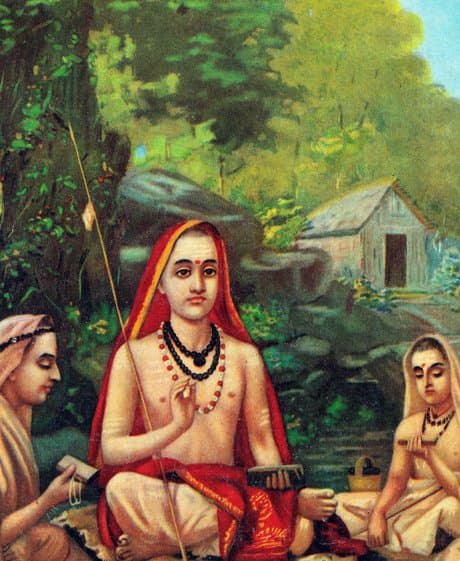
Ādi Śaṅkarācārya · Advaita
Śaṅkara opens with a line most readers of 2.47 never meet — the question of what Arjuna is qualified for right now. Disciplined action without craving purifies the mind and prepares it for knowledge; and the verse's last clause, he insists, blocks the conclusion that renouncing the fruit means stopping the work.
कर्मण्येव अधिकारः न ज्ञाननिष्ठायां ते तव — your right is in action alone, not yet in the steady abidance in knowledge.
Śaṅkara Bhāṣya on 2.47 (Sanskrit, GitaDeep corpus; working rendering under review)

Śrī Rāmānuja · Viśiṣṭādvaita
For Rāmānuja the same act binds or frees depending on what it is offered to — and the deeper renunciation is of agency itself.
But acts done without motivation are a form of worship and a means for Liberation. Do not initiate works with the idea of reaping their fruits.
Gītā-bhāṣya on 2.47 — English translation (GitaDeep corpus)
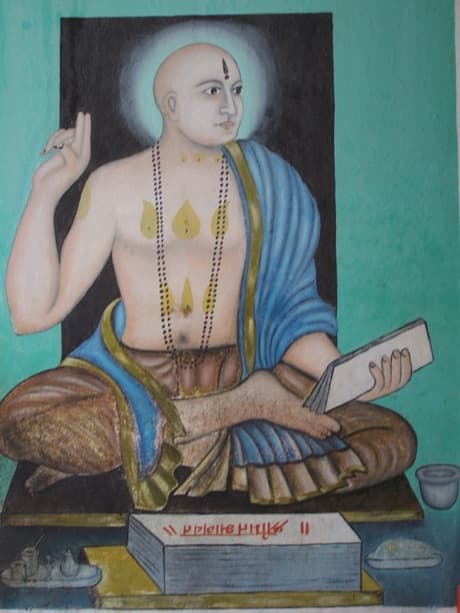
Śrī Madhvācārya · Dvaita
The Tātparya Nirṇaya asks whose fruit it ever was. Desire, for Madhva, is the finite self appropriating what only divine power sustains.
For actions alone are you and other Jivas entitled. The fruit, however, is within My power to give … Do not have the feeling that you are the Lord.
Gītā Tātparya Nirṇaya on 2.47 — English translation (GitaDeep corpus)

Śrī Jñāneśvar · Vārkarī
The Jñāneśvarī turns the teaching toward the ordinary worker: not extraordinary renunciation, but your own given work, done as it should be done.
You should not harbour any desire for the fruit of the action, nor have any tendency towards evil actions, but you should go on doing good actions with no motive whatever for enjoyment except doing your duty.
Jñāneśvarī on 2.47, tr. R. K. Bhagwat (GitaDeep corpus)
Swami Ramsukhdas · Sādhak Sañjīvanī
The modern practice reading: you are free in effort, never in outcome — and anxiety lives exactly in that confusion.
'Karmaṇyevādhikāraste'—Your right is to perform your duty, you are free in it, because no other bodies as those of animals and birds etc., are free to perform new actions.
Sādhak Sañjīvanī on 2.47 — English translation (GitaDeep corpus)
Where the traditions differ, we show the difference.