गीताGitaDeep

Concepts

What is liberation — and does anything of me remain in it?

मोक्षः

mokṣaḥ

from √muc 'to release' — release from the round of birth and death. What the release is INTO — identity, communion, or eternal distinct service — is the deepest divide among the traditions.

Why this is asked

Every tradition of the Gītā promises liberation; no two describe the same arrival. Śaṅkara's mokṣa dissolves the separate knower; Rāmānuja's and Madhva's preserve the soul in communion with a Lord it never becomes. The verses below are common ground — the readings of them are the parting of ways, and the Gītā has carried all of them for centuries.

Where the Gītā speaks

Bhagavad Gītā 2.72Open verse

the brāhmī state — no delusion, even at the last hour

एषा ब्राह्मी स्थितिः पार्थ

नैनां प्राप्य विमुह्यति

Arjuna, such is the state of the God-realized ( sou!; having reached this state, he overcomes delusion. And established in this state,even f at the last moment, he…

Bhagavad Gītā 8.15Open verse

having reached Me, no rebirth in this abode of sorrow

मामुपेत्य पुनर्जन्म

दुःखालयमशाश्वतम्

Great souls, who have attained the highest perfection, having come to Me, are no more subjected to rebirth, which is the abode of sorrow, and transient by nature.

Bhagavad Gītā 18.55Open verse

by devotion he knows Me in truth, and enters

भक्त्या मामभिजानाति

यावान्यश्चास्मि तत्त्वतः

Through that supreme devotion he comes: Vi to know Me in reality, what and how greatI am; and thereby knowing Me in essence he — forthwith enters into My being

The short answer

Freedom from being born and dying, ever again — on that every tradition agrees (8.15). What remains of you inside that freedom is the honest fight: Śaṅkara says the drop dissolves into the ocean; Rāmānuja and Madhva say the soul stays itself forever, in communion with a Lord it never becomes. We won't pick that winner — the Gītā has carried both readings for a thousand years. But notice what the text itself does at the end: its last instruction is not a doctrine. It is a surrender (18.66).

How the traditions read it

Sources under review
Portrait of Ādi Śaṅkarācārya · Advaita

Ādi Śaṅkarācārya · Advaita

For Śaṅkara mokṣa is not a journey's end but a standing fact recognized: abidance as Brahman.

सर्वं कर्म सन्न्यस्य ब्रह्मरूपेणैव अवस्थानम् — renouncing all action, abiding as Brahman itself.

Śaṅkara Bhāṣya on 2.72 (Sanskrit, GitaDeep corpus; working rendering under review)

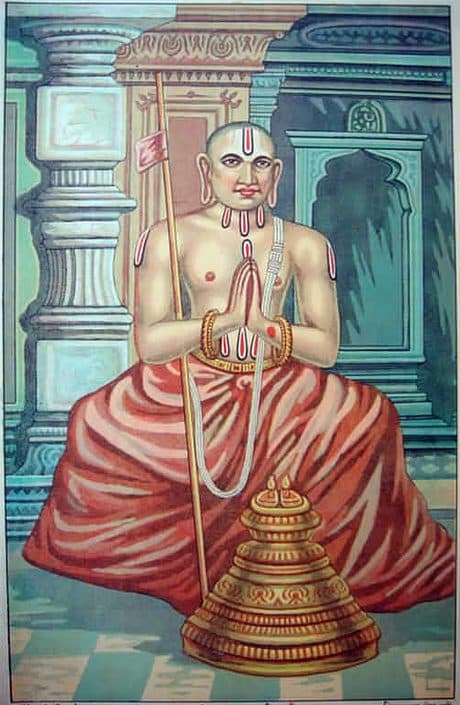
Portrait of Śrī Rāmānuja · Viśiṣṭādvaita

Śrī Rāmānuja · Viśiṣṭādvaita

Rāmānuja's arrival is personal: vision ripens into a love that attains its object.

The meaning is that one attains Krishna by means of ardent Bhakti which develops after the direct vision of the divine nature, attributes and glory of the Lord as they really are.

Gītā-bhāṣya on 18.55 — English translation (GitaDeep corpus)

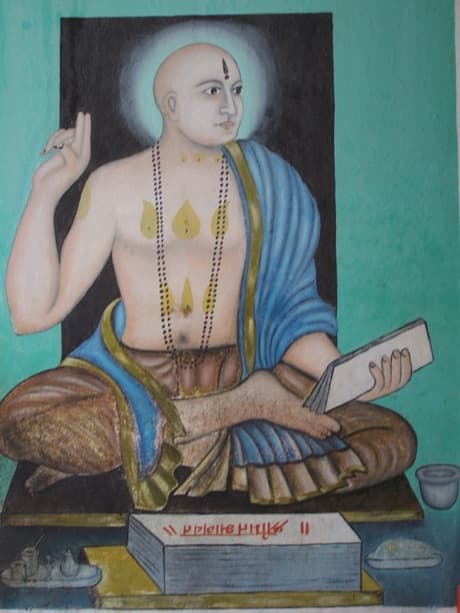
Portrait of Śrī Madhvācārya · Dvaita

Śrī Madhvācārya · Dvaita

The Tātparya names the sole gate — and, for Madhva, the soul remains eternally itself within it.

Deliverance from samsara and attaining the supreme Lord is possible only through exclusive devotion or Bhakti.

Gītā Tātparya Nirṇaya on 8.15 — English translation (GitaDeep corpus)

Portrait of Śrī Jñāneśvar · Vārkarī

Śrī Jñāneśvar · Vārkarī

The Jñāneśvarī insists the state is not manufactured: for the desireless it arrives on its own.

Such is the Brahmic state unique and boundless. Those that are desireless, experience it, and attain the Supreme state without efforts in the long run.

Jñāneśvarī on 2.72, tr. R. K. Bhagwat (GitaDeep corpus)

Swami Ramsukhdas · Sādhak Sañjīvanī

The practice reading describes the mechanism: individuality stood only on worldly affinity, and falls with it.

On being free from egoism, individuality is completely wiped out and then a striver is automatically established in God. Individuality persisted only due to affinity with the world.

Sādhak Sañjīvanī on 2.72 — English translation (GitaDeep corpus)

Where the traditions differ, we show the difference.

Follow the thread

Ask about thisWhat actually happens at liberation?