
गीताGitaDeep

Concepts

Why should someone already wise keep working?

लोकसंग्रहः

lokasaṅgrahaḥ

loka 'world, people' + saṁgraha 'holding together' — the holding-together of the world. Krishna's stated reason (3.20) why the one who needs nothing still acts.

Why this is asked

If liberation is the point, why would the liberated keep working? Krishna's answer names King Janaka — realized, and ruling — and adds a reason that has nothing to do with self-interest: people walk the path the best among them walk. The commentators differ on what the wise one's action IS, but none allows retirement from the world as wisdom's proof.

Where the Gītā speaks

Bhagavad Gītā 3.20Open verse

Janaka attained perfection through action alone

कर्मणैव हि

संसिद्धिमास्थिता जनकादयः

It is through action (without oa: alone that Janaka and other wisemenreached perfection. Having an eye to maintenance of: the world order too you should take to

Bhagavad Gītā 3.21Open verse

what the best does, the world follows

यद्यदाचरति

श्रेष्ठस्तत्तदेवेतरो जनः

For whatever a great man does, that very thing other men also do; whatever standard he sets up; the generality of men follow the same. (2l

Bhagavad Gītā 3.25Open verse

act as the wise do — unattached, for the world

सक्ताः कर्मण्यविद्वांसो

यथा कुर्वन्ति भारत

Arjuna, as the unwise act with attach-: x7 ment, so should the wise man, seeking maintenance of the world order, act without attachment

The short answer

Because people follow what you do, not what you say — and because being finished with your own needs doesn't finish your obligations. Janaka ruled a kingdom after realization, and Krishna points at him: like that (3.20). Śaṅkara adds that the wise keep working so the world holds together; Jñāneśvar, that whatever the elders do becomes everyone's dharma by morning. If your wisdom makes you useless to the people around you, the Gītā does not call it wisdom.

How the traditions read it

Sources under review
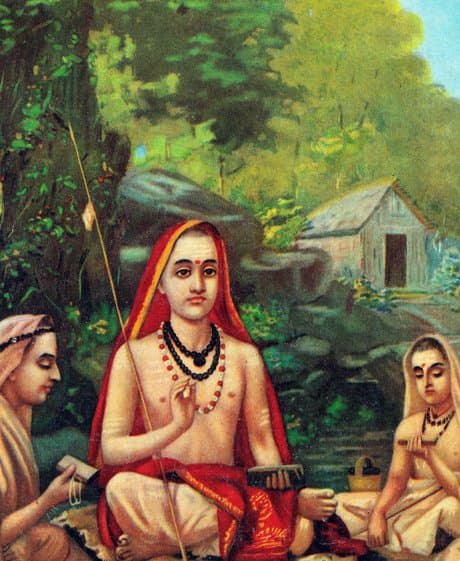
Portrait of Ādi Śaṅkarācārya · Advaita

Ādi Śaṅkarācārya · Advaita

Śaṅkara reads Janaka both ways — realized, he acted on by prārabdha for the world's cohesion; unrealized, action was his purification — and either way the duty to act stands.

लोकसङ्ग्रहार्थं प्रारब्धकर्मत्वात् कर्मणा सहैव असन्न्यस्यैव कर्म संसिद्धिमास्थिताः — for the holding-together of the world, their karma already in motion, they reached perfection with action itself, without renouncing it.

Śaṅkara Bhāṣya on 3.20 (Sanskrit, GitaDeep corpus; working rendering under review)

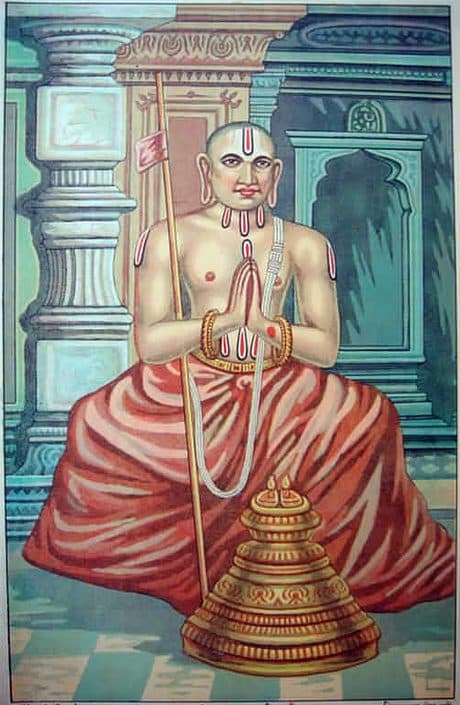
Portrait of Śrī Rāmānuja · Viśiṣṭādvaita

Śrī Rāmānuja · Viśiṣṭādvaita

For Rāmānuja the wise one's continued work is altruism in the strict sense — action whose beneficiary is the world.

So understanding that the whole Earth benefits from the performance of prescribed Vedic activities, one should act altruistically not for themselves but for the welfare of the world.

Gītā-bhāṣya on 3.21 — English translation (GitaDeep corpus)

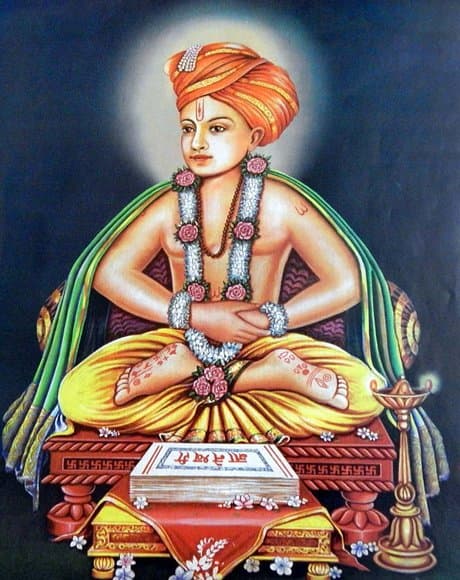
Portrait of Śrī Jñāneśvar · Vārkarī

Śrī Jñāneśvar · Vārkarī

The Jñāneśvarī grounds it in how norms actually propagate: what the elders do becomes the dharma others live.

Whatever the elders do, is called the religion and it is followed by others (ordinary persons). This is just in accordance with the order of nature and therefore especially the saints of higher insight should continue doing their duties according to their own religion without hesitation.

Jñāneśvarī on 3.21, tr. R. K. Bhagwat (GitaDeep corpus)

Swami Ramsukhdas · Sādhak Sañjīvanī

The practice reading keeps Janaka concrete: a householder's life, lived to liberation through action.

some great souls like Janaka, before and after him, leading householder's life attained salvation by action.

Sādhak Sañjīvanī on 3.20 — English translation (GitaDeep corpus)

Where the traditions differ, we show the difference.

Follow the thread

Ask about thisWhy work when I no longer need anything from it?