गीताGitaDeep

Concepts

Is 'yoga is skill in action' just a formula for high performance?

कौशलम्

kauśalam

from kuśala 'skilful, well, auspicious' — the skill 2.50 names: yogaḥ karmasu kauśalam. Not efficiency, on any classical reading, but the art of acting without being bound by the act.

Why this is asked

This half-verse lives on office posters as a productivity motto. The commentators would not recognize that reading: for each of them the 'skill' is measured not by output but by bondage — the same work, done in evenness, ceases to bind. Excellence may follow; it was never the point.

Where the Gītā speaks

Bhagavad Gītā 2.50Open verse

yoga is skill in action — the line itself

बुद्धियुक्तो जहातीह

उभे सुकृतदुष्कृते

Endowed with equanimity, one sheds in y this life both good and evil. Therefore, strive for the practice of this Yoga of equanimity Skill in action lies in (the practice…

Bhagavad Gītā 2.48Open verse

the evenness that constitutes the skill

योगस्थः कुरु कर्माणि

सङ्गं त्यक्त्वा धनञ्जय

Arjuna, perform your duties established S in Yoga, renouncing attachment, and even- ( tempered in success and failure; envenness Gas of temper is called Yoga

Bhagavad Gītā 5.10Open verse

acting without attachment, untouched as a lotus leaf

ब्रह्मण्याधाय कर्माणि

सङ्गं त्यक्त्वा करोति यः

He who acts offering all actions to God, Vv andshaking offattachment, remains untouched NY y by sin, as the lotus leaf by water. (l

The short answer

Not efficiency. The skill of 2.50 is measured by one thing: whether the work binds you. The same job, done grasping, forges chains; done in evenness, says Śaṅkara, even binding acts lose their binding nature — that is the skill. Rāmānuja calls it action guarded by intelligence; Madhva ties it to knowing the Lord. Excellence may follow, and good. But if your 'skill in action' leaves you more anxious and more owned by your results, it is not what this verse is teaching.

How the traditions read it

Sources under review
Portrait of Ādi Śaṅkarācārya · Advaita

Ādi Śaṅkarācārya · Advaita

Śaṅkara defines the skill exactly — and it is not competence.

तद्धि कौशलं यत् बन्धनस्वभावान्यपि कर्माणि समत्वबुद्ध्या स्वभावात् निवर्तन्ते — this is the skill: that acts, binding by their very nature, are turned from that nature by the even mind.

Śaṅkara Bhāṣya on 2.50 (Sanskrit, GitaDeep corpus; working rendering under review)

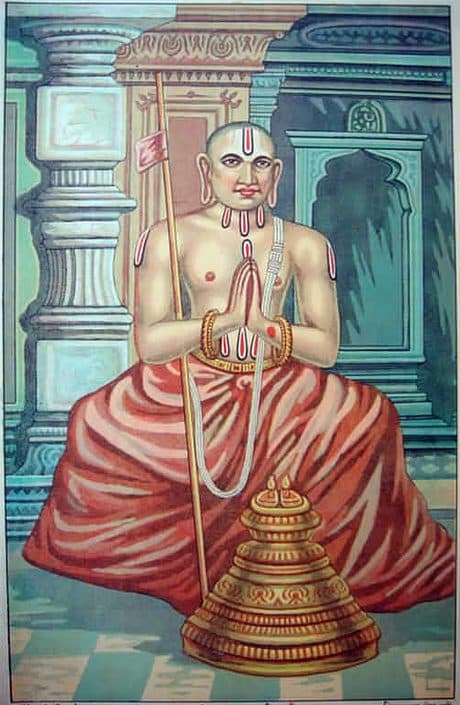
Portrait of Śrī Rāmānuja · Viśiṣṭādvaita

Śrī Rāmānuja · Viśiṣṭādvaita

For Rāmānuja the skill is protective: intelligence-guided action that cannot forge new chains.

Those whose activities are inherently protected under the secure guidance of spiritual intelligence are released from the bondage of continuous rebirth in the material existence.

Gītā-bhāṣya on 2.50 — English translation (GitaDeep corpus)

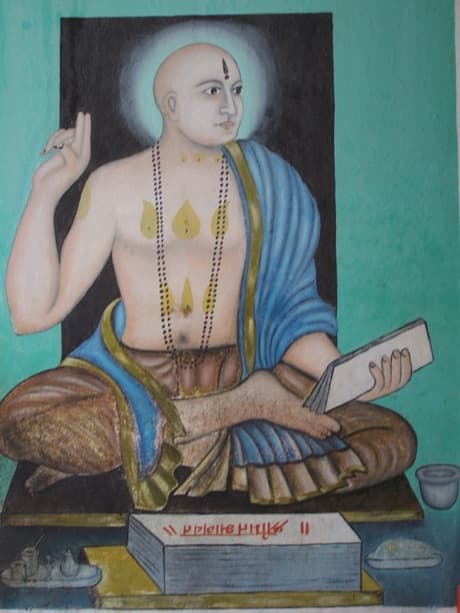
Portrait of Śrī Madhvācārya · Dvaita

Śrī Madhvācārya · Dvaita

The Tātparya roots the skill in knowledge of the Lord — technique follows theology.

Knowing Sri Vishnu and through that knowledge dis-associating the fruits of action is, what is called Excellence in Action. The knowledge of the Lord, verily, is Intelligence'.

Gītā Tātparya Nirṇaya on 2.50 — English translation (GitaDeep corpus)

Portrait of Śrī Jñāneśvar · Vārkarī

Śrī Jñāneśvar · Vārkarī

The Jñāneśvarī compresses the whole teaching into one equation.

O Arjuna, evenness of mind is the sole essence of Yoga, wherein are naturally unity of vision (illumination) and action.

Jñāneśvarī on 2.50, tr. R. K. Bhagwat (GitaDeep corpus)

Swami Ramsukhdas · Sādhak Sañjīvanī

The practice reading gives the skill its classic image — in the world, unwet by it.

In the state of equanimity, a man while living in the world detaches himself from the world, and remains untouched by virtues and sins, as a lotus leaf by water.

Sādhak Sañjīvanī on 2.50 — English translation (GitaDeep corpus)

Where the traditions differ, we show the difference.

Follow the thread

Ask about thisIs spiritual work about performing better?