

on the field of dharma, the field of the Kurus
धृतराष्ट्र उवाच धर्मक्षेत्रे
कुरुक्षेत्रे
समवेता युयुत्सवः
Dhrtarastra said: Sanjaya, gathered on the sacred soil of Kuruksetra, eager to fight, what did my children and the children of Pandu do?
Concepts
कुरुक्षेत्रम्
kurukṣetram
Kuru (the ancestral clan and land) + kṣetra ('field, terrain' — also 'field of action') — literally the Kurus' war-ground; later generations have read it as any field where dharma is decided.
एतान्न हन्तुमिच्छामि घ्नतोऽपि मधुसूदन
अपि त्रैलोक्यराज्यस्य हेतोः किं नु महीकृते
॥ १.३५ ॥
Slayer of Madhu, I do not want to kill them, though they should slay me, even for the throne of the three worlds; how much the less for earthly lordship!
Read in contextThere is no abstract question here — Arjuna sees his own kin across the field and puts down his bow: even if they kill me, I do not wish to kill them (1.31–37). The modern reader's version is blunter: why does the deepest teaching on non-attachment start inside a war at all?
on the field of dharma, the field of the Kurus
धृतराष्ट्र उवाच धर्मक्षेत्रे
कुरुक्षेत्रे
समवेता युयुत्सवः
Dhrtarastra said: Sanjaya, gathered on the sacred soil of Kuruksetra, eager to fight, what did my children and the children of Pandu do?
Arjuna's limbs give way, his bow slips
अर्जुन उवाच कृपया
परयाऽऽविष्टो
विषीदन्निदमब्रवीत्
Seeing all those relations present there, Arjuna was filled with deep compassion and uttered these words in sadness.
cast off this faint-heartedness
क्लैब्यं मा स्म गमः पार्थ
नैतत्त्वय्युपपद्यते
Yield not to unmanliness, Arjuna; illdoes: it become you. Shaking off this paltry faint-heartedness stand up, O scorcher of enemies. (3) Os 2: AO COGS SOL eee
considering your own dharma, do not waver
स्वधर्ममपि चावेक्ष्य
न विकम्पितुमर्हसि
Besides: considering your own duty too 4 you should not waver; for there is nothing nO ee Oe ic j more welcome for a man of the warrior class 3 than a righteous war. (3I
where Krishna is, there is victory
यत्र योगेश्वरः कृष्णो
यत्र पार्थो धनुर्धरः
Wherever there is Bhagavan Sri Krsna, the 2 Lord of Yoga, and wherever there is Arjuna,) lj the wielder of the Gandiva bow, goodness victory, glory and unfailing…
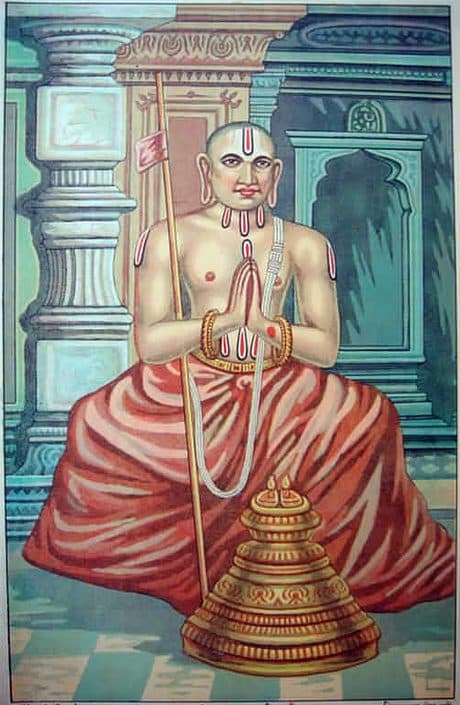
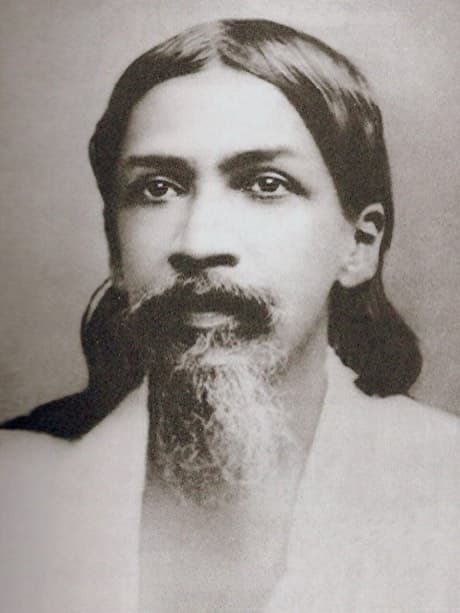
The commentators start from a real war. Rāmānuja says the teaching of the Self begins exactly where Arjuna's courage collapses; Ramsukhdas is blunter — the sudden ethics were born of faint-heartedness, and Krishna treats them as such; Aurobindo refuses to let any of it soften into metaphor. And yet every reader since has also fought this battle inwardly, and the text permits that reading for a simple reason: a teaching that holds on a battlefield holds anywhere. Start with the real field. The inner one follows.

Śrī Rāmānuja · Viśiṣṭādvaita
Rāmānuja reads the setting as the point: the teaching of the Self begins exactly where a good man's courage fails him.
Thus, the Lord, the Supreme Being, introduces the teaching regarding the Self for the sake of Arjuna whose natural courage was lost due to love and misplaced compassion.
Gītā-bhāṣya on 2.3 — English translation (GitaDeep corpus)
Swami Ramsukhdas · Sādhak Sañjīvanī
The practice reading is blunt about Arjuna's sudden ethics: the confusion was born of weakness, and Krishna treats it as such.
It is because of faint-heartedness that Arjuna perceives it, righteous not to wage war and unrighteous to wage war.
Sādhak Sañjīvanī on 2.3 — English translation (GitaDeep corpus)

Sri Aurobindo · Integral
Aurobindo takes a third position — neither pure allegory nor mere history, but a real crisis used to carry a universal teaching.
The Mahābhārata is not a metaphorical piece, nor are Krishna and Arjuna the creations of poetic fancy; the Gītā too is not the speculation of a modern logician or philosopher.
Essays on the Gita, First Series, ch. I (wording under review)
Where the traditions differ, we show the difference.